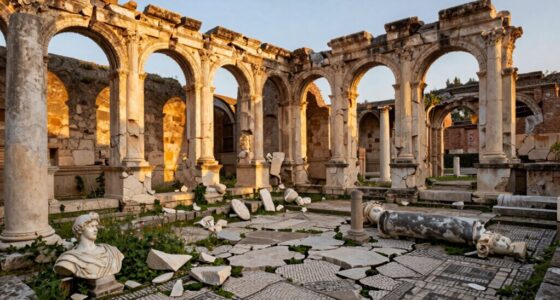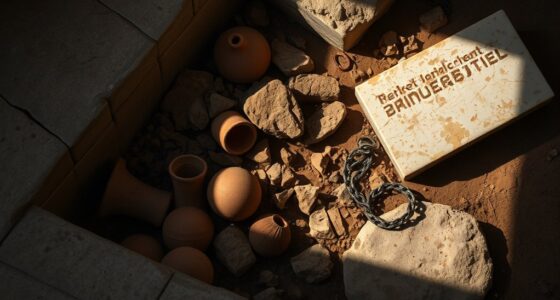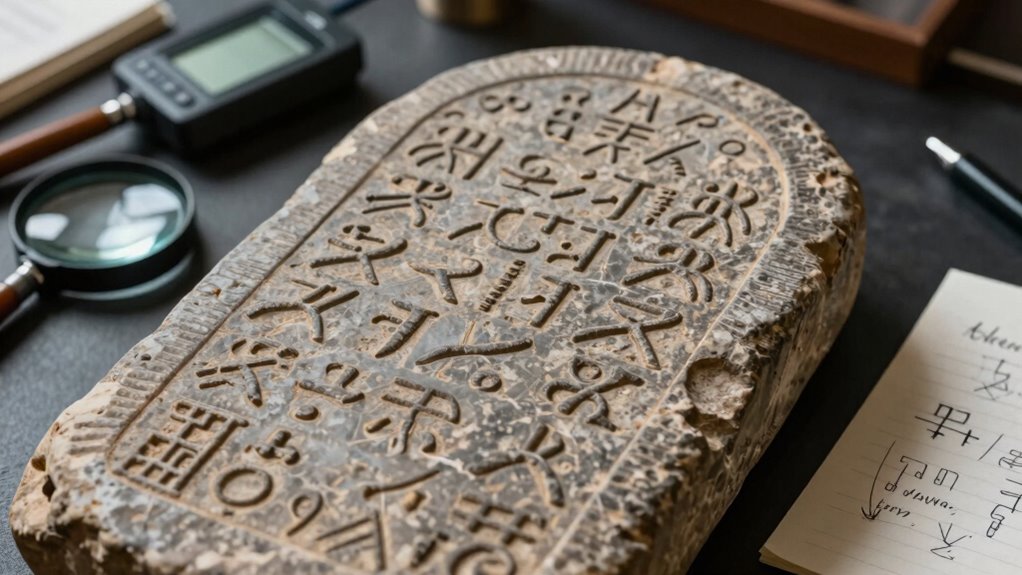

Deciphering a dead language involves collecting artifacts carefully and analyzing symbols, scripts, and context to uncover their meanings. Experts use pattern recognition, compare scripts with known languages, and examine cultural clues to interpret inscriptions. Modern tools like AI and machine learning speed up this process by identifying patterns and aiding translation. Understanding the cultural and historical background guides accurate interpretation. Keep exploring to discover how each step reveals secrets of the past.

Prime made for students and young adults
- Fast, free delivery for dorm and study essentials
- Prime Video and Amazon Music included
- Member-only deals
Key Takeaways
- Analyze artifacts’ inscriptions and symbols using pattern recognition and contextual clues to identify linguistic features.
- Employ modern technologies like AI and machine learning to detect patterns and assist in translation efforts.
- Compare scripts through visual analysis of character shapes, stylistic elements, and cultural motifs.
- Use artifact context, placement, and associated features to infer meanings and societal significance.
- Preserve and stabilize artifacts with advanced conservation techniques to enable detailed scientific examination.
What Are Dead Languages and Why Do They Matter?
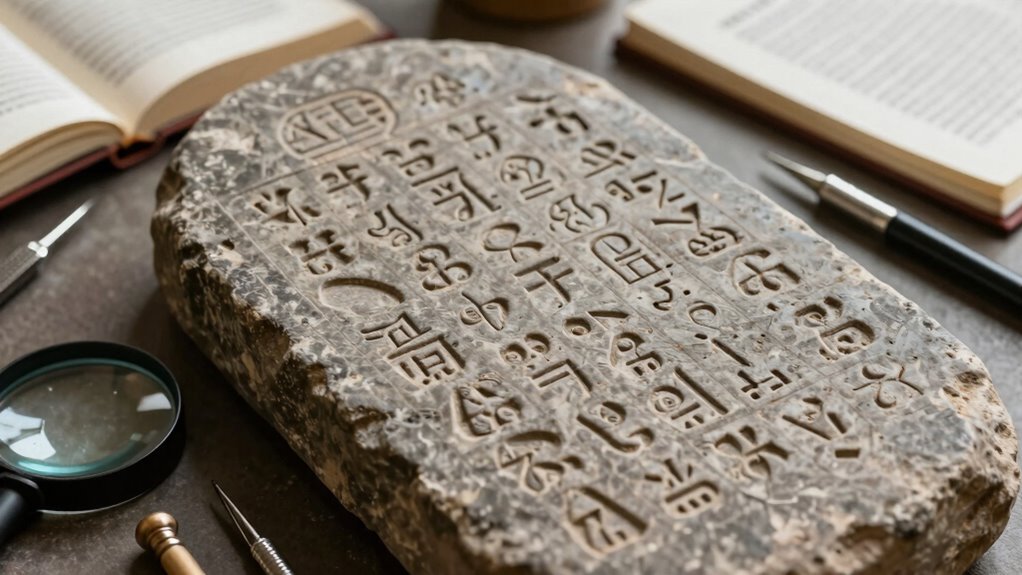
Have you ever wondered why some languages no longer have living speakers? These are called dead languages, and they matter because they reveal the story of linguistic evolution. Over time, languages change, merge, or disappear due to factors like cultural shifts or globalization. Language extinction occurs when a community stops speaking a language, often leaving behind only written records. Studying dead languages helps us understand how languages develop and how cultures communicate their history and knowledge. They offer insights into ancient civilizations, their beliefs, and societal structures. Preserving and deciphering these languages allows us to piece together human history and see how language has adapted or faded over centuries. Dead languages are like time capsules, releasing stories from the past that would otherwise be lost forever. Recognizing linguistic diversity is essential for appreciating the full scope of human cultural heritage. Additionally, examining linguistic evolution can reveal patterns of language change and influence over time. Exploring these languages can also help develop linguistic reconstruction techniques vital for understanding extinct tongues. Furthermore, advances in linguistic technology have improved our ability to decode and preserve these ancient languages more effectively.
How Do We Collect and Analyze Artifacts for Decipherment?
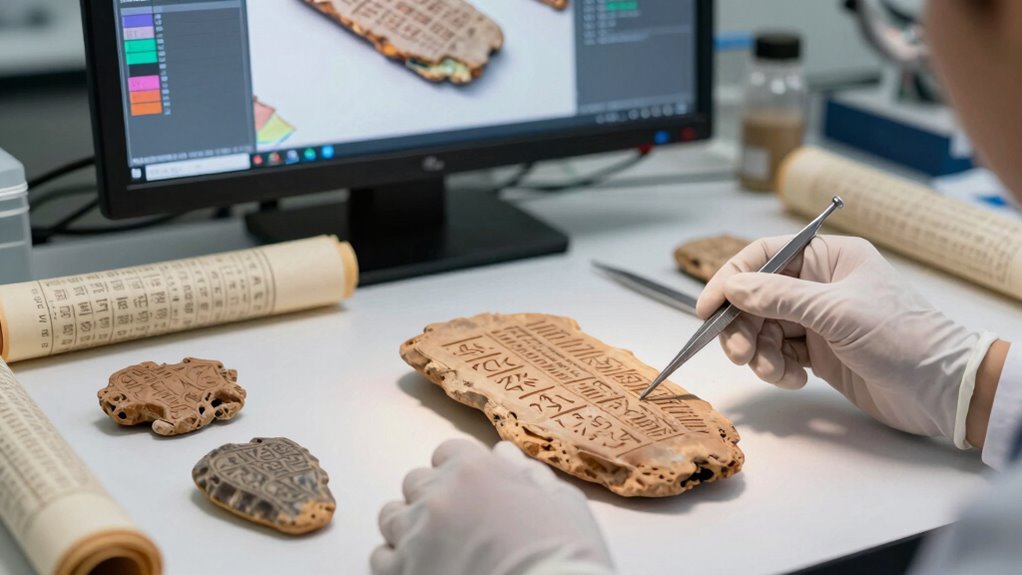
You gather artifacts carefully, using preservation techniques that prevent deterioration. You analyze their context for clues about their meaning, considering where and how they were found. Studying their material composition helps you understand the tools and resources used, guiding your decipherment process. Additionally, examining any associated water-related features can provide insights into the cultural significance of aquatic environments in the civilization. Recognizing the seasonal events and promotions associated with artifacts may also offer valuable context for understanding their use and importance. Incorporating knowledge about sustainable design practices can shed light on the cultural practices related to resource management and environmental awareness in the society.
Artifact Preservation Techniques
Preserving artifacts is a critical step in deciphering a dead language, as it guarantees that delicate inscriptions and materials remain intact for study. You use ceramic conservation techniques to stabilize pottery and prevent further deterioration, ensuring inscriptions stay legible. Handling organic residues carefully allows you to perform organic residue analysis, revealing ancient substances like food, oils, or adhesives that offer clues to the artifact’s use. You store artifacts in controlled environments, maintaining ideal temperature and humidity levels to preserve their integrity. When necessary, you employ non-invasive cleaning methods to remove dirt without damaging inscriptions. These preservation techniques are essential, as they enable detailed analysis and prevent the loss of fundamental linguistic or cultural information embedded in fragile materials. Additionally, understanding forage options can aid in sourcing sustainable materials for artifact preservation and analysis.
Contextual Clue Analysis
After stabilizing artifacts through preservation techniques, the next step is to examine their context to uncover meaningful clues. You analyze where and how the artifacts were found, considering their placement and relationship to other objects. This helps reveal linguistic nuances that might be embedded in inscriptions or symbols, providing insight into pronunciation or grammar. You also assess the cultural significance behind the artifacts, understanding what they represent within the society that created them. By studying these contextual details, you can identify patterns and connections that narrow down possible meanings. This process enables you to interpret the language more accurately, blending linguistic analysis with cultural understanding to build a clearer picture of the ancient civilization’s communication and beliefs. Recognizing Ear Wax Odor features in the artifacts can further aid in decoding ambiguous symbols and understanding their role within the language system. Paying attention to artifact placement can also reveal how language was used in social or ritual contexts, adding another layer to your interpretation.
Material Composition Study
To decipher an ancient language, understanding the material composition of artifacts is essential, as it reveals insights into their origin, manufacturing techniques, and usage. You collect samples carefully to prevent damage, then analyze them using techniques like metal analysis and fiber identification. Metal analysis uncovers the types and purity of metals, indicating trade routes or technological levels. Fiber identification helps determine the textile or material origins, shedding light on cultural exchanges. Here’s a quick overview:
| Material Type | Analysis Method | Purpose |
|---|---|---|
| Metals | Spectroscopy | Trace elemental composition |
| Fibers | Microscopy & Tests | Fiber source and techniques |
| Others | Various | Overall artifact context |
This information guides your understanding of craft, trade, and cultural connections. Additionally, vetted methods ensure the reliability and safety of your analysis process.
How Can We Recognize Symbols and Scripts in Ancient Texts?
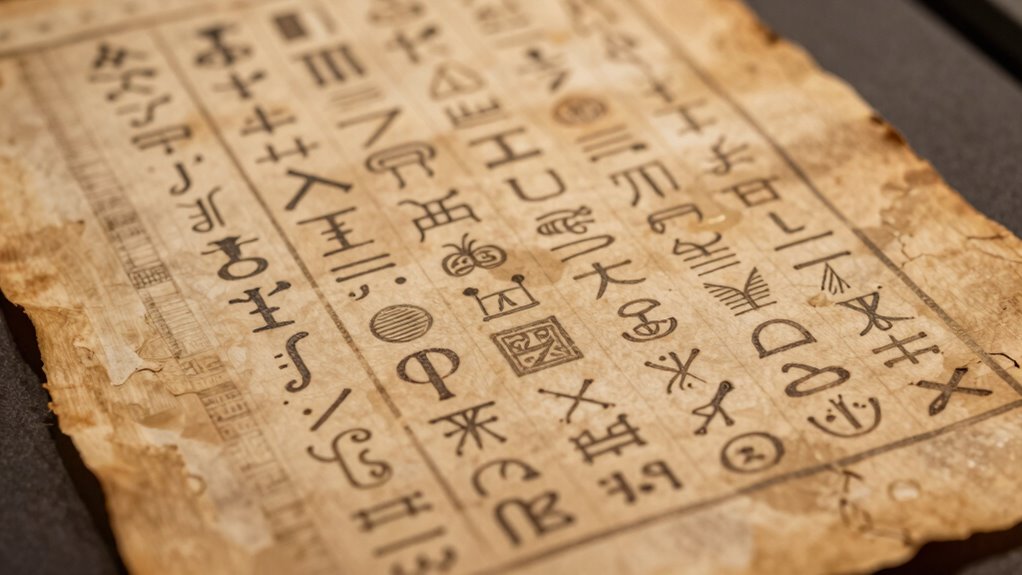
To recognize symbols and scripts in ancient texts, you need to start by observing visual patterns that repeat or stand out. Analyzing the context around the symbols can give clues about their meaning, while comparing scripts from different sites helps identify similarities and differences. These methods together can help decipher the language encoded in the ancient writing. Additionally, understanding linguistic patterns and the historical background of the texts can provide valuable insights into their interpretation. Recognizing the sticking wall decor techniques can also aid in understanding how ancient cultures displayed and preserved their writing. Paying attention to material and preservation methods used for the texts can further assist in decoding their significance and origin. Moreover, applying scientific analysis such as spectroscopy or imaging techniques can reveal hidden details not visible to the naked eye. Examining writing tools and techniques used in ancient times can also shed light on how the texts were created and preserved over centuries.
Visual Pattern Recognition
Understanding ancient symbols and scripts relies heavily on visual pattern recognition, a skill that allows you to identify recurring shapes, strokes, and motifs within texts. By spotting cryptographic patterns, you can distinguish between meaningful symbols and random marks. This process of visual decoding helps you recognize repeated elements, revealing underlying structures in the script. Recognizing these patterns is vital for decoding unfamiliar symbols and linking them to known language features. Your ability to detect subtle visual cues accelerates the deciphering process, transforming complex, undeciphered symbols into recognizable language units. This skill forms the foundation for further linguistic analysis and visual pattern recognition, which is essential for accurate interpretation and translation of ancient texts. Additionally, cultivating creative storytelling for branding can aid in constructing narratives that make deciphered texts more engaging and meaningful for modern audiences. Developing a keen eye for symbolic motifs also enhances the efficiency of decoding by providing contextual clues that guide interpretation.
Contextual Clues Analysis
When examining ancient texts, you can often identify symbols and scripts by paying close attention to the context in which they appear. The linguistic context provides clues about their meaning, revealing whether a symbol functions as a word, numeral, or phonetic sound. Recognizing patterns within the text helps you understand how scripts evolved over time, showing changes in style and usage. By analyzing surrounding words, you can determine if a symbol is part of a larger phrase or a standalone marker. These contextual clues help differentiate unfamiliar symbols from known ones, guiding you toward accurate identification. Paying attention to the overall message and structure allows you to piece together the script’s development, making the deciphering process more precise and insightful.
Comparative Script Study
How can you distinguish one ancient script from another? It starts with a detailed script comparison, examining the unique features of each writing system. Look for differences in character shapes, stroke styles, and directional flow. Conduct a thorough writing system analysis, noting stylistic elements like diacritics, ligatures, and symbol repetitions. Comparing scripts helps identify patterns and variations that reveal their origins or cultural influences. For example, comparing hieroglyphs with cuneiform symbols highlights distinct visual and structural traits. Recognizing these differences enables you to classify texts accurately and understand their relationships. This method is essential for deciphering dead languages, revealing connections between scripts, and reveal the stories behind ancient inscriptions.
How Do Bilingual Texts Help Us Build a Rosetta Stone?
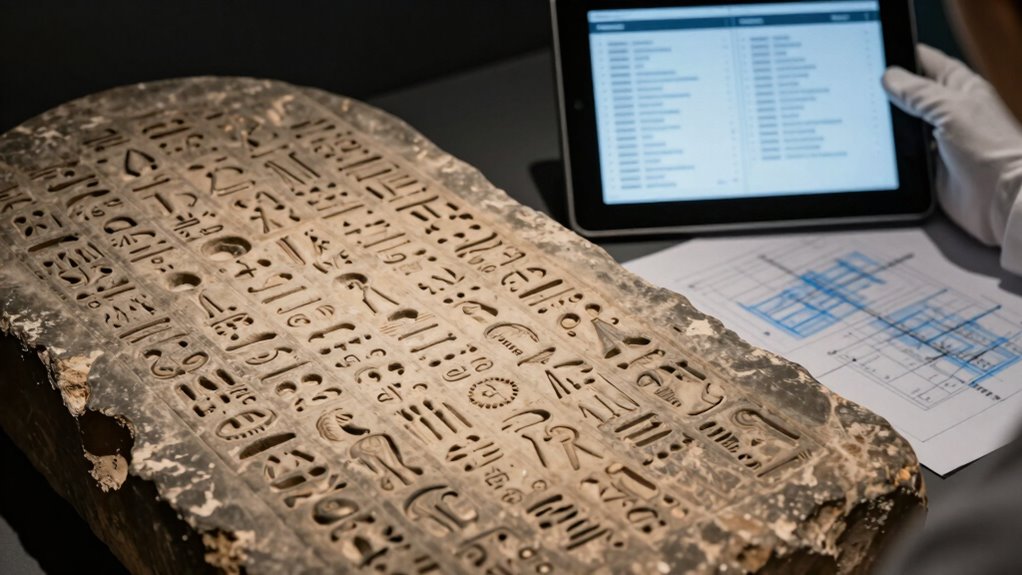
Have bilingual texts truly revolutionized our ability to decipher dead languages? Absolutely. They serve as a linguistic bridge, revealing patterns within scripts and illuminating script evolution. By comparing known languages with unfamiliar ones, you can identify recurring symbols and grammatical structures, making sense of complex texts. Visualize this process like arranging puzzle pieces:
| Known Language | Bilingual Text | Dead Language |
|---|---|---|
| “House” | “House” | Unknown Word |
| “Eat” | “Eat” | Unknown Word |
| “Run” | “Run” | Unknown Word |
| “Linguistic patterns” | Shared symbols | Unique symbols |
This table helps you see how matching symbols across texts uncovers their meaning, guiding you toward understanding the script’s evolution and unravel the language’s secrets.
How Do AI and Modern Technology Assist in Deciphering?
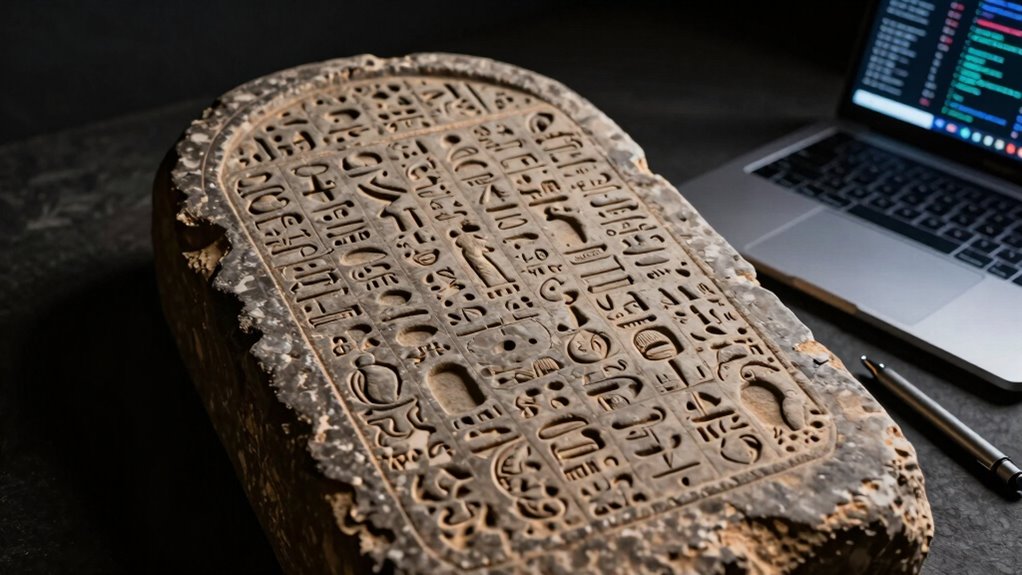
Modern technology, especially AI, has transformed the way you approach deciphering dead languages. AI tools excel in cryptography applications, helping you decode complex symbols and patterns that were once indecipherable. Through advanced algorithms, AI can analyze vast amounts of data quickly, identifying linguistic patterns that humans might overlook. This pattern analysis enables you to find recurring word structures, grammar rules, and contextual clues essential for understanding the language. Machine learning models can also compare unfamiliar symbols with known languages, offering potential translations or hypotheses. These technologies dramatically speed up the deciphering process, reduce guesswork, and improve accuracy. As a result, you gain deeper insights into ancient texts, uncover secrets that were once lost to history.
Why Is Cultural and Historical Context Important?
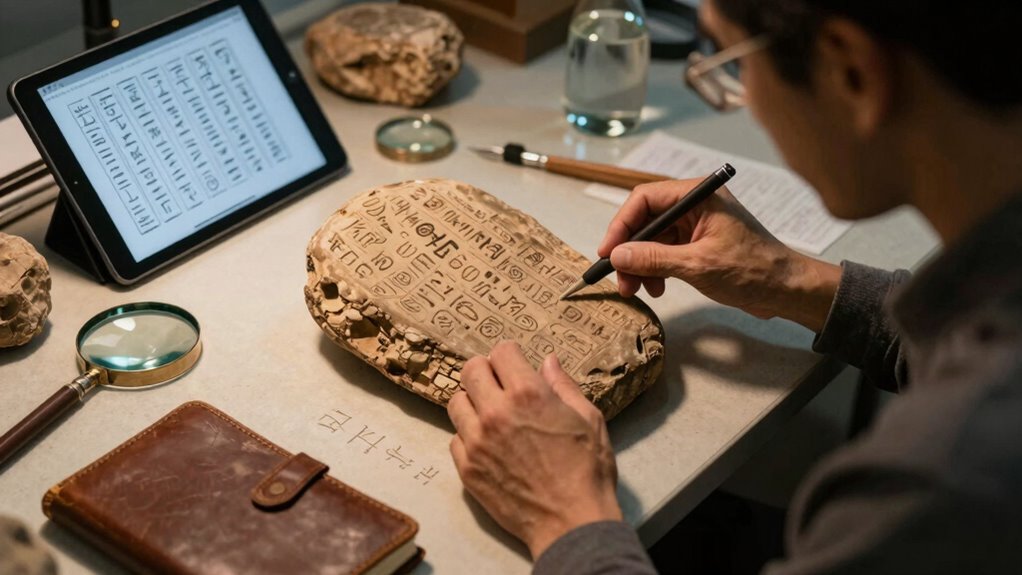
AI and modern technology have considerably advanced the process of deciphering dead languages, but understanding the symbols and patterns alone isn’t enough. To truly interpret ancient texts, you need to grasp their cultural significance and historical influence. These contexts reveal why certain symbols mattered and how they fit into daily life, beliefs, and societal norms. Without this background, translations can miss nuances or misrepresent meanings. Recognizing cultural and historical clues helps you understand the intentions behind inscriptions, uncovering insights about lost civilizations.
- Connect symbols to ancient customs and traditions
- Understand the societal hierarchy influencing language
- Decode references to historical events or figures
- Interpret idioms or metaphors unique to the culture
- Appreciate the language’s role in shaping identity
How Do Experts Verify and Perfect Translations?

Experts verify and perfect translations by systematically cross-referencing multiple sources and consulting diverse specialists. You’ll find that linguistic reconstruction plays a key role, allowing you to piece together missing or ambiguous parts of the language. Phonetic analysis helps clarify pronunciation clues, making it easier to distinguish similar sounds and confirm word meanings. By comparing inscriptions, texts, and contextual clues, you can identify inconsistencies or errors. Experts also test translations against known cultural and historical references to guarantee accuracy. This process involves iterative refinement, where each discovery informs the next. Ultimately, combining linguistic reconstruction with phonetic analysis ensures your translations are precise, reliable, and as close to the original meaning as possible.
Frequently Asked Questions
What Are the Main Challenges in Deciphering Completely Unknown Scripts?
You face major challenges like linguistic ambiguities, making it hard to identify meanings or grammar rules, and lacking cultural context, which leaves you guessing about symbolism or references. Without a bilingual reference or a Rosetta Stone, it’s difficult to establish connections. You must carefully analyze patterns, compare symbols, and infer possible meanings, but uncertainties persist, making the deciphering process complex and often incomplete.
How Do Linguists Differentiate Between Symbols and Decorative Art?
You differentiate symbols from decorative art through symbol analysis, focusing on recurring patterns and their potential linguistic functions. Artistic motifs often appear as embellishments without linguistic significance, while symbols tend to have consistent shapes linked to specific meanings. By comparing these elements across artifacts, you can identify which designs serve communicative purposes versus purely aesthetic or cultural ornamentation, helping to decode the language embedded within the symbols.
Can DNA Analysis Aid in Understanding Ancient Texts and Inscriptions?
DNA analysis can definitely aid in understanding ancient texts and inscriptions by providing genetic clues about the people who created them. You can connect genetic data with archaeological context to identify cultural groups, migration patterns, and even specific individuals. This helps you interpret inscriptions more accurately, revealing insights into their language, origins, and societal roles, ultimately enriching your understanding of the ancient civilization behind the texts.
What Role Do Cross-Disciplinary Collaborations Play in Deciphering Languages?
You play a vital role in cross-disciplinary collaborations, which combine interdisciplinary insights from linguistics, archaeology, and science. These partnerships lead to collaborative breakthroughs, enabling you to decipher complex scripts more effectively. By sharing expertise and data, you help solve puzzles that single disciplines can’t tackle alone, accelerating understanding of ancient languages. Your involvement fosters innovative methods and deeper insights, making decipherment more accurate and revealing the rich history behind dead languages.
How Does the Preservation State of Artifacts Affect Decipherment Efforts?
Ever notice how a nearly intact artifact can reveal centuries of secrets? When preservation techniques are expertly applied, they prevent artifact degradation, making decipherment easier. Conversely, poor preservation leads to deterioration, obscuring vital details and complicating efforts. The better the condition, the clearer the symbols and inscriptions, allowing you to analyze linguistic patterns more effectively. So, preserving artifacts is essential for revealing the language’s true story.
Conclusion
Deciphering a dead language is like opening a hidden treasure chest, revealing stories buried in time. With each breakthrough, you become a key that turns the lock on history’s secrets. Modern technology and your curiosity work together like a lighthouse guiding you through foggy waters. Every discovery brightens the darkness of the past, showing you that even silence can speak volumes when you listen closely. Keep exploring—your journey to understanding echoes through eternity.
Halloween Picks
halloween
As an affiliate, we earn on qualifying purchases.