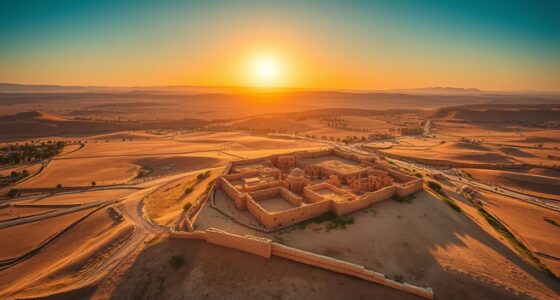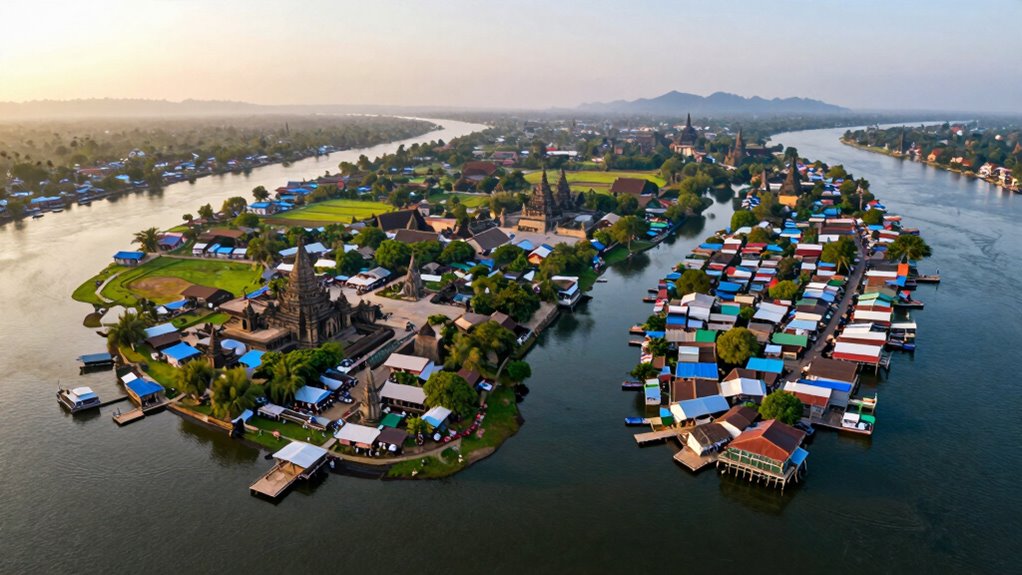

Many great civilizations thrived near water because it gave you easy transportation routes, boosting trade and connection. Water sources supplied fresh water for drinking, farming, and industry, supporting larger populations. Rivers and seas also provided food, natural resources, and ways to grow your city’s economy. Additionally, water scenery inspired art, religion, and culture, strengthening societal identity. If you want to discover more about why water played such a big role in history, keep exploring this fascinating connection.

Prime made for students and young adults
- Fast, free delivery for dorm and study essentials
- Prime Video and Amazon Music included
- Member-only deals
Key Takeaways
- Waterways serve as natural transportation routes, facilitating trade, communication, and movement of people.
- Access to water resources supports agriculture, sustaining larger populations and economic development.
- Proximity to water enhances urban growth, sanitation, and public health, fostering civilization expansion.
- Water bodies inspire cultural, artistic, and spiritual expressions, strengthening societal identity.
- Control of waterways grants strategic military and trade advantages, boosting regional influence.
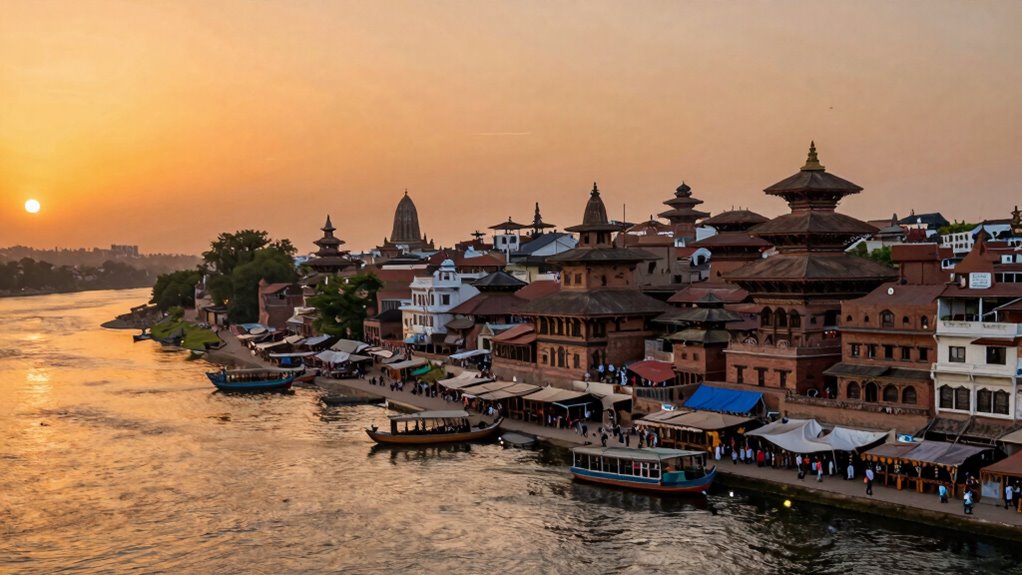
Throughout history, great civilizations have thrived near water because access to rivers, lakes, and coastlines provided essential resources and strategic advantages. Waterways serve as natural highways, facilitating maritime trade that connects different regions, promotes economic growth, and spreads cultural ideas. When you settle near water, you gain the ability to trade goods and services more efficiently, expanding your influence far beyond your immediate surroundings. Maritime trade becomes the backbone of your economy, allowing you to import luxury items, raw materials, and technology while exporting locally produced goods. This exchange enhances your civilization’s wealth and technological development, giving you a competitive edge over others.
Access to waterways fuels trade, growth, and innovation, giving civilizations strategic, economic, and cultural advantages throughout history.
Resource access is another imperative reason for building near water. Rivers and lakes supply fresh water necessary for drinking, agriculture, and industry. You can harness these water sources for irrigation, supporting larger populations and more productive farms. Coastal areas provide access to seafood, which offers a critical protein source, especially in regions where land-based resources may be limited. Additionally, water bodies often contain valuable minerals and other natural resources that you can utilize for your growth. The proximity to water allows you to sustain larger populations and develop complex social structures, fueling advancements in arts, sciences, and governance. Water access also plays a crucial role in the development of early urban centers, as it supports sanitation and public health, which are vital for a thriving society.
Water also offers strategic advantages. Being near a coast or river means you can defend your territory more effectively. Naval capabilities allow you to control trade routes, protect your borders, and project power across wider areas. You can build ships that serve both military and commercial purposes, ensuring your civilization remains secure and influential. Access to water routes makes it easier to move troops and supplies during conflicts, providing a military advantage that land-based civilizations might struggle to match. This strategic positioning often leads to dominance in regional politics and trade networks.
In addition to practical benefits, water lends aesthetic and cultural value to a civilization. Settling near water often inspires art, religion, and architecture rooted in the natural environment. Over time, these cultural aspects reinforce your civilization’s identity and cohesion. The combination of resource abundance, trade opportunities, strategic location, and cultural richness makes water an ideal place for a thriving civilization to develop and flourish. Your civilization’s success hinges on these interconnected factors, all stemming from the fundamental access to water that sustains and elevates societies throughout history.
As an affiliate, we earn on qualifying purchases.
Frequently Asked Questions
How Did Water Sources Influence Ancient City Planning?
Water sources greatly influenced ancient city planning because you needed a reliable freshwater supply for daily life, agriculture, and sanitation. You also considered urban aesthetics, designing cities with waterways that enhanced beauty and social spaces. Access to water dictated the city’s layout, often positioning important buildings near rivers or lakes. These water sources guaranteed sustainability, growth, and attractiveness, making your city both functional and appealing to inhabitants and visitors alike.
Were Civilizations Near Water More Prone to Conflicts?
Ironically, civilizations near water often faced more conflicts due to maritime defense needs and freshwater scarcity. As they relied on water for survival, control over these resources became critical, igniting disputes. You might think water would unite, but instead, it drew armies and rivalries. The struggle for freshwater and strategic waterways made these societies more prone to conflicts, highlighting water’s double-edged role in both sustenance and strife.
How Did Water Access Affect Trade Routes Historically?
Water access boosted trade routes by enabling maritime commerce, making it easier to transport goods over long distances. If you had access to water, you could establish fishing economies that supported local populations and trade. Historically, civilizations near water relied on ships to trade with distant regions, expanding their influence and wealth. This proximity to water facilitated cultural exchanges and economic growth, ultimately shaping prosperous societies.
Did Water Proximity Impact Societal Hierarchy Development?
You might think water proximity influenced societal hierarchy, and evidence suggests maritime innovations played a role. Societies near water often developed complex hierarchies to support trade and navigation, fostering leadership roles. Water mythology embedded in cultures reinforced these structures, emphasizing divine authority linked to waterways. By mastering water, civilizations could assert dominance and structure society, proving water access shaped not just economy but also social status and governance.
Are Modern Cities Still Influenced by Ancient Water-Based Locations?
Yes, modern cities still influence water-based locations, especially for maritime defense and trade. You’ll notice many urban centers are near coastlines or rivers, continuing the legacy of ancient water mythology that emphasizes water’s significance. These sites offer strategic advantages and cultural importance, shaping city development. Water remains essential for transportation, commerce, and defense, proving that ancient water-based sites still impact urban planning and societal growth today.
As an affiliate, we earn on qualifying purchases.
Conclusion
So, as you’ve seen, water’s role in shaping civilizations is undeniable. But what secrets still lie beneath its surface? Will future discoveries reveal even deeper connections between water and human progress? The truth is, the story isn’t over. As you continue to explore, remember that water’s influence might hold surprises you’ve yet to imagine. The next chapter in this ancient tale could change everything you thought you knew.
As an affiliate, we earn on qualifying purchases.
As an affiliate, we earn on qualifying purchases.
Halloween Picks
halloween
As an affiliate, we earn on qualifying purchases.