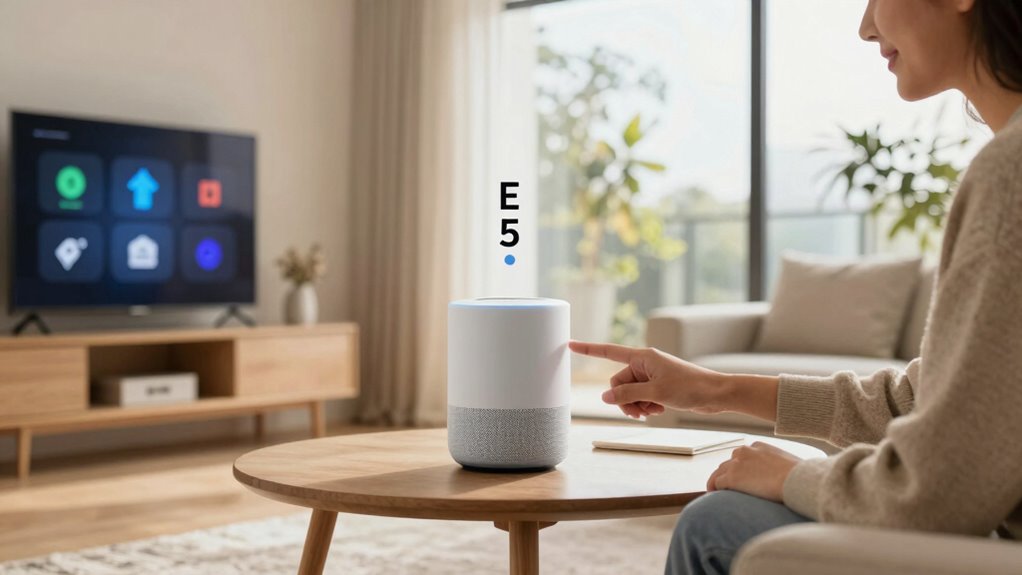

Smart home devices become accessibility tools because they let you control your environment easily with voice commands and personalized settings. You can operate lights, doors, and temperature without physical effort, which boosts your independence. These devices recognize different voices, adapt to your preferences, and work with other assistive tools to support your needs. As technology advances, these solutions become even more intuitive. Keep exploring to discover how these innovations can make daily life simpler for you.

Get school and study supplies delivered free — and shop member deals
- Fast, free delivery on millions of items
- Access to Prime Big Deal Days deals on October 6–7
- Prime Video, Amazon Music and more included
Key Takeaways
- Voice-controlled devices enable hands-free operation, enhancing independence for users with mobility challenges.
- Customizable features and routines allow tailored assistance for diverse needs and preferences.
- Seamless integration with assistive technologies promotes inclusive environments.
- Eliminating physical controls reduces barriers for individuals with limited mobility.
- User-friendly interfaces and ongoing innovations improve accessibility and overall quality of life.
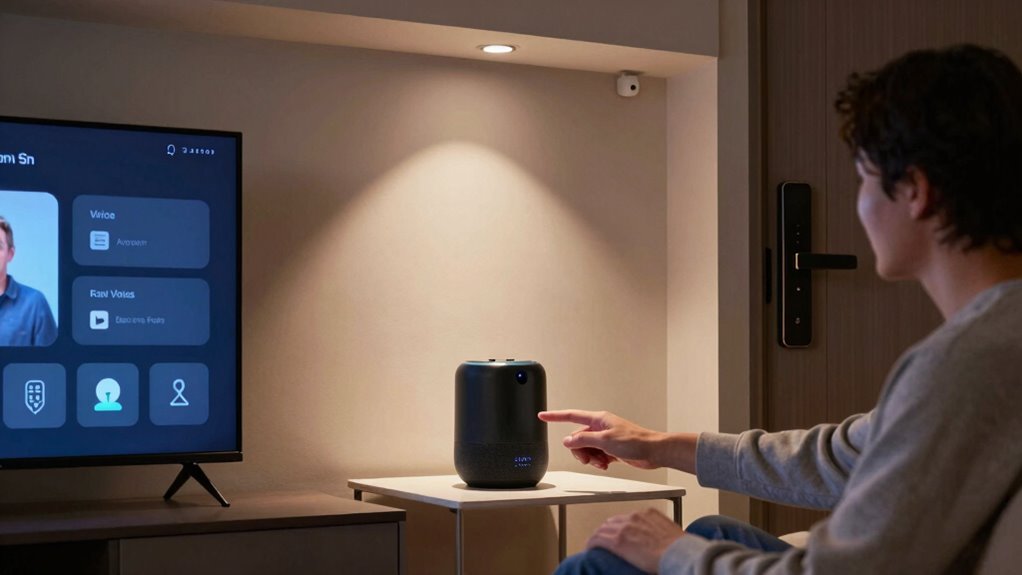
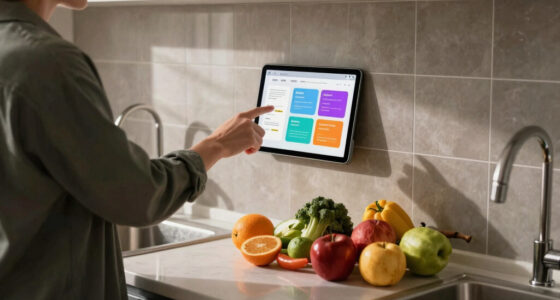
Smart home devices are transforming the way people with disabilities or mobility challenges access and control their living spaces. With the help of voice control, you can easily manage various household functions without needing to move around or reach for switches and remotes. For many users, this technology can significantly improve daily routines** by providing a more streamlined and accessible way to manage household tasks. Voice control, a key feature of many smart home systems, acts as an adaptive technology that adapts to your needs, making daily routines smoother and more manageable. It eliminates the physical barriers** that traditional controls often present, granting you more independence and confidence in your environment.
Smart home devices improve independence by enabling hands-free control of household functions through voice commands.
Adaptive technology embedded in smart devices guarantees they are designed with accessibility in mind. These tools can recognize different voices, understand complex commands, and even learn your preferences over time. For example, you might set up your voice assistant to turn on specific lights when you wake up or to adjust the temperature before you arrive home. Such customization means your living space can respond intuitively to your needs, reducing the effort required to perform routine tasks. This technology also integrates seamlessly with other assistive tools, creating a connected ecosystem that enhances your overall quality of life. Incorporating assistive technology into smart home devices ensures they are built to support diverse needs and promote inclusivity. Additionally, ongoing advancements in voice recognition technology continue to expand the accessibility capabilities of these devices, emphasizing the importance of inclusive design in fostering accessible environments.
Using smart home devices as accessibility tools isn’t just about convenience—it’s about creating an environment that promotes independence. You no longer need to rely heavily on caregivers or struggle with traditional controls. Instead, you gain the ability to control your home through simple voice commands, making everyday activities less frustrating and more efficient. For example, if you have limited mobility, turning on the lights or facilitating the door becomes as easy as saying, “Turn on the living room lights” or “Unlock the front door.” These small but significant changes can dramatically improve your autonomy and ease of living.
Furthermore, smart home technology often comes with user-friendly interfaces and customizable settings, allowing you to tailor your environment to your specific needs. Whether it’s setting up routines, controlling multiple devices simultaneously, or adjusting speech recognition sensitivity, you have the power to make your home work best for you. As the technology continues to evolve, its potential to serve as a holistic accessibility tool grows, offering more intuitive, responsive, and inclusive solutions. In this way, smart home devices not only modernize your living space but also fundamentally enhance your independence and comfort. Recognizing the importance of adaptive technology in this context highlights how these innovations are shaping more accessible environments for everyone.
voice-controlled smart home devices for accessibility
As an affiliate, we earn on qualifying purchases.
As an affiliate, we earn on qualifying purchases.
Frequently Asked Questions
How Affordable Are Smart Home Devices for Accessibility Purposes?
Smart home devices are becoming more affordable for accessibility, but affordability barriers still exist for some. You’ll find a wide range of options with varying costs, making it important to do a cost comparison before purchasing. While basic devices like smart lights or voice assistants are often budget-friendly, advanced systems may be pricier. Overall, as technology advances, prices tend to drop, making accessibility tools more accessible to everyone.
Are There Privacy Concerns With Using Smart Home Devices for Accessibility?
You’re right to wonder about privacy concerns, as over 80% of users worry about data security when using smart home devices. These devices collect personal information, raising questions about user privacy. While they offer accessibility benefits, you must consider data security risks. Always review privacy policies and choose reputable brands to guarantee your data is protected. Being cautious helps you enjoy smart home features without compromising your privacy.
Can Smart Home Devices Be Customized for Individual Accessibility Needs?
Yes, smart home devices can be customized for your individual accessibility needs. You can explore various personalization options and user customization features, such as adjusting voice commands, screen size, or text-to-speech settings. These options allow you to tailor your smart home environment, making it more comfortable and accessible. By leveraging these customization features, you guarantee the devices work effectively for your specific requirements, enhancing independence and ease of use.
What Training Is Needed to Effectively Use These Devices?
You need to undertake user training to effectively use smart home devices. Start with device tutorials, which guide you through setup and features. Practice regularly to become comfortable with voice commands or app controls. Many manufacturers offer online resources or in-person workshops. By engaging with these training materials, you’ll gain confidence, understand accessibility features better, and maximize the benefits of your devices for a more independent and accessible living environment.
How Do Smart Home Devices Integrate With Existing Assistive Technologies?
Smart home devices seamlessly integrate with existing assistive technologies, making your life incredibly easier. You can use voice control to operate lights, thermostats, and security systems effortlessly. Most devices boast extensive device compatibility, ensuring they work well with your current tools like hearing aids or mobility aids. This integration transforms your home into a smart sanctuary, empowering you to regain independence and control in ways you never imagined possible.
smart home assistant for mobility challenges
As an affiliate, we earn on qualifying purchases.
As an affiliate, we earn on qualifying purchases.
Conclusion
As you explore smart home devices, you’ll find they gently open new doors to independence, making daily life smoother and more manageable. These tools, like silent allies, adapt quietly to your needs, offering subtle support without fuss. Embracing this technology can turn everyday routines into seamless experiences, allowing you to navigate your home with confidence. In this way, smart devices become your discreet partners, enhancing accessibility in a way that feels natural and unobtrusive.
accessible smart lighting system
As an affiliate, we earn on qualifying purchases.
As an affiliate, we earn on qualifying purchases.
As an affiliate, we earn on qualifying purchases.
Halloween Picks
halloween
As an affiliate, we earn on qualifying purchases.




![Competitive Programmer's Handbook (2018) [Pdf]](https://curiousminds.info/wp-content/uploads/2026/10/competitive-programmer-s-handbook-2018-pdf-featured-260x140.jpg)