

Your brain is wired to find patterns in randomness because it helps you interpret your environment and spot threats or opportunities quickly. This tendency evolved over time to improve survival, so you naturally connect events even when they’re unrelated. Cognitive biases like superstitions and confirmation bias can make coincidences feel like fate, even when they’re not. If you stay curious, you’ll discover how to recognize true signals from false patterns lurking around you.
Key Takeaways
- Our brains are wired to automatically seek connections, making coincidences appear meaningful or fated.
- Neural pathways and storytelling instinct create narratives that link random events, reinforcing the sense of fate.
- Evolutionary survival favored pattern recognition, so we instinctively interpret coincidences as significant.
- Cognitive biases like superstitions and confirmation bias distort perception, making coincidences seem purposeful.
- Critical thinking and awareness of fake patterns help distinguish genuine signals from illusions of fate.

Hands-On Machine Learning with Scikit-Learn and PyTorch: Concepts, Tools, and Techniques to Build Intelligent Systems
As an affiliate, we earn on qualifying purchases.
As an affiliate, we earn on qualifying purchases.
Why Do We See Patterns in Coincidences?

Have you ever noticed how coincidences often seem to follow a pattern or feel meaningful? Your brain is wired to find connections, even where none exist. It does this through synaptic shortcuts—quick pathways between neurons that help process familiar or relevant information faster. These shortcuts enable neural storytelling, where your brain crafts a narrative from seemingly random events. When you encounter a coincidence, your brain automatically searches for meaning, linking unrelated pieces to create a coherent story. This pattern-seeking behavior is a survival trait, helping you recognize relationships and predict outcomes. Additionally, our brain’s tendency to detect patterns is influenced by evolutionary advantages that enhance survival skills. This innate pattern recognition is reinforced by the brain’s neural pathways, which promote quick and efficient processing of information. The brain’s ability to spot recurring themes further amplifies this effect, making coincidences seem even more significant. Consequently, the brain’s pattern recognition mechanisms are a fundamental aspect of how we interpret the world around us. So, what feels like fate is really your brain’s natural tendency to spot patterns, making coincidences seem more significant than they actually are.

End of Bias: A Beginning
As an affiliate, we earn on qualifying purchases.
As an affiliate, we earn on qualifying purchases.
How Our Brains Detect Patterns in Random Events

Your brain is constantly on the lookout for patterns, even in random events, because recognizing order helps you make sense of the world. Neuroscience insights reveal that your neural networks are wired to find connections, often jumping to conclusions based on limited data. This pattern detection is automatic, activating certain brain regions like the temporal lobe and prefrontal cortex. Cultural influences also shape how you interpret these patterns, as different societies emphasize certain coincidences or symbols as meaningful. Your brain’s tendency to seek order in chaos is adaptive, helping you learn and predict future events. Additionally, research into sound healing science shows how our perception of patterns can be influenced by sensory stimuli. However, this can lead to seeing patterns where none exist, fueling beliefs that coincidences are intentional or fated. Understanding this process clarifies why your mind is so quick to find meaning in randomness.

Ultimate Mind Games: With Over 400 Puzzles (Brain Busters)
As an affiliate, we earn on qualifying purchases.
As an affiliate, we earn on qualifying purchases.
Evolutionary Reasons We Seek Meaning in Randomness

Throughout human evolution, the tendency to seek meaning in random events provided a survival advantage. Your neural mechanisms evolved to recognize patterns quickly, helping you predict dangers and opportunities. When you see connections or assign meaning to coincidences, it’s because your brain’s neurons are wired to detect potential threats or resources, even in ambiguous situations. This pattern-seeking behavior increased your ancestors’ chances of survival by enabling faster responses to unfamiliar stimuli. Over time, these neural circuits became deeply ingrained, encouraging you to find purpose and order in chaos. The evolutionary advantage of this trait is clear: it boosts your ability to adapt and make sense of the world, even when information is incomplete or random, ultimately increasing your chances of survival and reproduction. Additionally, neural wiring plays a crucial role in how these pattern recognition processes operate within your brain. This innate drive to find meaning in randomness has shaped human culture, from superstition to scientific discovery. Recognizing the importance of evolutionary psychology helps explain why our minds are so attuned to patterns, even when none truly exist.
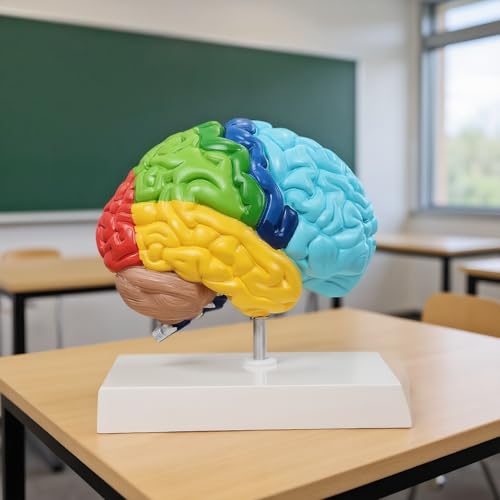
Dranvosk Life Size Human Half Brain Anatomy Model Colored Medical Teaching Tool for Kids Educational Science Kits with Detailed Brain Structure (Style 1)
Premium Brain Anatomy Model This highly detailed brain model accurately replicates human brain structures, perfect for teaching brain…
As an affiliate, we earn on qualifying purchases.
As an affiliate, we earn on qualifying purchases.
Cognitive Biases That Make You See Fates and Luck

Cognitive biases play a crucial role in shaping how you interpret random events as meaningful, often convincing you that luck or fate is at work. Superstitious thinking leads you to believe certain actions influence outcomes, reinforcing false connections. Confirmation bias makes you notice events that support your beliefs while ignoring evidence to the contrary. For example, if you find a four-leaf clover, you might think luck is on your side, ignoring countless times luck didn’t favor you. These biases distort your perception, making coincidences seem like signs of fate. To understand this better, consider the following: Biases influence perception and how they can lead to believing in luck or magic. Additionally, electric dirt bikes with impressive horsepower and speed capabilities can sometimes feel like they are powered by luck, but it’s actually the result of engineering and design. Recognizing how cognitive biases skew our judgment helps us see that many perceived signs of fate are simply the brain’s way of finding patterns in randomness. Moreover, understanding the impact of confirmation bias can help you differentiate between genuine coincidences and mere illusions.
How to Recognize Fake Patterns and Stay Grounded

Recognizing fake patterns requires a critical eye and a healthy dose of skepticism, especially when our minds are quick to see connections where none exist. To stay grounded, question whether your superstitious beliefs or luck perception are influencing your thoughts. Look out for these signs of fake patterns:
- Relying on coincidences rather than evidence
- Seeing connections that ignore randomness
- Overinterpreting minor events as significant
- Believing in patterns that fit preconceptions rather than facts
- Being aware of Rhythm Failure, which can sometimes lead to false pattern recognition and misinterpretation of events. Additionally, understanding wave and wind patterns can help differentiate between authentic signals and random noise, ensuring your perceptions are based on credible data. For example, just as best fake fireplace options offer safe, reliable ambiance without false flames, recognizing genuine patterns involves discerning authentic signals from superficial illusions. Recognizing market patterns in financial data can similarly help investors avoid falling for misleading signals and make informed decisions.
Frequently Asked Questions
Can Seeing Patterns in Coincidences Influence Our Decision-Making?
Seeing patterns in coincidences can definitely influence your decision-making. When you experience synchronicity perception, your brain uses pattern recognition to find meaning, which may lead you to believe certain outcomes are destined. This can make you more confident in your choices or steer you toward specific paths. However, it’s important to stay aware that your mind might be interpreting random events as meaningful, potentially biasing your decisions.
How Do Cultural Beliefs Shape Our Perception of Luck and Fate?
Cultural cues and belief systems beautifully bolster your bias toward believing in luck and fate. When cultural narratives narrate notions of destiny, you naturally notice patterns and coincidences that align with these beliefs. Your brain’s tendency to interpret random events as meaningful is shaped by shared stories and societal standards. This cultural conditioning convinces you that certain coincidences carry deeper, divine significance, reinforcing your perceptions of luck and fate as guiding forces.
Are There Neurological Differences in People Who Detect More Patterns?
Yes, there are neurological differences in people who detect more patterns. Your brain’s neural connectivity influences your pattern recognition ability, making you more sensitive to regularities and coincidences. If you have heightened neural connectivity, your brain more easily connects disparate information, leading you to see patterns where others might not. This heightened pattern recognition can create the impression of coincidences or even fate, as your brain actively seeks meaningful connections.
Do Certain Personality Traits Increase the Tendency to See Patterns?
You might find yourself more prone to pattern recognition if you’re naturally curious or open-minded, traits that can amplify your tendency to see connections. These personality qualities often influence cognitive biases, making you more sensitive to patterns, even when they’re coincidental. While this can lead to insightful discoveries, it also increases the chance of perceiving meaning where there isn’t any. Your personality shapes how vividly you notice these hidden threads.
How Can Understanding This Bias Improve Our Mental Well-Being?
Understanding your pattern recognition bias helps improve mental well-being by making you aware of how your brain fills in gaps with false connections. When you recognize this cognitive bias, you can challenge automatic assumptions and avoid overinterpreting coincidences as fate. This awareness reduces anxiety and helps you make more rational decisions, fostering a calmer, more balanced mindset. Embracing this knowledge empowers you to see patterns more accurately and confidently.
Conclusion
So, next time you notice a coincidence that feels like fate, remember—your brain loves to find patterns, even where there are none. It’s like a storyteller weaving tales from random threads, making sense of chaos. While it’s natural to see connections, stay grounded and question those “fateful” moments. After all, understanding our mind’s tricks helps us see the world more clearly—so don’t let illusions be the puppeteer of your beliefs.