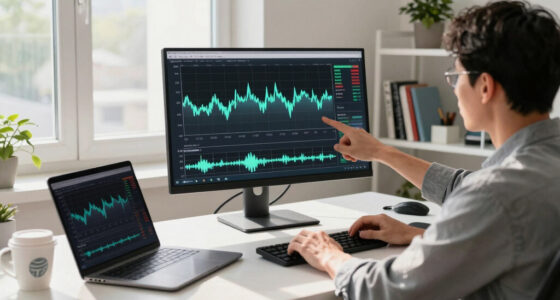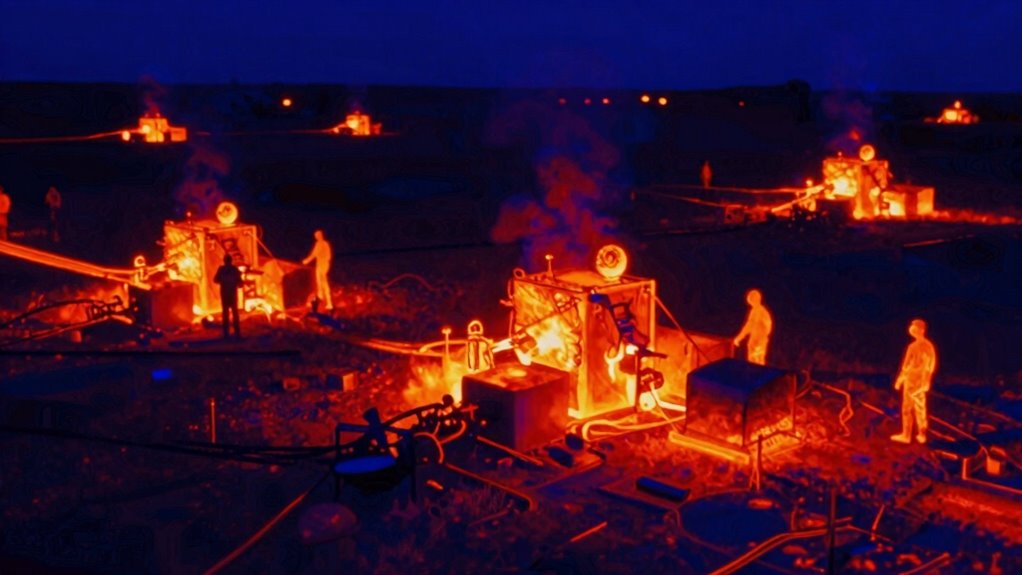

Thermal cameras detect infrared radiation emitted by objects, which varies with temperature, and convert it into electronic signals. These signals are processed to create visual images that color-code heat levels, making invisible heat visible. This allows you to quickly identify hotspots, leaks, or temperature anomalies in various settings, even in low-light or hazardous conditions. To discover more about how these powerful devices turn heat into useful insights, keep exploring their incredible capabilities.
Key Takeaways
- Thermal cameras detect infrared radiation emitted by objects based on their temperature.
- Infrared sensors convert radiation into electronic signals for processing.
- These signals are translated into visual thermal images showing heat distribution.
- Color-coding maps illustrate temperature variations, making heat patterns easily interpretable.
- This process transforms invisible heat into actionable visual data for analysis and decision-making.
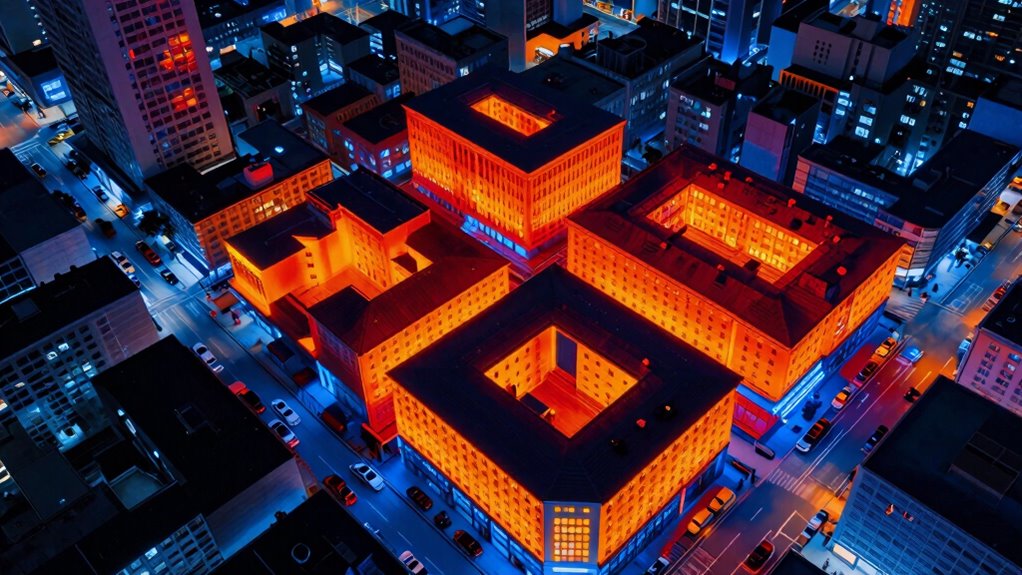
Thermal cameras have revolutionized how we perceive and interpret heat, transforming invisible thermal energy into clear, visual information. This transformation relies heavily on infrared detection, a process that enables these cameras to sense heat emitted by objects and convert it into a visual format. When you look through a thermal camera, you’re not seeing light in the traditional sense. Instead, you see variations in temperature displayed as different colors or shades, revealing details hidden to the naked eye. This ability to visualize heat makes thermal imaging technology invaluable across multiple fields, from firefighting to medical diagnostics.
Infrared detection is at the core of how thermal cameras work. All objects emit some level of infrared radiation depending on their temperature. The warmer an object, the more infrared radiation it emits. Thermal imaging technology captures this radiation through specialized sensors, which then translate it into electronic signals. These signals are processed to produce a thermal image, where each pixel corresponds to a specific temperature. The result is a vivid, color-coded map of heat distribution that allows you to analyze temperature differences quickly and accurately.
Infrared radiation emitted by objects is captured by sensors and converted into thermal images for quick, accurate heat analysis.
Using thermal cameras, you can identify hotspots or cold spots within seconds, making them essential tools in various practical scenarios. For instance, in electrical inspections, you can spot overheating components that might cause failures before they escalate into bigger problems. In building inspections, thermal imaging technology helps you detect insulation gaps, leaks, or hidden moisture that could lead to structural damage. Emergency responders rely on thermal cameras to find people trapped in smoke-filled environments or to locate fires early, thanks to the detailed heat signatures these devices capture. Additionally, the ability to detect thermal anomalies can assist in early problem detection that might otherwise go unnoticed.
The power of thermal imaging technology lies in its ability to convert heat into actionable information. You don’t need direct contact or visible light to gather critical data. Instead, you observe thermal patterns that tell you where issues are likely to be. This capability is particularly useful in situations where visibility is limited or where dangerous conditions prevent close inspection. Whether you’re troubleshooting machinery, performing security surveillance, or conducting medical assessments, thermal cameras give you an immediate, intuitive understanding of thermal dynamics. Additionally, the effectiveness of thermal cameras relies on infrared detection, which is fundamental to how these devices sense and visualize heat. In fact, advances in infrared sensor technology continue to expand the applications and precision of thermal imaging.
In essence, thermal imaging technology bridges the gap between unseen heat and human perception, turning thermal energy into visual cues that inform decisions and guide actions. By harnessing infrared detection, you gain a powerful tool that reveals what’s happening beneath the surface—an invaluable advantage in countless professional and everyday applications.

AccuYard Handheld Thermal Camera for Home Inspection, 240×240 SuperIR Infrared Camera with HD Screen & 25Hz, -4°F to 1022°F Thermal Imager with Temp Alarm for Water Leak, HVAC, Auto, Pipe
- Enhanced Thermal Imaging: Clear images with 96×96 sensor and TISR
- Real-Time Refresh Rate: Smooth 25Hz imaging for faster inspections
- Temperature Alerts: Custom high/low alarms for heat detection
As an affiliate, we earn on qualifying purchases.
As an affiliate, we earn on qualifying purchases.
Frequently Asked Questions
How Accurate Are Thermal Cameras in Different Environmental Conditions?
Thermal camera accuracy varies with environmental conditions and proper temperature calibration. They perform well in stable environments, but environmental interference like wind, rain, or extreme temperatures can affect readings. You should regularly calibrate your camera and be aware of conditions that can distort heat signatures. By understanding these factors, you can guarantee more precise measurements. Keep in mind, the environment plays a significant role in the accuracy of thermal imaging.
Can Thermal Cameras Detect Hidden or Concealed Objects?
You might find that thermal cameras can detect concealed objects up to 10 centimeters beneath surfaces. They work through heat signature analysis, revealing hidden items by identifying temperature differences. While object concealment can sometimes challenge thermal imaging, especially with thick or insulating materials, skilled operators often use these cameras to uncover concealed objects in security, search-and-rescue, or inspection scenarios effectively.
What Is the Typical Lifespan of a Thermal Camera Sensor?
The typical lifespan of a thermal camera sensor ranges from 5 to 10 years, depending on usage and manufacturer quality. You should regularly perform sensor calibration to maintain accuracy and ensure durability. Proper maintenance, like avoiding extreme temperatures and handling with care, extends the sensor’s lifespan. Ultimately, investing in high-quality sensors and routine calibration can greatly improve lifespan durability, keeping your thermal camera reliable over time.
Are Thermal Cameras Effective for Long-Distance Thermal Imaging?
Yes, thermal cameras are effective for long-distance thermal imaging, especially when equipped with high thermal resolution. You can achieve accurate long-distance detection by choosing cameras with the right specifications, such as enhanced lens quality and sensor sensitivity. These features allow you to detect temperature differences from afar, making them ideal for security, surveillance, or industrial inspections. Just make certain your camera’s thermal resolution matches your distance needs for peak results.
How Do Thermal Cameras Differentiate Between Different Heat Sources?
You can differentiate between heat sources by analyzing their unique heat signatures captured through infrared detection. Thermal cameras detect variations in infrared radiation emitted by objects, creating distinct heat signatures. These signatures vary based on temperature, material, and activity. By comparing these patterns, you identify different heat sources accurately, making thermal imaging a powerful tool for surveillance, maintenance, or medical diagnostics.

HF96 Thermal Camera with AI Scene Detection, Laser Pointer, -4°F~1022°F
- AI Scene Recognition: Automated water leak and insulation gap detection
- 3-in-1 Tool: Thermometer, thermal camera, laser pointer combined
- User-Friendly Controls: Simple button operation for all functions
As an affiliate, we earn on qualifying purchases.
As an affiliate, we earn on qualifying purchases.
Conclusion
You might think thermal cameras just detect heat, but they do much more—they reveal hidden patterns and anomalies invisible to the naked eye. Some skeptics wonder if thermal imaging is reliable enough for critical uses, but extensive research shows it’s accurate and invaluable. By transforming heat into clear, actionable data, thermal cameras prove that understanding temperature differences can truly revolutionize fields like medicine, security, and energy. So, next time you see one, remember it’s more than just heat—it’s insight.

TOPDON TC004 Mini Thermal Imaging Camera, 240 x 240 TISR Resolution
- Enhanced Thermal Resolution: 128×128 to 240×240 TISR technology
- Wide Field of View: 40°x30° for detailed inspections
- High Refresh Rate: 25Hz for smooth images
As an affiliate, we earn on qualifying purchases.
As an affiliate, we earn on qualifying purchases.
TOPDON TC004 Mini Thermal Imaging Camera, 240 x 240 TISR Resolution
- Enhanced Thermal Resolution: 128×128 to 240×240 TISR technology
- Wide Field of View: 40°x30° for detailed inspections
- High Refresh Rate: 25Hz for smooth images
As an affiliate, we earn on qualifying purchases.
As an affiliate, we earn on qualifying purchases.