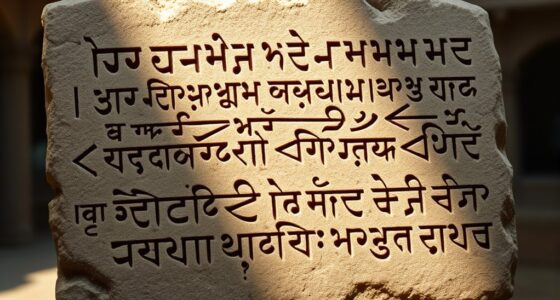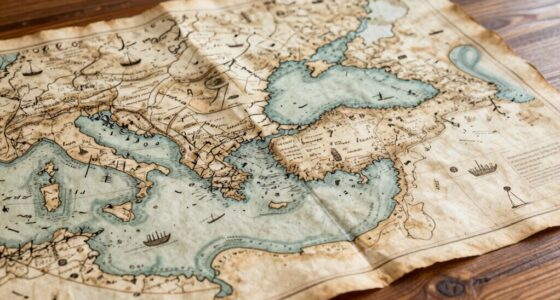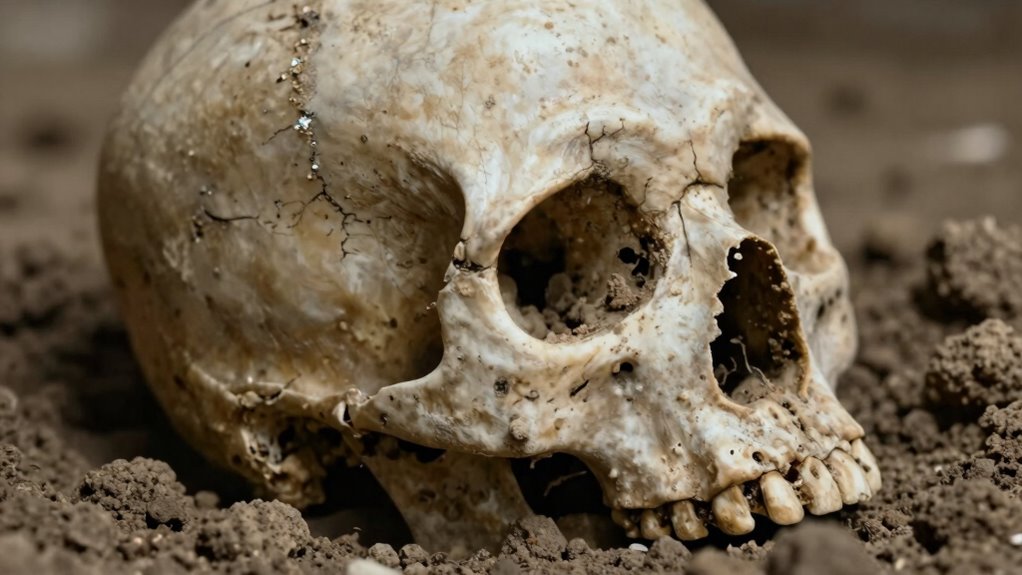

Ancient bones hold hidden stories about past lives, death, and cultural beliefs that you can uncover through forensic analysis. By examining fractures, wear patterns, and artifacts, you discover details about age, health, and causes of death. Burial customs reveal societal values and rituals, while signs of trauma or rituals like trepanation show how communities honored their dead. If you keep exploring, you’ll uncover the fascinating depths of history embedded in these silent witnesses.

Prime made for students and young adults
- Fast, free delivery for dorm and study essentials
- Prime Video and Amazon Music included
- Member-only deals
Key Takeaways
- Forensic analysis of bones reveals cultural rituals, social hierarchies, and beliefs embedded in ancient burial practices.
- Skeletal evidence uncovers health conditions, trauma, and dietary habits, reflecting environmental and societal influences.
- Burial customs and grave goods provide insights into spiritual beliefs, life after death, and societal values.
- Preservation markers and environmental effects help reconstruct historical contexts of burial sites over time.
- Bones serve as silent witnesses, revealing complex stories of human history, rituals, and societal evolution.
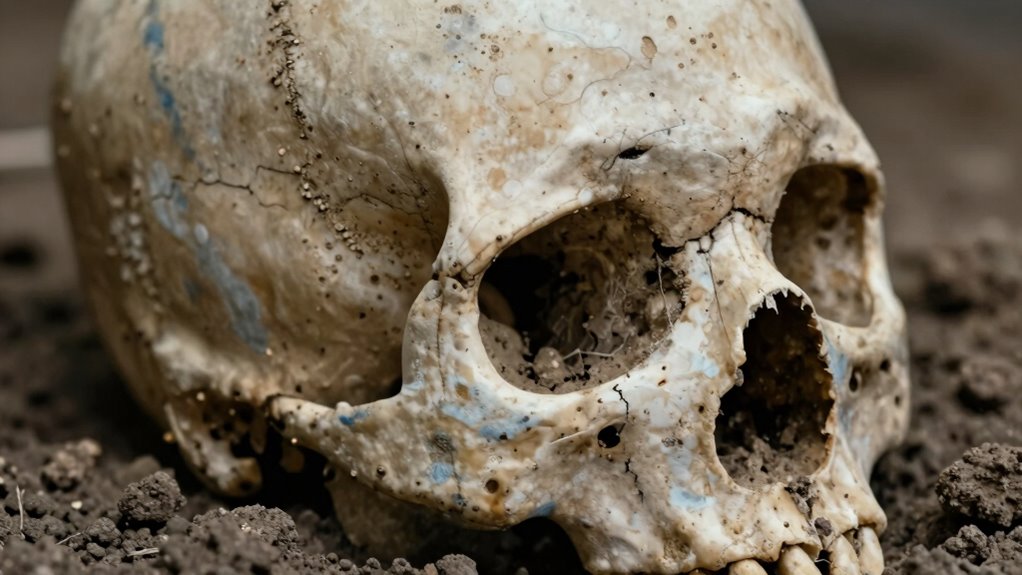
Beneath the layers of soil and time lie ancient bones that hold more than just skeletal remains; they contain stories waiting to be uncovered. When you examine these bones through forensic analysis, you reveal clues about the lives, deaths, and cultural practices of long-gone peoples. Each fracture, wear pattern, or artifact embedded in the remains tells a story about how they lived and how they were laid to rest. Forensic techniques enable you to analyze skeletal remains with remarkable precision, revealing details like age at death, cause of death, health conditions, and even social status. These insights go beyond mere biological data—they connect you directly to the customs and beliefs of ancient civilizations.
Examining ancient bones reveals stories of lives, deaths, and cultural practices through forensic analysis.
You might find, for example, that certain burial customs influenced how bones were deposited. In some cultures, elaborate grave goods and specific positioning of the body reflect rituals meant to guide the soul into the afterlife. In others, simple burials might indicate a focus on humility or practicality. By studying these burial customs, you gain a deeper understanding of their worldview, religious beliefs, and social hierarchy. The placement of bones, the presence of offerings, and the materials used in burial ceremonies all serve as cultural signposts, guiding you through the society’s values and traditions. Advances in forensic analysis techniques now allow for even more detailed insights into these ancient practices.
When forensic analysis is applied to these ancient bones, you can also discern signs of cultural practices that affected health and mortality. For instance, evidence of trepanation—drilling into the skull—might suggest ritualistic healing or medicinal procedures. Similarly, signs of nutritional deficiencies or trauma reveal how their lifestyle and environment impacted their well-being. These details allow you to piece together not just individual stories but broader societal patterns. You begin to see how burial customs reflected their relationship with life and death, and how those traditions evolved over time.
Moreover, advancements in forensic techniques now enable the detection of preservation markers, which help scientists understand how environmental factors influenced the condition of the bones over centuries. As you explore further into these bones, you realize that each discovery is a puzzle piece in a much larger picture. The forensic analysis doesn’t just identify causes of death; it uncovers how communities honored their dead, what they valued, and what fears or beliefs shaped their rituals. The stories held within these ancient bones are complex, layered, and rich with meaning. By revealing these hidden histories, you connect to the distant past in a way that’s tangible and profound, transforming skeletal remains into silent witnesses of human history.
As an affiliate, we earn on qualifying purchases.
Frequently Asked Questions
How Do Scientists Determine the Age of Ancient Bones Accurately?
You determine the age of ancient bones through chemical analysis, measuring isotopes like carbon-14. Bone fragmentation can complicate dating, but scientists carefully analyze the remaining material to guarantee accuracy. By comparing isotope levels in the bones to those in the environment, they can estimate the bones’ age precisely. This method offers a reliable way to uncover the bones’ history, even with some fragmentation or degradation present.
What Specific Techniques Reveal the Diet of Ancient Civilizations?
You can uncover ancient diets through isotope analysis and lipid residue analysis. Isotope analysis examines ratios of stable isotopes in bones or teeth, revealing whether people ate primarily terrestrial or marine foods. Lipid residue analysis identifies fats preserved in pottery, pinpointing specific food sources like dairy, plants, or animals. Together, these techniques provide a detailed picture of what ancient civilizations consumed, helping you understand their dietary habits and environmental adaptations.
Can Ancient Bones Indicate the Cause of Death?
Ancient bones can whisper secrets about their last moments, revealing causes of death through signs like fractures, infections, or toxins. You see, these bones are like a historical ledger, telling stories behind burial practices and cultural significance. By studying trauma or disease markers, you can piece together how people met their end, providing a deeper understanding of their lives and rituals. Bones truly hold the echoes of history’s final chapter.
How Are Ancient DNA Samples Preserved Over Thousands of Years?
You can preserve ancient DNA samples over thousands of years through careful preservation methods like cooling, drying, or chemical treatment, which prevent decay. Genetic mutation can occur over time, but these methods slow degradation and contamination. By maintaining samples in cold, dry, and stable environments, scientists minimize damage, allowing DNA retrieval for analysis. This preservation effort is vital for understanding ancient life and revealing secrets hidden within bones.
What Are the Ethical Considerations in Excavating and Studying Ancient Bones?
Imagine you’re a guardian of a fragile, ancient manuscript; respecting its secrets is essential. When excavating and studying bones, you must navigate cultural sensitivities and prioritize ethical preservation. You handle remains with reverence, acknowledging their significance to descendant communities, and guarantee research benefits all. Balancing scientific curiosity with respect for the dead safeguards priceless history, reminding you that behind every bone lies a story deserving dignity and care.
ancient bones preservation tools
As an affiliate, we earn on qualifying purchases.
As an affiliate, we earn on qualifying purchases.
Conclusion
You might think ancient bones are just old relics, but they’re stories waiting to be uncovered. Imagine holding a 3,000-year-old skull, seeing the clues of a life once lived. These bones reveal secrets about our ancestors’ struggles, migrations, and health. By studying them, you can piece together history’s puzzle. So next time you see a skeleton, remember: behind those bones lies a fascinating story, waiting for you to bring it to life.
archaeological bone examination set
As an affiliate, we earn on qualifying purchases.
As an affiliate, we earn on qualifying purchases.
forensic anthropology reference book
As an affiliate, we earn on qualifying purchases.
As an affiliate, we earn on qualifying purchases.
Evergreen bestsellers Picks
bestsellers
As an affiliate, we earn on qualifying purchases.