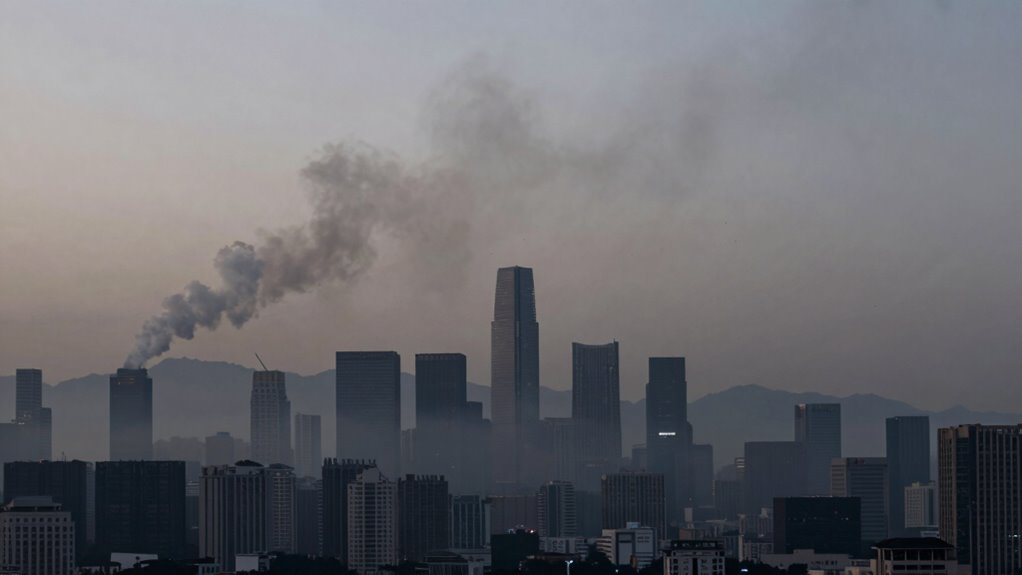

Air pollution can travel much farther than you might expect, carried by wind and weather patterns over hundreds or thousands of miles. Factors like atmospheric currents, topography, and climate influence how far pollutants disperse and where they settle. Urban areas and natural events like wildfires also spread pollution across regions. If you want to understand how these atmospheric processes extend pollution’s reach, you’ll find more details on how airflow and environment shape these pathways.

Prime made for students and young adults
- Fast, free delivery for dorm and study essentials
- Prime Video and Amazon Music included
- Member-only deals
Key Takeaways
- Pollutants can travel hundreds or thousands of miles through atmospheric transport driven by wind and weather patterns.
- Large-scale atmospheric currents carry pollution over long distances, beyond local sources.
- Weather conditions and topography influence how far and where pollutants disperse and settle.
- Indoor pollutants can infiltrate outdoor air, extending pollution reach beyond initial sources.
- Climate patterns and atmospheric conditions make pollution movement unpredictable over large areas.
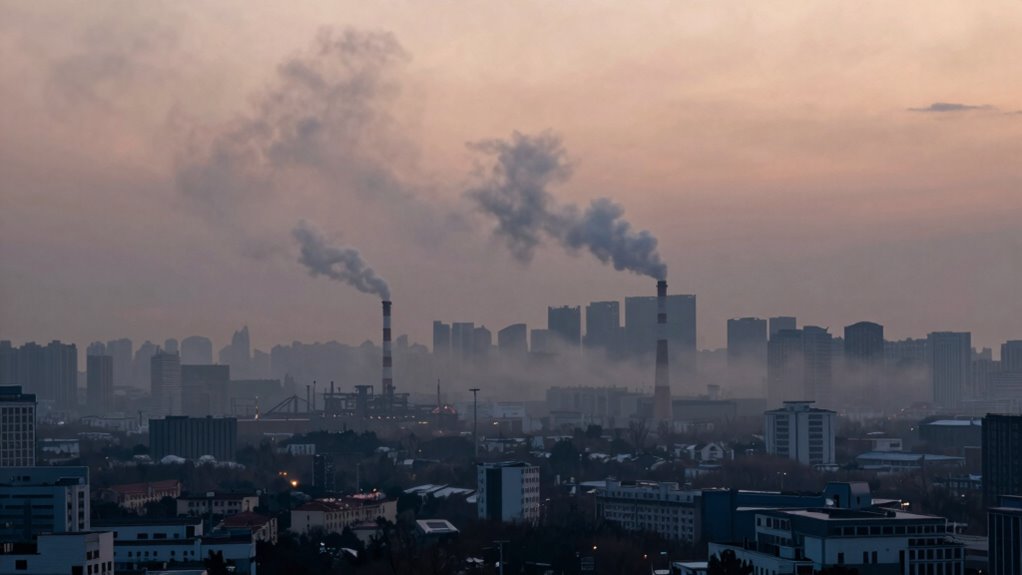
Have you ever wondered how air pollution spreads across regions and cities? It’s a complex process that often surprises people because pollution doesn’t just stay confined to the immediate area where it originates. Instead, it travels far beyond, crossing boundaries and affecting places you might never expect. One of the key factors in this movement is indoor air, which many assume is separate from outdoor pollution. While indoor air can be less polluted than outdoor air in some cases, it’s still connected to the broader environment. Pollution sources inside buildings, such as cooking fumes, tobacco smoke, or heating systems, can contribute to the overall picture of air quality, especially when these sources are persistent or combined with outdoor pollution that seeps in through windows, doors, or ventilation systems.
The movement of air pollution begins with pollution sources, which include factories, vehicles, power plants, and even natural events like wildfires or dust storms. These sources release a variety of pollutants—particulate matter, nitrogen oxides, sulfur dioxide, volatile organic compounds—that don’t stay put. Instead, they get caught up in the air currents, traveling at different speeds and distances depending on weather conditions, topography, and wind patterns. What might seem like a localized problem can quickly become a regional or even global issue as these pollutants drift with the wind, sometimes traveling hundreds or thousands of miles. Atmospheric transport is a crucial process that explains how pollutants disperse over large areas. This movement is further influenced by air flow patterns, which determine the specific pathways pollutants take. Additionally, topography can significantly influence local air movement, creating areas where pollution tends to accumulate or dissipate.
Wind plays a vital role in pushing pollution from one area to another, often carrying it over mountains, across lakes, and through valleys. In urban areas, the density of pollution sources amplifies this effect, creating a smog that can spread over entire cities and neighboring regions. But the journey doesn’t stop there. Once airborne, some pollutants can remain suspended in the atmosphere for days or weeks, gradually dispersing over large distances. This means that a city with strict pollution controls can still be affected by pollution originating elsewhere, carried by atmospheric currents. Additionally, climate patterns influence how long pollutants stay airborne and where they tend to settle, further complicating the movement of pollution. Understanding these weather influences helps clarify the unpredictable nature of pollution dispersion. The combined effect of these factors makes tracking pollution movement a complex but essential part of environmental health understanding.
Indoor air also contributes to this movement, especially when outdoor pollutants infiltrate indoor environments. When pollution sources inside a building release contaminants, they can add to the existing indoor air quality issues, which are already influenced by outdoor pollution. As outdoor air laden with pollutants moves into indoor spaces, it mixes with indoor sources, creating a cycle that can extend the reach of pollution far beyond its original point of release. Overall, understanding how air pollution moves helps you see that its reach is broader and more dynamic than it appears on the surface.
Popular right now

Ninja Flip Toaster Oven and Air Fryer, 8-in-1, Stainless Steel, SP151

Dyson Ball Animal 3 Extra Upright Vacuum

Breville Bambino Espresso Machine, Brushed Stainless Steel
As an affiliate, we earn on qualifying purchases.
Frequently Asked Questions
How Do Weather Patterns Influence Pollution Dispersion?
Weather patterns considerably influence pollution dispersion. When you encounter a temperature inversion, it traps urban smog close to the ground, preventing it from dispersing. Wind speed and direction also matter; strong winds can carry pollutants farther, while calm conditions cause them to linger locally. These patterns can either help clear the air or worsen pollution problems, making weather a vital factor in how far air pollution spreads.
Can Pollution Travel Across Oceans?
Yes, pollution can travel across oceans. In fact, studies show that transboundary pollution from sources like marine transport can reach coastlines thousands of miles away. For example, sulfur emissions from ships in one region can affect air quality on distant shores. This illustrates how ocean currents and wind patterns transport pollutants, making marine transport a significant contributor to transboundary pollution, impacting ecosystems and human health far beyond their origin.
What Role Do Wind Speed and Direction Play?
You should know that wind speed and direction are essential in shaping pollution movement. Faster winds carry pollution plumes farther, spreading pollutants over larger areas. Local wind patterns influence how pollution disperses, sometimes pushing it away from sources or trapping it nearby. When wind shifts direction, it can redirect pollution toward new regions, making it harder to predict where pollution will go. So, wind plays a key role in how far and wide pollution travels.
How Long Do Pollutants Stay Airborne?
Think of pollutants as whispers in a vast hall, lingering through chemical reactions and particulate settling. Depending on their composition and weather conditions, they stay airborne from hours to days. Chemical reactions can transform pollutants, while particulate settling gradually pulls them down. Wind can extend their stay, dispersing them farther, but without strong movement, many pollutants settle quickly. Your environment’s conditions determine just how long these airborne whispers echo around you.
Are Certain Seasons Worse for Pollution Spread?
Yes, certain seasons are worse for pollution spread. Urban smog tends to worsen during colder months because of seasonal variations like temperature inversions, which trap pollutants close to the ground. During winter, you’ll notice more haze and difficulty breathing, especially in cities. Conversely, warmer seasons often see better dispersion of pollutants. So, understanding seasonal variations helps you anticipate when air quality might decline and take precautions accordingly.
Conclusion
So, next time you smugly think that air pollution is just a local nuisance, remember it’s sneaking past borders and borders you didn’t even know existed. Think of it as the world’s most unwelcome and invisible guest—eavesdropping, lingering, and traveling further than your backyard. In the grand game of “hide and seek,” pollution’s winning moves remind us that what happens in one place can easily crash the party elsewhere. Cheers to our global air-sharing adventure!