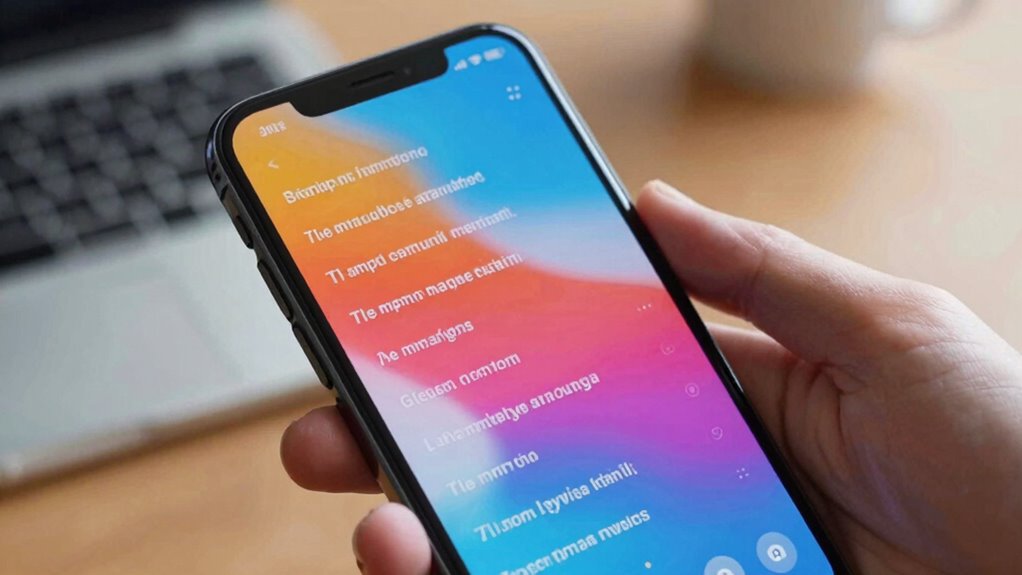

When you speak, your voice creates sound waves captured by a microphone, which quickly convert into digital signals. Advanced speech recognition algorithms analyze these signals, filtering out background noise and considering your accent and style. The system continuously learns and adapts to improve accuracy in real time. By combining audio analysis with machine learning, live captions instantly turn spoken words into text, even in noisy environments. Keep going to uncover how all these parts come together seamlessly.

Prime made for students and young adults
- Fast, free delivery for dorm and study essentials
- Prime Video and Amazon Music included
- Member-only deals
Key Takeaways
- Live captions capture speech via microphones and convert sound waves into digital signals for real-time processing.
- Speech recognition compares audio data against language databases using machine learning models.
- The system continuously adapts to speakers’ voices, accents, and environmental changes for improved accuracy.
- Advanced noise filtering isolates speech from background sounds, ensuring clear transcription in noisy settings.
- High-speed data analysis and integration enable instant display of captions during live conversations.
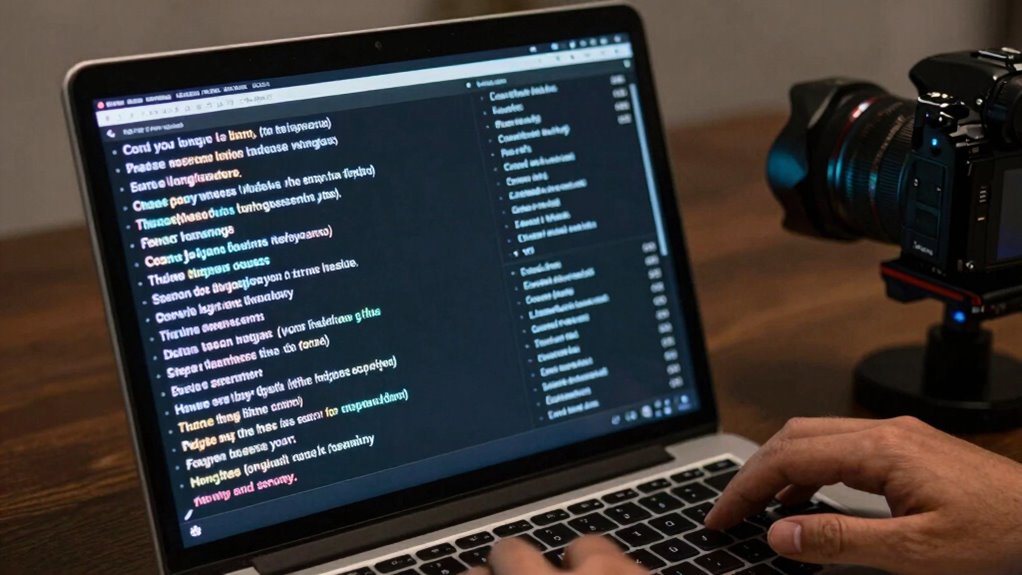
Ever wondered how live captions can provide real-time transcriptions of spoken words? It all hinges on sophisticated technology working seamlessly behind the scenes. At the core, speech recognition plays an essential role. This technology transforms spoken language into written text almost instantly. When you speak, your voice creates sound waves that are captured by a microphone and converted into digital audio signals. These signals then undergo audio processing, where various algorithms analyze the sound for clarity, pitch, and rhythm. This step is critical because it filters out background noise and enhances speech clarity, guaranteeing the system accurately interprets what’s being said.
Once the audio is processed, the speech recognition engine kicks into action. It compares the incoming audio data against vast databases of language patterns, words, and phrases. Using complex machine learning models, the system predicts what words are being spoken in real time. It considers context, pronunciation, and the speaker’s accent to improve accuracy. This process happens incredibly quickly, often within milliseconds, so the transcription appears almost instantaneously on your screen. Additionally, the continuous updates from digital audio analysis help the system adapt to changing sound environments, further enhancing its robustness. Incorporating adaptive algorithms allows the system to continuously learn from new data, improving its performance over time.
Speech recognition compares audio to language databases, predicting words instantly with context and accent considerations.
The system also continuously adapts to the speaker’s voice, dialect, and speaking style through ongoing audio processing and machine learning improvements. As you speak, the live captioning software constantly updates the text, correcting mistakes and refining accuracy on the fly. A new advanced processing technique enhances its ability to distinguish speech from ambient noise, making the transcription even more precise in challenging environments. The entire process relies on high-speed data analysis and efficient audio processing to keep pace with natural speech. The result is a fluid and reliable transcription that makes content accessible to everyone, regardless of hearing ability or language barriers.
Behind the scenes, the system’s ability to perform real-time audio processing ensures that background noise doesn’t drown out the speech. It isolates spoken words from ambient sounds, making the transcription more precise. This is especially useful in noisy environments like crowded rooms or busy streets. As the speech recognition engine continues to learn and adapt, it becomes better at handling different accents, speech patterns, and technical jargon, making live captions more accurate over time. Moreover, ongoing advancements in machine learning models contribute significantly to this improvement.
In essence, live captions work because of a finely tuned interplay between audio processing and speech recognition. The speed and accuracy of this technology mean you get a near-instant, reliable text version of spoken words, making communication more inclusive and accessible. This seamless integration of digital audio analysis and intelligent language modeling transforms how we consume spoken content in real time.
As an affiliate, we earn on qualifying purchases.
Frequently Asked Questions
Do Live Captions Work for All Languages?
Live captions don’t work for all languages yet, but many popular ones like English, Spanish, and French are supported. The technology uses language translation to convert spoken words into text in real time. You can often customize captions to improve accuracy or readability, but support for less common languages may be limited. As technology advances, expect broader language coverage and better customization options for more diverse languages.
Can Live Captions Be Customized for Different Accents?
Did you know that 75% of users find accent adaptation essential for accurate live captions? You can customize live captions for different accents through various customization options. These features improve accuracy by adjusting to speech nuances, making conversations clearer. While not all platforms offer extensive options yet, many are enhancing their systems to better recognize diverse accents, ensuring you get more precise, personalized captions tailored to your speech patterns.
How Accurate Are Live Captions in Noisy Environments?
Live captions in noisy environments can be quite accurate, but noise interference sometimes affects their clarity. When there’s a lot of background sound, captions might lag or miss words, impacting caption synchronization. You’ll notice that in quieter moments, captions are more precise, but in loud settings, they may struggle to keep up. Overall, while technology improves, ambient noise can still challenge the accuracy of live captions.
Are Live Captions Available on All Devices?
Like a modern Swiss Army knife, live captions are increasingly accessible, but they’re not on all devices. You’ll find them mainly on newer smartphones, tablets, and computers, thanks to advanced accessibility features and device compatibility. If your device doesn’t support live captions yet, check for software updates or app options. In today’s world, staying connected and inclusive depends on choosing devices that embrace these essential tools.
What Privacy Measures Are in Place for Live Caption Data?
Live caption data is protected through data encryption, ensuring your conversations stay private during processing. Additionally, most platforms require your user consent before enabling live captions, giving you control over when your spoken words are transcribed. These privacy measures help safeguard your information, so you can confidently use live captions knowing your data is secure and your privacy preferences are respected throughout the process.
real-time speech to text software
As an affiliate, we earn on qualifying purchases.
As an affiliate, we earn on qualifying purchases.
Conclusion
Now that you know how live captions work in real time, imagine yourself as the hero of a silent movie, desperately trying to keep up with the chatter but missing all the punchlines. With live captions, you’re handed a backstage pass to every word, turning scrambled dialogue into a clear script. So next time you’re fumbling through a noisy room, just remember: these captions are your personal translator, saving you from the chaos and making you look way smarter than you actually are.
noise cancelling microphone for transcription
As an affiliate, we earn on qualifying purchases.
As an affiliate, we earn on qualifying purchases.
automatic speech recognition app
As an affiliate, we earn on qualifying purchases.
As an affiliate, we earn on qualifying purchases.
Halloween Picks
halloween
As an affiliate, we earn on qualifying purchases.