
TL;DR

Prime made for students and young adults
- Fast, free delivery for dorm and study essentials
- Prime Video and Amazon Music included
- Member-only deals
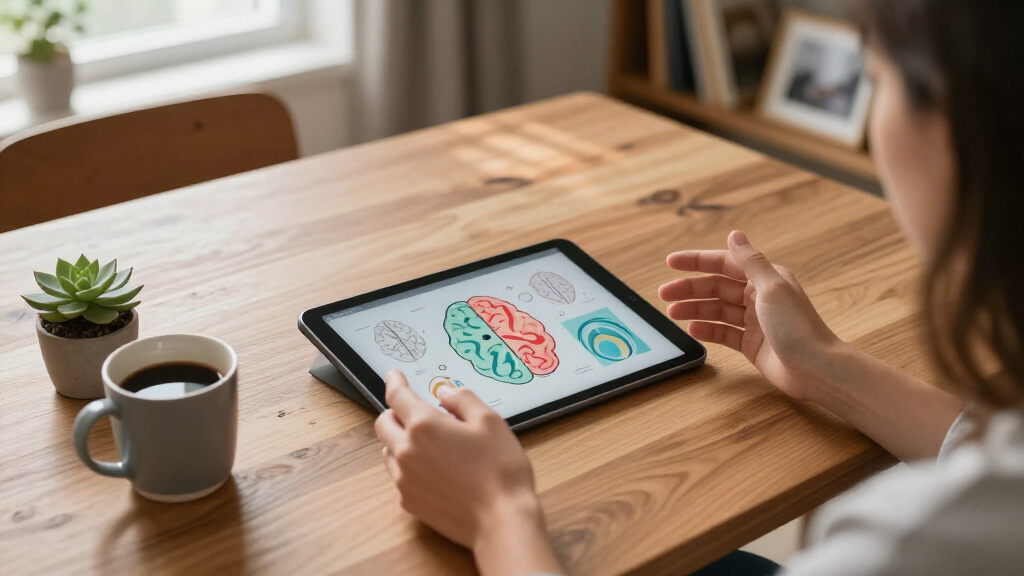
Recent interest in individuals with aphantasia—those who cannot visualize images—has prompted scientists to reconsider how imagination works. This trend is driven by rising search interest and ongoing studies, though many details remain uncertain.
Scientists are increasingly studying individuals with a condition called aphantasia, who report an inability to visualize images mentally. This emerging focus is challenging long-held assumptions about how imagination functions, with researchers seeking to understand whether visual imagery is essential to creative thought and mental simulation, or if alternative cognitive processes exist. The trend is driven by a spike in search interest and recent scientific inquiries, making it a significant development in cognitive science.
Over the past few years, the concept of aphantasia has gained prominence as more individuals describe their inability to generate mental images. According to preliminary studies, approximately 2-3% of the population may have this condition, though estimates vary. Researchers like Dr. Adam Zeman of the University of Exeter have documented cases where people report no visual mental imagery, yet still engage in memory, problem-solving, and creative thinking.
Recent studies suggest that these individuals may rely on non-visual cognitive strategies, such as verbal or abstract reasoning, challenging the traditional view that visualization is central to imagination. The surge of online discussions and search interest—spiking notably over the past year—reflects a broader curiosity and indicates that this phenomenon could reshape foundational theories in psychology and neuroscience.
While some experts argue that aphantasia reveals a more complex understanding of mental imagery, others caution that research is still in early stages. Many questions remain about how widespread the condition is, how it develops, and whether it affects all forms of imagination equally. Scientific consensus has yet to be established, and ongoing studies are exploring these issues.
Implications for Understanding Human Creativity and Cognition
This development matters because it challenges the assumption that visual mental imagery is necessary for imagination, creativity, and memory. If individuals can think and create without visualizing images, it suggests alternative cognitive pathways and could influence approaches in education, mental health, and artificial intelligence. Understanding aphantasia may also shed light on the diversity of human thought processes and expand theories about how the brain constructs mental experiences.
Popular right now

Vitamix 5200 Professional-Grade Blender, 64 oz. Container, Black

Dyson Car+Boat Cordless Handheld Vacuum

Dyson Ball Animal 3 Extra Upright Vacuum
As an affiliate, we earn on qualifying purchases.
Rise in Scientific and Public Interest in Aphantasia
The concept of aphantasia was first described in scientific literature in 2015 by Professor Adam Zeman and colleagues, sparking initial curiosity. Since then, reports of the condition have increased, both in academic research and online communities. The phenomenon has gained visibility through personal accounts, social media, and media coverage, fueling broader interest.
Despite growing attention, the scientific understanding remains limited. Most studies are small-scale or anecdotal, and researchers are working to develop standardized measures for assessing mental imagery. The recent spike in search interest, noted by tools like Google Trends, indicates that the topic is rapidly gaining traction among the public and scientists alike, though the exact reasons for this surge are unconfirmed.
Many experts see this as part of a larger trend toward recognizing cognitive diversity, but it is still unclear how many people are affected or how this condition interacts with other mental processes. The scientific community continues to investigate whether aphantasia is a distinct neurological condition or a variation within normal cognition.
Unanswered Questions About Aphantasia and Imagination
Many aspects of aphantasia remain unclear. It is not yet confirmed how prevalent the condition is across different populations, nor how it develops over time. Researchers are still debating whether visual imagery is essential to all forms of imagination or if alternative mental processes can fully compensate.
Further, the long-term implications of living without mental visualization are unknown, and whether the condition impacts creativity, memory, or problem-solving in ways yet to be understood. There is also ongoing investigation into whether aphantasia exists on a spectrum or as a discrete condition, and how it interacts with other cognitive traits.
Upcoming Research and Broader Scientific Engagement
Researchers plan to conduct larger, more controlled studies to better understand the prevalence and cognitive profiles of individuals with aphantasia. Advances in neuroimaging and cognitive testing are expected to clarify how different mental processes compensate for the lack of visual imagery.
In addition, scientists aim to explore whether training or interventions can influence mental imagery and whether similar phenomena occur in related conditions. Public interest and online discussions are likely to continue fueling scientific inquiry, with potential implications for education, mental health, and AI development.
Key Questions
What is aphantasia?
Aphantasia is a condition where individuals report an inability to generate mental images voluntarily, often described as ‘seeing’ nothing in their mind’s eye.
How common is aphantasia?
Current estimates suggest that about 2-3% of the population may have aphantasia, but research is ongoing to determine its true prevalence.
Does aphantasia affect creativity?
It is not yet clear whether aphantasia limits or alters creativity, as many affected individuals report engaging in creative activities through non-visual means.
Why is this trend gaining attention now?
Rising online discussions, media coverage, and scientific research are fueling increased interest and search activity related to aphantasia and the nature of imagination.
What are the implications for understanding the brain?
If confirmed, aphantasia could lead to a broader understanding of diverse cognitive pathways and challenge existing models of mental imagery and imagination.
Source: hn