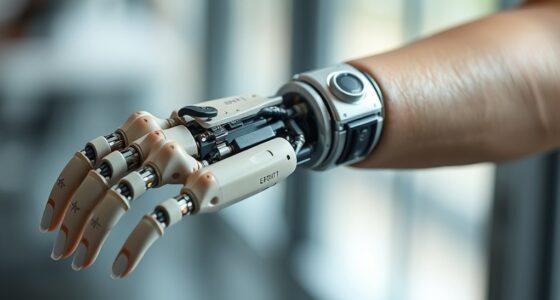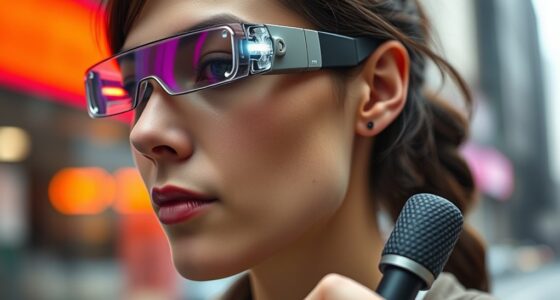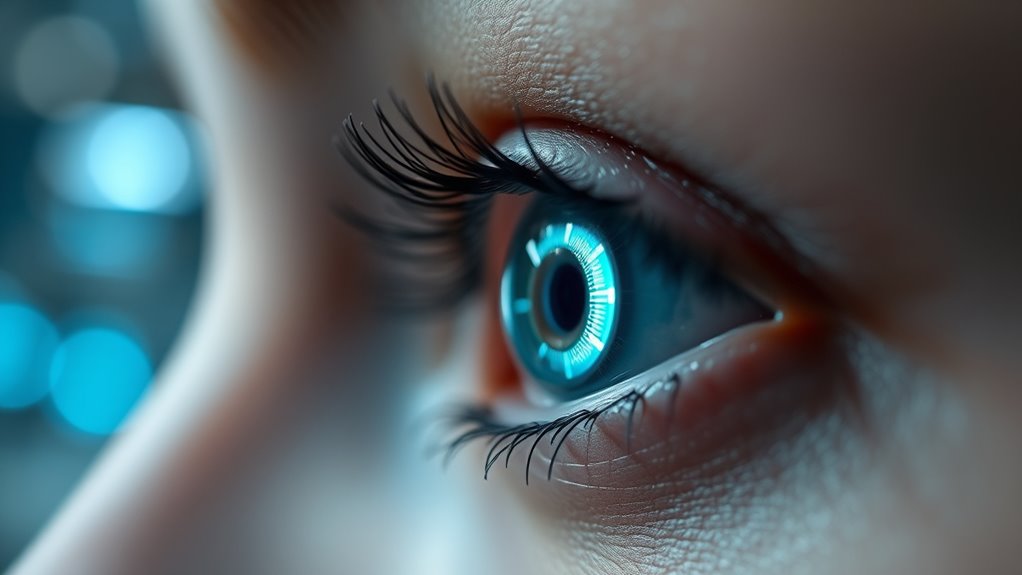

Bionic eye implants powered by AI are now helping people with severe vision loss regain partial sight. These devices process visual data in real-time, improving your ability to see shapes, light, and basic scenes. Though they aren’t perfect yet, ongoing advancements aim to enhance clarity, reliability, and safety. If you explore further, you’ll discover how these innovations could transform lives and the challenges researchers are working to overcome.
Key Takeaways
- AI-enhanced bionic eye implants can restore limited sight, such as light perception and basic shape recognition, to visually impaired individuals.
- These devices process visual information in real-time, improving environmental awareness and navigation.
- Current technological challenges include device size, power needs, and neural integration for more comprehensive vision.
- Ethical considerations focus on patient consent, data privacy, and ensuring equitable access to advanced vision restoration.
- Ongoing research aims to enhance image resolution, safety, and functionality of AI-driven bionic eye systems.
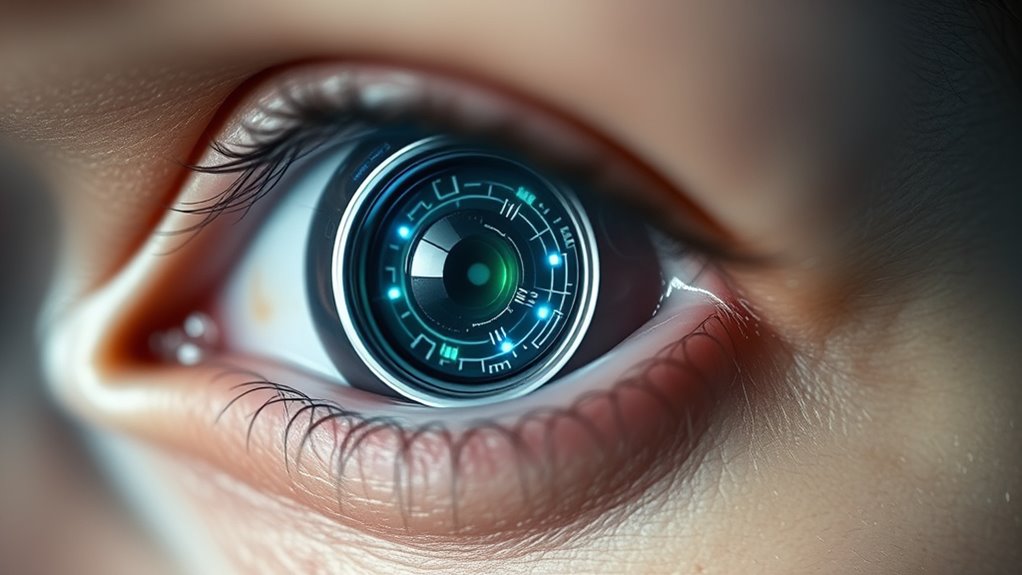
Advancements in artificial intelligence are transforming vision restoration through bionic eye implants that seamlessly integrate AI technology. These innovations offer new hope for individuals with severe visual impairments, allowing them to regain partial sight and improve their quality of life. However, as promising as these developments are, they also bring important ethical considerations and technological limitations that you need to understand. Ethical concerns revolve around issues like patient consent, data privacy, and the long-term effects of implanting AI-driven devices. You might wonder how your personal data is protected and whether you’re fully aware of potential risks. Ensuring informed consent becomes vital, especially as AI systems become more complex and capable of collecting sensitive information. Additionally, questions about equitable access arise, as such advanced technology could be expensive, potentially widening existing disparities in healthcare. You should consider the societal implications of widespread adoption and how to make these innovations accessible to all who need them. Moreover, the integration of AI with biological tissues presents ongoing challenges that researchers are actively working to address. On the technological front, there are notable limitations that still challenge the full potential of AI-powered bionic eyes. Despite significant progress, current implants do not restore perfect vision; instead, they provide partial sight, often in the form of light perception or basic shapes. This means that your ability to interpret complex scenes, recognize faces, or navigate unfamiliar environments remains limited. Furthermore, the integration of AI with biological tissues is complex and still evolving, leading to issues like device durability, stability, and compatibility with your neural pathways. You might experience discomfort or require adjustments over time, and ongoing maintenance is necessary to keep the system functioning at its best. The hardware itself is also constrained by size, power requirements, and the need for minimally invasive surgical procedures, all of which restrict the current capabilities and widespread use of these implants. As AI continues to advance, ongoing research aims to improve image resolution, reliability, and safety, but progress is gradual. You should stay informed about emerging innovations and AI in medical devices to better understand how these developments might benefit or impact you. As a potential recipient, you must weigh the benefits of partial vision restoration against the existing limitations and ethical concerns. Remaining informed about ongoing developments and actively participating in conversations about the responsible use of AI in medical devices is essential. Ultimately, these innovations represent a significant step forward, yet they are still part of an evolving landscape that requires careful consideration to guarantee they serve your best interests and uphold societal values.
Top picks for "bionic implant restore"
Open Amazon search results for this keyword.
As an affiliate, we earn on qualifying purchases.
Frequently Asked Questions
How Long Does a Bionic Eye Implant Typically Last?
A bionic eye implant typically lasts around 5 to 10 years, depending on battery longevity and material durability. You’ll need to observe the battery life, as it may need replacing or recharging periodically. The device’s materials are designed to withstand daily wear and tear, but over time, they may degrade. Regular check-ups ensure your implant remains functional, helping you enjoy improved vision longer.
Are There Any Long-Term Health Risks Associated With the Implant?
Think of your implant as a delicate garden needing care; potential infection or device rejection are like weeds threatening its health. Long-term risks include infection, which can occur if bacteria invade, and device rejection, where your body might see the implant as foreign. While rare, these risks highlight the importance of regular check-ups and monitoring. Stay vigilant, and your new vision can thrive, much like a well-tended garden.
Can the Implant Be Upgraded as Technology Advances?
Yes, your implant can be upgraded as technology advances. Manufacturers often design these devices with upgrade options in mind, allowing you to improve functionality over time. You might receive software updates or hardware enhancements that enhance your vision or add new features. Staying in touch with your healthcare provider guarantees you benefit from the latest technology advancements, keeping your implant current and maximizing its performance.
What Is the Recovery Time After the Surgery?
After the surgery, you can expect a recovery time of a few weeks. During this period, you’ll need to follow post-surgery care instructions carefully and attend regular check-ups. The rehabilitation process begins soon after, helping you adapt to your new vision. Rest is essential, and you might experience some discomfort or visual fluctuations initially. Staying consistent with your care and rehab will help optimize your results and guarantee a smoother recovery.
Will AI Improvements Improve Visual Clarity Over Time?
Think of AI as a fine-tuning instrument for your sight. As AI accuracy improves, your visual clarity will get sharper like a camera lens focusing better over time. With ongoing visual enhancement, future advancements will make your bionic eye more precise, helping you see clearer details. You’ll notice gradual improvements as AI learns and adapts, transforming your partial vision into a more vivid and accurate view of the world.
Conclusion
With these bionic eye implants powered by AI, you’re stepping into a new world where shadows turn to shapes and darkness begins to lift. It’s like opening a window after years of being shut tight, giving you a glimpse of hope and possibility. While it’s not a perfect fix, it’s a powerful step forward—like planting a seed that could someday grow into full clarity. Your journey toward regained sight is just beginning, and the future looks brighter than ever.