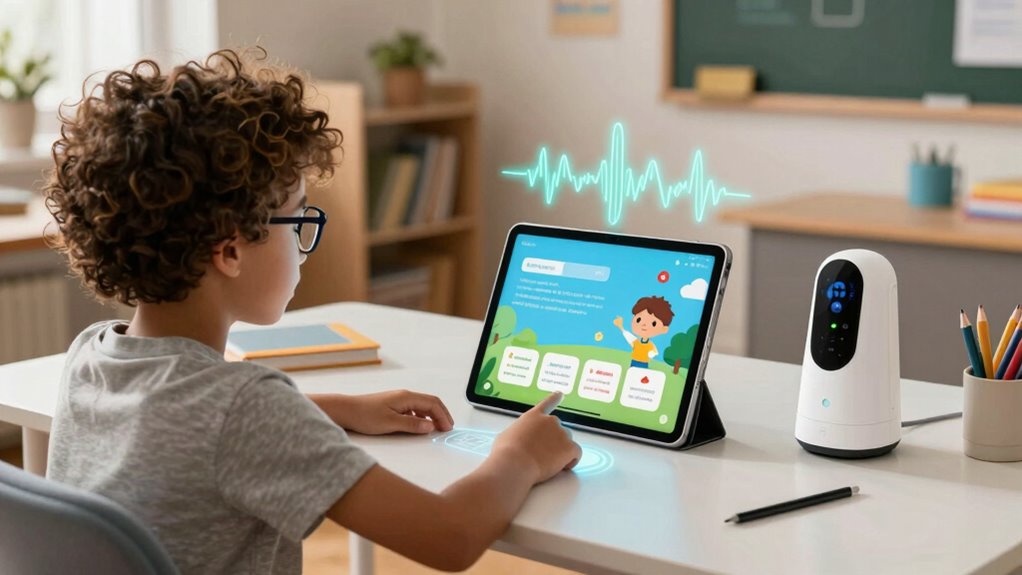

AI reading support tools help you by offering personalized, adaptive strategies tailored to your needs. They identify your specific challenges early and adjust content in real time, reducing frustration. Features like text-to-speech and voice recognition make learning more accessible and engaging. These technologies provide immediate feedback, helping you improve confidence and skills. As you continue exploring, you’ll discover how these tools can truly transform your learning experience and support long-term growth.

Prime made for students and young adults
- Fast, free delivery for dorm and study essentials
- Prime Video and Amazon Music included
- Member-only deals
Key Takeaways
- AI tools provide personalized reading support, accommodating individual dyslexic learners’ specific challenges.
- Real-time feedback and adaptive content help reduce frustration and improve reading skills.
- Voice recognition and text-to-speech features enhance accessibility for dyslexic students.
- Data analysis identifies early signs of reading difficulties, enabling timely interventions.
- Interactive and engaging platforms boost motivation and confidence in dyslexic learners.

Have you ever wondered how technology can bridge the gap for dyslexic learners? Early intervention is essential in helping these students succeed, and AI reading support tools are transforming the way educators approach this goal. When you introduce technology early in a child’s learning journey, you give them a better chance to develop fundamental reading skills before frustration or gaps set in. AI-powered platforms can identify specific reading challenges, adapt to individual needs, and provide targeted support that traditional methods might miss. This seamless technology integration allows you to tailor interventions in real-time, guaranteeing that each student receives the help they need precisely when they need it.
Using AI tools in reading instruction isn’t just about replacing traditional methods; it’s about enhancing them. These systems analyze a student’s reading patterns, responsiveness, and progress, offering immediate feedback and personalized exercises. When you leverage this data, you can adjust your teaching strategies instantly, making your support more effective. It also helps in spotting difficulties early, enabling you to intervene before issues become entrenched. As a result, students feel more confident and motivated as they experience success, fostering a positive attitude toward reading and learning.
AI analyzes reading patterns, provides instant feedback, and helps teachers address challenges early for confident, motivated learners.
AI reading support also makes technology integration in the classroom more seamless and impactful. With user-friendly interfaces, these tools often require minimal training, so you can focus on your students rather than struggling with complex setups. Voice recognition, text-to-speech functionalities, and interactive exercises make reading more engaging, especially for learners who struggle with traditional text. This engagement is essential because it helps maintain attention and encourages repeated practice, which is critical for skill development. Additionally, because AI can adapt content to match a student’s reading level, it offers a personalized experience that respects each learner’s pace, avoiding frustration and discouragement. Incorporating adaptive learning technology further enhances this personalized approach by dynamically adjusting to each student’s evolving needs, ensuring continuous support. Implementing early intervention strategies is crucial for maximizing the benefits of AI support and ensuring students receive help at the right time, preventing difficulties from becoming more severe. Moreover, understanding the importance of early intervention can significantly impact a student’s long-term reading success. Utilizing biodiversity and conservation principles in designing these tools can also contribute to creating more inclusive and accessible learning environments, aligning technology with broader sustainable practices. Recognizing the importance of technological integration helps in designing systems that are both effective and easy to use, ensuring broader adoption and success.
AI reading support tools for dyslexia
As an affiliate, we earn on qualifying purchases.
As an affiliate, we earn on qualifying purchases.
Frequently Asked Questions
How Does AI Reading Support Differ From Traditional Assistive Technologies?
AI reading support differs from traditional assistive technologies by offering advanced features like text customization, which lets you adjust font size, color, and spacing for better readability. It also uses emotion detection to identify when you’re frustrated or overwhelmed, providing tailored encouragement or breaks. Unlike static tools, AI adapts in real-time, creating a personalized learning experience that addresses your specific needs, making reading more accessible and less stressful.
Can AI Tools Adapt to Individual Dyslexic Learning Needs Over Time?
You bet AI tools can adapt to your unique dyslexic learning needs over time. They learn from your interactions, tackling personalization challenges head-on, and fine-tune support to keep you engaged emotionally. This constant evolution helps you stay motivated and confident in your reading skills. Unlike static aids, AI adjusts dynamically, ensuring you get the right help precisely when you need it, making the learning journey smoother and more effective.
What Are the Potential Privacy Concerns With AI Reading Support?
You might worry about privacy with AI reading support, especially regarding data security and user privacy. These tools collect personal reading data, which could be vulnerable if not properly protected. Ensuring that your information remains confidential requires strong data security measures. Be cautious about what data you share and check the privacy policies of the AI tools you use, so your user privacy stays protected while benefiting from the support.
How Accessible Are AI Reading Tools for Students in Different Regions?
Imagine AI reading tools as bridges spanning diverse landscapes. Their accessibility varies by region, influenced by infrastructure and resources. In areas with strong digital connectivity, these tools are readily available, embracing language diversity and offering support. However, in regions with limited tech access, they’re less reachable. You see, regional accessibility depends on local investments, infrastructure, and language inclusion, making these tools a symbol of opportunity or gap, based on where you are.
What Training Is Required for Educators to Effectively Use AI Reading Support?
You need to undergo targeted teacher training focused on technology integration to effectively use AI reading support tools. This training helps you understand how to navigate the software, tailor support for individual students, and troubleshoot issues. By mastering these skills, you guarantee that AI tools enhance learning experiences for dyslexic learners. Ongoing professional development keeps you updated on new features and best practices, maximizing the benefits of technology integration in your classroom.
text-to-speech software for students
As an affiliate, we earn on qualifying purchases.
As an affiliate, we earn on qualifying purchases.
Conclusion
With AI reading support, you gain a powerful tool that acts like a guiding light through the maze of words, making reading less intimidating. It’s like having a trusty friend by your side, helping you discover the meaning behind each sentence. As you embrace this technology, you’ll find that your confidence grows stronger, and reading becomes a smoother journey. Remember, with the right support, you can turn the tide and navigate even the roughest waters with ease.
As an affiliate, we earn on qualifying purchases.
adaptive learning platforms for dyslexic learners
As an affiliate, we earn on qualifying purchases.
As an affiliate, we earn on qualifying purchases.
Fall Picks
fall essentials
As an affiliate, we earn on qualifying purchases.