
Virtual sign language interpreters break communication barriers by offering real-time, accessible translation through user-friendly platforms on your computer or mobile device. They promote inclusion in diverse settings like healthcare, education, and work, fostering a sense of belonging for deaf individuals. Advanced AI and high-quality video ensure clear, natural conversations while respecting cultural identities. To discover how these innovative tools are shaping society and creating inclusive environments, keep exploring the possibilities.
Key Takeaways
- They enable seamless communication across diverse environments, reducing physical and language barriers for deaf individuals.
- High-quality video streaming provides natural, real-time translation, enhancing understanding and interaction.
- Accessible via multiple devices, increasing flexibility and mobility for users in various settings.
- AI-driven features support regional dialects and cultural nuances, ensuring accurate and authentic interpretation.
- Their adoption promotes inclusive practices, demonstrating organizational commitment to accessibility and societal integration.
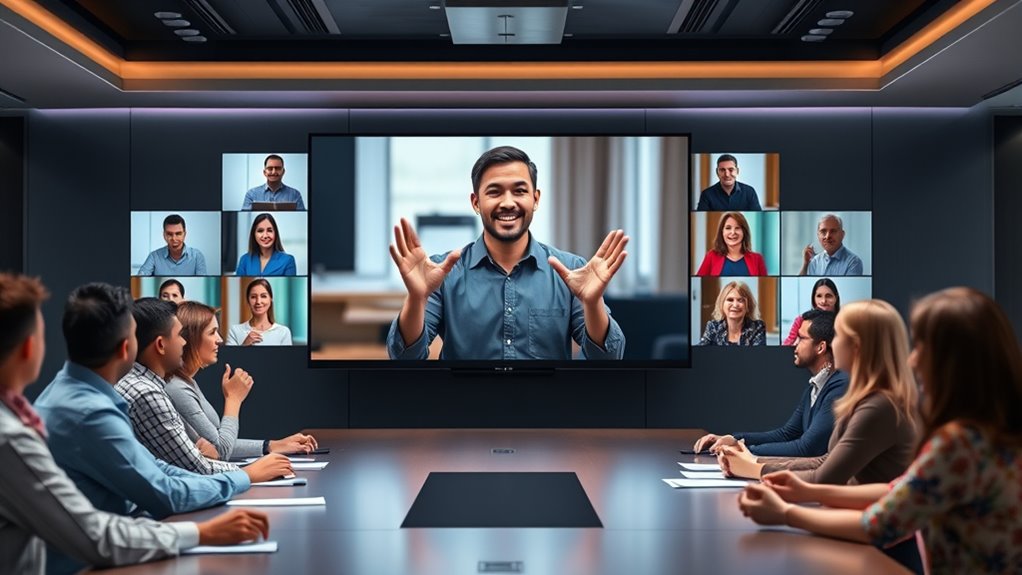
As technology advances, virtual sign language interpreters are becoming an increasingly accessible way to bridge communication gaps for the deaf and hard-of-hearing community. These digital solutions are transforming how people connect in various settings, from healthcare and education to business and social interactions. One of the most significant benefits of this innovation is how it promotes cultural integration, allowing deaf individuals to participate more fully in mainstream environments without feeling excluded. By breaking down physical barriers, virtual interpreters help foster a sense of belonging, enabling seamless communication regardless of location or situation. The impact of these tools is further amplified by ongoing research into sign language recognition, which aims to improve accuracy and cultural sensitivity in interpretation. Technological advancements have played a pivotal role in making virtual sign language interpreting more reliable and widespread. High-quality video streaming, real-time translation, and user-friendly interfaces ensure that conversations flow naturally and efficiently. These tools can be accessed via computers, smartphones, or tablets, giving users flexibility and mobility. As the technology continues to evolve, the accuracy of sign language recognition improves, reducing misunderstandings and misinterpretations. This progress not only enhances communication but also empowers deaf individuals to advocate for themselves confidently in various environments.
Virtual sign language interpreters foster inclusion and cultural integration across diverse settings, breaking physical barriers for seamless communication.
Furthermore, the integration of artificial intelligence and machine learning has accelerated the development of virtual interpreters, making them more adaptable to different sign language dialects and regional variations. This adaptability is essential for promoting cultural sensitivity and ensuring that interpretations are authentic and respectful of diverse sign language communities. The capacity to customize settings and preferences allows users to feel more comfortable, knowing their unique linguistic and cultural nuances are acknowledged. As a result, virtual interpreters are not just technological tools but also bridges that respect and celebrate cultural identity.
These advancements also mean that organizations and institutions can implement inclusive practices more easily. Employers, educational institutions, and healthcare providers can deploy virtual sign language services to better serve deaf clients and students, fostering a more inclusive environment. This shift helps normalize the use of technology in accessibility efforts, demonstrating a commitment to equal opportunities. As virtual sign language interpreters become more integrated into daily life, they contribute to a broader societal understanding of deaf culture and language, encouraging more acceptance and appreciation.
Top picks for "virtual sign language"
Open Amazon search results for this keyword.
As an affiliate, we earn on qualifying purchases.
Frequently Asked Questions
How Do Virtual Interpreters Ensure Privacy During Sessions?
Virtual interpreters guarantee privacy during sessions by using data encryption to protect your information from unauthorized access. They also prioritize user confidentiality by following strict privacy policies and only sharing your data with authorized individuals. You can trust that your communication remains secure because these platforms regularly update their security measures and adhere to industry standards, giving you peace of mind that your session stays private and protected at all times.
What Technology Is Needed for Effective Virtual Sign Language Interpretation?
You need reliable technology for effective virtual sign language interpretation, including high-quality cameras and microphones to capture clear visuals and audio. Using sign language apps enhances communication by providing instant translation, while video conferencing platforms allow real-time interaction. Make certain your device supports these tools and has a stable internet connection to guarantee smooth, accurate interpretation, making communication seamless for both parties.
Are Virtual Interpreters Available 24/7 for Emergencies?
Yes, virtual interpreters are often available 24/7 for emergencies, but availability concerns can vary depending on the provider. You should verify their hours and guarantee they maintain high interpreter reliability. Some services offer on-demand access at all hours, giving you peace of mind during urgent situations. Always check with the specific platform to confirm their emergency coverage and reliability to ensure seamless communication when you need it most.
How Do Virtual Interpreters Handle Complex or Specialized Terminology?
Specialized vocabulary stumps some interpreters, but virtual sign language interpreters skillfully solve this by leveraging their extensive training and contextual understanding. They adapt quickly, utilizing resources and prior knowledge to interpret complex or technical terminology accurately. This combination of competence and contextual awareness guarantees clear communication, even with specialized language. You can trust that virtual interpreters handle intricate terms efficiently, bridging gaps and breaking barriers with confidence and clarity.
What Training Do Virtual Sign Language Interpreters Undergo?
You’ll find that virtual sign language interpreters undergo rigorous training, including earning a sign language certification to demonstrate their skills. They focus on developing interpreter proficiency, which involves mastering various communication scenarios and specialized terminology. This training guarantees they can handle complex conversations smoothly. By continuously honing their skills, they provide accurate, clear interpretations, helping you communicate effectively regardless of the setting, whether medical, legal, or educational.
Conclusion
Virtual sign language interpreters are transforming communication by making it more accessible and inclusive. With over 15% of the global population experiencing some form of hearing loss, these digital solutions bridge essential gaps. You can now connect more easily in healthcare, education, and daily interactions. As technology advances, you’re part of a movement that’s breaking down barriers and fostering understanding, ensuring everyone’s voice is heard—no matter where they are or the challenges they face.