
Live speech technology doesn’t just add subtitles; it instantly converts spoken words into text through AI-powered speech recognition. When you speak into a microphone, these systems analyze your speech patterns, accents, and context to produce real-time captions, improving accessibility and communication. Challenges like background noise and dialects are ongoing, but advancements aim for more natural, accurate transcriptions. If you keep exploring, you’ll discover how this tech is transforming how we connect and communicate.
Key Takeaways
- Real-time speech technology converts spoken words into text instantly, providing immediate captions during live conversations or broadcasts.
- It uses advanced speech recognition algorithms and AI to analyze speech patterns, accents, and context for high accuracy.
- The system continuously processes audio input, adjusting for background noise, speech speed, and environmental factors to improve reliability.
- Future enhancements include emotional tone recognition and personalized captions for a more natural, authentic user experience.
- Beyond subtitles, live speech tech enhances accessibility, privacy, and societal inclusion by making spoken content understandable to diverse audiences.
What Is Real-Time Speech Technology and Why Does It Matter?
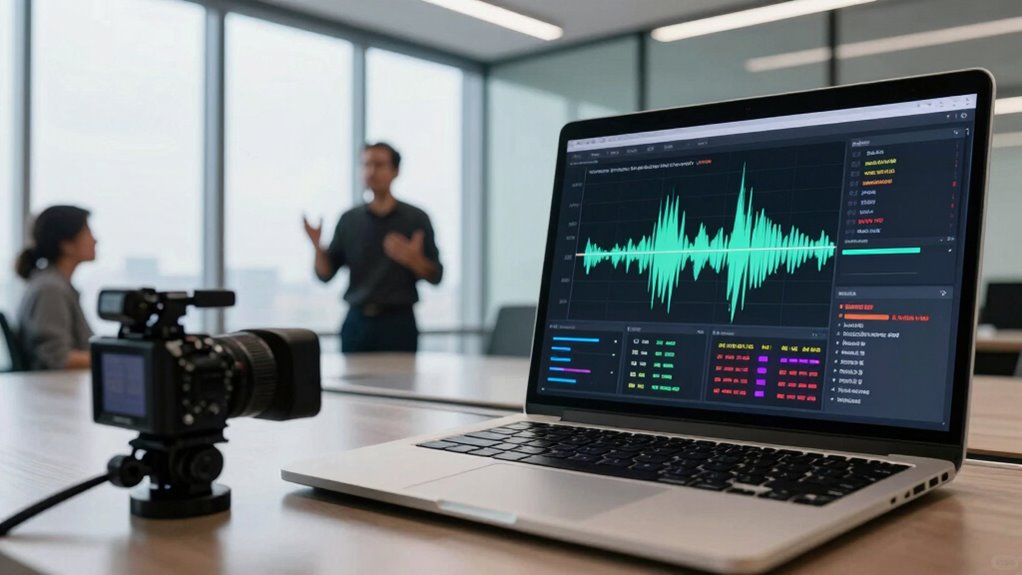
Real-time speech technology converts spoken words into text instantly, enabling seamless communication between humans and machines. This technology is essential because it ensures high caption accuracy, making conversations clear and understandable. Additionally, high refresh rates can improve the responsiveness of speech recognition systems, leading to more natural interactions. However, audio privacy remains a concern, as sensitive information could be exposed if security isn’t prioritized. When you use real-time speech tech, you want to be sure your data stays protected. This technology is especially important for accessibility, helping people with hearing impairments stay connected. It also improves efficiency in meetings and customer service. By delivering quick, reliable captions, real-time speech technology bridges communication gaps. As it advances, maintaining audio privacy and ensuring caption accuracy will be key to its success and widespread adoption. Additionally, leveraging European cloud innovation can enhance the security and sustainability of these solutions, ensuring data protection and energy efficiency. Furthermore, ongoing AI discoveries demonstrate the rapid progress in related fields, which can contribute to more sophisticated and secure speech recognition systems. Incorporating privacy safeguards is crucial as these systems become more prevalent to protect user data and maintain trust.
How Does Live Captioning Work? An Overview of the Process

Live captioning works by instantly converting spoken words into on-screen text, enabling real-time understanding during conversations, presentations, or broadcasts. The process involves capturing speech, quickly analyzing it, and displaying accurate captions. To guarantee quality, caption accuracy depends on advanced speech recognition algorithms, while processing latency affects how fast captions appear. Faster processing reduces delays, making captions feel seamless. Additionally, linguistic context plays a crucial role in improving transcription accuracy by helping the system understand the meaning behind words. Incorporating adaptive learning algorithms allows caption systems to better handle diverse accents and speech patterns over time. The use of body language cues can also enhance the accuracy of live captions by providing additional context. Here’s an overview:
| Step | Function |
|---|---|
| Speech Capture | Microphones pick up spoken words |
| Audio Processing | Converts audio into digital signals |
| Speech Recognition | Transcribes speech into text |
| Caption Rendering | Displays text on screen in real-time |
| Quality Optimization | Adjusts for caption accuracy and latency, often utilizing machine learning algorithms to enhance performance. |
How Speech Recognition and AI Power Live Transcriptions
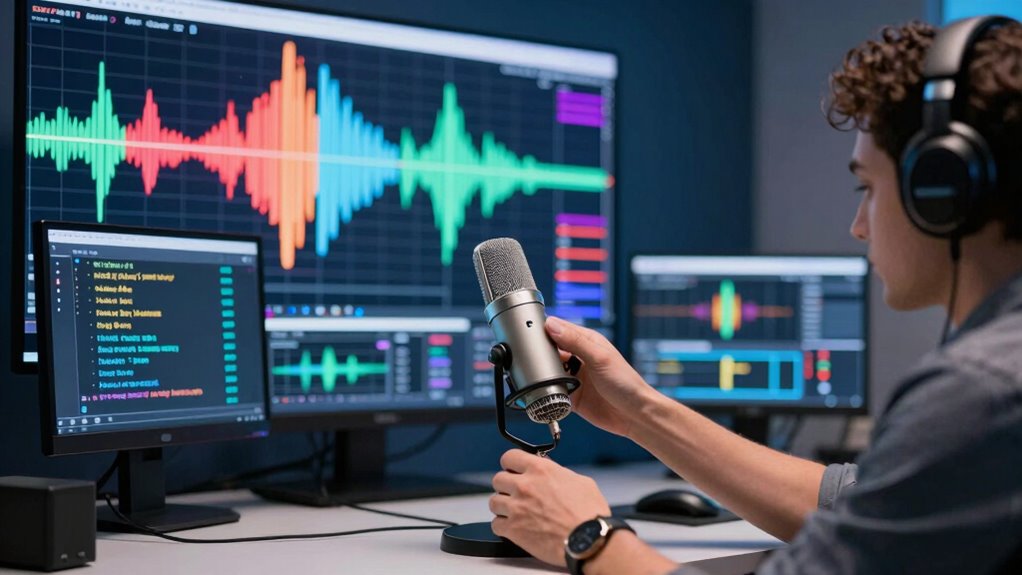
You rely on speech pattern analysis to help the system understand different accents and speech styles. AI language models then process this data to predict and transcribe what’s being said accurately. Together, these technologies make real-time captions faster and more reliable for everyone. Additionally, hydrotherapy techniques can be incorporated into voice commands to enhance home organization and maintenance. Implementing voice-controlled smart devices can further streamline everyday tasks and improve overall efficiency within the modern kitchen environment.
Speech Pattern Analysis
Speech pattern analysis lies at the core of how speech recognition and AI generate accurate transcriptions. It helps systems understand the nuances of speech by examining patterns in pronunciation, rhythm, and intonation. This process enables the AI to distinguish similar sounds through phonetic recognition, improving accuracy even with accents or background noise. By analyzing speech patterns, the technology adapts to different speakers and contexts, making live captions more reliable. Here’s a quick look at key components:
| Component | Function |
|---|---|
| Speech Pattern Analysis | Detects speech rhythms and intonation patterns |
| Phonetic Recognition | Converts sounds into recognizable phonemes |
| Contextual Cues | Uses surrounding words to clarify ambiguous sounds |
| Speaker Adaptation | Customizes recognition based on individual speech styles |
AI Language Models
AI language models serve as the core engines behind real-time speech recognition, transforming spoken words into accurate transcriptions almost instantly. These models process audio input, analyze context, and predict the most probable word sequences, enabling seamless live captions. They are integral to conversational agents, which interact naturally with users and improve understanding over time. By leveraging vast amounts of training data, AI language models grasp nuances of speech, accents, and idiomatic expressions, making transcriptions more precise. The models continually learn from new interactions, enhancing their accuracy and responsiveness. This technology allows live captions to go beyond simple subtitles, providing real-time, context-aware transcriptions that support accessibility, communication, and user engagement across diverse settings.
Challenges in Live Captioning: Accents, Noise, and Accuracy

Accents, background noise, and varying speech patterns pose significant challenges for live captioning systems. Regional dialects can confuse speech recognition, leading to errors. Background noise, like chatter or traffic, makes it harder to pick out words accurately. Different speech tempos and pronunciations add to the difficulty, reducing caption precision. To illustrate:
| Challenge | Example | Impact |
|---|---|---|
| Regional dialects | Southern or Boston accents | Misinterpretation of words |
| Background noise | Café chatter or construction | Words missed or misheard |
| Varying speech | Fast talkers or pauses | Decreased accuracy and clarity |
These factors require sophisticated algorithms to improve transcription quality, but perfect accuracy remains elusive in dynamic environments. Additionally, automatic speech recognition technology continues to evolve, aiming to better handle these obstacles.
Top Tools and Platforms for Live Captioning
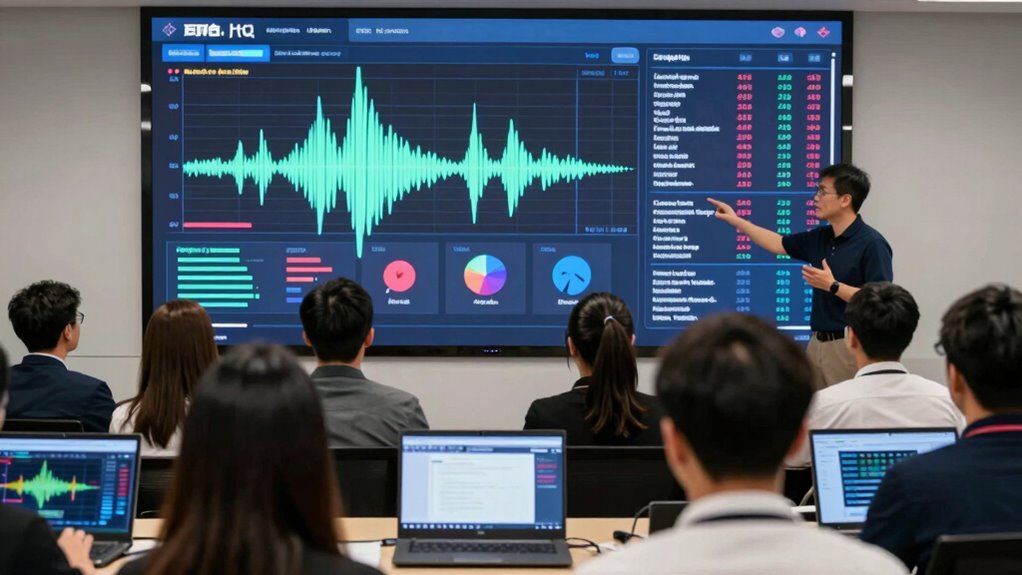
To overcome the challenges of live captioning, many organizations turn to advanced tools and platforms designed specifically for real-time transcription. These platforms offer features like caption customization, enabling you to tailor text for clarity and readability. They also support seamless platform integration, ensuring smooth operation across video conferencing, streaming, or broadcast systems. Additionally, understanding how sleep comfort and environmental factors influence overall well-being can help inform the development of more intuitive and user-friendly captioning technologies. Incorporating user feedback can further enhance caption accuracy and usability. Leveraging technology integration allows these platforms to work more efficiently within existing workflows, empowering you to deliver precise, adaptable live captions, especially when considering system compatibility to meet diverse setup needs. Recognizing the importance of real-time processing can lead to faster, more accurate captions that improve overall user experience.
How Live Speech Tech Promotes Accessibility and Inclusion
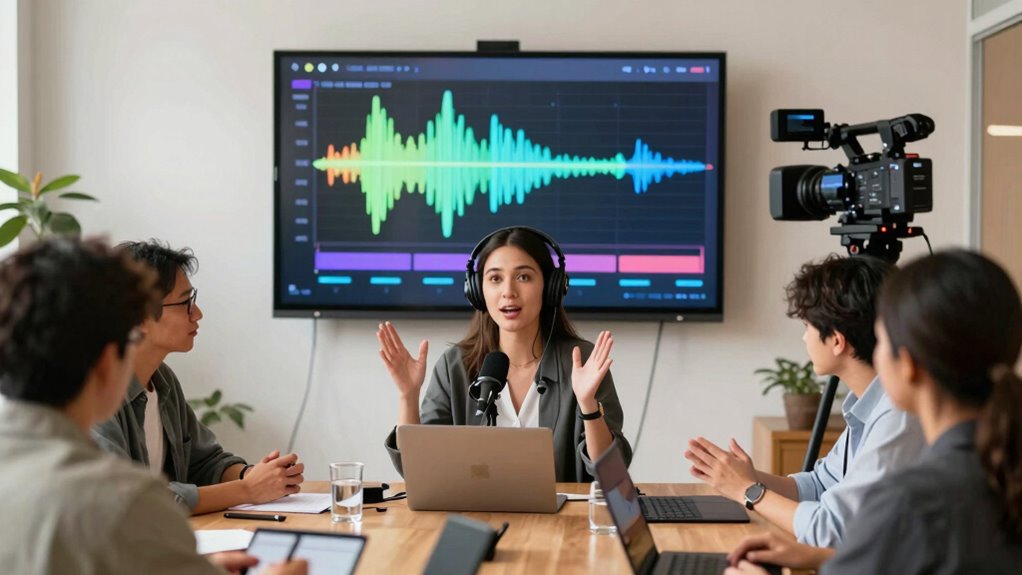
Live speech technology substantially enhances accessibility by breaking down communication barriers for people with hearing impairments and other disabilities. It allows for real-time captions that make conversations, events, and broadcasts more inclusive. By supporting sign language integration, the technology can bridge gaps between spoken words and visual communication, ensuring deaf individuals can participate fully. Incorporating advanced speech recognition technology improves the accuracy and responsiveness of live captions, making interactions more natural. Cultural sensitivity is also essential; tailoring captions to respect language nuances and cultural contexts fosters respect and understanding. These features demonstrate a commitment to inclusivity, making public spaces, workplaces, and digital content accessible to all. As a result, live speech tech promotes a more equitable society where everyone can engage and communicate without limitations. Incorporating timeless information from classic motorcycle restoration can serve as a metaphor for preserving valuable communication traditions in evolving technology. Additionally, ongoing research in media literacy helps ensure that users can effectively interpret and trust the generated captions, reinforcing the importance of cultural competence in designing inclusive tools. Moreover, integrating indoor air quality considerations in the development of such technology can improve user comfort during extended use.
Future Trends: Making Live Captions Smarter and More Natural
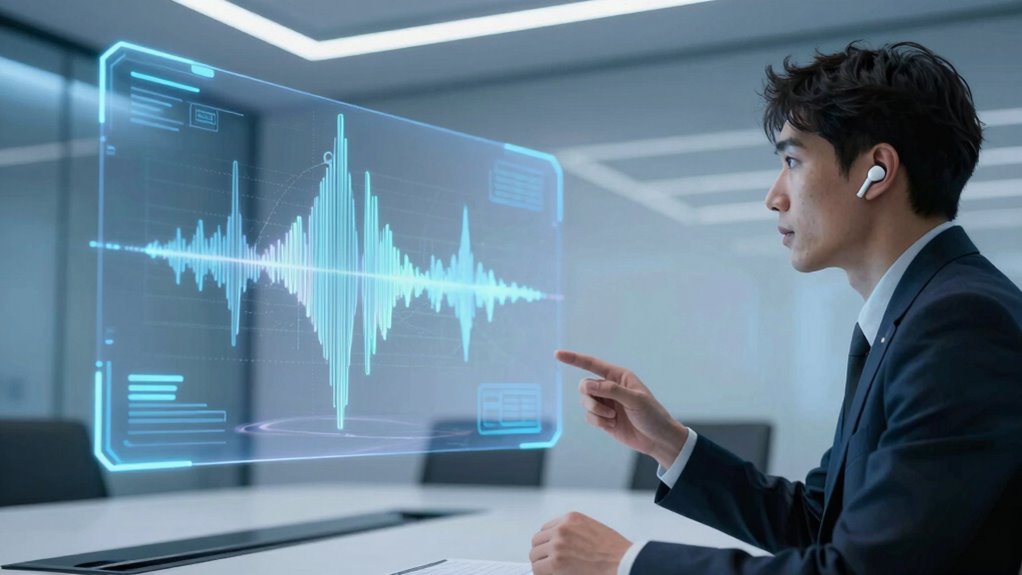
Advancements in artificial intelligence and machine learning are driving live captioning systems toward greater intelligence and naturalness. Future trends focus on enhancing the user experience by incorporating voice modulation and emotional tone, making captions feel more authentic and engaging. You’ll see improvements like:
- Better recognition of emotional cues to reflect tone accurately
- Dynamic voice modulation that matches speakers’ mood shifts
- Context-aware captions that adapt to conversation flow
- Increased personalization to suit individual preferences
These innovations help your captions not only transcribe speech but also convey the speaker’s intent and emotion. As a result, live captions become more intuitive, making virtual interactions feel more genuine and relatable.
Frequently Asked Questions
How Secure Is Live Speech Data During Transcription?
Your live speech data is generally secure during transcription because providers use data encryption to protect your information. They also require your user consent before capturing or processing your speech, ensuring transparency. While encryption keeps your data safe from unauthorized access, it’s important to review the privacy policies of the service you’re using. Always stay informed and give consent knowingly to maintain control over your speech data.
Can Live Captioning Be Customized for Different Languages?
Think of live captioning as a multilingual tour guide adjusting seamlessly to different languages and dialects. You can customize it to support various languages, ensuring clear communication across cultures. Dialect adaptation is like tuning a radio to catch every local nuance. This flexibility makes real-time speech tech invaluable for diverse audiences, enabling you to break language barriers effortlessly and connect more effectively in any setting.
What Are the Costs Associated With Implementing Live Speech Technology?
Implementing live speech technology involves significant cost implications, including software licenses, hardware upgrades, and ongoing maintenance. You should conduct an ROI analysis to determine if the benefits—like improved accessibility and user engagement—justify the investment. While initial expenses can be high, the long-term gains in customer satisfaction and compliance often outweigh costs. Carefully evaluate your needs to balance expenses with potential benefits for a smart, cost-effective deployment.
How Do Live Captions Handle Technical Jargon or Slang?
You might notice live captions sometimes struggle with industry slang or technical vocabulary, but they’re continuously improving. The system uses advanced algorithms and contextual analysis to recognize and adapt to specialized language. When it encounters unfamiliar terms, it often guesses based on nearby words or learns from user corrections. This helps guarantee that even complex technical vocabulary and slang are more accurately transcribed, making the captions more useful and reliable for you.
Are There Privacy Concerns With Real-Time Speech Processing?
Think of real-time speech processing as a guarded vault—privacy concerns are real but manageable. You’re protected through data encryption, which locks your conversations tight, and user consent, ensuring you’re in control. While some worry about data exposure, these systems prioritize your privacy, making sure your voice stays yours. As long as you’re aware and give your consent, you can confidently use live captions without fear of unwanted leaks.
Conclusion
As you explore the world of live speech tech, you’ll realize how these innovations are shaping moments when words matter most—sometimes when you least expect it. Just as a sudden noise or unexpected accent can challenge accuracy, your connection to seamless, inclusive communication grows stronger. Embracing these tools isn’t just about technology; it’s about making sure everyone’s voice is heard, no matter the circumstance. In this changing landscape, the smallest advancements often have the biggest impact.