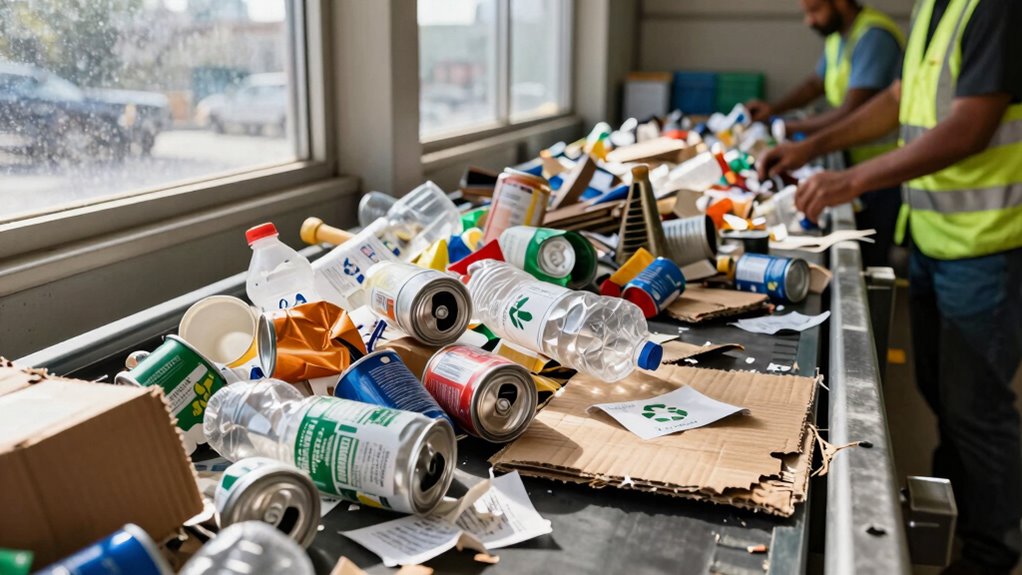

Many materials labeled as recyclable never get reused because of contamination, sorting issues, and economic hurdles. Dirty or mixed recyclables are hard to process and can damage machines, reducing their market value. Materials like aluminum and glass are easier to recycle, but complex plastics or composites pose significant challenges. Economic factors like market demand also influence what actually gets reused. Keep exploring to understand how your choices impact recycling outcomes and what really makes the cut.

Prime made for students and young adults
- Fast, free delivery for dorm and study essentials
- Prime Video and Amazon Music included
- Member-only deals
Key Takeaways
- Many recyclables are discarded due to contamination, which degrades material quality and complicates sorting and cleaning processes.
- Simple, pure materials like aluminum and glass are more likely to be reused, while complex or mixed plastics pose significant processing challenges.
- Infrastructure limitations and lack of proper sorting technology reduce the recyclability of certain materials.
- Market fluctuations and low commodity prices discourage recycling programs, leading to increased waste in landfills.
- Consumer practices and awareness directly impact contamination levels and the overall success of recycling efforts.
As an affiliate, we earn on qualifying purchases.
Why Do Not All Recycled Materials Get Reused?
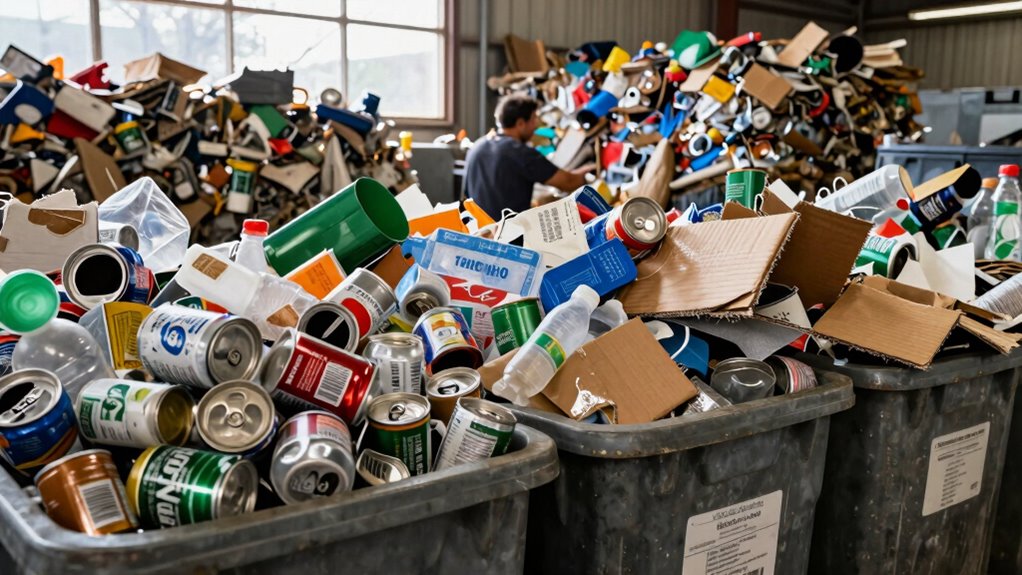
Not all recycled materials get reused because of issues like contamination, sorting errors, and the quality of the recovered materials. Many recycling myths suggest that everything thrown into the bin is automatically reused, but that’s not true. Your consumer habits play a big role in this process. For example, if recyclables are dirty or mixed with non-recyclables, they become contaminated, making them harder to process. Sorting errors at recycling facilities also lead to some materials being discarded rather than reused. Additionally, the quality of the recovered materials impacts whether they can be transformed into new products. Improving recycling efficiency and ensuring proper disposal practices can help increase the amount of materials that are successfully reused. Incorporating advanced sorting technology can further enhance recovery rates and reduce contamination. Community education on proper recycling techniques is essential to minimize contamination and improve overall outcomes. Furthermore, the recycling market for recovered materials can fluctuate, affecting whether they are reused or sold for other purposes. Understanding the cryptids and folklore associated with recycling myths can sometimes influence public perception and behaviors. Even when you do your part, these challenges mean not everything you recycle ends up being reused, highlighting the need for better education and improved recycling systems.
automatic optical sorter for recycling
As an affiliate, we earn on qualifying purchases.
As an affiliate, we earn on qualifying purchases.
How Are Recycling Materials Sorted and Processed?
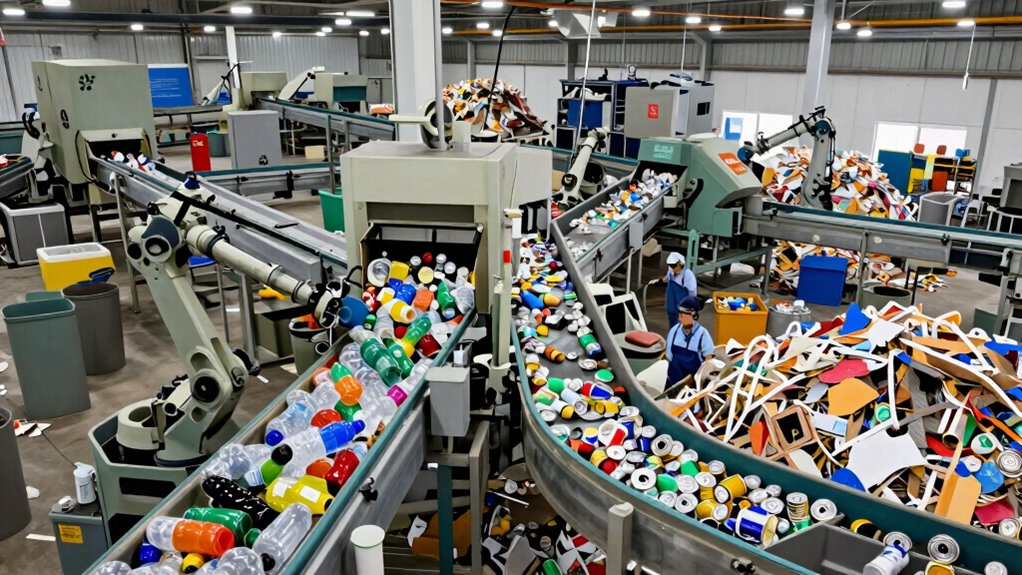
Recycling materials go through a series of careful sorting and processing steps to prepare them for reuse. First, the sorting process begins at recycling facilities, where materials are separated by type—plastic, paper, metal, and glass. Advanced machinery, like conveyor belts and automated scanners, help streamline this process. Material identification is vital; sensors and optical sorters detect specific characteristics such as resin type or color, guaranteeing each material is routed correctly. Once sorted, materials are cleaned and prepared for their next stage, which may involve shredding, melting, or pulping. This meticulous process helps remove contaminants and guarantees that each material is suitable for manufacturing new products. Effective sorting and accurate material identification are essential to make recycling efficient and to reduce waste going to landfills. Proper sorting techniques are crucial for maximizing material recovery and ensuring the sustainability of recycling efforts. Additionally, implementing advanced processing technologies can further enhance the efficiency and quality of recycled materials.
recycling contamination removal tools
As an affiliate, we earn on qualifying purchases.
As an affiliate, we earn on qualifying purchases.
Which Materials Are Easier to Recycle and Why?
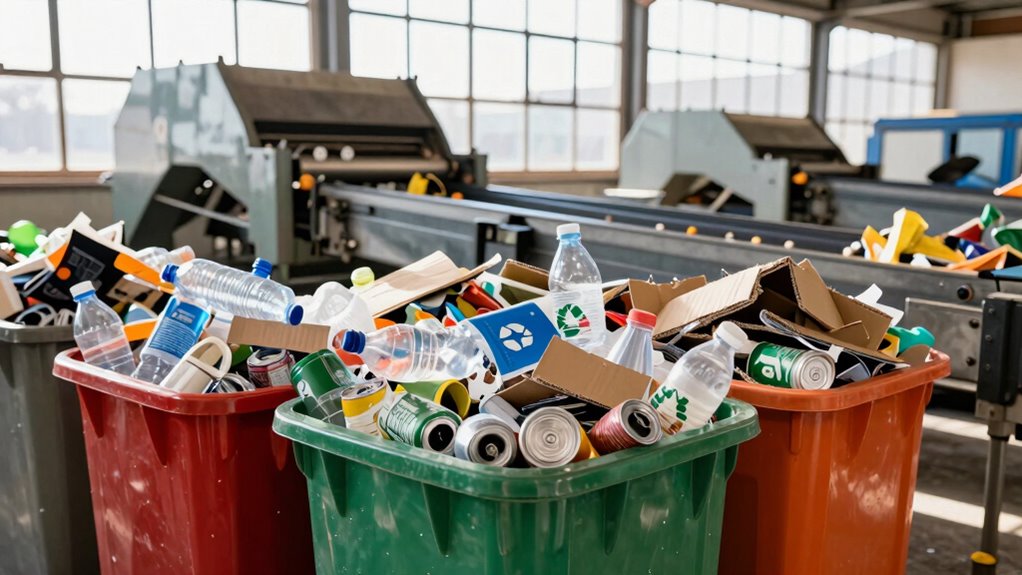
You’ll find that materials with simple compositions, like aluminum cans and glass bottles, are easier to recycle because they don’t require complex processing. The availability of recycling facilities also plays a big role—if the infrastructure isn’t there, even recyclable materials can end up wasted. Additionally, lower contamination levels make recycling more efficient, so clean materials are much simpler to process. For example, recycling standards help ensure the quality and consistency of materials being processed. Furthermore, understanding auditory processing can enhance how we recognize and sort recyclable materials based on their acoustic and physical properties. Recognizing the material properties of items can further streamline sorting and recycling efforts, making the process more effective.
Material Composition Matters
Materials with simpler and more consistent compositions are generally easier to recycle because they can be processed using straightforward methods without extensive separation. When a material’s chemical composition is uniform, it’s less prone to issues like material degradation during recycling, which can weaken or contaminate the final product. For example, pure metals like aluminum and steel are easier to recycle because their chemical makeup remains stable and predictable. Conversely, complex composites or mixed materials pose challenges since different components may degrade differently or require special treatments. Understanding the chemical composition helps recyclers determine the best processing techniques and ensures the quality of recycled materials. Ultimately, materials with stable, predictable compositions streamline recycling and improve the likelihood of reuse.
Recycling Infrastructure Availability
Certain materials are easier to recycle because the existing infrastructure is already well-developed to handle them. For example, aluminum cans and PET plastic bottles benefit from extensive recycling infrastructure, making their material availability high and collection straightforward. These materials are common, so recycling facilities are optimized to process them efficiently. In contrast, materials with limited or specialized infrastructure—like certain plastics or composite materials—are harder to recycle because the necessary equipment and collection systems are less widespread. The availability of recycling infrastructure directly impacts which materials are more easily recycled; if the infrastructure is in place and well-maintained, material availability increases, improving recycling rates. Well-developed recycling infrastructure enhances collection efficiency, making it simpler to recover specific materials, ensuring higher reuse potential. Additionally, ongoing advancements in recycling technology are gradually expanding the range of materials that can be effectively processed.
Contamination Levels Impact
Recycling processes are markedly affected by contamination levels, which determine how easily materials can be recovered and reused. When contamination exceeds certain thresholds, the sorting complexity increases, making it harder to clean and separate recyclables efficiently. Materials with low contamination thresholds are more difficult to recycle because even small amounts of food, dirt, or other waste can render entire batches unusable. For example, plastics with food residue or paper contaminated with liquids often require extensive cleaning or are rejected altogether. Conversely, materials like clean glass or metal tend to have higher contamination thresholds, making them easier to process. Additionally, understanding sorting complexity can help improve recycling efficiency and reduce waste. Recognizing contamination thresholds is crucial because they directly impact the success of recycling efforts and the quality of recovered materials. Furthermore, advancements in recycling technology are continuously working to overcome these contamination hurdles, making recycling more feasible for a wider range of materials. For instance, innovations in material processing are emerging to better handle contaminated recyclables and increase recovery rates. Improving contamination management can significantly enhance the overall effectiveness of recycling systems.
recycling bin with separate compartments
As an affiliate, we earn on qualifying purchases.
As an affiliate, we earn on qualifying purchases.
How Does Contamination Affect Recycling Quality?
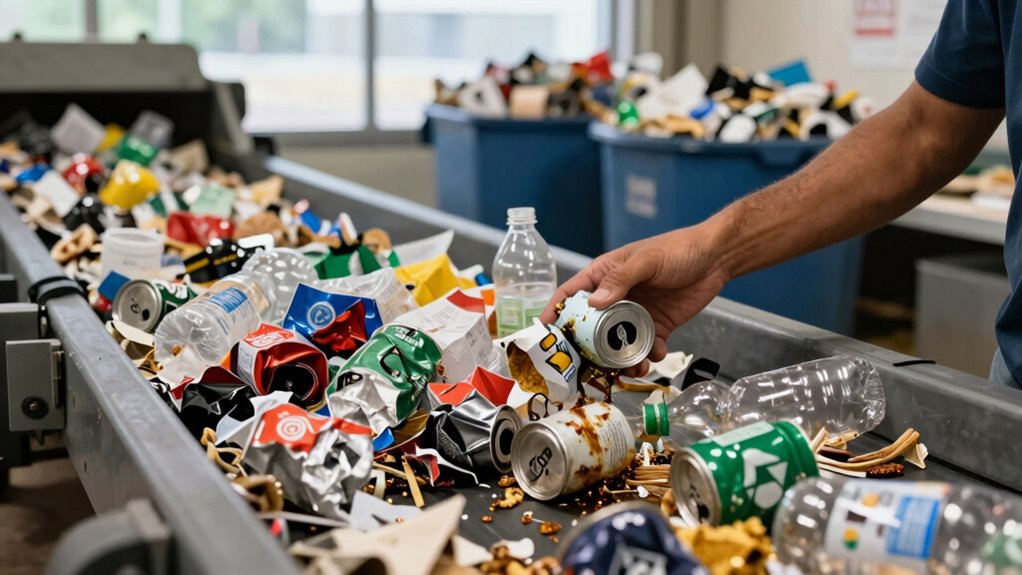
Contamination can considerably degrade the quality of recycled materials, making them harder to process and less valuable. Many recycling myths suggest that any waste mixed with recyclables can be cleaned and reused, but contamination prevention is vital. When non-recyclables or hazardous substances are mixed in, it introduces impurities that disrupt sorting and refining processes. These contaminants can damage machinery, increase processing costs, and lower the quality of the final product. As a result, recyclables become less marketable and may even be rejected by recycling facilities. Your efforts to keep recyclables clean and free of contaminants directly impact the efficiency and effectiveness of recycling programs. Understanding how contamination affects quality highlights the importance of proper sorting and reducing waste that compromises recycled materials’ value. Proper handling and awareness of contamination are essential for maintaining high standards in recycling efforts. Additionally, implementing better waste separation practices can significantly improve the overall recycling process and outcomes. Recognizing the role of contamination control in recycling can help communities develop more effective waste management strategies. Improving public education around proper recycling habits can also lead to fewer contaminants entering the system, thus enhancing overall efficiency.
How Do Economic Factors Influence Recycling Outcomes?
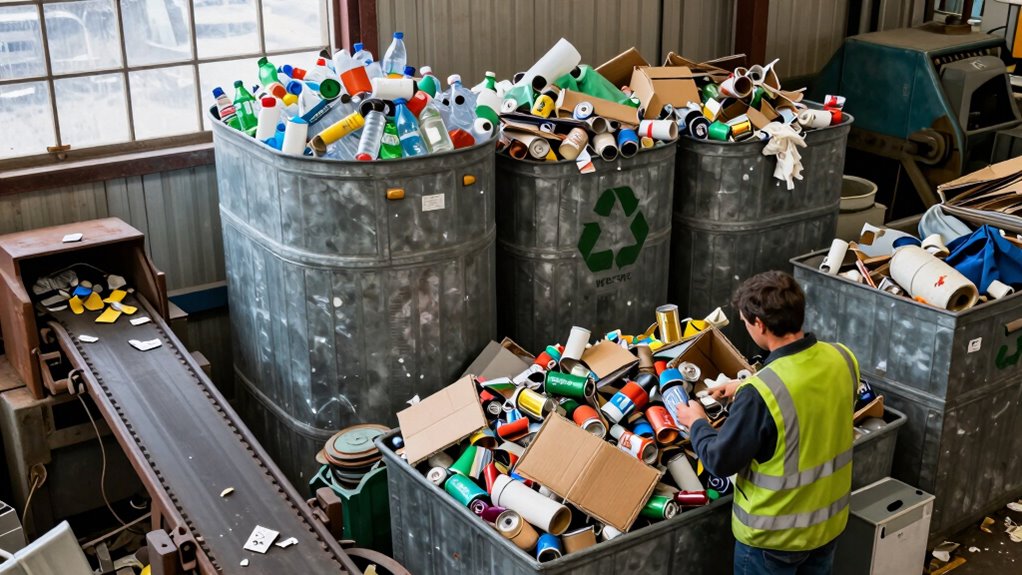
Economic factors play a vital role in recycling outcomes, especially as market prices for materials fluctuate. When prices drop, recycling programs may struggle to stay sustainable, while subsidies can encourage more participation. Understanding these financial influences helps you see why recycling efforts can vary over time. Additionally, the cost of processing and handling significantly impacts whether recycling remains economically viable for communities. Fluctuations in commodity prices can also influence material demand, affecting the volume of recyclables collected and processed.
Market Prices Fluctuate
When market prices for recyclable materials rise and fall, they directly impact the viability of recycling programs. Price volatility makes it difficult to plan long-term investments, causing uncertainty for recyclers and municipalities alike. When the market value drops, recycling becomes less profitable, leading to layoffs, reduced services, or even program closures. Conversely, a sudden spike in prices can boost recycling efforts temporarily. This fluctuation can also discourage consumers from sorting waste properly, fearing that their efforts won’t be valued.
- You may see recyclable materials dumped or discarded instead of reused.
- Recycling facilities face unpredictable income streams, risking layoffs.
- Municipal budgets tighten, limiting recycling infrastructure upgrades.
- Valuable materials might be wasted when prices plummet.
- Overall, market volatility keeps recycling uncertain and fragile.
Recycling Subsidies Impact
Recycling subsidies play a crucial role in shaping the success of recycling programs by providing financial support that offsets operational costs. These policy incentives encourage municipalities and companies to prioritize recycling efforts, making it economically feasible to process materials that might otherwise be discarded. When subsidies are available, recycling becomes more attractive, boosting participation rates and reducing waste. Conversely, the absence of subsidies can lead to lower recycling rates as economic barriers increase. Understanding these economic factors helps explain why some materials are more likely to be recycled than others.
| Effect of Recycling Subsidies | Impact on Recycling Outcomes |
|---|---|
| Lower operational costs | Increased recycling participation |
| Policy incentives | Encourages investment in recycling |
| Market stability | Boosts long-term recycling efforts |
| Reduced waste disposal costs | Promotes reuse of materials |
| Economic viability | Ensures recycling programs survive |
How Does Global Market Demand Impact Recycling Effectiveness?
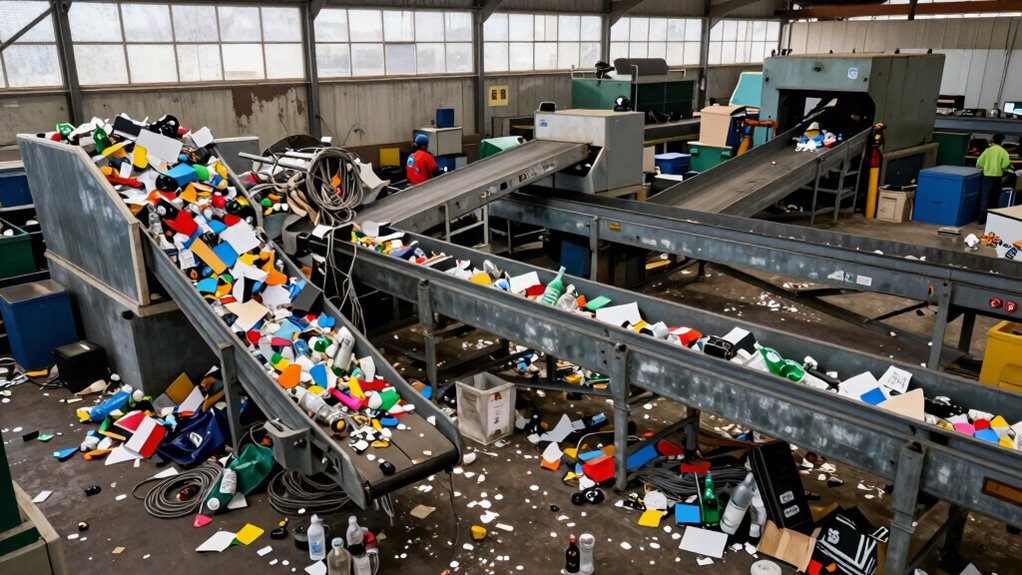
Global market demand plays a crucial role in shaping the effectiveness of recycling efforts worldwide. When global demand for recycled materials drops, your recycling efforts can feel futile, as there’s little incentive for companies to buy or reuse what you’ve collected. Market influence determines whether recyclable materials are valued or discarded, directly affecting what gets reused.
You might feel frustrated seeing valuable recyclables pile up, knowing their potential isn’t realized. The fluctuating global demand can cause recycling programs to stall or shut down altogether. Additionally, EnergyLast can impact the availability and cost of recycled materials, further complicating recycling efforts.
- Your waste might be exported, only to be dumped or burned elsewhere
- Recyclables could end up in landfills because of low market prices
- Recycling efforts become inconsistent, discouraging community participation
- Valuable materials are wasted, harming the environment
- Your impact feels diminished by global economic shifts
Which Materials Are Difficult or Impossible to Recycle Efficiently?
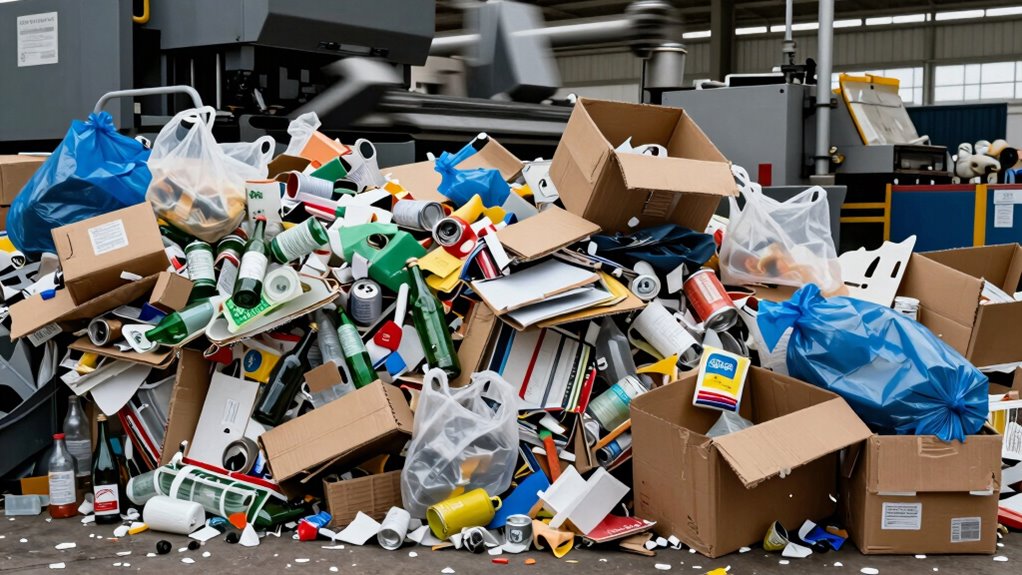
Many materials pose significant challenges to recycling because their composition or structure makes processing difficult or unfeasible. For instance, materials prone to material degradation often lose integrity during recycling, reducing quality and limiting reuse options. Plastics with multiple layers or mixed materials are especially problematic, as they degrade chemically when processed together, leading to chemical incompatibility issues. These incompatibilities cause the recycled material to weaken or become unusable. Additionally, some items contain additives or contaminants that interfere with recycling processes, making effective separation and cleaning hard. As a result, these materials are either downgraded into lower-quality products or discarded altogether. Overcoming these challenges requires advanced technology and better design, but currently, many such materials remain difficult or impossible to recycle efficiently.
How Can Consumers Help Improve Recycling Results?
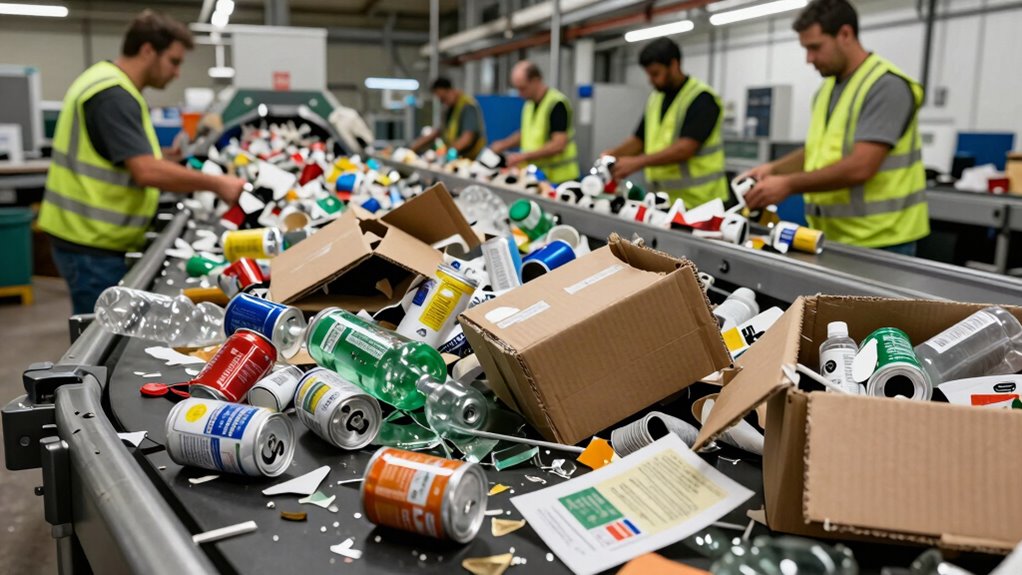
Consumers play a crucial role in improving recycling outcomes by making mindful choices and following proper disposal practices. Your increased consumer awareness and commitment to recycling education can make a real difference. By staying informed about what materials are recyclable and how to prepare them correctly, you reduce contamination and waste. Small actions, like rinsing containers or avoiding plastic bags in recycling bins, have a big impact.
Consumers can boost recycling success through mindful choices and proper disposal practices.
- Educate yourself on local recycling rules to avoid mistakes
- Choose products with minimal or recyclable packaging
- Support brands that prioritize sustainability
- Spread awareness among friends and family
- Advocate for better recycling programs in your community
Your conscious efforts can help ensure more materials are reused and that recycling facilities work more efficiently. Every responsible choice counts toward a cleaner, more sustainable future.
Frequently Asked Questions
What Are the Environmental Impacts of Recycling Processes?
Recycling processes can reduce plastic pollution and lower your carbon footprint by reusing materials instead of producing new ones. However, they also consume energy and resources, which can contribute to pollution if not managed properly. You might think recycling is always eco-friendly, but incomplete sorting or contaminated materials can cause environmental harm. Ultimately, proper recycling helps protect ecosystems, but it’s essential to understand and minimize its own environmental impacts.
How Do Local Policies Influence Recycling Success?
Local policies directly impact your recycling success by shaping how waste is managed. When policies address policy barriers, they make recycling easier and more efficient. Community engagement is vital; when residents are involved and informed, participation increases. If policies ignore these factors, recycling efforts struggle. You can help by advocating for clear, supportive policies and staying engaged with local recycling programs to improve overall success.
Are There Emerging Technologies Improving Recycling Efficiency?
Imagine a future where waste transforms like a phoenix rising. Emerging technologies, like innovative sorting and chemical recycling, are making this possible. They act as catalysts, breaking down complex materials into reusable forms more efficiently. These advancements help you recycle smarter, turning trash into treasure, and reducing environmental impact. As these technologies evolve, they promise a cleaner, more sustainable world, inspiring hope and action in your everyday recycling efforts.
How Do Recycling Rates Differ Worldwide?
You’ll notice recycling rates vary worldwide due to global disparities and cultural influences. In some countries, strict regulations and advanced infrastructure boost recycling efforts, while others face challenges like limited resources or low public awareness. Cultural attitudes toward waste and reuse also shape recycling habits. Understanding these differences helps you see why some regions excel and others struggle, highlighting the importance of tailored solutions to improve global recycling practices.
What Role Do Manufacturers Play in Recycling Challenges?
Imagine a tangled web, with manufacturers at the center, pulling strings that influence recycling challenges. You see, manufacturers’ responsibilities include designing products for easier reuse and recycling, which impacts the entire supply chain. When they cut corners or prioritize cost over sustainability, it complicates recycling efforts, causing waste to pile up or become unrecyclable. Their choices directly shape what gets reused, making their role vital in tackling recycling hurdles.
Conclusion
Understanding the recycling process reveals why not everything gets reused. It’s not just about sorting; contamination, market demand, and material type all play roles. While some items are easy to recycle, others are tricky or impossible without advanced technology. You can help by rinsing containers, choosing recyclable products, and staying informed. Remember, recycling isn’t perfect, but your efforts make a difference—turning waste into valuable resources and pushing the system toward better sustainability.
Halloween Picks
halloween
As an affiliate, we earn on qualifying purchases.