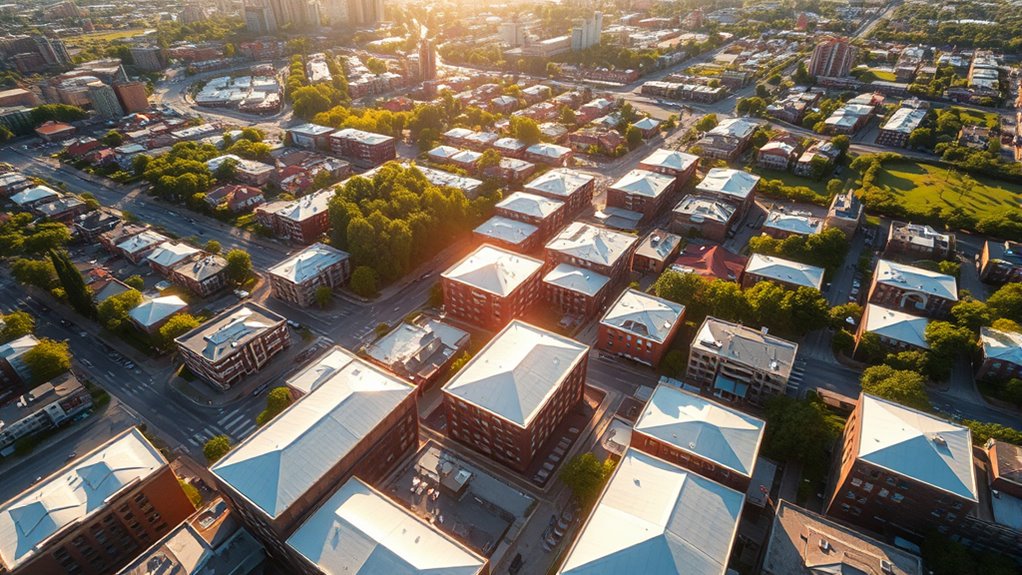

Reflective roofs are an effective way to cool urban areas by reducing the heat associated with the heat island effect. They reflect more sunlight, absorb less heat, and help lower city surface temperatures, making neighborhoods more comfortable. By decreasing energy demand for cooling, they also cut down on greenhouse gases and save money. Cities adopting these strategies often see healthier, more resilient communities. To discover how these solutions can transform your city, keep exploring the many benefits they offer.

Prime made for students and young adults
- Fast, free delivery for dorm and study essentials
- Prime Video and Amazon Music included
- Member-only deals
Key Takeaways
- Reflective roofs reduce surface and air temperatures, mitigating the urban heat island effect.
- They lower energy consumption for cooling, decreasing greenhouse gas emissions.
- Incorporating reflective roofs in urban planning enhances city resilience and sustainability.
- Widespread adoption improves public health by reducing heat-related risks.
- Community engagement and policy incentives promote the adoption of reflective roofing solutions.
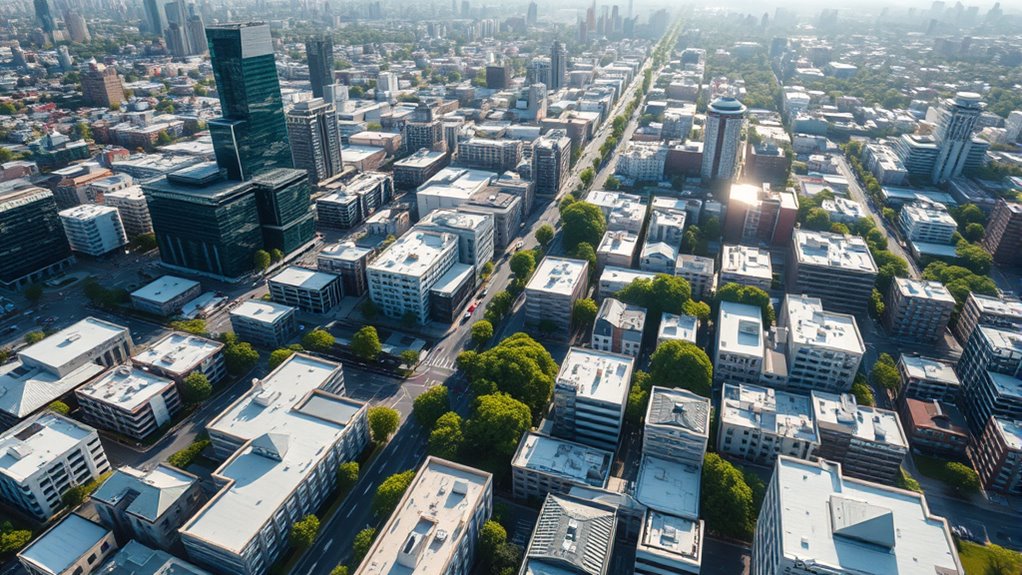
As urban areas grow hotter due to the heat island effect, cities are turning to reflective roofs as an effective solution. This approach is gaining traction because it directly addresses the challenge of rising temperatures in densely built environments. Reflective roofs, often made from materials that reflect more sunlight and absorb less heat, can substantially reduce the overall temperature of a city’s surface. When incorporated into urban planning, these roofs become a crucial component of strategies aimed at making cities more livable and sustainable. By reflecting sunlight, they prevent rooftops from reaching extreme temperatures, which in turn lowers the surrounding air temperature, alleviating the urban heat island phenomenon.
Implementing reflective roofs isn’t just about comfort; it’s a wise move for boosting energy efficiency. When roofs stay cooler, your building’s cooling systems don’t have to work as hard, leading to lower energy consumption. This reduction in energy use translates into less strain on power grids and decreases your carbon footprint. As a city or building owner, you’ll notice your energy bills drop, especially during the hot summer months, making reflective roofing a financially sound investment. It’s a win-win situation—improving comfort while also advancing sustainability goals.
In terms of urban planning, integrating reflective roofs requires thoughtful design and policy support. City planners can incentivize property owners to adopt reflective materials through rebates or building codes that emphasize sustainability. This proactive approach ensures that new developments and renovations contribute to the city’s cooling efforts. Furthermore, it encourages a shift toward more climate-conscious construction practices. When urban planning prioritizes reflective roofing, it creates a healthier, more resilient environment for residents and reduces the heat stress during heatwaves.
You also benefit from the widespread adoption of reflective roofs because they contribute to a more equitable urban environment. Lower city temperatures help reduce health risks associated with heat exposure, especially for vulnerable populations. Additionally, these roofs can be combined with green infrastructure, like rooftop gardens, to further enhance cooling and improve air quality. As someone invested in urban sustainability, understanding how reflective roofs fit into the broader framework of urban planning and energy efficiency helps you see their potential as a key tool in combating climate change and enhancing city life.
Furthermore, implementing reflective roofs can influence public perception and encourage community participation in sustainability initiatives, fostering a collective effort toward climate resilience.
As an affiliate, we earn on qualifying purchases.
Frequently Asked Questions
How Long Do Reflective Roofs Typically Last?
Reflective roofs typically last between 10 to 20 years, depending on the material and roof durability. If you choose high-quality materials like metal or coated membranes, you’ll benefit from longer material longevity. Proper maintenance, such as regular inspections and cleaning, can also extend their lifespan. Keep in mind that weather conditions and installation quality influence how long your reflective roof remains effective and durable over time.
Are Reflective Roofs Cost-Effective for Homeowners?
Ever wondered if reflective roofs are worth the investment? For homeowners, they can be very cost-effective by boosting energy savings, reducing cooling costs, and lowering environmental impact. While upfront costs might seem high, the long-term savings often outweigh initial expenses. Plus, you help combat climate change. Isn’t protecting your wallet and the planet a smart choice? Reflective roofs offer a practical way to save money and be eco-friendly.
Do Reflective Roofs Require Special Maintenance?
Reflective roofs generally have manageable maintenance requirements. You’ll need to surface clean them periodically to remove dirt, debris, and leaves that can reduce their reflectivity. Unlike some roofing types, they don’t require special treatments or coatings once installed. Regular inspections help ensure they stay effective, but overall, maintaining reflective roofs is straightforward and cost-effective, helping you keep your home cooler and energy-efficient without much hassle.
How Do Reflective Roofs Perform in Winter?
In winter, reflective roofs perform well despite seasonal temperature variations because their material reflectivity properties help prevent heat loss. You’ll find they stay effective by reflecting sunlight during the day, even in colder months. This can keep your building cooler in summer and maintain warmth in winter. Their design ensures they adapt to seasonal changes, providing consistent energy efficiency and comfort year-round without needing special adjustments.
Can Reflective Roofs Be Installed on Existing Buildings?
Think of installing reflective roofs as giving your building a fresh coat of armor. Yes, you can install them on existing structures, but watch out for installation challenges like roof type and accessibility. Aesthetic considerations matter too, as reflective surfaces might alter your building’s appearance. With proper planning, these roofs can seamlessly enhance your property’s energy efficiency and curb appeal, making your building smarter and cooler.
As an affiliate, we earn on qualifying purchases.
Conclusion
By installing reflective roofs, you can substantially lower your city’s temperature and combat urban heat islands. Some might worry about the cost, but think of it as an investment in your community’s health and comfort. The upfront expense saves you money on cooling bills and reduces pollution over time. So, don’t let concerns hold you back—embrace cool, sustainable solutions and help create a more livable, vibrant city for everyone.
energy-efficient reflective roof panels
As an affiliate, we earn on qualifying purchases.
As an affiliate, we earn on qualifying purchases.
urban heat island mitigation roofing
As an affiliate, we earn on qualifying purchases.
As an affiliate, we earn on qualifying purchases.
Halloween Picks
halloween
As an affiliate, we earn on qualifying purchases.