
In a voice-first world, Braille still matters because it gives you independence and privacy that technology can’t always provide. Tactile literacy helps you understand environments better, especially in noisy or quiet settings. It also supports cognitive development and guarantees everyone has equal access. Braille’s presence in public signs and devices shows society’s commitment to inclusivity. To discover how Braille continues to play a vital role today, keep exploring this important topic.

Prime made for students and young adults
- Fast, free delivery for dorm and study essentials
- Prime Video and Amazon Music included
- Member-only deals
Key Takeaways
- Braille provides essential tactile literacy and independence in noisy or silent environments where voice technology may fail.
- It enhances cognitive skills, memory, and deeper comprehension beyond spoken words.
- Braille signage and labels promote inclusive public spaces and universal accessibility.
- Tactile literacy supports navigation of everyday environments—elevators, doors, transportation—safely and independently.
- Preserving Braille ensures diverse, inclusive communication methods complement voice-first devices for all users.
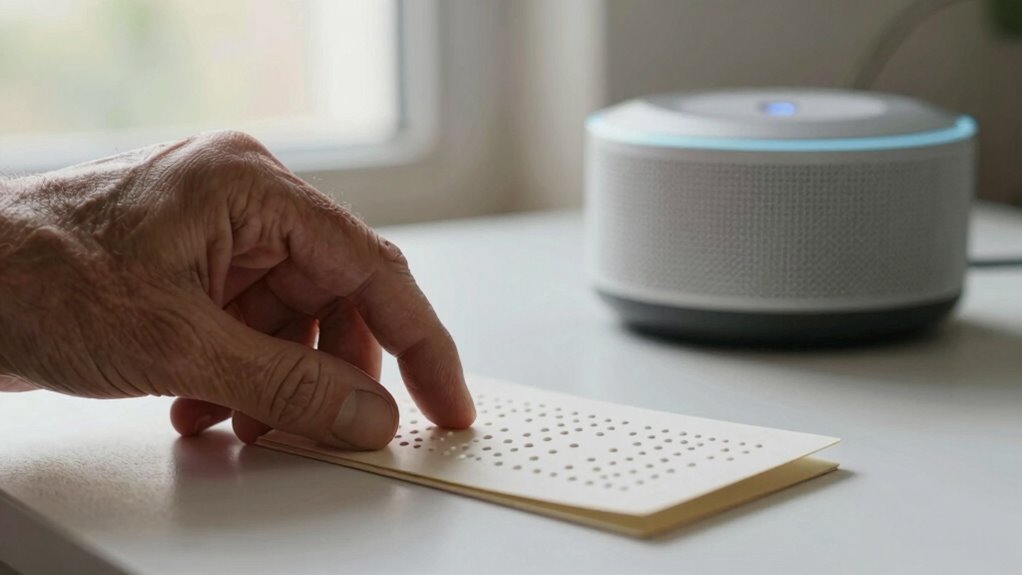
Have you ever wondered if traditional reading methods like Braille still hold relevance in today’s voice-driven world? While voice assistants and screen readers have transformed how many access information, Braille remains a pivotal part of tactile literacy and accessibility awareness. It’s not just about reading text; it’s about empowering individuals who rely on touch to interpret their environment and communicate effectively. Braille provides a tangible way to develop literacy skills, especially for those who are deaf-blind or have limited hearing. It offers independence that voice technology alone can’t fully deliver, allowing users to read menus, medication labels, and personal notes privately and accurately.
In a world increasingly dominated by audio-based technology, you might think Braille is becoming obsolete. But it’s quite the opposite. Tactile literacy—reading through touch—continues to bridge gaps that voice technology can’t always fill. For example, in noisy environments or situations where silence is required, Braille remains a dependable form of access. Furthermore, tactile literacy fosters cognitive development, improves memory, and enhances understanding of language structures. It also encourages a deeper engagement with text, which voice commands might overlook. When you incorporate Braille into daily life, you’re supporting a broader understanding of accessibility awareness and recognizing that no single technology can meet all needs. Supporting tactile literacy also promotes inclusive design that benefits everyone. Additionally, tactile literacy can be a key component in universal design principles that aim to make environments accessible for all. Recognizing the importance of tactile methods can also influence how we approach public signage and wayfinding solutions.
Braille’s importance extends beyond individual use; it plays an essential role in promoting inclusive environments. When you see Braille signs on elevators, doors, or public transportation, you’re witnessing a commitment to accessibility awareness. These tactile markings serve as universal symbols of inclusivity, ensuring that everyone can navigate spaces independently. Maintaining and expanding Braille literacy programs is fundamental in fostering equal opportunities, especially as technology evolves. While voice-first devices provide convenience, they shouldn’t replace tactile literacy. Instead, they should complement each other, creating a more all-encompassing approach to accessibility.
Ultimately, Braille remains a critical part of ensuring that no one is left behind in a voice-driven world. It’s about preserving tactile literacy as a foundational skill and promoting accessibility awareness at every level. By recognizing the enduring value of Braille, you help uphold a society that respects and accommodates diverse ways of perceiving and interacting with the world. Braille isn’t just about reading; it’s about independence, dignity, and equal access—values that remain essential in any era, voice-first or not. Additionally, supporting tactile literacy helps reinforce conservation efforts by fostering a society that values sustainable and inclusive practices.
As an affiliate, we earn on qualifying purchases.
Frequently Asked Questions
How Does Braille Support Literacy Beyond Reading and Writing?
Braille supports literacy beyond reading and writing by enhancing tactile literacy, allowing you to develop a keen sense of touch that improves overall comprehension. It also promotes sensory development, engaging your tactile senses to reinforce learning and memory. When you use Braille, you strengthen your ability to interpret tactile information, which can boost cognitive skills, spatial awareness, and independence, making it an essential tool even in a voice-first world.
Can Braille Be Integrated With Modern Digital Devices?
Yes, braille can be integrated with modern digital devices through tactile feedback technology. You can connect braille displays to smartphones, tablets, and computers, allowing you to read digital content via refreshable braille cells. This digital integration enhances accessibility, giving you a tactile way to access information. By combining traditional braille with cutting-edge tech, you maintain independence and stay connected in a voice-first world.
What Are the Costs Associated With Braille Materials and Learning?
Cost considerations for braille materials and learning can seem like a tall order, but they’re worth it. Braille books, displays, and training often come with a higher price tag due to specialized materials and production costs, impacting material accessibility. However, many organizations endeavor to reduce costs through grants and digital solutions, making braille more affordable and ensuring you can access essential information and learning opportunities without breaking the bank.
How Does Braille Benefit Individuals With Partial Sight Loss?
You benefit from Braille because it enhances tactile recognition, allowing you to read through touch, even with partial sight loss. It also improves spatial awareness, helping you navigate your environment more confidently. Braille provides independence by enabling you to access information discreetly and efficiently. This tactile method complements other aids, ensuring you stay connected, informed, and empowered, regardless of your level of vision impairment.
Are There Advancements in Tactile Technology Replacing Traditional Braille?
You might be surprised to learn that tactile displays and haptic feedback are transforming how you access information. These advancements offer dynamic, refreshable tactile surfaces that mimic traditional braille, making reading more versatile. With tactile displays, you can feel text changes instantly, while haptic feedback provides nuanced sensations for navigation. These innovations are not replacing braille but enhancing accessibility, allowing you to engage with digital content seamlessly in a voice-first world.
As an affiliate, we earn on qualifying purchases.
Conclusion
As we embrace a voice-first world, remember that Braille remains a essential thread in the fabric of accessibility. It’s not just a system of reading; it’s a symbol of independence and dignity. Don’t let the glow of screens blind you to the tactile power of Braille. Because in a future filled with voices, it’s the touch of Braille that reminds us: some messages are too important to be spoken only.
As an affiliate, we earn on qualifying purchases.
As an affiliate, we earn on qualifying purchases.
Fall Picks
fall essentials
As an affiliate, we earn on qualifying purchases.