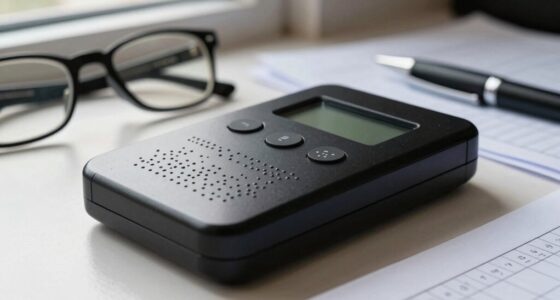
Haptic feedback can be more helpful than visual alerts because it provides tactile signals you can feel without taking your eyes off the task. This makes it ideal when your visual attention is limited or busy, like while driving or working. It reduces distractions and guarantees you get important information immediately. Plus, it’s useful for those with visual impairments and offers a more seamless, less intrusive way to stay alert. To discover more, keep exploring how this technology enhances daily life.

Prime made for students and young adults
- Fast, free delivery for dorm and study essentials
- Prime Video and Amazon Music included
- Member-only deals
Key Takeaways
- Haptic feedback provides immediate, tactile alerts that are less likely to be overlooked or ignored than visual signals.
- It allows users to stay focused on their environment or tasks without visual distractions.
- Haptic cues are particularly beneficial for users with visual impairments, enhancing accessibility and inclusivity.
- Tactile alerts can function effectively in environments with poor visibility or high visual workload.
- Advances in technology enable personalized, nuanced haptic feedback for context-aware and safer communication.

When it comes to alerting users, both haptic feedback and visual alerts serve essential roles, but understanding their differences can help you choose the right method for your needs. Haptic feedback provides tactile communication, using vibrations or other physical sensations to convey information. This form of sensory substitution allows you to receive alerts without relying solely on sight, making it especially useful in situations where visual attention is limited or distracted. For example, a subtle buzz on your wrist can warn you of a new message or an upcoming appointment without pulling your eyes away from your current task. This immediacy and directness make haptic feedback a powerful tool for quick, intuitive communication.
Unlike visual alerts, which depend entirely on your ability to see a notification or indicator, haptic feedback engages your sense of touch directly. This means you can stay focused on what’s happening around you or on your screen, while still receiving important cues. When you’re driving, for instance, a vibration on the steering wheel can alert you to a lane departure or a collision warning, allowing you to respond faster than you might if you had to glance at a visual alert. Because tactile communication doesn’t compete with your visual field, it reduces the cognitive load involved in processing multiple types of information simultaneously. This makes haptic feedback especially effective in environments where visual attention is critical, such as during physical activity or in busy workspaces.
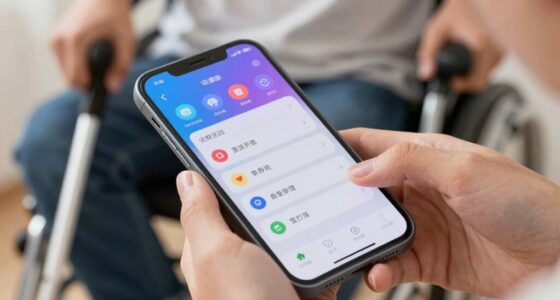
Furthermore, tactile communication can enhance accessibility for users with visual impairments. Sensory substitution through haptic feedback provides an alternative way to access alerts, notifications, or instructions that would otherwise require sight. It creates an inclusive experience by bridging sensory gaps, making technology more usable for everyone. Whether it’s a navigation cue on a smartwatch or a warning on a medical device, haptic alerts can be seamlessly integrated into daily routines without interrupting your flow. Because the feedback is personal and direct, it often feels more immediate and less intrusive than visual alerts, which can be ignored or missed if your attention is elsewhere. Additionally, haptic feedback technology continues to advance, making it increasingly versatile and customizable for various applications. As this technology evolves, it can also provide more nuanced and context-aware alerts, further enhancing user experience and safety. A growing body of research underscores the importance of multisensory communication in improving overall alert effectiveness and user engagement.
As an affiliate, we earn on qualifying purchases.
Frequently Asked Questions
Can Haptic Feedback Replace All Visual Alerts Effectively?
Haptic feedback can’t replace all visual alerts effectively because tactile communication alone may not convey complex or detailed information. While haptic cues grab your attention quickly, sensory adaptation might reduce their effectiveness over time, especially with frequent alerts. You need visual alerts for clarity and context, but combining both creates a more all-encompassing system. Relying solely on haptic feedback risks missing critical details that visuals can clearly communicate.
How Does Haptic Feedback Work in Different Devices?
Think of haptic feedback as a secret language of tactile sensations that different devices speak fluently. It works through device integration, where tiny motors or actuators generate vibrations or taps that mimic real-world touch. In smartphones, it signals notifications; in gaming controllers, it adds immersive feel. Each device customizes these tactile cues, creating an intuitive experience that connects you more directly, beyond just sight or sound.
Are There Any Health Concerns With Prolonged Haptic Use?
Prolonged use of haptic feedback generally poses minimal health implications, but it can cause discomfort or skin irritation if used excessively or with sensitive skin. You might experience fatigue or numbness if you rely heavily on haptic alerts for extended periods. To avoid these issues, take regular breaks and limit continuous usage. If discomfort persists, consider adjusting device settings or consulting a healthcare professional.
Is Haptic Feedback Suitable for All Age Groups?
Haptic feedback isn’t suitable for all age groups, as age-specific preferences and accessibility considerations vary. Young children might find it overwhelming, while older adults with sensory sensitivities could experience discomfort. You should consider individual needs, ensuring that haptic cues are adjustable or complemented with visual or auditory alerts. Customizing feedback levels helps make technology more inclusive, allowing everyone to benefit without causing unease or confusion.
How Do Users Typically Prefer Haptic Over Visual Alerts?
You usually prefer haptic feedback over visual alerts because it taps into your tactile perception, providing immediate, intuitive signals without demanding your full attention. While visual alerts can be overwhelming or easily missed, haptic cues offer user comfort by delivering discreet, physical notifications. This sensory contrast makes haptic feedback more engaging and less intrusive, helping you stay connected without distraction, especially in noisy or visually demanding environments.
As an affiliate, we earn on qualifying purchases.
Conclusion
So, next time you’re faced with a choice between a visual alert and haptic feedback, consider which truly engages you. Isn’t it more reassuring to feel a signal directly through your body, rather than just see a flashing light? Haptic feedback creates a more immediate, personal connection, helping you stay alert and safe. After all, isn’t feeling something more powerful than just seeing it? Embrace the tactile for a truly impactful experience.
As an affiliate, we earn on qualifying purchases.
As an affiliate, we earn on qualifying purchases.
Halloween Picks
halloween
As an affiliate, we earn on qualifying purchases.