📊 Full opportunity report: How To Get More Comfortable Speaking On Camera As A Business Owner on IdeaNavigator AI — validation score, market gap, and execution plan.

Prime made for students and young adults
- Fast, free delivery for dorm and study essentials
- Prime Video and Amazon Music included
- Member-only deals
TL;DR
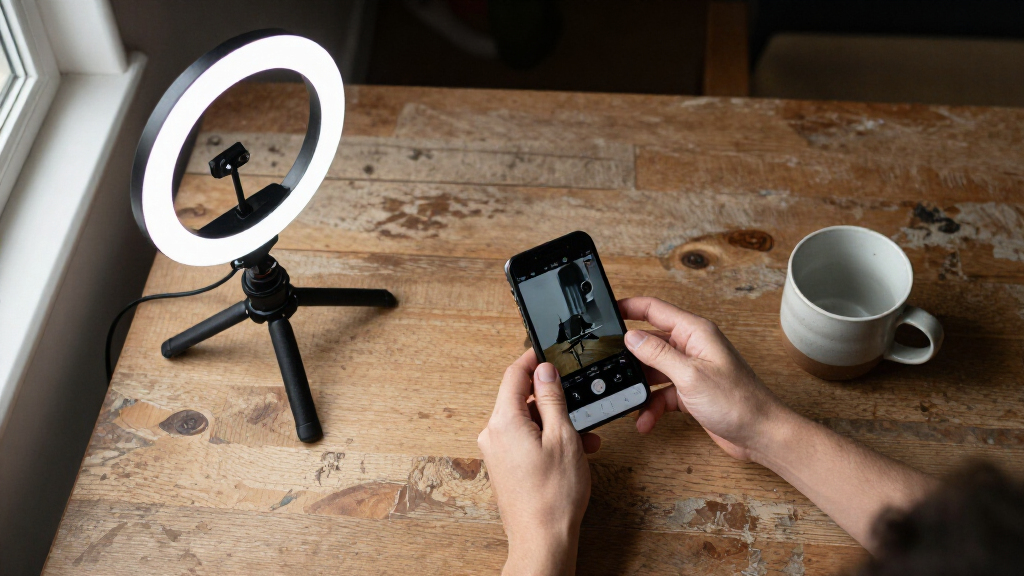
IdeaNavigator AI has outlined a proposed practice app for business owners who know video could help their business but feel anxious recording themselves. The concept includes short daily exercises and automated feedback, but no app, pilot results or evidence of effectiveness are reported.
IdeaNavigator AI has proposed a practice app to help business owners become more comfortable recording marketing videos, targeting people who know video matters to their business but freeze when they press record. The proposal describes a possible product and a way to test it; it does not report a launched app, completed trial or evidence that the approach works.
The suggested first version would offer daily, two-minute speaking exercises, starting with reading prepared text and moving toward speaking more freely. The app would use multimodal AI to assess delivery, including pace, filler words, eye line and energy, then show users how those measures change over time. The proposal frames feedback as private and judgment-free, though it does not specify how the scoring would work or how users’ recordings would be stored.
The intended progression is from practice exercises to recording real business content, with confidence streaks marking continued use. The business model under consideration is a consumer subscription, plus a team option for agencies that coach clients. These are product and revenue concepts, not confirmed features, pricing or operating plans.
To test demand and outcomes, IdeaNavigator AI suggests a 30-day cohort of 100 business owners, compared with a waitlist control group. The proposed measure is the share of participants who publish their first real video by day 45. No recruitment, study results or comparison data are provided.
Testing Video Confidence as a Product
The idea addresses a practical obstacle for small businesses: an owner may understand the marketing value of video yet avoid producing it because recording alone can bring stumbling, self-criticism and repeated takes. If a practice tool helped users move from rehearsal to publishing, it could offer a more focused alternative to broad public-speaking training, which the proposal says does not directly address the solo-recording situation.
For business owners, the difference between feeling more confident in an exercise and actually publishing useful content matters. The suggested day-45 measure at least points toward a real-world behavior, rather than relying only on app engagement or subjective confidence scores. However, whether a short practice routine leads to more published videos, and whether those videos help businesses, remains untested.
The proposal also reflects a potential use of AI feedback in communication training. Automated observations about delivery might give users repeated practice without a live coach. But scores for energy or eye contact can be subjective, and the supplied description offers no information about accuracy, accessibility, privacy safeguards or whether users would find the feedback useful.
Popular right now

Bose QuietComfort True Wireless Earbuds with Active Noise Cancellation, Black

Apple AirPods Pro 3 Wireless Earbuds with Active Noise Cancellation

Hisense 85 U7 Mini-LED ULED 4K UHD Smart Google TV (85U7SG, 2026)
As an affiliate, we earn on qualifying purchases.
From Recording Anxiety to Daily Practice
The concept is aimed at a specific user rather than everyone seeking presentation training: a business owner who already sees a reason to use video but is held back during recording. The stated problem is not a lack of marketing advice. It is the difficulty of performing alone, where there may be no audience or coach to respond and each retake can reinforce self-criticism.
IdeaNavigator AI’s rationale is that pressure to use video marketing now reaches businesses of different sizes, while multimodal AI could assess aspects of spoken and visual delivery. That is the proposal’s framing, not independently reported evidence about how widespread camera anxiety is or how well automated systems can evaluate these traits.
The suggested path is deliberately small: begin with reading, add less scripted speaking, track practice, and then try a real recording. The proposed pilot would test whether that sequence leads to a first published video. The material does not identify a developer, announce a release schedule or say that an app is already being built.
No Pilot Results or Launch Details
The app’s development and availability are unclear. The proposal does not name a product, developer or release date, and it does not establish that the concept has moved beyond the planning stage. There is also no reported evidence that its exercises reduce camera anxiety or increase the number of videos business owners publish.
Details of the proposed evaluation remain open. The material does not explain how the 100 owners would be recruited, how a waitlist comparison would be managed, or what would count as a published video. It also gives no information about participant drop-off, consent, data retention, or the reliability and fairness of automated delivery scores. The proposed day-45 comparison would be a useful behavioral measure, but by itself would not establish an effect on business results.
A 100-Owner Pilot Is Proposed
The next step described is a 30-day pilot with 100 business owners, followed by measurement of first-video publication by day 45 against a waitlist control group. The proposal does not say when or whether that test will begin. Until results are available, the concept should be treated as a product hypothesis rather than a proven training method.
If a pilot proceeds, the findings could clarify whether brief guided practice helps users publish, whether people keep using the exercises, and which feedback measures they find helpful. No next milestone, launch announcement or follow-up date has been provided.
Source: IdeaNavigator AI
Key Questions
Has the camera-practice app launched?
No launch is reported. IdeaNavigator AI describes a product proposal, but provides no release date or confirmation that the app is being built.
Who is the proposed app for?
It is aimed at business owners who understand the value of video but feel uncomfortable or get stuck when recording themselves.
What would users do in the app?
The proposed format uses two-minute daily exercises that progress from reading prepared material to speaking more spontaneously, with AI feedback on delivery.
Has the app been shown to help owners publish videos?
No results are reported. A 30-day pilot with 100 owners is proposed, with first video publication by day 45 as its measure, but no completed test is described.
Source: IdeaNavigator AI