To protect yourself from misinformation, ask questions like: Who’s the source, and are they credible? What evidence supports this claim? Are there inconsistencies in the media, like unnatural movements or lighting? Is the content emotionally charged or biased? Cross-check facts across multiple sources and examine metadata or digital fingerprints for authenticity. Developing these questions sharpens your critical thinking and helps you spot manipulation. Keep exploring to uncover more effective skepticism tools.
Key Takeaways
- Question the credibility and transparency of sources, including authorship, funding, and supporting evidence.
- Look for media inconsistencies like unnatural movements, lighting, or pixel patterns indicating manipulation.
- Cross-verify information with multiple reputable sources to confirm accuracy.
- Beware of emotional language, biased tones, or one-sided arguments that aim to manipulate perceptions.
- Practice critical thinking by challenging assumptions, seeking dissenting views, and remaining open-minded.
How Can I Recognize Common Misinformation Tactics?
How can you spot common misinformation tactics? Recognizing these requires awareness of heuristic shortcuts and cognitive traps. Misinformation often relies on mental shortcuts like the availability heuristic, making you believe something is true because it’s recent or vivid. Cognitive traps such as confirmation bias lead you to favor information that supports your existing beliefs, ignoring evidence to the contrary. Watch for emotionally charged language or sensational headlines designed to trigger quick reactions rather than thoughtful analysis. Be cautious of oversimplified explanations or logical fallacies that seem convincing but lack evidence. Additionally, understanding the Vetted status of sources can help distinguish reliable information from misinformation. Being aware of visual persuasion techniques can further help you identify manipulative tactics used to sway opinions. Recognizing how heuristics influence perception allows you to better evaluate the credibility of information before accepting it as truth. Developing an understanding of information verification methods is essential for critically assessing sources and avoiding deception. For instance, being familiar with fact-checking tools can greatly enhance your ability to verify claims effectively. By understanding these mental shortcuts and traps, you become better at questioning the motives behind the information you encounter, helping you avoid falling for common misinformation tactics.
What Questions Should I Ask to Assess a Source’s Credibility?
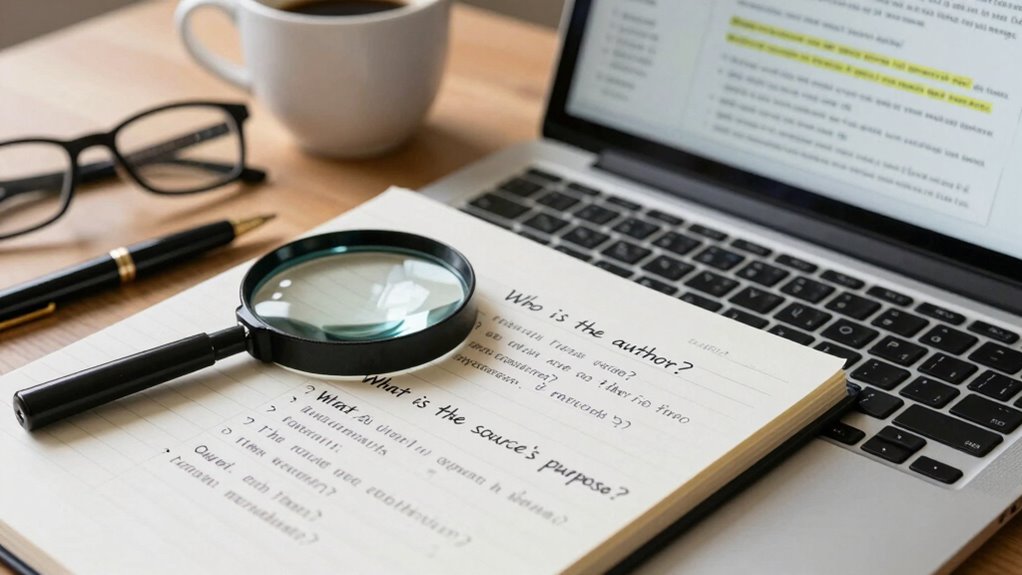
When evaluating a source’s credibility, asking the right questions can make all the difference. Focus on source evaluation by checking credibility markers such as authorship, publication reputation, and supporting evidence. Ask who the author is and whether they have expertise in the subject. Consider if the publication is known for accuracy and fairness. Look for citations or references that back up claims—are they reputable and current? Be wary of emotional language or biased tones that might indicate partisanship. Does the source disclose its funding or potential conflicts of interest? These questions help you assess whether the source is trustworthy or if it’s likely to spread misinformation. Using credibility markers as a guide ensures you’re relying on solid, reliable information. Additionally, examining the source’s alignment with European cloud standards can provide insights into its commitment to secure and sustainable solutions. Verifying the authenticity of supporting evidence can further prevent the dissemination of false information. Also, checking whether the source employs fact-based reporting helps confirm its commitment to accuracy and objectivity.
How Do I Verify Facts and Data Before Accepting Them?
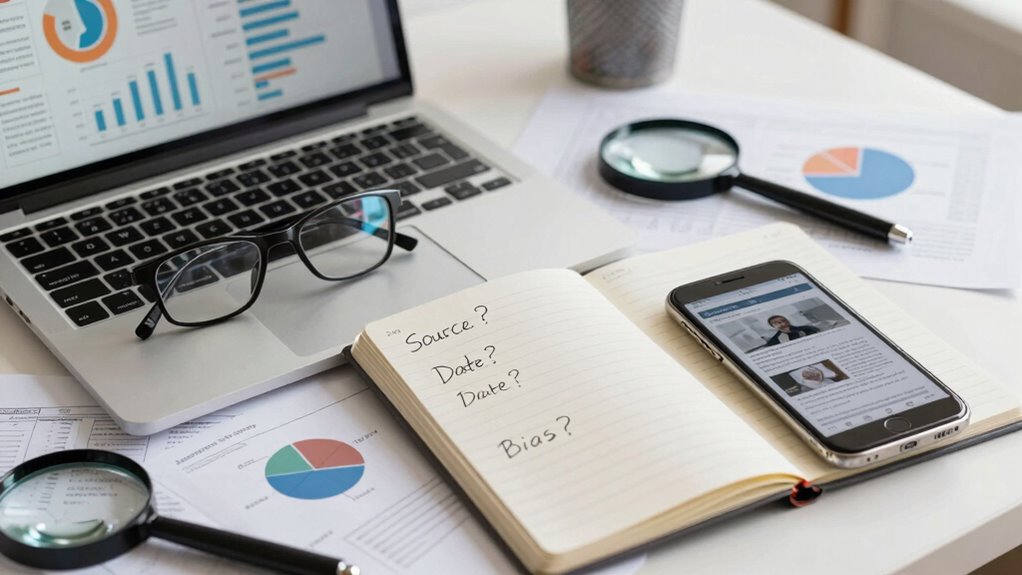
Verifying facts and data is essential to avoiding misinformation, especially in a world flooded with conflicting information. To do this effectively, use source triangulation—checking multiple independent sources to confirm a fact. Don’t rely on just one website, article, or expert. Instead, look for consensus across reputable outlets. Data triangulation further strengthens your verification process by comparing different types of data or evidence, such as official reports, academic studies, or firsthand accounts. If multiple sources and data types agree, you can be more confident in the accuracy. Always question the origin of the data and seek out corroborating evidence. This approach helps you cut through bias and misinformation, ensuring you accept only well-supported facts. Additionally, understanding the background or context of the information can help you evaluate its credibility more effectively. Incorporating critical thinking skills into your evaluation process allows you to better discern trustworthy information from misleading claims. Being aware of confirmation bias can also help you remain objective when assessing sources. Recognizing the role of aviation regulations in establishing reliable standards can further enhance your ability to verify factual accuracy. Awareness of specific odor characteristics, such as those associated with ear wax, bleach, or spoiled meat, can also aid in identifying misinformation related to health or safety claims.
What Are Warning Signs of Bias or Manipulation in Content?
Watch for author bias indicators, like one-sided arguments or lack of credible sources, which can skew the information. Emotional language cues, such as sensational words or exaggerated claims, often aim to manipulate your feelings. Staying alert to these signs helps you spot content that may be pushing a hidden agenda. Additionally, reviewing the reputation of sources within the Gold IRA markets can help you determine the reliability of the information presented. Being aware of cultural beliefs surrounding astrology and beauty can also aid in understanding potential biases rooted in tradition or popular notions. Recognizing tanning trends and how they influence beauty standards can further reveal underlying biases in content. Moreover, understanding the role of affiliate disclosure policies can help you identify when content might be influenced by financial incentives rather than objective information. Being familiar with cookie categories and how they collect data can also improve your awareness of targeted content strategies.
Author Bias Indicators
How can you spot bias or manipulation in an author’s content? Look for signs of author bias, such as one-sided arguments, selective use of facts, or language that favors a particular viewpoint. When evaluating source objectivity, consider whether the author presents multiple perspectives or seems to push a specific agenda. If the content lacks balanced evidence or dismisses opposing opinions without justification, it’s a warning sign. Pay attention to loaded or emotionally charged language that might skew perceptions. Also, check if the author’s credentials or affiliations could influence their objectivity. Recognizing these bias indicators helps you evaluate the credibility of the information and avoid falling for manipulative content. Staying alert to these signs makes you a smarter, more critical reader.
Emotional Language Cues
When evaluating an author’s content, paying attention to emotional language cues can reveal underlying bias or manipulation. Look for words or phrases that evoke strong feelings—like anger, fear, or hope—that seem designed to sway your opinion. Emotional language often taps into persuasive appeals, aiming to trigger an emotional response rather than presenting facts objectively. If the content relies heavily on emotional language without supporting evidence, it may be trying to manipulate your perceptions. Be cautious of sensational words or exaggerated claims that play on your emotions instead of offering balanced information. Recognizing these cues helps you see through attempts at bias, ensuring you assess content based on facts rather than feelings. Additionally, understanding the concept of Free Floating can help identify when information lacks specific grounding, which may be a sign of misleading or superficial content.
How Can I Detect Fake Images, Videos, or Deepfakes?

To spot fake images, videos, or deepfakes, start by using digital forensics tools that analyze pixel-level details. Always scrutinize the source’s credibility before trusting the content, and look for inconsistencies like unnatural movements or lighting. Carefully examining these clues helps you distinguish real from manipulated media effectively. Additionally, understanding the horsepower of electric dirt bikes can aid in identifying discrepancies in speed or performance claims that may be exaggerated in fake content. Being aware of digital forensics techniques enhances your ability to detect subtle signs of tampering or manipulation, especially when analyzing visual artifacts that often reveal editing or compositing.
Digital Forensics Tools
Detecting fake images, videos, and deepfakes requires the use of specialized digital forensics tools that analyze visual content for signs of manipulation. These tools help you uncover inconsistencies like unnatural pixel patterns, irregular lighting, or mismatched audio and visuals. Utilizing digital forensics tools aligns with cybersecurity protocols designed to verify authenticity and prevent misinformation. By examining metadata, analyzing pixel-level anomalies, and checking for digital fingerprints, you can better assess whether media has been altered. Many tools are user-friendly and provide quick insights, making it easier for you to scrutinize suspicious content. Incorporating digital forensics tools into your fact-checking process enhances your ability to detect deception and stay ahead of fabricated media. This step is essential in maintaining digital integrity and combatting misinformation.
Scrutinize Source Credibility
Ever wonder if the source of an image or video is trustworthy? To perform effective source evaluation, you need to look for credibility markers that reveal authenticity. First, check the origin: is it from a reputable platform or an unknown site? Second, examine the metadata or technical details, which can reveal signs of manipulation. Third, verify the source’s reputation by cross-referencing with trusted outlets. Recognizing these credibility markers helps you detect fake images, videos, or deepfakes. Remember, fake media often lacks consistent source information or displays unusual inconsistencies. Being vigilant about source evaluation ensures you don’t fall for misleading content. Trustworthy sources maintain transparency and credibility markers that distinguish real from manipulated media. Additionally, understanding the Cultural Significance behind symbols or images can help identify whether content is contextually accurate or potentially fabricated. Recognizing media manipulation techniques can further sharpen your ability to spot false content.
Analyze Inconsistencies Carefully
Even though many images and videos appear convincing, carefully examining them for inconsistencies can reveal their true nature. Look for subtle signs like mismatched shadows, unusual pixelation, or inconsistent lighting. Deepfakes often contain logical fallacies in their context or content, such as unnatural speech patterns or out-of-place gestures. To verify authenticity, use source triangulation—compare the media across multiple reputable sources to spot discrepancies. Don’t rely on a single image or video; cross-check details with trusted outlets or official channels. Pay attention to metadata and technical details, which sometimes expose editing or manipulation. Developing a keen eye for these inconsistencies helps you distinguish real from fake and prevents misinformation from slipping through. Additionally, understanding content authenticity can empower you to better identify manipulated media.
What Strategies Help Me Stay Open-Minded and Avoid Confirmation Bias?

Staying open-minded and avoiding confirmation bias requires actively challenging your own assumptions. Cultivate cognitive flexibility by questioning your initial beliefs and considering alternative perspectives. Engage in open-mindedness exercises, such as debating with someone holding opposing views or deliberately seeking out dissenting information. These practices help you recognize biases and expand your understanding. To reinforce this, try:
- Practicing cognitive flexibility daily by re-evaluating your opinions.
- Participating in open-mindedness exercises to challenge your perspectives.
- Reflecting on your reasoning process to identify biases and gaps.
Frequently Asked Questions
How Can I Identify Emotional Language Used to Manipulate Opinions?
You can spot emotional language by paying attention to emotional triggers and persuasive phrases that aim to evoke strong feelings. Look for words and expressions that appeal to fear, anger, or happiness, rather than facts. Ask yourself if the language is trying to manipulate your opinion through emotional triggers. If it feels overly charged or too good to be true, it’s likely using persuasive phrases to sway your judgment.
What Are Effective Methods for Cross-Referencing Information Across Multiple Sources?
You should start with source comparison by checking if different sources report the same facts, looking for consistency. Verify facts by consulting reputable outlets or official records to guarantee accuracy. Cross-reference information by noting discrepancies or unique details, which can indicate reliability issues. Always prioritize primary sources for fact verification. This method helps you identify trustworthy info and avoid misinformation, empowering you to make informed decisions based on solid evidence.
How Do I Recognize When Statistics Are Presented Out of Context?
You spot out-of-context statistics when data visualization exaggerates or distorts the truth, making numbers seem more alarming or reassuring than they truly are. To recognize this, consider source credibility—does the source have a reputation for accuracy? Always ask if the data is presented alongside relevant context. When numbers seem isolated or manipulated visually, it’s a sign to question whether they’re truly telling the whole story.
What Techniques Help Spot Subtle Propaganda or Persuasive Tactics?
You can spot subtle propaganda by paying attention to visual cues like exaggerated images or misleading charts that evoke emotion. Always check source credibility—question who’s behind the message and their motives. Be wary of persuasive tactics like loaded language or sensational headlines. By critically analyzing visuals and verifying sources, you guard yourself against manipulation and better identify when subtle propaganda influences your perception.
How Can I Stay Updated on New Misinformation Trends and Detection Tools?
Did you know that 70% of adults struggle to distinguish between real and fake news? To stay updated on misinformation trends and detection tools, focus on media literacy and regularly practice fact-checking techniques. Follow reputable fact-checking sites, subscribe to newsletters from media literacy organizations, and join online communities. Staying vigilant and continuously learning helps you recognize new tactics and stay ahead of evolving misinformation.
Conclusion
By asking the right questions and staying vigilant, you can effectively spot misinformation and protect your understanding. Remember, studies show that over 60% of people struggle to identify fake news, highlighting the importance of your skeptical toolkit. Keep questioning sources, verifying facts, and staying open-minded. These habits empower you to navigate the information landscape confidently and resist manipulation, ensuring you stay informed with accurate, trustworthy content.