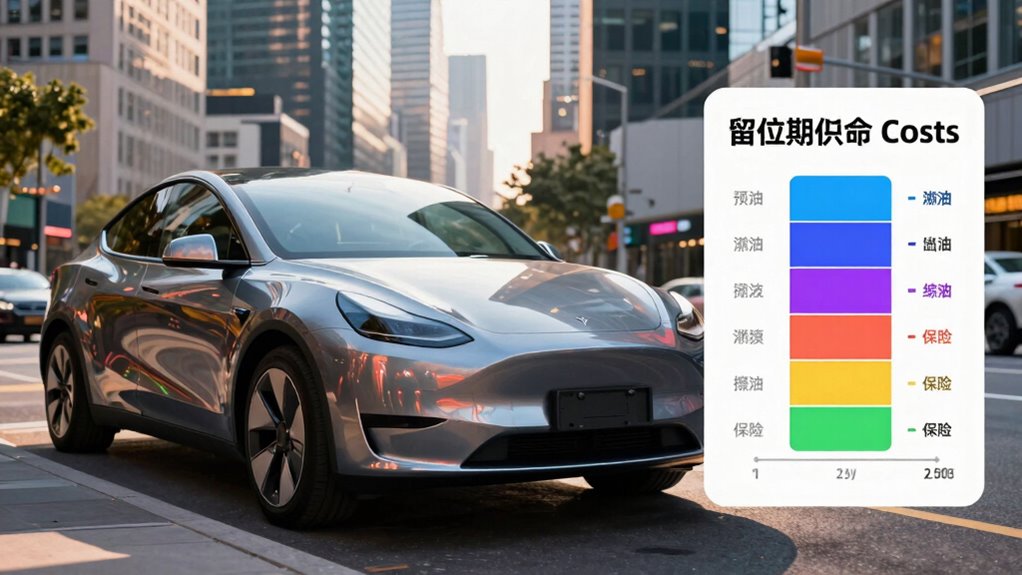

Focusing only on the sticker price can lead you to overlook the real expenses of owning a vehicle. Maintenance, insurance, fuel, and depreciation can add up to several times the initial cost. Understanding the total cost of ownership helps you make smarter financial choices and avoid surprises down the road. By considering all expenses, you’ll choose a vehicle that’s more economical in the long run. Keep exploring to learn how to calculate and compare these hidden costs effectively.

Prime made for students and young adults
- Fast, free delivery for dorm and study essentials
- Prime Video and Amazon Music included
- Member-only deals
Key Takeaways
- The sticker price only reflects initial cost, ignoring ongoing expenses like maintenance, insurance, and fuel that add up over time.
- Total ownership costs influence long-term affordability, often surpassing the initial purchase price.
- Considering all costs prevents unexpected financial burdens and promotes smarter vehicle choices.
- High maintenance or insurance costs can negate savings from a lower sticker price.
- Evaluating total costs helps ensure accurate budgeting and better financial decision-making.
Have you ever considered that the initial purchase price of an asset is only part of the story? When you’re buying a vehicle, it’s easy to focus on the sticker price and overlook what it really costs to own over time. The truth is, the total cost of ownership includes many factors beyond what you pay upfront. If you want to make a smart financial decision, you need to look at the full picture, especially vehicle maintenance and insurance expenses, which can considerably impact your overall costs. Additionally, understanding product comparisons can help you choose a vehicle that offers better value over its lifetime. Vehicle maintenance is a major ongoing expense that can catch you off guard if you only consider the purchase price. Every vehicle requires routine services like oil changes, tire rotations, brake inspections, and occasional repairs. Some models are more reliable and cheaper to maintain, while others can rack up high costs quickly. By choosing a vehicle with lower maintenance needs, you save money in the long run. Regular maintenance also helps prevent costly repairs down the line, so it’s a smart investment to factor into your total ownership costs. Insurance expenses are another key element often overlooked when considering a vehicle. Insurance premiums vary based on the make, model, age, and even your driving history. A sporty or luxury vehicle typically comes with higher premiums, adding to your monthly costs. It’s essential to compare insurance quotes before purchasing a vehicle, as these expenses can greatly inflate your total ownership cost. If you ignore insurance costs, you might underestimate the true financial commitment involved in owning a particular vehicle. Beyond maintenance and insurance, other factors like fuel costs, depreciation, registration fees, and financing charges contribute to the overall expense. Understanding total costs can help you make more informed choices about your vehicle. Being aware of depreciation and how it impacts your vehicle’s resale value is especially important when planning for long-term ownership. Depreciation, for instance, is often the largest cost of owning a vehicle—your car’s value drops over time, which can impact resale value. Fuel efficiency also plays a vital role, especially if you commute long distances; a less efficient vehicle will cost more to operate. Being aware of ownership costs can help you make more informed choices about your vehicle. Thinking about the total cost of ownership helps you avoid unpleasant surprises and budget more accurately. It encourages you to evaluate your needs carefully and select a vehicle that fits your financial situation. When you consider all these factors—vehicle maintenance, insurance expenses, depreciation—you’ll realize that the cheapest sticker price isn’t always the most economical choice over time. Making an informed decision means looking beyond the initial purchase and understanding the ongoing costs that truly define what a vehicle will cost you in the long run.
As an affiliate, we earn on qualifying purchases.
Frequently Asked Questions
How Is Total Cost of Ownership Calculated?
You calculate total cost of ownership by performing a thorough cost analysis that includes purchase price, maintenance, fuel, insurance, and depreciation. You also track ongoing expenses like repairs and upgrades over the asset’s lifespan. By actively monitoring these costs, you get a clear picture of the true expenses involved, helping you make smarter financial decisions. This approach guarantees you understand all costs beyond just the initial sticker price.
Does TCO Vary by Industry?
Yes, TCO varies by industry because industry-specific expenses influence overall costs. For instance, manufacturing might face higher maintenance and energy costs, while tech sectors deal more with rapid asset depreciation. Your TCO calculations should consider these factors, as they impact long-term expenses. Understanding industry-specific expenses helps you better evaluate true costs, making smarter investment decisions and avoiding surprises that could affect your profitability over time.
What Factors Influence Maintenance Costs?
Maintenance costs are influenced by factors like maintenance frequency and spare parts availability. If you schedule regular upkeep, you can prevent costly repairs down the line, but neglecting it will make costs skyrocket. When spare parts are readily available, repairs happen faster and cheaper. Remember, a stitch in time saves nine, so staying on top of maintenance and ensuring parts availability keeps your expenses in check and your operations running smoothly.
How Can I Reduce TCO Over Time?
To reduce your TCO over time, focus on choosing cost-effective leasing options and negotiating better terms to lower leasing expenses. Regular maintenance and timely upgrades can prevent costly repairs and extend the lifespan of your assets, ultimately lowering upgrade costs. Additionally, consider investing in fuel-efficient or energy-saving options, which reduce ongoing operational costs. Staying proactive about these factors helps you manage expenses and maximize your investment’s value over the long term.
Is TCO Applicable to Both Personal and Business Assets?
Yes, TCO applies to both personal and business assets. For personal budgeting, understanding TCO helps you account for expenses like maintenance and depreciation over time, not just the purchase price. Similarly, in business, tracking TCO allows you to evaluate asset depreciation and ongoing costs, ensuring better financial decisions. By considering TCO, you get a clearer picture of an asset’s true cost, helping you manage expenses more effectively in both contexts.
auto insurance comparison calculator
As an affiliate, we earn on qualifying purchases.
As an affiliate, we earn on qualifying purchases.
Conclusion
When you look beyond the sticker price, you’re steering your ship through calmer waters, avoiding hidden storms like maintenance costs and depreciation. Think of the total cost of ownership as the full landscape—every winding road and scenic overlook—that shows you the real journey. By understanding this, you’re not just buying a car or gadget; you’re charting a course that saves you from surprises and keeps your financial voyage smooth and steady.
fuel efficiency monitor for cars
As an affiliate, we earn on qualifying purchases.
As an affiliate, we earn on qualifying purchases.
As an affiliate, we earn on qualifying purchases.
Evergreen bestsellers Picks
bestsellers
As an affiliate, we earn on qualifying purchases.