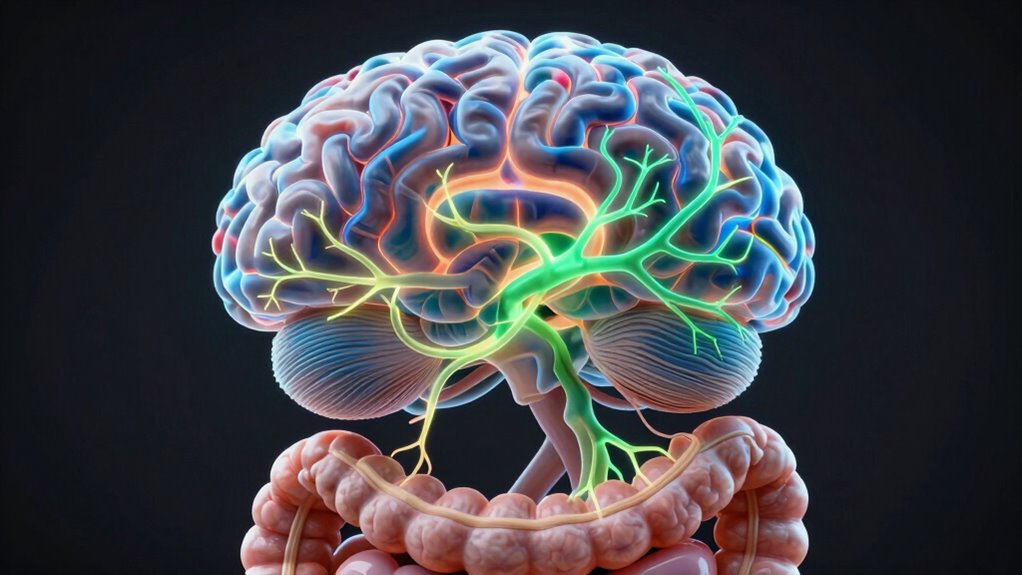

Your gut and brain constantly communicate through biochemical signals, affecting your mood, clarity, and overall health. Your gut microbiome produces neurotransmitters like serotonin and dopamine, which influence your happiness and mental state. The vagus nerve acts as a highway, transmitting signals between them. When your gut is healthy and balanced, you feel calmer and more focused. If you stay aware of how these systems interact, you’ll discover simple ways to support your mental well-being.

Prime made for students and young adults
- Fast, free delivery for dorm and study essentials
- Prime Video and Amazon Music included
- Member-only deals
Key Takeaways
- The vagus nerve transmits signals bidirectionally between the gut and brain, influencing mood and digestion.
- Gut microbiota produce neurotransmitters like serotonin and dopamine, affecting mental health and emotional states.
- Disruptions in gut microbiome balance can impair signaling, leading to anxiety, depression, and cognitive changes.
- Microbial compounds from the gut influence nervous system activity, inflammation, and stress responses.
- Maintaining gut health through diet and probiotics supports mental clarity, stability, and overall well-being.
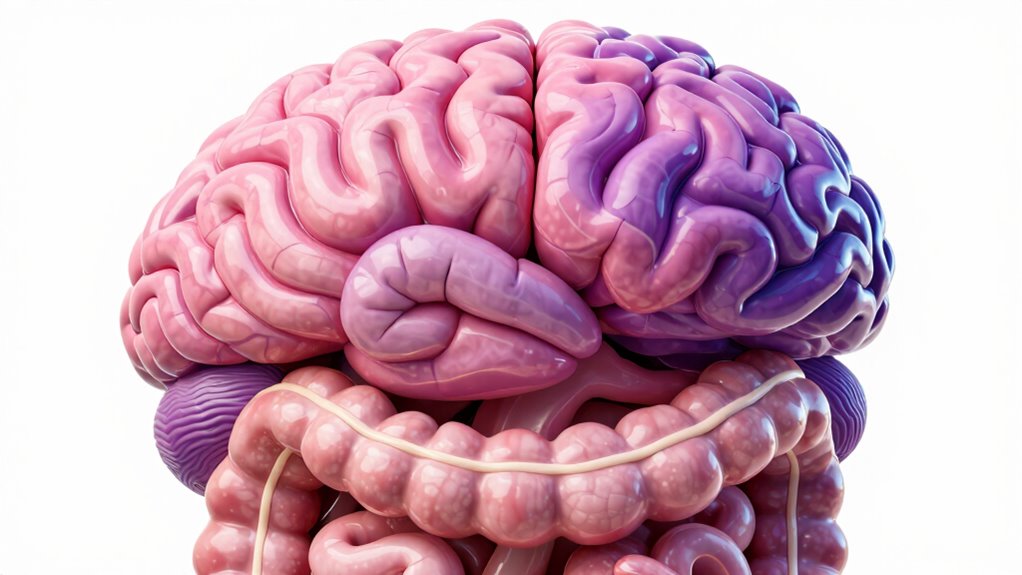
Your brain and gut are more connected than you might realize, constantly exchanging signals that influence your mood, digestion, and overall health. This communication isn’t just about nerves; it involves complex biochemical processes, including neurotransmitter influence and gut microbiome dynamics. When your gut bacteria produce neurotransmitters like serotonin and dopamine, they can directly impact how you feel and even how your brain functions. In fact, about 90% of serotonin, a key neurotransmitter linked to happiness and mood regulation, is found in your gut. This means that your gut microbiome isn’t just involved in digestion—it actively shapes your mental state. Recent research into nanotechnology demonstrates potential for innovative ways to manipulate gut bacteria and neurotransmitter production, opening new avenues for mental health treatments.
Your gut microbiome influences your mood and mental health through neurotransmitter production like serotonin and dopamine.
The gut microbiome, a diverse community of trillions of microorganisms living in your digestive system, plays an essential role in this bidirectional communication. These microbes produce compounds that influence your nervous system, modulating inflammation, stress responses, and even cognitive functions. When your gut microbiome is balanced, it supports the production of healthy neurotransmitters, helping you feel more stable emotionally and mentally. Conversely, disruptions in gut microbiome dynamics—caused by poor diet, stress, or antibiotics—can impair neurotransmitter production, leading to issues like anxiety or depression. This connection highlights how fundamental it is to maintain a healthy gut environment for overall well-being. Additionally, promoting biodiversity within your gut microbiome can enhance resilience against such disruptions and improve mental health. Supporting this, dietary diversity can help maintain a thriving and resilient microbiome. Furthermore, microbiome diversity is crucial for the robustness of gut-brain signaling pathways.
Your nervous system, particularly the vagus nerve, acts as a highway for this gut-brain dialogue. It transmits signals from your gut to your brain and vice versa, allowing your digestive health to influence your mood and mental clarity. When your gut microbiome is thriving, it sends positive signals, promoting calmness and focus. But if your gut is inflamed or imbalanced, it can send distress signals to your brain, raising stress levels or causing fatigue. This dynamic process is why you might notice your mood shifts after eating certain foods or experiencing gut discomfort. Maintaining microbiome health is essential to support this communication pathway and overall mental well-being.
Understanding this interplay makes it clear that caring for your gut isn’t just about digestion—it’s about supporting your mental and emotional health, too. By nourishing your gut microbiome with fiber-rich foods, probiotics, and a balanced diet, you help foster healthy neurotransmitter activity. This, in turn, can elevate your mood, reduce anxiety, and boost your overall resilience. Recognizing how neurotransmitter influence and gut microbiome dynamics work together empowers you to make choices that benefit both your mind and body, reinforcing the deep connection between your brain and gut.
As an affiliate, we earn on qualifying purchases.
Frequently Asked Questions
Can Gut Health Influence Mental Health Disorders?
Yes, gut health can influence mental health disorders. When your microbiome diversity is imbalanced, it impacts neurotransmitter production, which affects mood and cognition. A healthy gut supports the creation of serotonin and other key chemicals that regulate your mental well-being. So, taking care of your gut through diet and probiotics can help improve mental health by boosting your microbiome diversity and supporting ideal neurotransmitter synthesis.
How Does Stress Impact Gut Bacteria?
Stress acts like a storm cloud over your gut, disrupting your gut microbiome. When you experience a stress response, your body releases hormones that can kill beneficial bacteria and promote harmful ones. This imbalance affects digestion, immunity, and mood. The more stressed you are, the more your gut bacteria suffer. Managing stress helps maintain a healthy microbiome, supporting overall well-being and keeping your gut in harmony.
Are There Specific Foods That Improve Brain-Gut Communication?
You can improve brain-gut communication by eating probiotic foods like yogurt, kefir, and sauerkraut, which boost gut bacteria diversity. Incorporate brain-boosting nutrients such as omega-3 fatty acids from fish, nuts, and seeds, along with antioxidants from berries and dark leafy greens. These foods support a healthy gut environment and enhance cognitive function, helping your brain and gut work together more effectively for overall well-being.
Can Gut Issues Cause Neurological Symptoms?
Yes, gut issues can cause neurological symptoms. When your microbiome balance is disrupted, it can lead to digestive inflammation, which affects nerve signaling between your gut and brain. This inflammation releases chemicals that may cause headaches, fatigue, or mood changes. Maintaining a healthy microbiome and reducing digestive inflammation helps support proper brain-gut communication, potentially alleviating these neurological symptoms and promoting overall well-being.
How Quickly Can Diet Changes Affect Brain and Gut Health?
Diet timing can influence your brain and gut health surprisingly fast, sometimes within days. As you make changes, your gut begins to adapt, improving digestion and balancing bacteria, which can enhance mental clarity and mood. You might notice symptoms easing or energy boosting in a week, but true gut adaptation and brain benefits often take a few weeks. Consistent, mindful eating helps foster this positive shift, making your overall health more resilient.
As an affiliate, we earn on qualifying purchases.
Conclusion
So, next time your stomach rumbles or your mind feels overwhelmed, remember—your brain and gut are locked in a nonstop, epic battle for control! It’s like having a tiny, invisible war zone inside you, where emotions and digestion clash and collaborate at lightning speed. By nurturing both, you hold the power to release unstoppable mental clarity and gut happiness. Trust me, understanding this connection might just save your day—or even your life!
As an affiliate, we earn on qualifying purchases.
As an affiliate, we earn on qualifying purchases.
Fall Picks
fall essentials
As an affiliate, we earn on qualifying purchases.