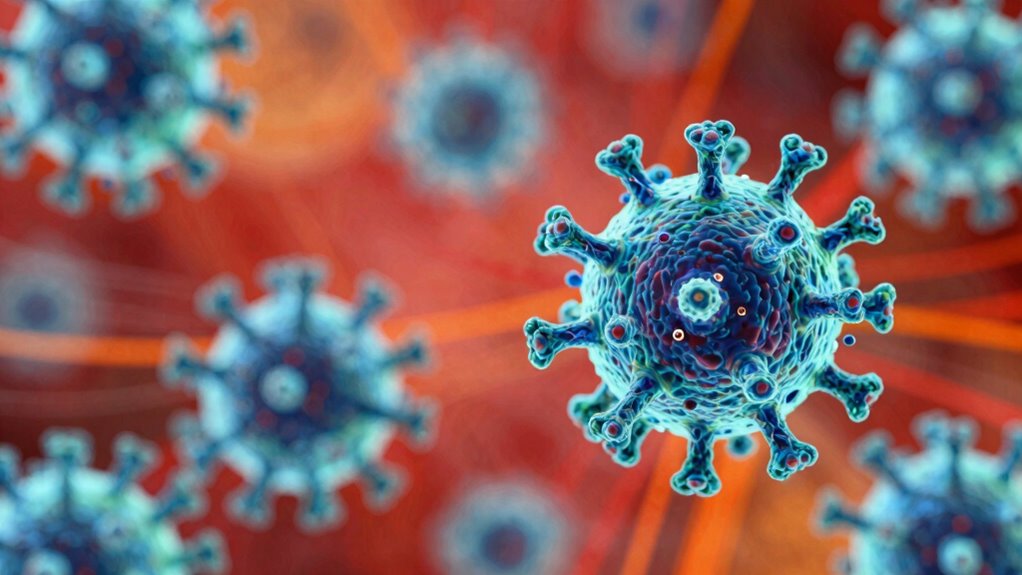

Some viruses spread so efficiently because they can infect you without showing symptoms, making it easy to unknowingly pass them on. They shed many infectious particles through coughing, sneezing, or talking, which linger in the air and on surfaces. Their ability to evade your immune system allows them to persist longer and spread faster. When you understand how these factors work together, you’ll see why controlling outbreaks is so challenging—and there’s more to uncover if you keep exploring.

Prime made for students and young adults
- Fast, free delivery for dorm and study essentials
- Prime Video and Amazon Music included
- Member-only deals
Key Takeaways
- Ability to transmit via asymptomatic carriers who show no symptoms yet spread the virus unknowingly.
- High viral shedding through coughing, sneezing, or talking increases environmental contamination.
- Spread occurs in crowded, enclosed spaces where viral particles accumulate.
- Viral strategies to evade immune detection facilitate silent, sustained transmission.
- Efficient public health measures depend on identifying and limiting asymptomatic and viral shedding transmission.
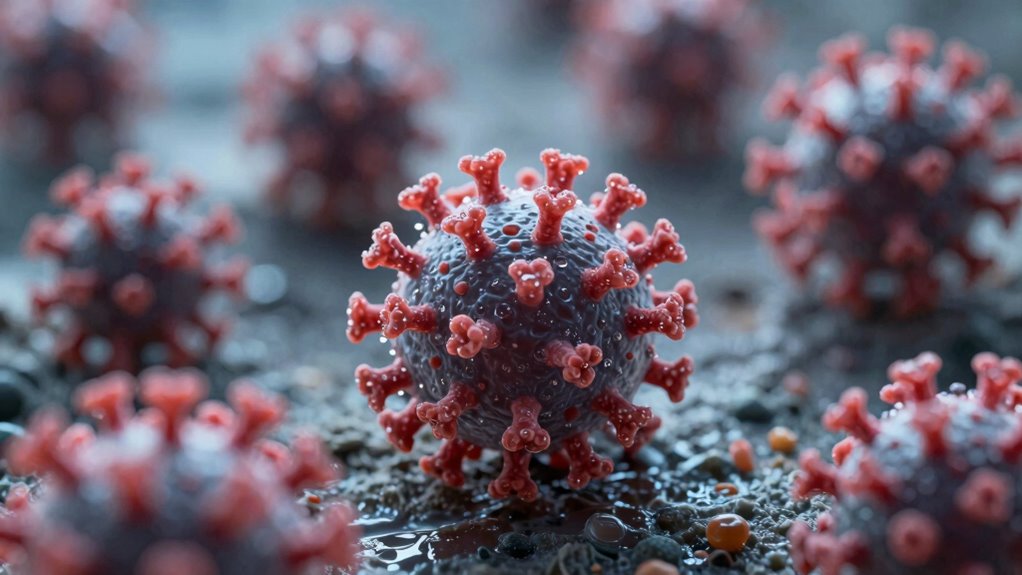
Have you ever wondered how viruses manage to spread so quickly and widely? It all comes down to their ability to exploit certain biological factors that make transmission effortless. One key reason is asymptomatic transmission, where people infected with the virus show no symptoms but are still capable of spreading the disease. This sneaky trait allows the virus to move unnoticed through communities, making containment difficult. When someone feels healthy, they’re less likely to isolate or take precautions, unknowingly becoming a carrier. This silent spreading accelerates outbreaks and complicates efforts to track and isolate infected individuals.
Another essential factor is viral shedding, the process by which viruses release particles into the environment. During infection, your body produces and releases virus particles through various routes—coughing, sneezing, talking, or even breathing. Some viruses are highly efficient at viral shedding, producing large quantities of infectious particles that linger in the air or on surfaces. The more virus particles shed, the higher the chance that someone else will come into contact with an infectious dose. This is especially problematic in crowded or enclosed spaces where these particles can accumulate, increasing the risk of transmission. Additionally, asymptomatic carriers often unknowingly contribute to the continuous spread of infectious particles, making control measures more challenging. Understanding viral transmission mechanisms can help in developing more effective interventions.
The combination of asymptomatic transmission and viral shedding creates a perfect storm for rapid spread. You might come into contact with an infected person who appears perfectly healthy but is shedding a significant amount of virus. Because they don’t exhibit symptoms, they might not follow precautions like mask-wearing or self-isolation, unknowingly exposing others. Meanwhile, the virus continues to be shed into the environment, contaminating surfaces or lingering in the air, ready to infect the next person who breathes or touches contaminated objects. Furthermore, understanding the mechanisms of transmission can help in designing more effective public health strategies to curb outbreaks. This understanding is crucial because some viruses have evolved immune evasion strategies that help them avoid detection by the immune system, increasing their infectiousness.
This ability to spread without obvious signs of infection is what makes some viruses particularly successful at infecting large populations quickly. It also explains why certain viruses, like the flu or coronaviruses, can cause widespread outbreaks in a short amount of time. The efficiency isn’t just about the virus’s infectiousness but also about how well it can hide in asymptomatic individuals and continuously shed infectious particles. Recognizing these factors emphasizes the importance of comprehensive testing and contact tracing efforts.
Understanding these mechanisms highlights why public health measures such as mask-wearing, social distancing, and widespread testing are vital. They help interrupt the chain of transmission by catching asymptomatic carriers and reducing viral shedding. In the end, the more you learn about how viruses spread, the better equipped you are to protect yourself and others from these invisible yet highly effective pathogens.
air purifiers for virus particles
As an affiliate, we earn on qualifying purchases.
As an affiliate, we earn on qualifying purchases.
Frequently Asked Questions
How Do Viruses Adapt to Different Environments?
You see, viruses adapt to different environments through viral mutation, which changes their genetic makeup, enabling them to survive in new conditions. This process boosts their environmental resilience, allowing them to withstand factors like temperature changes or immune responses. As they mutate, they can also develop new ways to infect hosts or evade defenses, making them more efficient at spreading across diverse environments and populations.
What Role Do Human Behaviors Play in Virus Transmission?
Your behaviors greatly influence virus transmission. When you practice good personal hygiene, like washing hands and covering coughs, you reduce the risk of spreading viruses. Conversely, close social interactions, especially in crowded settings, increase exposure and facilitate transmission. By being mindful of your actions—maintaining cleanliness and avoiding unnecessary close contact—you help protect yourself and others from contagious viruses, slowing their spread profoundly.
Can Viruses Evolve to Become Less Infectious?
Viruses can evolve to become less infectious over time, especially if mutations decrease their viral fitness. Higher mutation rates can lead to less effective viral strains, reducing their ability to spread. As you observe, natural selection favors viruses that spread more efficiently, so less infectious variants often die out. However, under certain conditions, viruses may adapt to become less deadly but still transmit effectively, balancing survival and infectivity.
How Do Vaccines Influence Virus Spread?
Vaccines reduce virus spread by boosting your immune system and establishing herd immunity, which limits the available hosts for the virus. When enough people are vaccinated, the virus struggles to spread, protecting even those unvaccinated. High vaccine efficacy guarantees that vaccinated individuals are less likely to transmit the virus, further slowing outbreaks. This combined effect helps control and eventually halt the spread of infectious diseases.
Are Some Populations More Vulnerable to Fast-Spreading Viruses?
Yes, some populations are more vulnerable to fast-spreading viruses. High population density means more close contact, making it easier for viruses to transmit quickly. Additionally, if people’s immune systems are weakened—due to age, health conditions, or malnutrition—they can’t fight off infections as effectively. So, densely populated areas with vulnerable individuals tend to experience faster and wider virus spread, highlighting the importance of protective measures and healthcare access.
As an affiliate, we earn on qualifying purchases.
Conclusion
Understanding what makes some viruses spread so efficiently helps you see the delicate balance between tiny particles and human behavior. While a single sneeze or handshake can ignite an outbreak, strict hygiene and awareness act as powerful shields. Just as a small spark can ignite a wildfire, tiny viruses can cause global upheavals. Your actions, no matter how small, hold the potential to either fuel or halt the spread—reminding you that control begins with awareness.
As an affiliate, we earn on qualifying purchases.
As an affiliate, we earn on qualifying purchases.
Evergreen bestsellers Picks
bestsellers
As an affiliate, we earn on qualifying purchases.