
🔍 Read the full analysis: What The Luddites’ Resistance Reveals About AI on ThorstenMeyerAI.com

Prime made for students and young adults
- Fast, free delivery for dorm and study essentials
- Prime Video and Amazon Music included
- Member-only deals
TL;DR
In 1811 and 1812, British framework knitters and other workers attacked selected machines amid falling pay and limited legal routes to organize. A historical analysis published by ThorstenMeyerAI.com on Nov. 5, 2026, argues that the conflict was about who controlled technology and who gained from it—questions that remain relevant to AI in workplaces. The comparison does not establish that AI will have the same effects or that today’s disputes will follow the same course.
A historical analysis published by ThorstenMeyerAI.com on Nov. 5, 2026, argues that the Luddites’ resistance to machinery offers a way to examine current disputes over AI, wages and worker control. The early 19th-century frame-breakers were machine workers themselves, the account says; their protests targeted particular employers and equipment amid low pay and unemployment, rather than technology in the abstract.
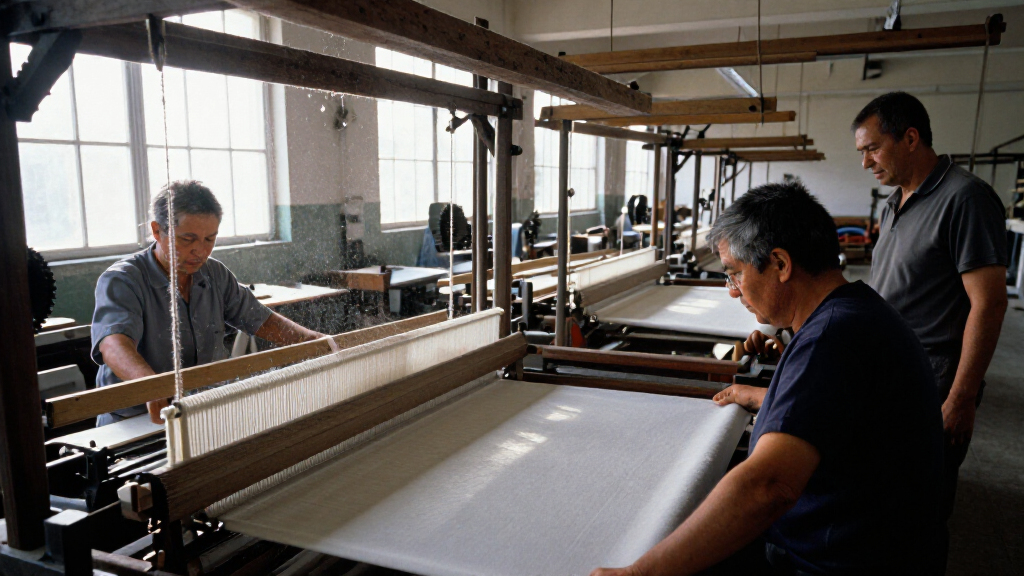
The movement began among framework knitters in Nottinghamshire in 1811 and spread to Yorkshire and Lancashire the following year. These workers made stockings and other goods on mechanical knitting frames, often in homes or small workshops. Many did not own the equipment: some rented frames from merchants or other owners and were paid by the piece for work supplied by hosiers.
The account draws on a report sent to the Home Office by Nottingham magistrate Robert Baker on Feb. 6, 1812. Baker wrote that in many places a fifth of frame workers were out of work, and that some hosiers had offered work at reduced rates. He said protesters initially focused on employers who paid below the prevailing price and on wider frames that could produce cheaper stockings. Baker’s report is an official account of the unrest, not a complete record of every protester’s motives.
The government responded with troops and legislation. By December 1811, the source says, 900 cavalry and 1,000 infantry had been sent to Nottingham. Parliament’s Frame-Breaking Act, passed on March 20, 1812, made frame-breaking a capital felony; 17 men were executed in 1813. The article uses this history to frame today’s workplace debates around pay, product quality and workers’ say in how new technology is used.
AI Disputes Are About Workplace Power
The comparison matters because it shifts attention from whether workers welcome or reject a machine to who sets the terms for its use. The historical account describes workers who relied on machinery but resisted changes they associated with lower rates, cheaper goods and reduced control over their trade. That distinction can help readers assess present-day AI disputes without treating all criticism as hostility to technology.
Current examples cited in the source include Hollywood writers’ contracts, German works-council rights and the EU AI Act. These operate in different legal and economic settings from early 19th-century Britain, but each touches on rules governing work and technology. The historical parallel is a lens for asking about distribution of gains and worker voice; it is not evidence that AI will produce the same outcomes as mechanized knitting.
The article also points to estimates about economic growth and wages. It reports Robert Allen’s estimate that British real wages rose 12% from 1780 to 1840, while output per worker rose 46%; it says later research narrows, but does not eliminate, that gap. Those figures concern a long period and a particular historical estimate. They do not, by themselves, establish what AI will do to wages today.
Popular right now

Hisense 65-Inch U8 Series Mini-LED 4K UHD Smart Google TV (65U8QG)

Vitamix Propel Series 510 Professional-Grade Blender, Black

Ninja CREAMi 7-in-1 Ice Cream Maker, NC301
As an affiliate, we earn on qualifying purchases.
The Knitters’ Targets and Constraints
The stocking frame was a hand- and foot-operated knitting machine. Framework knitters often worked on equipment they did not own, taking piecework from hosiers, the merchants who supplied work and sold goods. That arrangement meant a worker’s income depended not just on the machine but also on rates and decisions made by employers and intermediaries.
According to the source’s account of Baker’s report, protesters did not attack every frame indiscriminately. He described attacks on frames associated with underpayment and on wider frames that enabled cheaper stockings. A Nottingham reward notice from Jan. 25, 1812, also shows the limits of that selectivity: it offered a reward after five frames were broken even though their workers said they were paid the full rate.
Workers had few lawful collective options. The Combination Acts of 1799 and 1800 prohibited trade unions, and Parliament rejected a minimum-wage measure for weavers in 1808, according to the source. Letters attributed to “General Ned Ludd” or “King Ludd” gave the movement a shared figure, but the National Archives describes Ned Ludd as mythical. There is no reliable evidence in the supplied material that a historical Ned Ludd led the protests.
““For some time before these troubles broke out, in many places a fifth of the frame workers were out of employ.””
— Robert Baker, Nottingham magistrate, in a Feb. 6, 1812, report to the Home Office, as quoted by ThorstenMeyerAI.com
Limits of the Historical Comparison
The supplied account does not establish that every frame-breaker shared the motives Baker described, or that attacks were always limited to underpaying employers and wider frames. The reward notice concerning frames whose workers said they received full rates illustrates that targets and circumstances varied. The movement’s own threatening letters also do not provide a straightforward account of its aims.
The article connects Luddism to AI-era workplace disputes, but the analogy has limits. It does not specify how particular AI systems will affect employment, pay, working conditions or productivity, and the historical wage and output estimates cover Britain from 1780 to 1840—not today’s labor market. The supplied material also does not report new policy decisions or outcomes from the Hollywood, German or EU examples.
How Today’s Workplace Rules Develop
The source identifies ongoing areas to watch rather than announcing a single next event: contract negotiations, works-council rights and implementation of the EU AI Act. Their practical effects will depend on the rules adopted, how employers use AI tools and how workers and their representatives respond.
For readers following the comparison, the key question is whether workplace rules address pay, quality and worker input as technology changes tasks. The historical account can inform those questions, but current evidence about AI’s effects will need to come from workplace data, policy decisions and documented agreements as they develop.
Key Questions
Who were the Luddites?
They were workers who protested machinery and workplace practices in Britain from 1811 to 1813. The movement began among framework knitters in Nottinghamshire and spread to other textile districts.
Were the Luddites against all technology?
The account describes them as machine workers who targeted particular frames and employers. Magistrate Robert Baker attributed some attacks to disputes over reduced rates and wider frames, though his report does not establish every protester’s reasons.
What happened to the people who broke frames?
The Frame-Breaking Act of 1812 made frame-breaking a capital felony. The source says 17 men were executed in 1813, after the government deployed troops in Nottingham.
What does the Luddite history have to do with AI?
The article draws a comparison around who controls workplace technology and who receives its economic gains. It does not claim that AI will have the same effects as knitting machinery or that today’s labor disputes will repeat the Luddite movement.
Source: ThorstenMeyerAI.com