
You might wonder why some artifacts last thousands of years while others don’t. It’s mainly because of natural factors like climate, which can either protect or hasten decay. Dry, stable environments help preserve objects, while humid or fluctuating conditions speed up deterioration. Human efforts, such as careful handling and climate control, also play a crucial role in safeguarding relics. If you stay curious, you’ll discover how preservation techniques and environmental influences work together to keep history alive.

Get school and study supplies delivered free — and shop member deals
- Fast, free delivery on millions of items
- Access to Prime Big Deal Days deals on October 6–7
- Prime Video, Amazon Music and more included
Key Takeaways
- Artifacts in dry, stable environments like deserts are less prone to decay, promoting long-term preservation.
- Proper conservation techniques, including climate control and chemical treatments, slow deterioration processes.
- Natural factors such as low humidity and minimal microbial activity help artifacts resist decay.
- Human efforts, such as careful handling and storage, significantly extend the lifespan of relics.
- Advances in preservation technology continually improve methods to protect fragile artifacts over millennia.
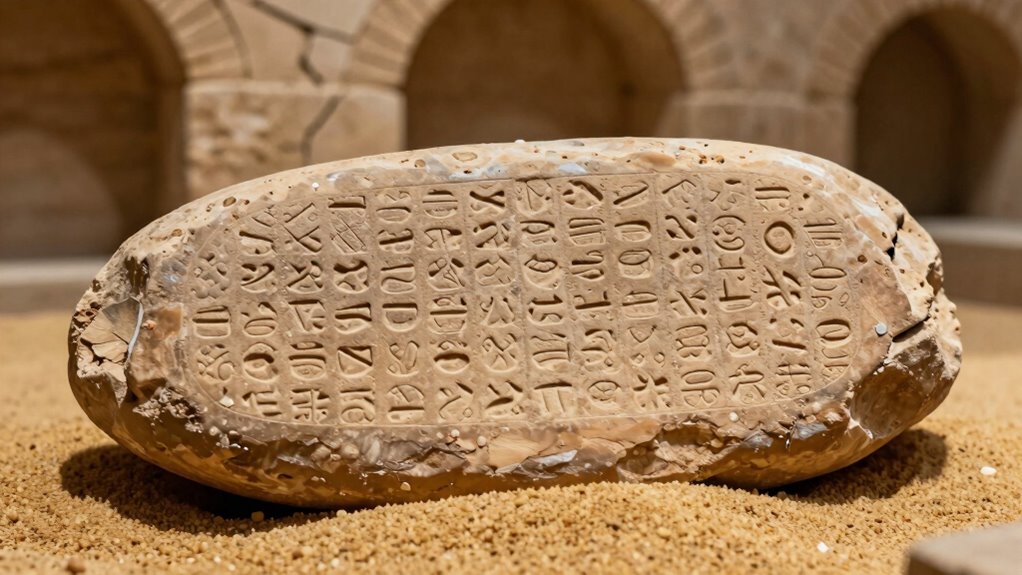
Many artifacts from ancient civilizations have remarkably survived thousands of years, offering us a direct link to our distant past. You might wonder why some objects endure while others fade away. The answer lies largely in the preservation techniques used and the climate impact on those materials. Over centuries, natural and human efforts have played essential roles in protecting these relics, allowing them to withstand the test of time.
Preservation techniques are fundamental in safeguarding artifacts. When archaeologists and conservators discover ancient objects, they often employ methods like controlled environments, chemical treatments, and careful handling to prevent deterioration. For example, wrapping artifacts in specialized materials or storing them in sealed, climate-controlled spaces minimizes exposure to harmful elements. Sometimes, techniques like dehydration or stabilization are used to halt decay processes. These efforts are critical because they slow down the natural breakdown caused by moisture, oxygen, and microbial activity. Proper climate control is crucial in preserving these delicate items over extended periods. Additionally, public awareness and funding for preservation programs significantly contribute to the longevity of these relics. Moreover, advancements in preservation techniques continually improve our ability to protect fragile objects. Recognizing the importance of environmental factors helps us understand why some objects endure while others do not.
Preservation techniques like controlled environments and chemical treatments are vital in preventing artifact deterioration.
Climate impact greatly influences how well artifacts survive. A stable, dry, and cool environment greatly enhances preservation. Conversely, exposure to fluctuating temperatures, high humidity, or water can accelerate deterioration. For instance, artifacts buried in arid deserts often survive better than those in humid jungles, where moisture encourages mold and microbial decay. Similarly, salt deposits from ancient sea water can help preserve some artifacts by preventing microbial activity, while others may suffer from salt corrosion. The specific climate conditions of the location where an artifact is found or stored can either be a protector or a destroyer. That’s why many museums and archaeological sites carefully control the climate—reducing temperature swings and humidity levels—to promote long-term preservation. Recognizing the importance of climate conditions helps us understand why some objects endure while others do not. The ongoing study of these factors allows scientists to develop better strategies for protecting artifacts in various environments.
In essence, the survival of ancient artifacts hinges on a combination of natural factors and deliberate preservation techniques. When these factors align—such as favorable climate conditions and meticulous conservation efforts—artifacts can survive for thousands of years, offering us invaluable insights into our history. Your interest in these relics reflects a broader human desire to connect with the past, and understanding how they endure highlights the importance of ongoing preservation efforts. By safeguarding these treasures against climate impact and employing advanced preservation techniques, we guarantee that future generations can continue to explore and learn from our shared history.
artifact preservation climate control
As an affiliate, we earn on qualifying purchases.
As an affiliate, we earn on qualifying purchases.
Frequently Asked Questions
How Do Environmental Factors Influence Artifact Preservation?
Environmental factors greatly influence artifact preservation. You’ll notice that climate variations, like extreme dryness or cold, slow decay and help artifacts last longer. Soil acidity also plays a role; acidic soils tend to break down organic materials faster, while neutral or alkaline soils protect them better. By understanding these factors, you can appreciate how certain environments create ideal conditions for artifacts to survive for thousands of years.
What Role Do Human Activities Play in Artifact Decay?
You play a key role in artifact decay through your cultural activities and burial practices. When artifacts are buried in unstable environments or subjected to human interference, they deteriorate faster. Conversely, culturally significant burial practices can help preserve artifacts by protecting them from external elements. Your actions, whether careful preservation or neglect, directly influence how long artifacts survive, shaping our understanding of history and culture.
Are Synthetic Materials More Durable Than Natural Ones?
You’ll find that synthetic materials are often more durable than natural ones, with some lasting hundreds of years longer. Synthetic durability means they resist decay and environmental damage better, whereas natural resilience depends on the material’s inherent properties. For example, plastics can endure extreme conditions, while natural fibers may rot or degrade faster. This durability makes synthetic artifacts more likely to survive through the ages, offering valuable insights into our history.
How Do Archaeologists Date Ancient Artifacts Accurately?
You can find out the age of ancient artifacts by analyzing their artifact symbolism and artistic techniques. Archaeologists use methods like radiocarbon dating for organic materials and thermoluminescence for ceramics. They interpret symbols and craftsmanship styles, comparing them with known periods. These clues help establish a timeline, ensuring accurate dating. By combining scientific tests with cultural analysis, you get a clearer picture of when these artifacts were created, revealing their historical significance.
Can Modern Technology Help Restore Damaged Artifacts?
Yes, modern technology can definitely help restore damaged artifacts. Digital imaging allows you to create detailed, 3D reconstructions of broken pieces, making it easier to visualize and piece them together. Material analysis helps identify the original composition of artifacts, guiding accurate restoration efforts. Together, these tools enable you to preserve cultural heritage more effectively, ensuring artifacts survive longer and retain their historical significance for future generations.
conservation chemical treatments for artifacts
As an affiliate, we earn on qualifying purchases.
As an affiliate, we earn on qualifying purchases.
Conclusion
You hold history in your hands, marveling at artifacts that have withstood centuries, their fragile beauty defying time. Yet, beneath their silent surfaces lie stories of decay and resilience, reminding you that survival isn’t just about preservation but also adaptation. As these relics outlive empires and civilizations, they challenge your understanding of permanence, proving that even the most delicate objects can endure through subtle forces—proof that in decay, there is also life.
archaeological artifact storage containers
As an affiliate, we earn on qualifying purchases.
As an affiliate, we earn on qualifying purchases.
As an affiliate, we earn on qualifying purchases.
Fall Picks
fall essentials
As an affiliate, we earn on qualifying purchases.