
🔍 Read the full analysis: AI Advancement Depends On Canada’s Energy Grid—Not Just Labs on ThorstenMeyerAI.com

Prime made for students and young adults
- Fast, free delivery for dorm and study essentials
- Prime Video and Amazon Music included
- Member-only deals
TL;DR
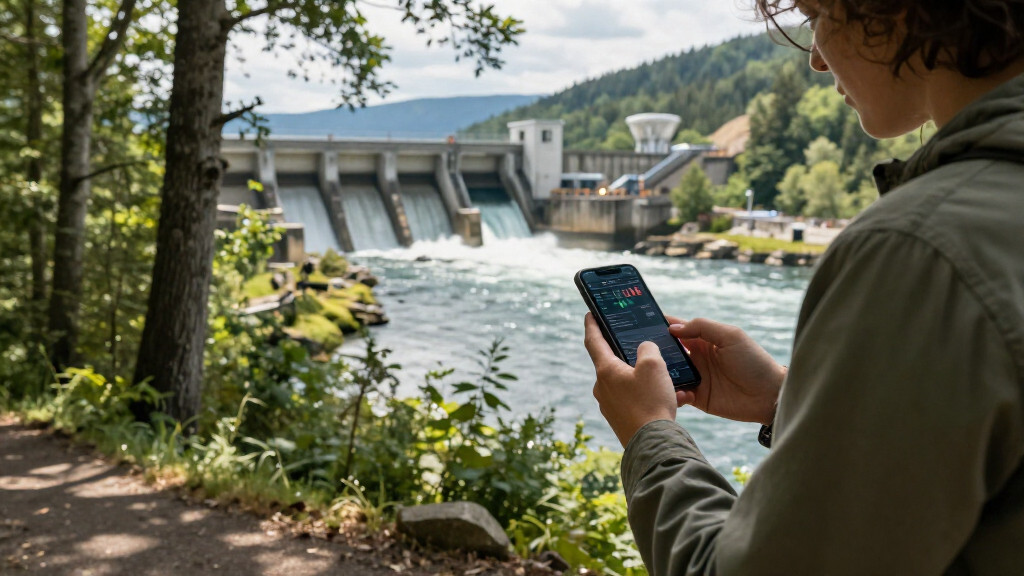
Canada’s energy supply is not as abundant or cheap as previously assumed, with provincial restrictions in Quebec and BC limiting data center expansion. This impacts AI industry growth plans that rely on Canadian power.
Canadian provinces, notably Quebec and British Columbia, are imposing restrictions on new power procurement for large data centers, directly impacting the availability of cheap, clean energy crucial for AI development. This challenges the common assumption that Canada offers abundant, low-cost hydroelectric power for AI industry growth, a premise previously used to support international alliances such as the proposed European-Canadian AI partnership.
Quebec, which has historically supplied about 60% of Canada’s hydroelectric power, has restricted new power procurement for large data centers since 2024. Hydro-Québec has proposed a higher tariff of 13 ¢/kWh for data centers above 5 MW, roughly double the current large-industrial rate, but this proposal remains under regulatory review amid opposition from data-center operators. Meanwhile, British Columbia has allocated only 400 MW over two years, capped at 145 MW per project, far below the capacity needed for major data-center projects like Schwarz’s 200 MW Lübbenau campus.
Canada’s existing data-center fleet stood at approximately 1.4 GW in late 2025, compared to the 40.6 GW in the United States, indicating a relatively small but growing sector. The constraints reflect a broader pattern: provinces are rationing and repricing power to prevent grid overloads and manage costs, as new large loads threaten to strain aging infrastructure. Ontario and Alberta have implemented policies requiring data centers to bear some connection costs, further complicating expansion efforts.
Energy is the AI policy: why Canada’s grid matters more than its labs — and why it isn’t free
Almost all the coverage leans on one assumption: Canada has abundant cheap clean power and Europe doesn’t. That assumption is about to be wrong, and the evidence is already public. Europe isn’t being offered a reservoir. It’s being offered a queue — already contested, already being repriced.
- >78 GW installed hydro; ~60% of national generation
- Lowest unit system costs: Quebec C$76/MWh, Manitoba C$91, BC C$100
- Cold climate cuts cooling load; Ontario nuclear expanding
- Ottawa: double capacity by 2050, non-emitting, plus an intertie programme
- Quebec has halted new large data-centre power procurement since 2024
- BC: 400 MW over two years, capped at 145 MW per project
- Alberta: 1,200 MW cap vs a >10 GW queue — a 1-in-8 hit rate
- Canada live capacity ~1.4 GW vs the US 40.6 GW
Procurement restricted since 2024. Data centres are the largest new line item in the supply plan; consumption forecast to rise ~7× by 2035 (200 MW → >1,000 MW).
Capped at 145 MW per project from Feb 2026. For scale: Lübbenau’s first phase alone is 200 MW.
Connection-asset payments, expansion deposits, locational marginal pricing. Shifts the cost — doesn’t remove the constraint. Nuclear expanding.
Federal MoU suspends Clean Electricity Regulations obligations; encourages made-in-Canada data centres. But 1,200 MW capped through 2028.
Energy economics push European AI compute out of Europe. Sovereignty rules push it back in. SecNumCloud requires EU-only storage; CADA’s assurance levels turn on data residency; the Digital Trade Agreement would prohibit “unjustified” localization. Three instruments, three directions. The workable answer is to tier the workloads: classified and DORA-bound work stays on EU soil regardless of price; pre-training runs and synthetic-data generation with no personal or classified data can sit where the electrons are cheap. Not all compute is sovereign compute — treating it as one undifferentiated resource is what makes the trade-off look impossible.
The sovereignty debate has been conducted as a legal argument — ownership caps, adequacy, assurance levels. All of it matters. But the binding constraint of the next five years is physical, measured in megawatts and queue positions. On that measure Canada is genuinely the best partner on offer: real hydro, a nuclear programme, cold climate, critical minerals, a government building sovereign compute. The alliance logic holds — at a smaller scale and higher price than the enthusiasm implies. Buy queue position, co-finance generation, put the sovereignty-bound workloads at home and the rest where the electrons are cheap, and tie it to interties and SMRs rather than one campus. Because Lübbenau’s lesson crosses the Atlantic: the scarce thing was never the model — it was the connection to the grid.
Implications for AI Industry Growth and International Alliances
The restrictions and capacity limitations in Canada mean that the assumption of readily available, affordable hydroelectric power for AI data centers is no longer valid. This affects not only Canada’s own growth prospects but also the strategic calculations of international partners, such as Europe, which may have relied on Canadian energy as a key component of their AI and industrial policies. The constraints highlight that energy infrastructure and regulatory environments are critical factors in the global race for AI leadership, beyond just chip supply and model development.
uninterruptible power supply for data centers
As an affiliate, we earn on qualifying purchases.
As an affiliate, we earn on qualifying purchases.
Canadian Energy Resources and Provincial Policies
Canada possesses over 78 GW of hydroelectric capacity across provinces like Quebec, BC, Ontario, Manitoba, and Newfoundland & Labrador, with hydroelectricity making up roughly 60% of national generation. Historically, this resource has been viewed as a strategic advantage for AI industry growth. Ottawa’s goal to double electricity capacity by 2050 emphasizes a non-emitting, interconnected grid. However, recent provincial policies reveal a shift: Quebec’s regulatory restrictions and BC’s limited allocations are reducing the available power for new large-scale data centers. Ontario and Alberta are managing costs through connection fees and caps, further constraining expansion. These policies reflect a recognition that infrastructure upgrades are necessary but are currently lagging behind demand growth.
energy-efficient server cooling systems
As an affiliate, we earn on qualifying purchases.
As an affiliate, we earn on qualifying purchases.
Unresolved Regulatory and Capacity Challenges
It remains unclear how quickly provinces will expand capacity or relax restrictions to meet growing demand. The regulatory processes are ongoing, and political pressures could influence future policies. Additionally, the extent to which new infrastructure investments will offset current constraints is still uncertain, as is the actual impact on international AI alliances relying on Canadian energy.
hydroelectric power backup generators
As an affiliate, we earn on qualifying purchases.
As an affiliate, we earn on qualifying purchases.
Next Steps in Canadian Energy Policy and Data Center Expansion
Provinces are expected to continue balancing demand and capacity through regulatory decisions, tariffs, and caps. Industry stakeholders are likely to push for infrastructure upgrades and policy reforms to facilitate growth. Meanwhile, international partners, including Europe, will need to reassess their assumptions about Canadian energy availability and possibly seek alternative sources or strategies for AI development, emphasizing the importance of infrastructure investments and regulatory clarity.
industrial power meters for data centers
As an affiliate, we earn on qualifying purchases.
As an affiliate, we earn on qualifying purchases.
Key Questions
How much hydroelectric capacity does Canada have?
Canada has over 78 GW of hydroelectric capacity, primarily in Quebec, BC, Ontario, Manitoba, and Newfoundland & Labrador.
Why are provinces restricting data center growth?
Provinces aim to prevent grid overloads, manage costs, and ensure grid stability amid rising demand from large data centers, which require significant, concentrated power.
What impact do these restrictions have on AI development?
Restrictions limit access to low-cost, clean hydroelectric power, potentially slowing AI data-center expansion and forcing industry to seek alternatives or face higher costs.
Could Canadian energy restrictions change soon?
It is uncertain; regulatory processes are ongoing, and future infrastructure investments or policy reforms could alter the current constraints.
How does Canada compare to Europe in energy availability for AI?
While Canada has significant hydro resources, current restrictions mean its capacity is less accessible than previously assumed, contrasting with Europe’s congested hubs and limited growth potential.
Source: ThorstenMeyerAI.com
Halloween Picks
halloween
As an affiliate, we earn on qualifying purchases.