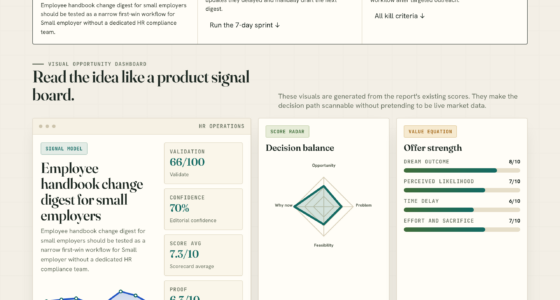

📊 Full opportunity report: The Real Impact Of The AI Act’s Accelerated Deadline On AI Innovation on ThorstenMeyerAI.com — validation score, market gap, and execution plan.

Prime made for students and young adults
- Fast, free delivery for dorm and study essentials
- Prime Video and Amazon Music included
- Member-only deals
TL;DR
The European AI Act’s high-risk enforcement deadline has been delayed by over a year, but transparency obligations remain unchanged. This shift impacts AI firms’ compliance strategies and innovation timelines.
The European Union’s AI Act’s enforcement date for high-risk obligations has been postponed from August 2026 to December 2027 for certain systems, according to recent legislative updates. This delay affects organizations preparing for compliance, but transparency requirements remain effective from August 2026, impacting a broad range of AI applications. The change aims to give industry more time to meet standards but raises questions about the overall regulatory trajectory and innovation pace.
In November 2025, the European Commission proposed amendments to the AI Act, notably splitting the enforcement timeline for high-risk AI systems. The new schedule pushes the compliance deadline for Annex III applications to December 2027, and for embedded AI in regulated products to August 2028. This adjustment was driven by delays in developing harmonized standards, which had previously linked compliance deadlines to standards readiness. However, the legislation’s transparency obligations—such as AI interaction disclosures, synthetic content marking, deepfake labeling, and public-interest disclosures—remained unaffected and became enforceable from August 2026.
Furthermore, enforcement powers for Article 50 obligations, including fines and investigations, became operational immediately, with national authorities responsible for oversight. A narrow grace period was granted for legacy systems to meet certain marking requirements by December 2026, but new or updated systems must comply immediately.
Additionally, a new ban on AI-generated non-consensual intimate imagery was introduced, maintaining its original timeline for implementation.
The AI Act’s 2 August deadline didn’t disappear — it split in two. The heavy high-risk regime slid past 2027. The transparency duties that apply to almost anyone touching generative AI landed exactly on schedule, with national enforcement behind them.
▲ Journalism, not legal advice · verify with counselThe Digital Omnibus cleaved one date into two speeds. If your mental model of “the deadline” was the high-risk regime, the pressure genuinely eased — but that was never the obligation most organisations actually had.
Not a high-risk provision, not tied to Annex III. It applies to specific categories of AI regardless of risk — in practice, to every business using generative AI to produce content or run a system that talks to users.
Three true stories collided and the headlines merged them into one false one.
Start with an inventory of every system that talks to a user or generates content on your behalf. Three duties are live today — not December.
you deferred the wrong obligation.
Implications for AI Developers and Regulators
This legislative shift means that many organizations no longer face immediate high-risk compliance burdens, potentially easing development pressures in the short term. However, the unchanged transparency obligations ensure that some compliance activities remain mandatory, affecting how companies deploy generative AI and user-facing systems. The delay may also influence innovation strategies, as firms reassess risk management and regulatory expectations. The immediate enforcement of transparency and content labeling rules underscores the EU's continued focus on accountability, even as enforcement capacity expands at the national level.
As an affiliate, we earn on qualifying purchases.
Background of the AI Act and Regulatory Delays
The EU's AI Act, formally known as Regulation (EU) 2024/1689, was adopted in mid-2024 with a phased enforcement timeline. Originally, August 2026 was set as the compliance deadline for high-risk AI systems under Annex III, including applications in employment, education, and law enforcement. The legislation aimed to establish a comprehensive framework for AI safety, transparency, and accountability.
However, progress on developing harmonized standards was slow, causing regulators and industry stakeholders to seek delays. The recent legislative amendments, finalized in July 2026, split the enforcement timeline, providing additional time for high-risk systems while keeping transparency rules unchanged. The amendments also introduced new prohibitions and clarified enforcement responsibilities at the national level.
"The delay in enforcement deadlines gives companies breathing room but does not eliminate the need to prepare for transparency obligations, which remain enforceable from August 2026."
— Thorsten Meyer, AI compliance expert
As an affiliate, we earn on qualifying purchases.
Unresolved Questions About Future Enforcement and Standards
It remains unclear how quickly harmonized standards will be developed and adopted, which could influence future compliance timelines. The long-term impact on AI innovation depends on how regulators interpret and enforce the remaining obligations, especially given the shift in deadlines. Additionally, the effects of the new prohibition on non-consensual AI-generated imagery are still being observed, and the scope of enforcement at the national level may vary across member states.
As an affiliate, we earn on qualifying purchases.
Next Steps for Industry and Regulators
AI firms should review their compliance strategies to prioritize transparency obligations, which are already in force. Regulatory authorities are expected to continue developing standards and guidance, with further clarity likely in the coming months. Companies should also monitor enforcement actions by national authorities to understand how rules are applied in practice. The European Commission may propose additional updates or clarifications as the legislation matures.
As an affiliate, we earn on qualifying purchases.
Key Questions
Does the delay mean AI companies can ignore high-risk compliance now?
No. The enforcement of high-risk obligations under Annex III has been postponed until December 2027, but transparency and certain other obligations remain effective from August 2026. Companies should continue preparing for compliance accordingly.
What obligations are still enforceable from August 2026?
Transparency obligations under Article 50, including AI interaction disclosures, synthetic content marking, deepfake labeling, and public-interest disclosures, are enforceable from August 2026. Enforcement is handled by national authorities.
Will the delay impact AI innovation in Europe?
The delay may temporarily reduce compliance burdens, potentially allowing faster development. However, ongoing transparency requirements and future standards development will continue to shape innovation strategies.
How will enforcement vary across EU member states?
Enforcement is decentralized, with national authorities responsible for monitoring and penalties. Variations may occur depending on each country's capacity and approach.
What should AI developers do now?
Developers should focus on meeting transparency obligations and prepare for future standards. Staying informed about legislative updates and guidance from regulators is essential for ongoing compliance.
Source: ThorstenMeyerAI.com
Fall Picks
fall essentials
As an affiliate, we earn on qualifying purchases.