

Educational science reference books can make complex ideas easier to explore, but the right choice depends on the reader’s age, interests, and appetite for detail. I name The Way Things Work: Newly Revised Edition my best overall pick for its broad, mechanics-focused approach; Science: The Definitive Visual Guide stands out for readers who want a wide visual survey, while Everything You Need to Ace Science in One Big Fat Notebook suits middle schoolers who need structured study support. The main tradeoff is between approachable explanations, visual browsing, and material that supports schoolwork or deeper reference. Some titles focus on one subject, while others cover science broadly. Read on for the full comparison and help matching a book to its reader.

Get school and study supplies delivered free — and shop member deals
- Fast, free delivery on millions of items
- Access to Prime Big Deal Days deals on October 6–7
- Prime Video, Amazon Music and more included
Key Takeaways
- The Way Things Work leads for broad curiosity because its focus on mechanisms gives readers a way to connect scientific ideas with how everyday things function.
- Science: The Definitive Visual Guide and Science Book offer broad coverage, while focused titles such as The Elements Book and First Human Body Encyclopedia make more sense when a reader already has a favorite subject.
- One Big Fat Notebook is the clearest school-support choice in this group; its study-guide format serves a different purpose from browsing-oriented encyclopedias.
- The younger-reader options use visual presentation and accessible explanations to invite exploration, but buyers should still check whether the reading level matches the child’s current independence.
- Sciencia takes a more compact, idea-dense approach, showing that a smaller reference can suit readers who want concepts across several disciplines rather than a child-friendly visual encyclopedia.




| educational science reference book | Format | Intended audience | Subject | Coverage |
|---|---|---|---|---|
| The Way Things Work: Newly Rev | Book | Readers of all ages | Machines and everyday objects | How machines and objects work |
| Everything You Need to Ace Sci | Book | — | Science | Middle school science topics |
| First Human Body Encyclopedia | Children’s encyclopedia | Young readers | Human body | Anatomy and bodily functions |
| The Elements Book: A Visual Pe | Children’s visual encyclopedia | Children | Chemical elements | Periodic table overview |
| Science: The Definitive Visual | Visual guide | Students and science enthusiasts | Science | Scientific concepts, discoveries, and history |
| Science Book: Everything You N | Book | Wide age range | Science and the natural world | Various scientific concepts |
| National Geographic Kids Scien | Encyclopedia | Kids | — | — |
| The Usborne Science Encycloped | Science encyclopedia | Young scientists | — | — |
| Sciencia: Mathematics | Book | General readers and beginners | — | — |
| Knowledge Encyclopedia Human B | Encyclopedia | Readers interested in human biology | Human body and anatomy | — |
| Knowledge Encyclopedia Science | Encyclopedia | — | Science | Wide range of scientific topics |
More Details on Our Top Picks
The Way Things Work: Newly Revised Edition
Everyday machines and objects make this a useful starting point for readers who want to connect science concepts with how things work around them. Its broad, engaging explanations give it a different purpose from Everything You Need to Ace Science in One Big Fat Notebook, which is aimed at middle school coursework and practice. The revised edition is described as adding new content, a plus for readers seeking an updated overview. Its wide age appeal also makes it a flexible shared reference for families. The tradeoff is depth: the available description gives no specific technical detail, and the material may feel basic to advanced readers. I’d choose it for curiosity-led exploration of machines, rather than as a detailed study guide or a specialist engineering reference.
Pros:- Explains machines and everyday objects through accessible science and engineering concepts
- Designed for readers of different ages
- Newly revised edition is described as containing updated material
Cons:- May be too basic for advanced science or engineering study
- The supplied product information gives no specific technical details or topic list
Best for: Families and curious readers who want accessible explanations of machines and everyday objects
Not ideal for: Advanced students seeking technical detail or readers who need structured school practice
- Format:Book
- Edition:Newly Revised Edition
- Subject:Machines and everyday objects
- Coverage:How machines and objects work
- Concept areas:Science and engineering
- Intended audience:Readers of all ages
Our verdict“Choose this for approachable, curiosity-led explanations of everyday engineering, especially for readers who want a broader age range than a middle school study guide serves.”
Everything You Need to Ace Science in One Big Fat Notebook: The Complete Middle School Study Guide
Course-focused coverage and practice questions give this book the clearest study role in the group. It is built around middle school science, so students can use it to review concepts and reinforce them with questions; that makes it more directly useful for school preparation than The Way Things Work: Newly Revised Edition, which takes a broader, everyday-machines approach. Its accessible explanations are intended to make science easier to follow, while its single-guide format brings multiple middle school topics together. The tradeoff is that it serves a defined age and academic stage, rather than offering the child-friendly anatomy focus of First Human Body Encyclopedia or a general reference for readers beyond school. The supplied description does not identify particular topics, edition details, or practice-question formats.
Pros:- Covers middle school science topics in one study guide
- Uses clear, accessible explanations
- Includes practice questions for concept reinforcement
Cons:- Its school-stage focus may not suit younger children or advanced learners
- The supplied information does not specify covered topics or question formats
Best for: Middle school students who want a single resource for reviewing science concepts and practicing questions
Not ideal for: Young children, advanced students, or readers looking for a visual reference on one science subject
- Format:Book
- Category:Study guide
- Subject:Science
- Intended level:Middle school
- Coverage:Middle school science topics
- Practice:Includes practice questions
Our verdict“Pick this for middle school science review when practice questions matter more than an illustrated, curiosity-led reference.”
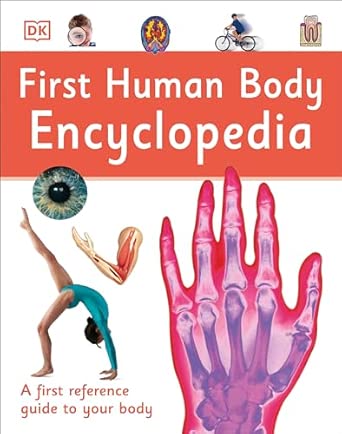
First Human Body Encyclopedia (DK First Reference)
Accessible anatomy for young readers is this encyclopedia’s defining strength. Its child-oriented overview, colorful illustrations, and facts offer an inviting introduction to bodily structures and functions. That narrow subject focus sets it apart from The Elements Book: A Visual Periodic Table Encyclopedia for Kids, which introduces chemistry through elements, and from the broader science scope of Science: The Definitive Visual Guide. For a child starting to ask how the body works, a focused reference can make the topic easier to approach than a general survey. The tradeoff is limited depth: the supplied description says it lacks detailed scientific information and offers little for older students. I’d treat it as an early learning resource, not as an anatomy text for sustained study or a comprehensive science reference.
Pros:- Focuses on the human body and bodily functions
- Uses colorful illustrations suited to young readers
- Presents facts in an accessible children’s reference format
Cons:- Lacks detailed scientific information
- Offers limited material for older students
Best for: Parents, caregivers, and early readers seeking an illustrated first introduction to anatomy
Not ideal for: Older students who need detailed body systems, advanced terminology, or a broader science survey
- Format:Children’s encyclopedia
- Series:DK First Reference
- Subject:Human body
- Coverage:Anatomy and bodily functions
- Intended audience:Young readers
- Visual content:Colorful illustrations
Our verdict“Choose this as a child’s first anatomy reference, but move to a more detailed guide when their questions outgrow an introductory overview.”
The Elements Book: A Visual Periodic Table Encyclopedia for Kids
Elements as a visual subject give this children’s encyclopedia a focused way into chemistry. Its illustrations and periodic-table overview are aimed at helping young readers recognize and learn about chemical elements, rather than following a school-course sequence. That makes it a more specialized pick than Everything You Need to Ace Science in One Big Fat Notebook, which covers middle school science and includes practice questions. Compared with First Human Body Encyclopedia, it trades anatomy for a first look at the building blocks of matter. The limitation is depth: the supplied description says the explanations may be too basic for older students and does not identify specific element-by-element details. I’d choose it to spark early interest in chemistry, not to support advanced study or detailed explanations of chemical behavior.
Pros:- Introduces the periodic table and chemical elements for children
- Uses colorful illustrations to support visual learning
- Provides a focused entry point into chemistry
Cons:- May be too basic for older students
- The supplied description does not specify the depth of its element-by-element explanations
Best for: Children beginning to explore chemical elements and the periodic table through illustrated explanations
Not ideal for: Older students who need detailed chemistry explanations, calculations, or course practice
- Format:Children’s visual encyclopedia
- Subject:Chemical elements
- Coverage:Periodic table overview
- Intended audience:Children
- Visual content:Colorful illustrations
- Reference focus:Chemistry
Our verdict“Pick this for a young learner’s visual introduction to the elements, while students needing chemistry instruction should choose a more detailed resource.”
Science: The Definitive Visual Guide
Broad science coverage with detailed illustrations gives this guide the widest reference role among these five. The description presents it as an overview of scientific concepts, discoveries, and history, so it suits readers who want to move between subjects rather than focus only on the human body as in First Human Body Encyclopedia or the periodic table as in The Elements Book. Its visual explanations can help readers grasp ideas across a range of topics, and the stated audience includes students and science enthusiasts. That breadth comes with a tradeoff: a wide survey may not provide the focused practice found in Everything You Need to Ace Science in One Big Fat Notebook. The supplied data also gives no edition or publication details, and does not specify which scientific fields receive the most depth.
Pros:- Covers scientific concepts, discoveries, and history
- Uses detailed illustrations to explain ideas
- Aims to serve both students and science enthusiasts
Cons:- The broad scope may offer less focused study support than a subject-specific guide
- The supplied product information does not specify edition, publication details, or topic-by-topic depth
Best for: Students and science enthusiasts who want an illustrated overview across scientific concepts, discoveries, and history
Not ideal for: Buyers seeking a narrowly focused children’s introduction or a course-aligned guide with practice questions
- Format:Visual guide
- Subject:Science
- Coverage:Scientific concepts, discoveries, and history
- Visual content:Detailed illustrations
- Intended audience:Students and science enthusiasts
- Reference scope:Broad scientific overview
Our verdict“Choose this for a wide-ranging illustrated science reference, especially if a broad survey matters more than age-specific lessons or practice questions.”
Science Book: Everything You Need to Know About the World and How It Works
Broad coverage and accessible explanations make this a practical starting point for readers who want an overview of how the natural world works. Compared with Sciencia, which names five core disciplines, this book is described more generally as spanning scientific concepts, so it may suit readers who prefer a wide-ranging introduction over a discipline-by-discipline survey. It also has a broader stated audience than the child-focused National Geographic Kids Science Encyclopedia. The tradeoff is that breadth comes without much technical depth: readers ready for detailed explanations may outgrow it, and the supplied product information does not identify an author or edition. I’d choose it for a first pass across science topics, while treating its general scope as an orientation rather than a substitute for specialized references.
Pros:- Explains scientific concepts in an accessible manner
- Covers a broad range of scientific topics
- Described as suitable for a wide age range
Cons:- Limited technical depth may leave advanced learners wanting more
- The supplied product data does not identify an author or edition
Best for: Readers or families seeking an accessible first overview of several areas of science
Not ideal for: Students who need technical detail, a clearly specified edition, or author information
- Format:Book
- Subject:Science and the natural world
- Coverage:Various scientific concepts
- Approach:Accessible explanations
- Intended audience:Wide age range
- Technical depth:Introductory
Our verdict“Choose this for a readable broad introduction, but look to a more specialized reference for deeper study.”
National Geographic Kids Science Encyclopedia: Atom Smashing, Food Chemistry, Animals, Space, and More!
Colorful illustrations and kid-oriented presentation give this encyclopedia a clear role as a curiosity-builder for young readers. Its stated range—from food chemistry and animals to space—offers more varied browsing than the anatomy-focused Knowledge Encyclopedia Human Body!, while its child-focused framing distinguishes it from the broad-audience Science Book. That range can help a child follow interests from one subject to another, though the product information does not specify how topics are organized or how much detail each receives. The tradeoff is age fit: the description cautions that material may be too advanced for very young children. I’d favor it for school-age readers who like visual reference books, but not as a first science book for a preschooler who needs simpler explanations.
Pros:- Engaging presentation aimed at children
- Covers chemistry, biology, space, and other topics
- Colorful illustrations support visual exploration
Cons:- May be too advanced for very young readers
- The supplied product data gives no specific organizational or feature details
Best for: School-age children who enjoy illustrated browsing across biology, chemistry, space, and other science topics
Not ideal for: Very young children who need simpler language and more guided explanations
- Format:Encyclopedia
- Intended audience:Kids
- Subject areas:Chemistry, biology, space, and more
- Named topics:Atom smashing, food chemistry, and animals
- Visuals:Colorful illustrations
- Presentation:Engaging facts
Our verdict“Pick it for an illustration-loving child ready to browse a wide range of science subjects.”
The Usborne Science Encyclopedia: An In-depth Guide for Young Scientists Exploring Gravity, Flight, Genes, DNA and More, with Over 180 Video Clips and 1000 Recommended Websites for Further Learning
Linked video clips and recommended websites set this guide apart from the print-focused National Geographic Kids Science Encyclopedia. Its named topics—gravity, flight, genes, and DNA—span physical and life sciences, and the additional resources point readers toward continued exploration beyond the book. That makes it a strong fit for young learners who like following a question from page to screen. Compared with Science Book, which is described as an accessible general introduction, this title signals a more in-depth approach for young scientists. The tradeoff is that online resources may be less useful to readers who want a fully self-contained book, and the description says some material may challenge very young children. I’d choose it for an older child who enjoys independent research, not for a beginner needing a simpler first reference.
Pros:- Covers topics across physical and life sciences
- Includes over 180 video clips
- Recommends 1,000 websites for further learning
- Encourages self-directed exploration
Cons:- Some topics may be too advanced for very young learners
- A substantial part of the further-learning offer depends on online resources
Best for: Older children who like exploring science independently and can make use of online learning resources
Not ideal for: Very young children or readers who want a self-contained reference without online follow-up
- Format:Science encyclopedia
- Intended audience:Young scientists
- Named topics:Gravity, flight, genes, and DNA
- Video resources:Over 180 video clips
- Website recommendations:1,000
- Learning approach:Further learning and self-directed exploration
Our verdict“Choose it for a young science enthusiast who will follow the book’s topics into its videos and websites.”
Sciencia: Mathematics, Physics, Chemistry, Biology, and Astronomy for All (Wooden Books, 37)
Five named disciplines in a compact format make Sciencia the most clearly defined cross-disciplinary survey in this group. It brings together mathematics, physics, chemistry, biology, and astronomy, whereas Knowledge Encyclopedia Human Body! concentrates on anatomy and The Usborne Science Encyclopedia pairs its science topics with extensive online resources. That focused list of fields can help a beginner see how major sciences sit alongside one another, and the described accessible explanations lower the barrier to entry. The tradeoff is limited technical depth, with few visual aids or diagrams noted in the product information. Compared with the richly illustrated National Geographic Kids Science Encyclopedia, it sounds less oriented around visual browsing. I’d pick it for an adult or older learner seeking a concise overview, not for someone who needs detailed instruction or diagram-led teaching.
Pros:- Covers mathematics, physics, chemistry, biology, and astronomy
- Accessible explanations suit beginners
- Described as compact and portable
Cons:- Does not provide detailed technical depth
- Product information notes limited visual aids and diagrams
- Author and publication date are not specified in the supplied data
Best for: Beginners and general readers who want a compact introduction spanning five core sciences
Not ideal for: Readers who rely on abundant diagrams or need technical explanations for study
- Format:Book
- Series:Wooden Books, 37
- Subject areas:Mathematics, physics, chemistry, biology, and astronomy
- Intended audience:General readers and beginners
- Approach:Accessible overview
- Portability:Compact format
- Technical depth:Introductory
Our verdict“Choose Sciencia for a portable, beginner-level survey of five sciences if you can do without extensive diagrams.”
Knowledge Encyclopedia Human Body! Human Anatomy as You’ve Never Seen It Before
Visual focus on human anatomy gives this encyclopedia a sharper purpose than broad surveys such as Sciencia, which spans five sciences, or Science Book, which covers the natural world more generally. For readers drawn specifically to human biology, a detailed, visually engaging treatment can make body structures easier to explore than a general science reference. Its accessible presentation also gives it wider appeal than a specialist text, though the supplied description does not identify its exact sections, visual formats, or level of technical detail. That lack of specification makes it harder to judge how well it supports structured study. Compared with the child-focused National Geographic Kids Science Encyclopedia, this is the more focused choice for anatomy rather than broad-topic browsing. I’d select it for visual learners curious about the body, not for readers seeking coverage across many sciences.
Pros:- Focuses on human anatomy and the body
- Uses a visually engaging presentation
- Explains complex concepts accessibly
- Suited to a range of readers interested in human biology
Cons:- Narrower subject coverage than broad science encyclopedias
- The supplied product data does not specify technical details or the depth of coverage
Best for: Visual learners and readers specifically interested in human anatomy and biology
Not ideal for: Buyers seeking a broad science reference or detailed technical specifications before choosing
- Format:Encyclopedia
- Subject:Human body and anatomy
- Approach:Detailed and accessible
- Visual presentation:Visually engaging
- Intended audience:Readers interested in human biology
- Scope:Human anatomy
Our verdict“Choose it for an accessible visual introduction to anatomy, but pick a broader encyclopedia for science across multiple fields.”
Knowledge Encyclopedia Science! 2nd Edition
Knowledge Encyclopedia Science! 2nd Edition is the broadest-fit choice here for readers who want to move among science topics with illustrations as entry points. The supplied description promises explanations and visuals across a wide range, which suits curious students who browse by question rather than follow a single course. Compared with Everything You Need to Ace Science in One Big Fat Notebook, this is positioned as a reference for exploration, not a middle-school study guide. It also has a wider stated scope than the human-body and periodic-table titles, though those are more focused for readers seeking depth in one area.
The tradeoff is limited product detail: the listing gives no specific account of the second edition’s changes, topic organization, or supporting features. I’d choose it for visual, general science browsing, but readers needing curriculum alignment or a clearly documented feature set may prefer a more targeted guide.
Pros:- Described as covering a wide range of scientific topics
- Illustrations and visuals can make unfamiliar ideas more approachable
- A general reference scope supports browsing beyond a single science subject
Cons:- The available product data does not identify specific second-edition updates
- No details are supplied about topic structure, reading level, or supplementary features
Best for: Curious school-age readers who want an illustrated general science reference to browse across topics
Not ideal for: Students seeking a clearly structured middle-school revision guide or readers who need documented details about edition changes and contents
- Edition:2nd Edition
- Format:Encyclopedia
- Subject:Science
- Coverage:Wide range of scientific topics
- Presentation:Illustrations and visuals
- Intended readers:Curious readers and students
Our verdict“Choose this for broad, visually supported science browsing; choose a focused encyclopedia or study guide when you need subject depth or a defined learning structure.”

How We Picked
I compared these books as educational science references, giving weight to how clearly they explain ideas, how easily readers can find and revisit information, and whether the subject breadth fits the book’s likely audience. I also considered visual support, age accessibility, usefulness for school or independent exploration, and whether a focused scope is a benefit for the right reader. Since the lineup ranges from study guides to broad encyclopedias and subject-specific books, I judged each against its intended use rather than treating every title as interchangeable.
The ranking favors books with a strong balance of useful scope, approachable explanations, and lasting reference value. Broad, concept-led titles rank ahead when they serve varied interests; targeted or age-specific picks rise for readers whose needs are more defined. Tradeoffs matter: a visually rich survey may be easier to browse than a compact, information-dense volume, while a school study guide can be more practical for lessons than a general encyclopedia. I lowered the standing of options when their narrow focus or audience fit made them less adaptable for a household seeking one all-purpose science reference.
| educational science reference book | Format | Subject |
|---|---|---|
| The Way Things Work: Newly Rev | Book | Machines and everyday objects |
| Everything You Need to Ace Sci | Book | Science |
| First Human Body Encyclopedia | Children’s encyclopedia | Human body |
| The Elements Book: A Visual Pe | Children’s visual encyclopedia | Chemical elements |
| Science: The Definitive Visual | Visual guide | Science |
| Science Book: Everything You N | Book | Science and the natural world |
| National Geographic Kids Scien | Encyclopedia | — |
| The Usborne Science Encycloped | Science encyclopedia | — |
| Sciencia: Mathematics | Book | — |
| Knowledge Encyclopedia Human B | Encyclopedia | Human body and anatomy |
| Knowledge Encyclopedia Science | Encyclopedia | Science |
Factors to Consider When Choosing Educational Science Reference Books
I’d choose an educational science reference by starting with the reader and the way the book will be used. A title for casual browsing has different strengths from one meant to support homework or answer detailed follow-up questions.
Match the book to the reader’s stage
Age labels can help, but they do not capture every reader’s vocabulary, patience, or appetite for detail. A young science enthusiast may enjoy advanced topics but still benefit from short sections and diagrams that explain terms in context. An older student may find a children’s encyclopedia too introductory, even if the subject coverage looks broad. Check sample pages or a contents list for paragraph length, assumed knowledge, and how unfamiliar words are handled. A common mistake is choosing the most detailed book and expecting the reader to grow into it without help. I’d favor a book the reader can open independently, then add more depth when questions outgrow it.
Decide whether browsing or study is the main job
Reference books work best when their structure matches the moment a reader reaches for them. A study guide often organizes material around school topics and review, while an encyclopedia invites short visits across many subjects. If the book will sit near homework, look for clear headings, definitions, and a layout that helps readers locate a concept again. For family reading or unplanned questions, a browsable format with strong visual cues can be easier to share. Avoid assuming that a general science book will teach a course in sequence; breadth and curriculum alignment are separate qualities. Choosing the wrong format can make a good book feel either scattered or overly school-like.
Balance breadth against depth
A broad survey helps readers make connections and discover new interests, but each subject necessarily receives limited space. A focused book can explain anatomy or the periodic table with more room for detail, though it may go untouched once that interest fades. Before choosing, ask whether the reader wants a dependable starting point across science or a deeper companion for one ongoing fascination. Buying multiple overlapping surveys may add less value than pairing one broad reference with a subject-specific title. A table of contents reveals whether topics are treated evenly or a few receive most of the attention. I’d pay for extra depth when the reader returns to that subject often, rather than choosing specialization simply because it sounds more advanced.
Look at how visuals support the explanation
Illustrations can clarify scale, structure, and processes that are difficult to picture from text alone. Their usefulness depends on whether captions and labels explain the point, rather than simply decorating a page. A young reader may benefit from diagrams that break a system into parts, while an older learner may prefer labeled detail and precise terminology. For digital extras such as video clips or recommended websites, check whether access and links are still practical for the household. Do not assume that the most image-heavy book is automatically the easiest to learn from. I’d choose visuals that answer a question or explain a relationship, especially if the reader tends to browse before reading closely.
Think about how the book will stay useful
Some science knowledge changes quickly, while basic explanations of physics, anatomy, and chemical elements can remain useful for years. For topics tied to current discoveries or technology, check the publication and revision details and decide how much up-to-date coverage matters. A sturdy, legible book with a useful index can serve as a household reference longer than one that is exciting but hard to navigate. Compact volumes are easier to carry and revisit, though dense pages may frustrate readers who prefer generous spacing. A large illustrated book can invite shared reading but take up more shelf space. I’d weigh likely rereading and ease of use more heavily than sheer page count.
Frequently Asked Questions
Should I choose a broad science encyclopedia or a book about one subject?
I’d start with a broad reference when the reader has several interests or is still discovering which sciences appeal to them. A subject-specific title makes more sense when questions repeatedly return to one area, such as the human body or chemistry. Broad books help readers notice links between fields, but they usually cannot explain every topic at length. Focused books provide more room for one subject and may be easier to use for sustained exploration. If you are unsure, compare the contents pages and choose the one that matches the questions the reader already asks.
Is a science study guide a good substitute for an encyclopedia?
A study guide and an encyclopedia solve different problems. A guide like One Big Fat Notebook is shaped around learning and reviewing school material, which can help a middle school student organize coursework. An encyclopedia is usually better for jumping between topics or pursuing questions outside a class sequence. The guide may feel too school-focused for a reader who wants relaxed browsing, while an encyclopedia may not track classroom expectations. If both homework support and open-ended exploration matter, treat them as complementary roles rather than expecting one format to do everything.
How can I tell whether a science reference is too advanced for a child?
Look beyond the age range and inspect a few representative pages. Check whether key terms are defined nearby, whether diagrams can be understood without a long explanation, and whether paragraphs assume prior knowledge. If the child can explain a page’s main idea in their own words, the level is probably workable even if some details are new. A slightly challenging book can invite questions, but dense text without scaffolding can make independent reading tiring. Choose based on how the child will use it: shared reading allows more complexity than a book expected to support solo browsing.
Do interactive extras make a reference book a better choice?
Extras such as video clips can make motion, scale, or complex processes easier to grasp, but they should support the printed explanations rather than carry the whole lesson. Check whether links require a device, remain accessible, and suit the reader’s attention habits. A well-organized print reference may be more dependable for quick lookup and repeated browsing. Digital material can be helpful when a reader wants demonstrations or further exploration after reading. I’d treat extras as a deciding factor only when they address a clear learning need.
When is a compact science reference preferable to a large illustrated one?
A compact book can suit a reader who wants concise ideas across several fields or needs something easy to carry and revisit. Its tradeoff is density: smaller pages and compressed explanations may call for more background knowledge. A large illustrated volume can be easier for shared browsing and visual learning, but it may offer less convenience for quick use on the go. Consider where the book will be read and whether the reader prefers concise text or spacious diagrams. The best format is the one that gets opened regularly, not simply the one with the most material.
Conclusion
I recommend The Way Things Work: Newly Revised Edition as the best overall choice for readers who want science explained through how things function. For a school-focused value pick, choose Everything You Need to Ace Science in One Big Fat Notebook; for a premium visual survey, look to Science: The Definitive Visual Guide. Younger beginners may find National Geographic Kids Science Encyclopedia or First Human Body Encyclopedia more approachable, depending on whether they want broad topics or anatomy. Readers with a clear interest should go straight to The Elements Book for chemistry or Knowledge Encyclopedia Human Body! for anatomy, while Sciencia suits those seeking a compact, denser cross-disciplinary reference. Match the format and depth to the reader’s actual questions, and the book is more likely to become a resource they return to.
Halloween Picks
halloween
As an affiliate, we earn on qualifying purchases.