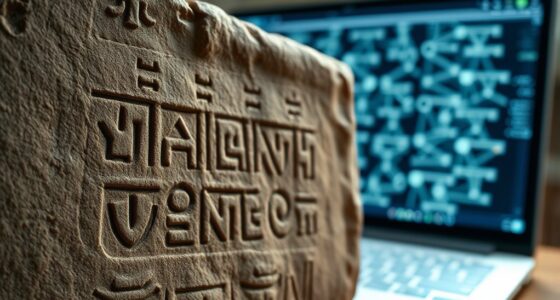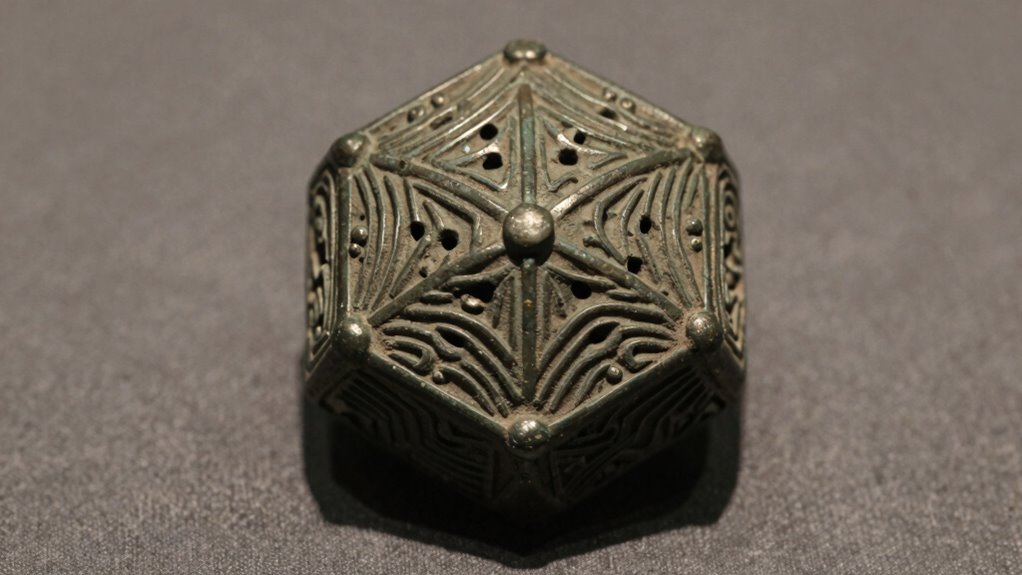

Roman dodecahedrons are mysterious artifacts with 12 pentagonal faces found across Europe. Experts aren’t sure what they were used for, but theories suggest they might have served as tools for measuring, religious objects, or game pieces. Their intricate design and regional variations hint at symbolic or ritual significance. If you’re curious about this ancient enigma, you’ll discover fascinating details that continue to puzzle scholars today.
Key Takeaways
- Their exact purpose remains unknown, sparking multiple theories including measurement tools, religious objects, or gaming pieces.
- Found across Europe, these artifacts feature intricate craftsmanship with regional variations in size, material, and decoration.
- Scientific analysis and dating techniques have yet to confirm their definitive function or cultural significance.
- Theories suggest they may have served in rituals, divination, or as symbolic representations in spiritual practices.
- Their mysterious nature continues to intrigue scholars and enthusiasts, making them one of the most enigmatic relics of the Roman era.
What Are Roman Dodecahedrons and Why Are They Mysterious?
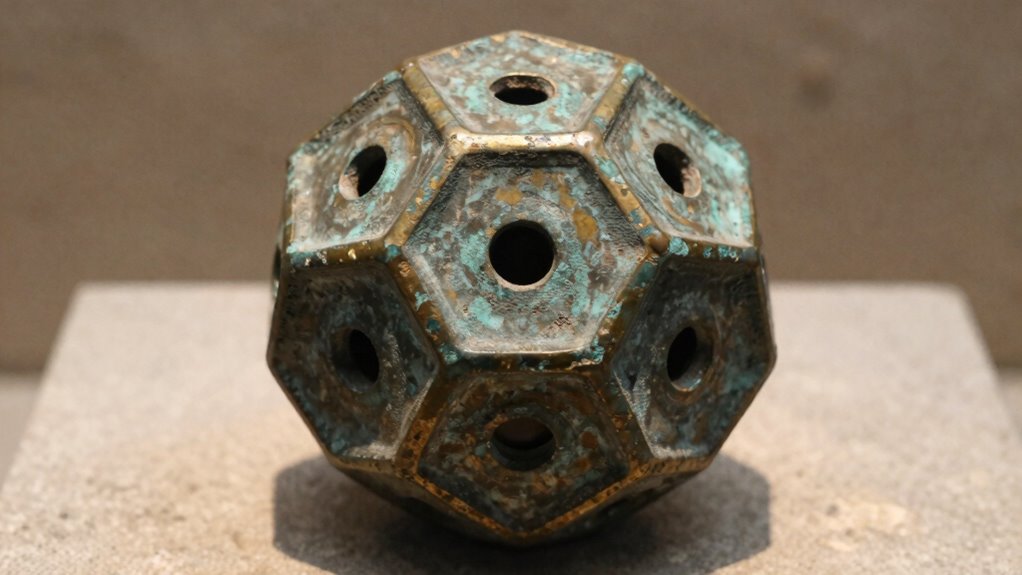
Roman dodecahedrons are mysterious artifacts from the Roman Empire, featuring twelve flat faces shaped like pentagons. You might wonder about their purpose, but their true significance remains uncertain, adding to their intrigue. These objects are believed to carry artifact symbolism, possibly representing religious or cultural ideas, though no definitive interpretation exists. Their manufacturing techniques reveal skilled craftsmanship, with precise metalwork and consistent geometric patterns, indicating they were carefully made. Despite advancements in archaeology, the exact function of these dodecahedrons continues to puzzle researchers. Some see them as gaming pieces, tools, or even mystical objects, but without concrete evidence, their true role remains a fascinating mystery. Their craftsmanship and symbolism continue to spark curiosity across centuries. Theories about their use suggest they may have served practical or ceremonial purposes, highlighting their importance in ancient societies. Additionally, modern analyses of their geometric precision demonstrate a high level of craftsmanship that hints at specialized knowledge or symbolic significance. The cultural context of these artifacts could provide further insights into the society that created them, although such context remains elusive. In recent studies, researchers have also considered the technological aspects involved in their production, which could shed light on their purpose.
Where Have Roman Dodecahedrons Been Found in Europe?
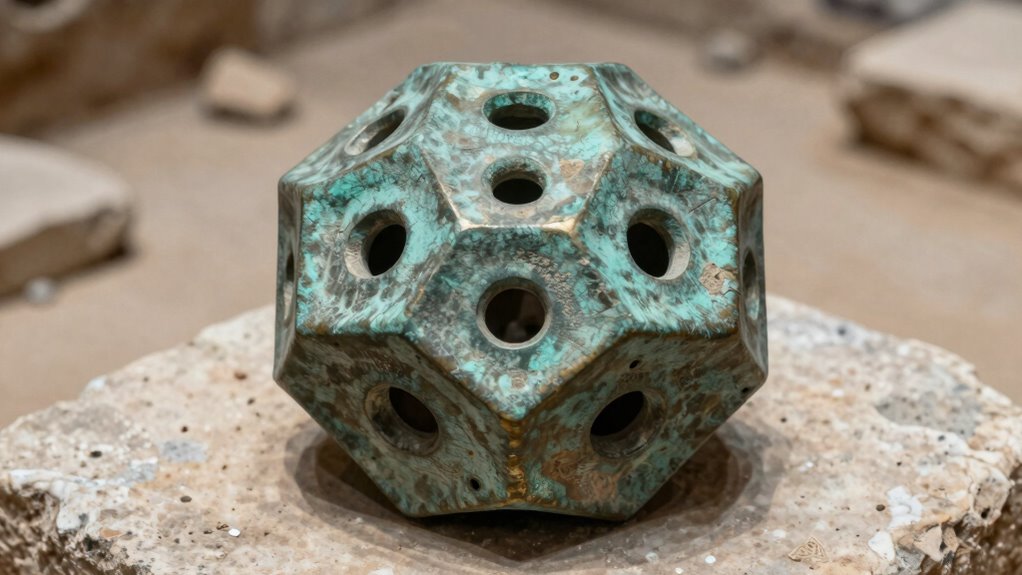
These mysterious objects have been uncovered across various regions of Europe, revealing a widespread presence during the Roman era. They have been found in sites from France to Germany and as far east as Romania. The geographic distribution suggests they were used across different cultures within the empire. Most Roman dodecahedrons are made from bronze or other metals, highlighting their metal composition. Their finds are often concentrated near ancient roads, settlements, and trade routes, indicating they might have had practical or ritual purposes. The table below summarizes their distribution and material: | Region | Metal Composition | Notable Finds | |————–|———————|———————| | Western Europe | Bronze | France, Belgium | | Central Europe | Iron/bronze | Germany, Austria | | Eastern Europe | Copper alloys | Romania, Bulgaria | Metal analysis and archaeological context continue to fuel debates about their true purpose and significance. Additionally, ongoing archaeological research may help uncover more clues about their origins and uses. The widespread distribution of these artifacts demonstrates their importance across different cultural contexts, though their exact function remains unclear. Recent scientific studies of metal composition and manufacturing techniques may offer new insights into their origins and potential uses.
What Materials and Sizes Were Used to Make Roman Dodecahedrons?
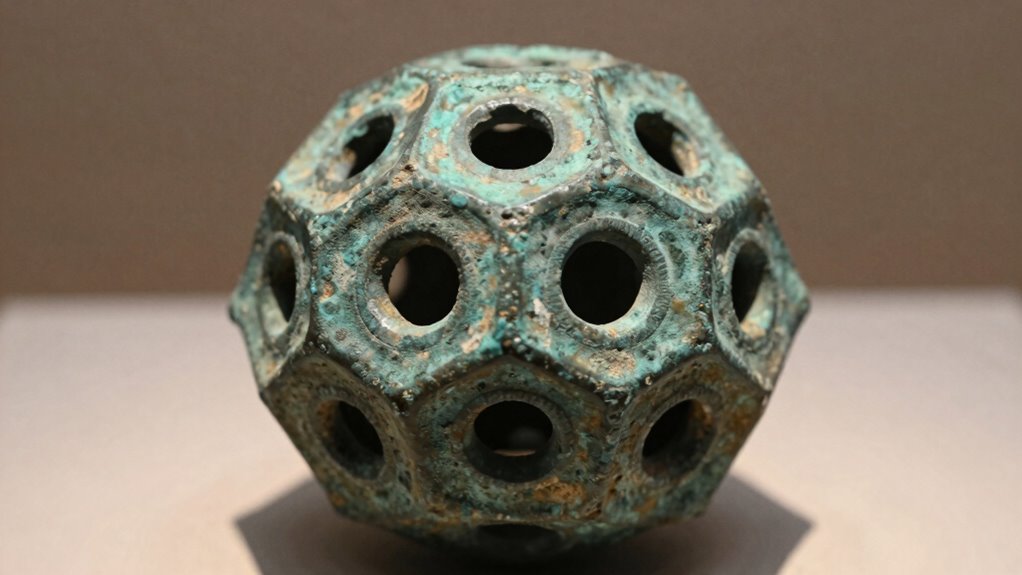
Roman dodecahedrons were crafted from various materials, including bronze and stone, showing some variation in their composition. Their sizes range from small handheld objects to larger pieces, with dimensions carefully considered. Understanding these differences helps reveal how and why they were made in specific ways. Additionally, the choice of materials used in artifacts can provide insights into their cultural and functional significance.
Material Composition Variations
Roman dodecahedrons are typically crafted from various materials, with bronze and copper being the most common. Metal analysis reveals differences in composition, indicating the use of different alloys or sources. Some dodecahedrons display intricate decorative patterns, which vary in complexity and style, suggesting regional or chronological differences. These decorative features often include geometric engravings or raised motifs, adding to their aesthetic appeal. The choice of material influences the artifact’s durability and appearance, with some specimens showing signs of corrosion or patina consistent with their composition. Variations in metal content may also hint at different production techniques or purposes. Additionally, the material properties of each artifact can help archaeologists determine their origins and the technological capabilities of the craftsmen. Overall, these material composition differences highlight the diversity of craftsmanship and regional resource availability across the Roman Empire.
Size Range and Dimensions
Have you ever wondered about the size variation among Roman dodecahedrons? These artifacts range from about 4 to 11 centimeters in diameter, displaying notable differences in their dimensions. Some are small enough to fit in your hand, while others are larger, suggesting different uses or symbolic meanings. The dimensions often align with cosmic symbolism, hinting at their possible connection to celestial or spiritual beliefs. Many feature intricate decorative motifs, which may have influenced their size choices. Despite their small size, the craftsmanship reveals a focus on symmetry and geometric precision, emphasizing their potential decorative or ritual significance. The variation in size and detailed design highlights the importance of both form and function in these mysterious objects, leaving their true purpose open to interpretation.
What Are the Main Theories About What These Dodecahedrons Were For?
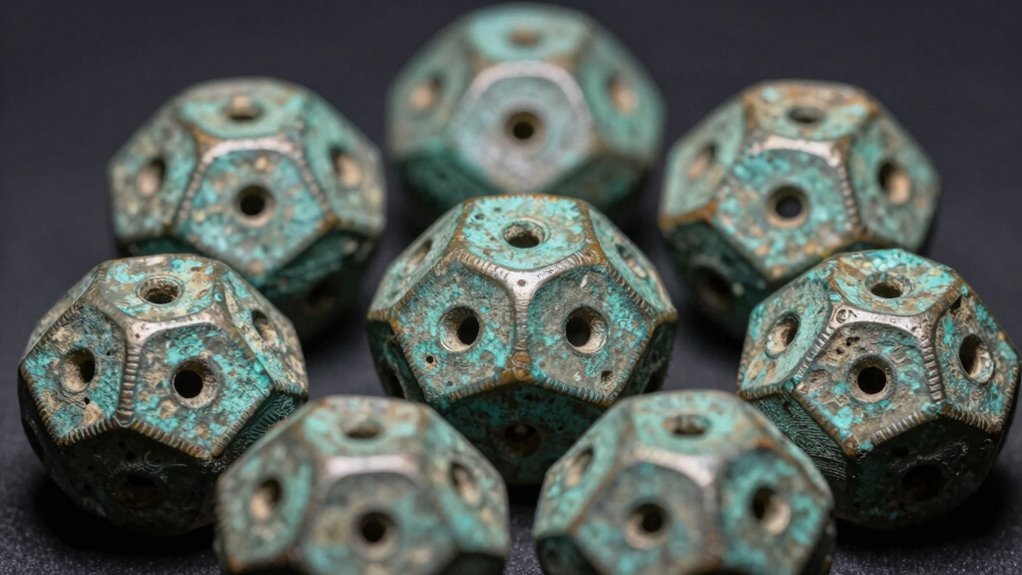
Many experts believe these dodecahedrons served as measuring devices, helping with tasks like determining distances or sizes. Others suggest they had religious or ritual significance, possibly used in ceremonies or as talismans. Exploring these ideas can help us understand the purpose behind these mysterious objects. Additionally, some theories propose that these artifacts may have been used for educational purposes, perhaps to teach geometric concepts or measurements.
Possible Measuring Devices
One of the most intriguing aspects of Roman dodecahedrons is the variety of theories suggesting they served as measuring devices. As you explore these mysterious artifacts, consider that some believe they functioned as tools for precise measurements, perhaps in tailoring or construction. Their varying hole sizes could have helped determine distances or thicknesses. Here’s a possible interpretation:
| Theory | Explanation |
|---|---|
| Rangefinders | Used to estimate distances in military or agricultural contexts |
| Thread Measurement | Helped measure different thread or cloth thickness |
| Calipers | Served as calipers for small object measurements |
| Optical Devices | Used for light or shadow measurements |
| Puzzle or Game | Designed as ancient puzzles or measuring games |
While these ideas remain speculative, they fit with the mystery that surrounds these ancient puzzles.
Religious or Ritual Use
What if Roman dodecahedrons served a sacred purpose? Some theories suggest they were used as sacred symbols or ritual artifacts in religious ceremonies. They might have held spiritual significance, representing cosmic or divine concepts. Here are some main ideas:
- They could have been part of pagan rituals, symbolizing the universe or celestial bodies.
- They might have served as ceremonial objects in rites of passage or offerings.
- Some believe they were used in divination, helping priests interpret omens or divine messages.
While their exact purpose remains uncertain, the idea that they had a religious or ritual use fits with their intricate design and placement in sacred contexts. These artifacts could have played a role in connecting people with the divine or spiritual domain.
Could They Have Been Used in Astronomy or Timekeeping?
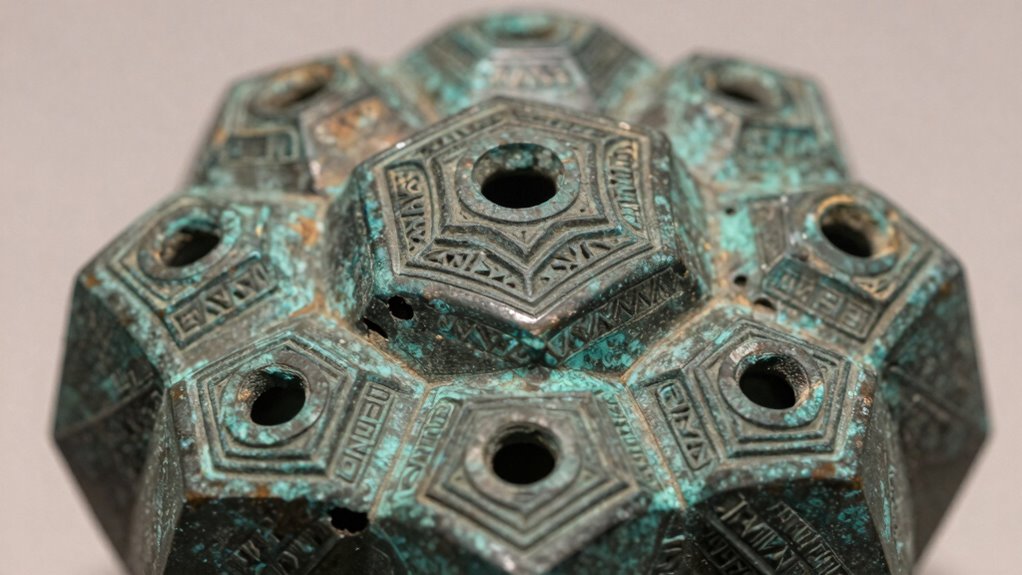
Could Roman dodecahedrons have served a role in astronomy or timekeeping? It’s a question worth exploring, especially considering their precise geometry. Some researchers suggest these artifacts might have aided celestial navigation, helping users determine their position by aligning with star patterns. Others propose they could have been tools in ancient astronomy, perhaps used to measure angles or track celestial events. The varied sizes and hole configurations hint at a possible purpose related to observing or calculating the movement of celestial bodies. While direct evidence is scarce, the symmetry and craftsmanship suggest they might have played a role in tracking time or astronomical phenomena. Still, no definitive proof confirms their use for timekeeping, leaving this theory intriguing yet unproven.
Were Roman Dodecahedrons Tools for Textile Production or Crafting?
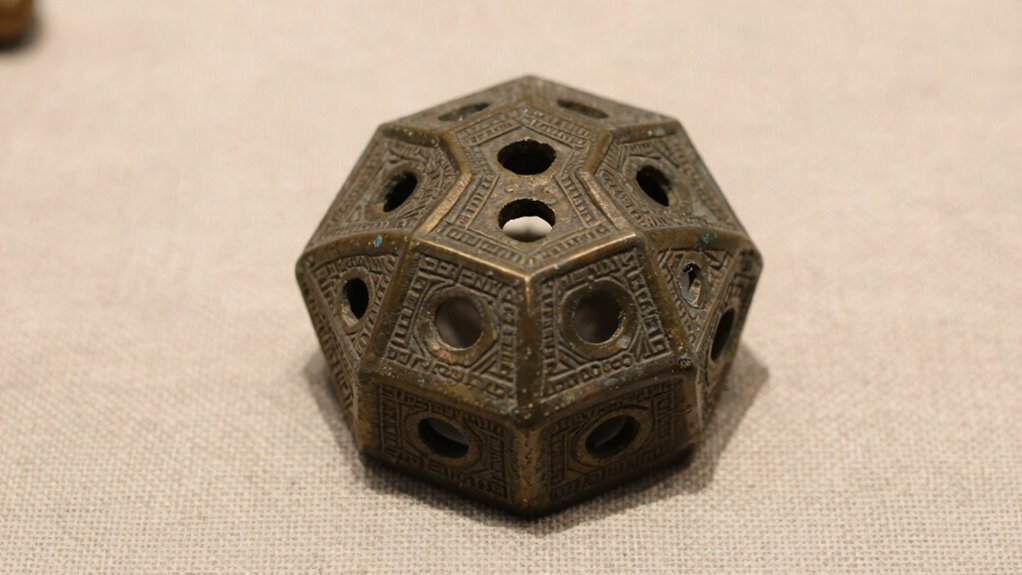
Some researchers suggest Roman dodecahedrons might have been tools for textile production or crafting. Evidence of crafting techniques could support this idea, but alternative functions are also possible. Exploring these points helps us understand their true purpose. Additionally, examining craftsmanship and materials can provide further insights into their potential uses. Furthermore, analyzing wear patterns on surviving artifacts might reveal how these objects were handled or utilized in daily activities. The presence of precision manufacturing might also indicate specialized use in detailed work or assembly processes. Studying manufacturing techniques can shed light on the level of skill involved in their creation and potential specific applications.
Possible Textile Tool Use
While many scholars have debated the purpose of Roman dodecahedrons, some have proposed that they might have served as tools in textile production or crafting. If true, they could be part of the craft evidence pointing to textile tools. Here are some possibilities:
- They might have been used to gauge thread or yarn thickness, aiding in consistent weaving.
- The openings could have helped in winding or winding yarn onto bobbins or spindles.
- Some suggest they functioned as tools for measuring or marking fabric during cutting or sewing.
Although these ideas are speculative, the unique design hints at a specialized function related to textile work. This interpretation aligns with the idea that Roman dodecahedrons could have been craft tools involved in textile production.
Evidence of Crafting Techniques
The unique design features of Roman dodecahedrons have led many researchers to contemplate their potential role in crafting techniques, particularly in textile production. Examining the artifact reveals clues about ancient craftsmanship, such as precise craftsmanship and symmetrical design, suggesting they may have served practical purposes. Some scholars point to wear patterns or tool marks that hint at use in shaping or measuring materials. Others argue that the intricate geometry might symbolize specific cultural or ritualistic meanings, reflecting artifact symbolism within the Roman world. While direct evidence remains elusive, these features support the theory that dodecahedrons were more than mere curiosities—they could have been integral tools or symbols within craft practices, blending functional craftsmanship with cultural significance.
Alternative Function Hypotheses
Although the true purpose of Roman dodecahedrons remains uncertain, many researchers consider the possibility that they served as tools in textile production or other crafts. Some believe these artifacts may relate to ancient symbolism, representing spiritual or cultural beliefs. Others suggest they were used in crafting techniques, perhaps as templates or measuring devices. Alternatively, these objects could have functioned as:
- Spindle whorls or weights to aid spinning and weaving processes
- Tools for shaping or carving materials in artisan crafts
- Ritual objects embedded with symbolic meaning, blending craftsmanship with cultural significance
While definitive evidence is lacking, these hypotheses highlight the potential roles in ancient craftsmanship, emphasizing their connection to both practical techniques and symbolic practices within Roman society.
What Do Patterns and Variations Tell Us About Their Possible Uses?
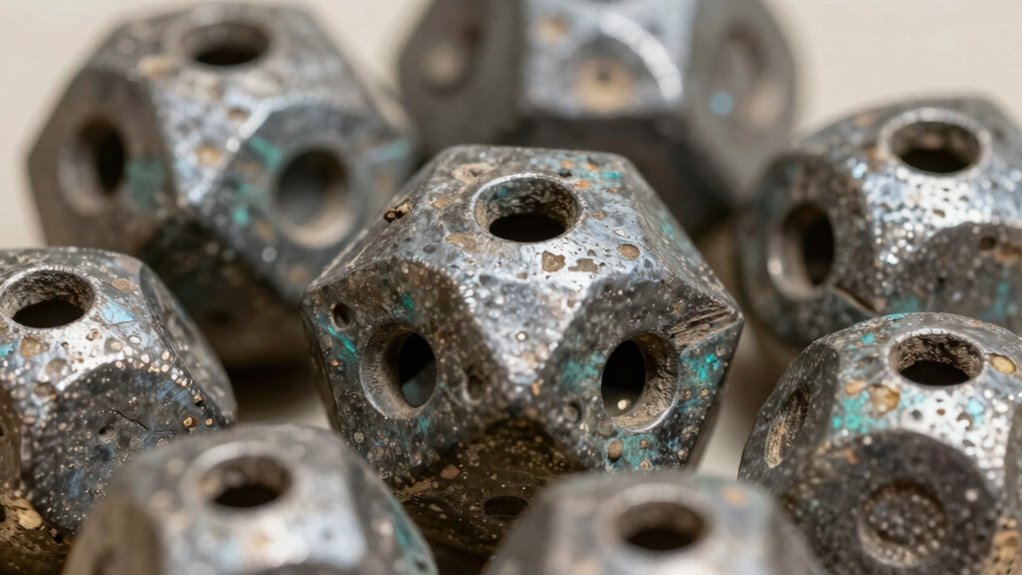
Examining the patterns and variations on Roman dodecahedrons reveals clues about their potential functions. The symbolic motifs carved into some artifacts suggest cultural or ritual significance, hinting that they may have served more than practical purposes. Variations in manufacturing patterns, such as differences in size, shape, and ornamentation, indicate that these objects might have had multiple uses or belonged to different regions or time periods. For instance, some dodecahedrons feature intricate designs that could symbolize status or identity, while others display simpler forms. These differences suggest they could have been used in ceremonies, as navigational tools, or even as toys. Additionally, the manufacturing variations reflect diverse cultural influences and technological capabilities across regions, which could inform their possible functions. The artistic embellishments found on some pieces further support the idea that they might have held symbolic or ceremonial importance. Exploring the cultural context of these artifacts can help uncover their significance and how they may have been integrated into daily life or special rituals. The patterns and decorations may also indicate different symbolic meanings or hierarchical significance among the users. Furthermore, the presence of manufacturing techniques indicates regional craftsmanship differences that could relate to their specific functions or social roles. By analyzing these patterns and variations, you get closer to understanding the wide range of possible functions these mysterious artifacts might have fulfilled.
How Do Archaeologists Date and Contextualize These Artifacts?
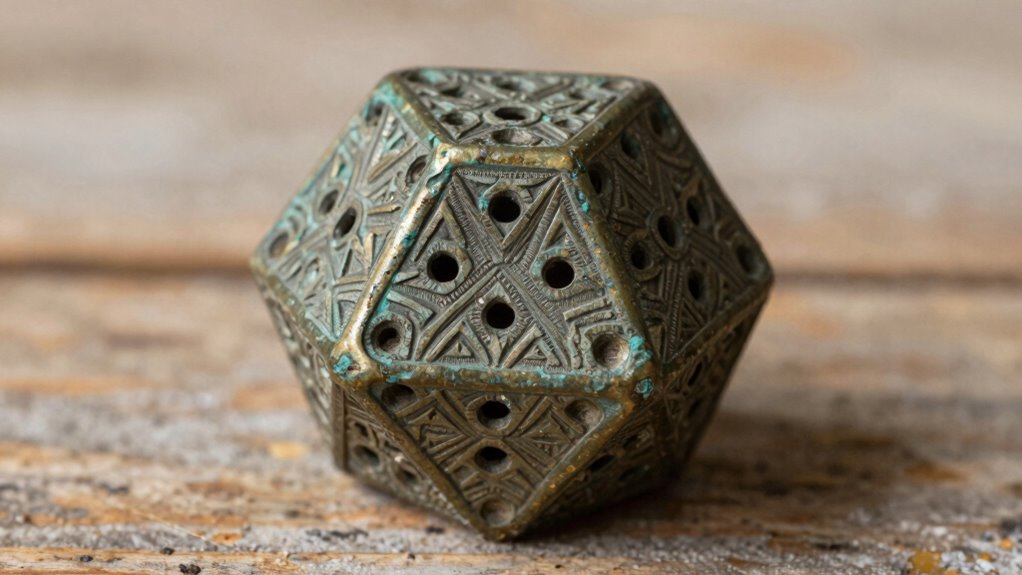
To determine the age and cultural context of Roman dodecahedrons, archaeologists rely on a combination of dating methods and contextual analysis. You can expect them to use several strategies: Typological dating — comparing shapes, sizes, and styles with similar artifacts from known periods. Stratigraphy — analyzing the layers where dodecahedrons are found to establish a chronological sequence. Material analysis — examining the composition of metals or stones to identify sourcing and production periods. Additionally, archaeological context plays a crucial role in understanding the artifacts’ significance and usage within their historical setting. Researchers may also incorporate scientific dating techniques like thermoluminescence or radiocarbon dating when applicable to refine age estimates.
Do Religious or Ritual Significance Explain Their Purpose?
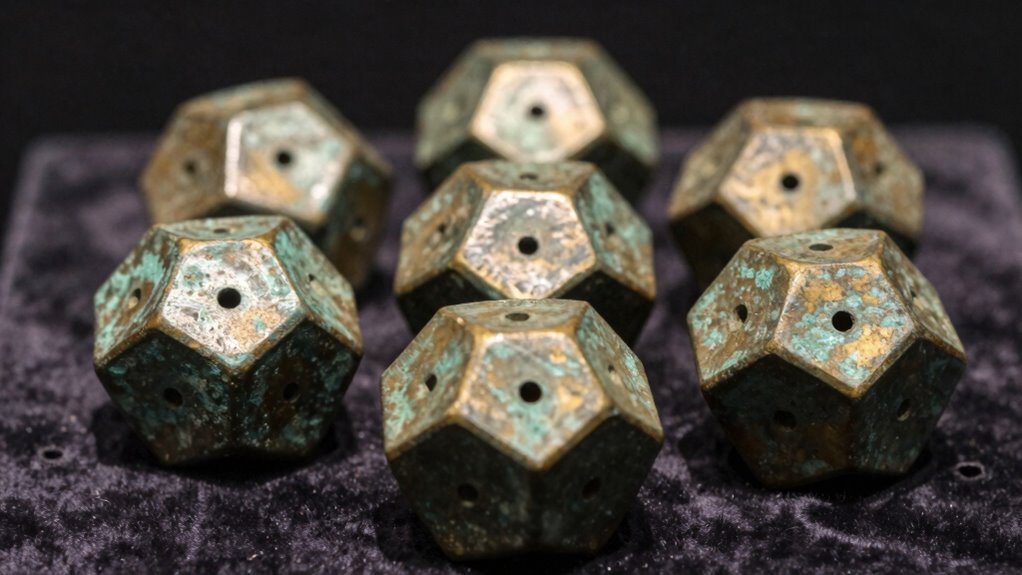
Many researchers believe that religious or ritual significance might explain the purpose of Roman dodecahedrons, though direct evidence remains scarce. These artifacts could hold symbolic significance, representing spiritual beliefs or cosmological concepts important in ancient rituals. Some propose that they played a role in ritual practices, perhaps used in ceremonies related to fertility, protection, or divination. The geometric design and craftsmanship might have imbued these objects with spiritual meaning beyond their practical use. If they functioned as ritual tools, their peculiar shape and size could symbolize cosmic elements or deities. The material composition of these objects might also provide clues to their spiritual or ritual functions. Additionally, the symbolic importance of such geometric shapes in ancient cultures suggests that their purpose could extend beyond mere utility. While definitive proof is lacking, the possibility that Roman dodecahedrons served a religious or ritual purpose continues to intrigue scholars, offering a glimpse into the spiritual life of ancient peoples.
Why Do Roman Dodecahedrons Continue to Fascinate Us Today?
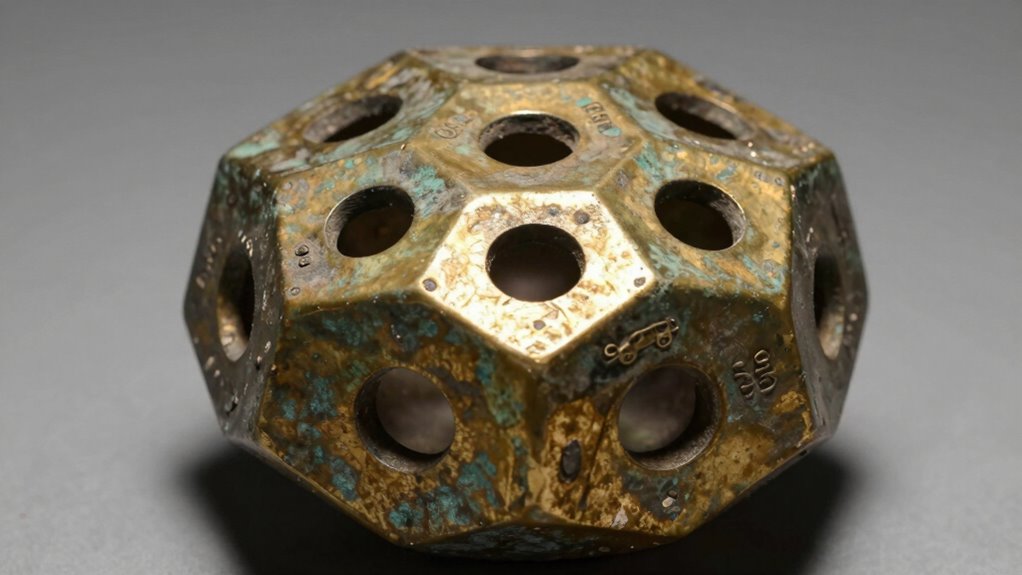
The ongoing mystery surrounding Roman dodecahedrons captures our curiosity because they challenge our understanding of the ancient world. You’re drawn to these artifacts because they embody a piece of ancient mysteries that remain unsolved. Their intriguing shapes and uncertain purpose fuel your fascination with artifact symbolism and the secrets of history.
Here are three reasons why they continue to captivate us:
- They spark curiosity about ancient craftsmanship and unknown functions.
- They symbolize a broader connection to the cultural and spiritual beliefs of the time.
- They remind us how much we still have to discover about our past.
Roman dodecahedrons stand as silent witnesses to history’s enigmas, inspiring wonder and exploration even today.
Frequently Asked Questions
Are There Any Known Inscriptions or Symbols on Roman Dodecahedrons?
You’ll find that most Roman dodecahedrons lack inscriptions or symbols, but some do feature markings and engravings. These markings often include geometric patterns, lines, or dots, which might have held symbolic or functional significance. While no definitive inscriptions have been identified, the engravings suggest they could have been used for measurement, decoration, or ritual purposes, leaving their true meaning still shrouded in mystery.
Have Similar Dodecahedral Objects Been Found in Other Cultures?
Imagine finding a puzzle piece in a box of diverse ancient artifacts. Similar geometric objects, like cultural dodecahedrons, have been discovered across different civilizations, from China to the Middle East. These ancient geometric artifacts suggest that cultures worldwide created dodecahedron-like objects, possibly for religious or practical purposes. Your curiosity drives you to see these artifacts as universal symbols, linking humanity’s shared fascination with geometry and symmetry.
Could the Dodecahedrons Have Been Children’s Toys or Educational Tools?
You might think Roman dodecahedrons were children’s toys or educational tools, and some believe they served that purpose. These Roman childhood artifacts could have been used for learning, play, or even as simple objects for honing fine motor skills. Their intricate design suggests they might have been part of educational purposes, helping children understand shapes and geometry. While their exact use remains uncertain, the idea of them as toys or learning aids is quite plausible.
What Is the Most Recent Discovery Related to Roman Dodecahedrons?
The most recent discovery related to Roman dodecahedrons is a new find in an archaeological context from Britain, revealing more about ancient manufacturing techniques. You’ll find that this artifact was likely produced using advanced tools for its time, suggesting it had a significant purpose. This discovery helps you understand the cultural and technological aspects of Roman-era craftsmanship, adding valuable insight into their everyday lives and the possible uses of these mysterious objects.
How Do Experts Authenticate and Distinguish Genuine Artifacts From Replicas?
You authenticate genuine artifacts by conducting material analysis to identify original materials and techniques used. Provenance verification helps trace their history and ownership, ensuring authenticity. Experts compare physical features, craftsmanship, and signs of aging, while advanced methods like radiocarbon dating or spectroscopy provide scientific confirmation. By combining these approaches, you can reliably distinguish authentic Roman dodecahedrons from replicas, ensuring the artifact’s historical integrity.
Conclusion
Ultimately, Roman dodecahedrons keep us guessing, proving that ancient inventors loved a good puzzle—perhaps even more than we love our smartphones. Their mystery invites endless speculation, making us wonder if they were tools, toys, or secret symbols. So next time you stumble upon one, remember: it’s probably just a quirky relic from a bygone era, patiently teasing us with the truth while we endlessly debate its purpose. Classic ancient ingenuity, or just cosmic doodles? You decide.