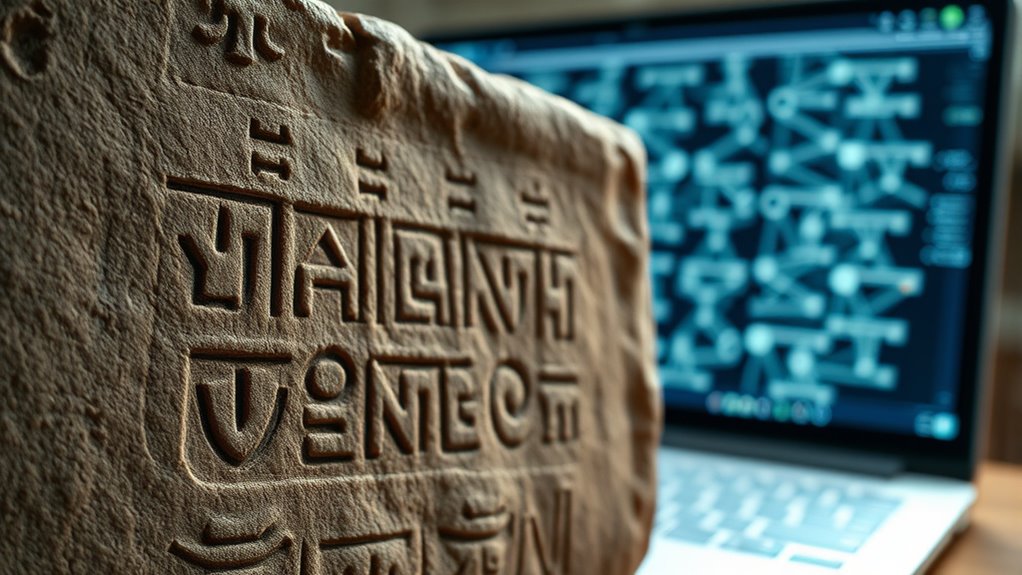

AI is revolutionizing efforts to decode the Indus Valley script by analyzing large datasets and recognizing patterns that researchers haven’t seen before. By feeding ancient inscriptions into machine learning models, scientists hope to classify symbols, identify repetitions, and find links to known languages. This innovative approach complements traditional archaeology and brings us closer to understanding this mysterious writing system. If you keep exploring, you’ll discover how these advances are revealing secrets of one of history’s greatest enigmas.

Prime made for students and young adults
- Fast, free delivery for dorm and study essentials
- Prime Video and Amazon Music included
- Member-only deals
Key Takeaways
- AI analyzes large datasets of Indus symbols to detect patterns and repetitions overlooked by traditional methods.
- Machine learning models classify symbols and identify potential linguistic or proto-linguistic connections.
- Combining AI analysis with archaeological findings offers new insights into the script’s structure and purpose.
- Advances in pattern recognition aim to decipher whether symbols represent a true writing system or non-linguistic signs.
- Ongoing technological progress brings researchers closer to understanding the language and culture of the Indus Valley civilization.
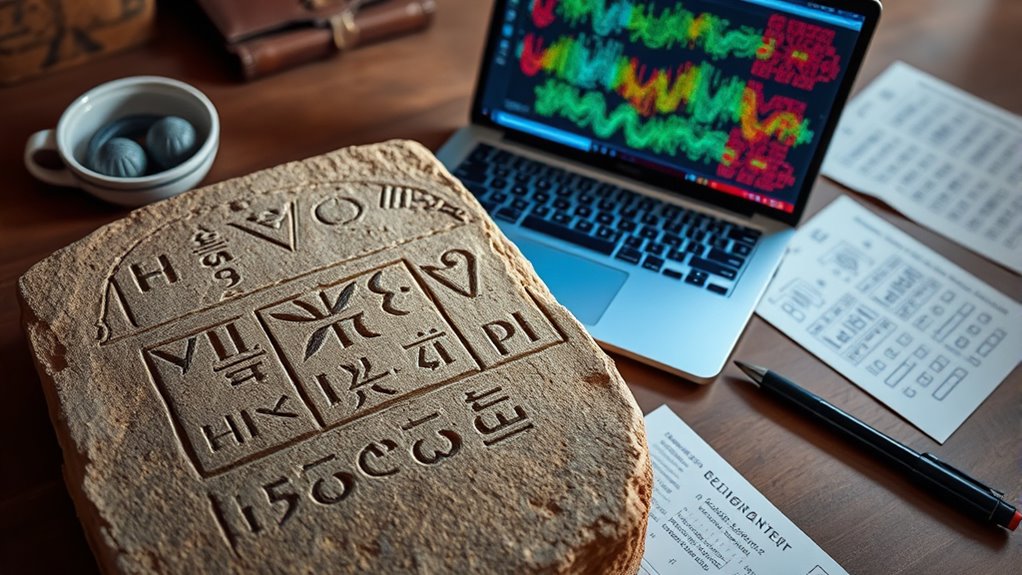
Have you ever wondered what secrets lie behind the mysterious symbols of the Indus Valley Civilization? These symbols, etched onto seals, pottery, and tablets, have puzzled archaeologists and linguists for decades. Despite numerous archaeological discoveries revealing the sophistication of the Indus people, their writing systems remain stubbornly undeciphered. The symbols are unique, unlike any other ancient script, which has complicated efforts to understand their meaning or purpose. For years, scholars have debated whether these markings represent a true writing system or are simply symbols with no linguistic function. The lack of bilingual inscriptions, like the Rosetta Stone for Egyptian hieroglyphs, has made decoding even more challenging. But recent advances, especially in artificial intelligence, are opening new avenues for interpretation. AI’s ability to analyze vast datasets quickly and identify patterns that elude human eyes has invigorated the quest to decode these symbols. Researchers now feed thousands of inscriptions into machine learning models, hoping to spot recurring patterns or correlations that might suggest linguistic structures. These efforts aim to classify symbols, recognize repetitions, and perhaps even link them to known languages or proto-languages. While traditional archaeological discoveries laid the groundwork by uncovering the physical artifacts bearing these symbols, AI-driven analysis is providing fresh insights that could finally crack the code. The combination of old and new techniques is essential because, without understanding the writing systems, we miss the chance to truly grasp the civilization’s culture, economy, and social organization. Some experts believe the symbols might represent a logo-based script, akin to modern branding, while others suggest a more complex writing system with phonetic elements. The mystery persists, but the hope is that AI can help piece together a puzzle that has confounded scholars for over a century. As these technological tools continue to evolve, they bring us closer to understanding the language and thoughts of the people behind these ancient symbols. Every archaeological discovery, whether it’s a new seal or fragment, adds another piece to the puzzle. With each new find, AI algorithms can be refined, and patterns become clearer. The journey to decode the Indus Valley script is ongoing, but the integration of cutting-edge technology with archaeological research promises to bring us nearer to revealing the secrets of one of the world’s earliest civilizations. In this quest, every breakthrough brings us closer to understanding the rich history and culture that these ancient symbols represent. Recognizing the importance of detecting and correcting passive voice can further enhance clarity and engagement in scholarly writing.
AI data analysis software for archaeology
As an affiliate, we earn on qualifying purchases.
As an affiliate, we earn on qualifying purchases.
Frequently Asked Questions
What Other Ancient Scripts Remain Undeciphered Besides Indus Valley?
Besides the Indus Valley script, you’ll find many lost languages and unfinished inscriptions that remain undeciphered, like the Rongorongo of Easter Island and the Vinča symbols. These scripts challenge scholars because of limited samples and unclear contexts. You can explore these mysteries, knowing that each lost language holds clues to ancient civilizations, and AI is now helping researchers piece together these cryptic writings, bringing us closer to understanding our shared human history.
How Does AI Compare to Traditional Linguistics in Script Decoding?
You might wonder how AI compares to traditional linguistics in script decoding. Machine learning offers a game-changing edge, analyzing patterns quickly and uncovering connections humans might miss. Unlike traditional methods, AI can process vast data sets, accelerating discoveries. However, it still relies on linguistic comparison to interpret context. Together, AI and linguistics form a powerful alliance, transforming the way we unravel ancient mysteries—one code at a time, with suspense mounting at every breakthrough.
Could Deciphering the Script Change Our Understanding of Indus Valley Civilization?
Deciphering the script could substantially change your understanding of the Indus Valley civilization, revealing insights into their culture, governance, and daily life. The script’s importance lies in revealing these hidden stories, which may reshape historical narratives. If you decode it, you’ll gain a clearer picture of their social structure and beliefs, providing profound cultural implications and enriching your knowledge of one of history’s most intriguing ancient societies.
Are There Any Controversies Surrounding Ai’s Role in Decoding Ancient Texts?
You’ll find that AI’s role in decoding ancient texts sparks ethical debates and accuracy concerns. People worry about relying too much on algorithms, which might misinterpret symbols or overlook cultural nuances. This raises questions about authenticity and the potential loss of human insight. While AI can accelerate discoveries, you should remain cautious, ensuring that ethical standards are upheld and that the interpretations are thoroughly verified before reshaping our understanding of history.
What Future Technologies Might Further Aid in Understanding Ancient Scripts?
Future technologies like digital archaeology and machine learning will revolutionize how you interpret ancient scripts. As digital tools digitize and analyze artifacts, they reveal patterns and connections previously unseen. Machine learning, in particular, accelerates deciphering, bridging gaps between past and present. These innovations create a synergy, transforming static relics into dynamic stories, and empowering you to unseal mysteries of ancient civilizations with unprecedented clarity and speed.
machine learning tools for ancient script decoding
As an affiliate, we earn on qualifying purchases.
As an affiliate, we earn on qualifying purchases.
Conclusion
So, as AI continues to analyze the ancient Indus script, you might wonder if this new tech will finally uncover the secrets of a civilization long lost. With each breakthrough, you’re closer to understanding their language and stories. Isn’t it fascinating to think that modern technology could bridge thousands of years, revealing the mysteries of a society that once thrived on these symbols? The future of archaeology might just be written in lines of code.
pattern recognition software for historical inscriptions
As an affiliate, we earn on qualifying purchases.
As an affiliate, we earn on qualifying purchases.
As an affiliate, we earn on qualifying purchases.
Fall Picks
fall essentials
As an affiliate, we earn on qualifying purchases.