🔍 Read the full analysis: 10 Powerful Mobile Workstation Laptops For AI Projects In 2027 on ThorstenMeyerAI.com

Prime made for students and young adults
- Fast, free delivery for dorm and study essentials
- Prime Video and Amazon Music included
- Member-only deals
TL;DR
The supplied material recommends 10 workstation models for AI and other demanding professional workloads, emphasizing sustained performance, graphics, display and portability tradeoffs. It does not provide independent test results, complete specifications for every model, or evidence that these configurations will be available in 2027, so the list should be treated as a buying guide rather than a verified 2027 ranking.
A buyer’s guide published by ThorstenMeyerAI.com, the original analysis, names 10 mobile workstation laptops for AI and other demanding professional projects, recommending models from Lenovo, Dell, HP, ASUS and Apple for different workloads. The guide highlights the tradeoff between portable designs and sustained performance, but it does not provide enough dated specifications or comparative test data to verify that all listed models will be current or purchasable in 2027.
The guide’s strongest recommendations include the Lenovo ThinkPad P1 Gen 7 as an overall choice, the ThinkPad P14s Gen 7 for a compact 14-inch design, and the Dell Precision 7680 for heavier engineering work; other workstation laptops for machine learning may also suit AI workloads. It also points to the ThinkPad P16s Gen 4 for an OLED display, while warning that OLED can use more power than IPS. The source does not include a consistent specification table or benchmark scores for these named products.
Its full list comprises the Lenovo ThinkPad P1 Gen 7, Lenovo ThinkPad P14s Gen 7, Dell Precision 7680, Lenovo ThinkPad P16s Gen 4, Dell Precision 5690, HP ZBook Fury 16 G10, ASUS ProArt Studiobook 16 OLED, MSI WS76, Apple MacBook Pro 16-inch with M-series silicon, and Framework Laptop 16. The guide assigns these options across workloads such as machine learning development, CAD, rendering and creative production, but provides no controlled results comparing them; other mobile workstations for AI workloads are also worth considering.
The article says newer Intel Core Ultra and AMD Ryzen AI processors can improve battery efficiency, while older HX-class chips may retain an advantage in peak multi-core performance. It also distinguishes professional NVIDIA RTX graphics and drivers from consumer GeForce products, arguing that certified drivers can matter for CAD and simulation. Those statements are presented as general buying guidance, not as independently documented findings for each laptop.
The 10 picks
- 1
 Dell Precision 7680 16-Inch Workstation Laptop, Intel Core i7-13850HX, NVIDIA…View on Amazon →
- 2
 Dell Precision 7680 Laptop, NVIDIA RTX 2000 Ada 8GB, Intel i7-13850HX, 32GB DDR5View on Amazon →
- 3
 Lenovo ThinkPad P1 Gen 7, w/ Ultra 7, NVIDIA RTX 3000, 16" 2.8K, 32GB RAMView on Amazon →
- 4
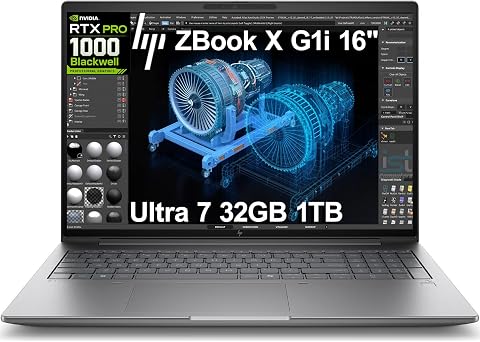 HP ZBook X G1i 16-inch Laptop, Intel Core Ultra 7 265H, NVIDIA RTX PRO 1000 B…View on Amazon →
- 5
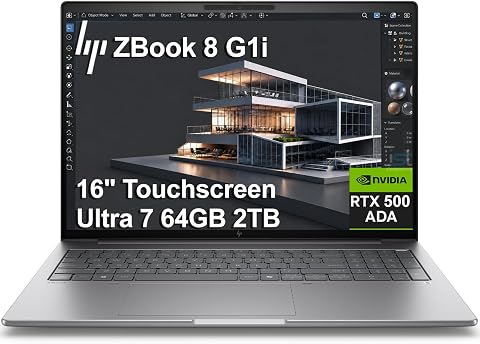 HP ZBook 8 G1i AI Mobile Workstation Laptop (16" FHD+ Touchscreen, Intel Ultr…View on Amazon →
- 6
 HP ZBook 8 G1i AI Mobile Workstation Laptop (16" 4K 120Hz, Intel Ultra 7 265H…View on Amazon →
- 7
 Lenovo ThinkPad P16s Gen 4 16-inch OLED Touchscreen Mobile WorkstationView on Amazon →
- 8
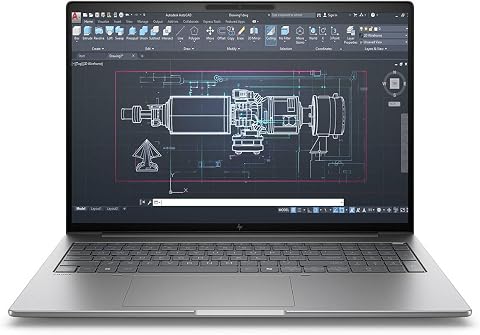 HP ZBook 8 G1i 16" Mobile Workstation – WUXGA – 60 Hz – Intel Core Ultra 7 25…View on Amazon →
- 9
 Lenovo ThinkPad P16s Gen 4 16-Inch Business LaptopView on Amazon →
- 10
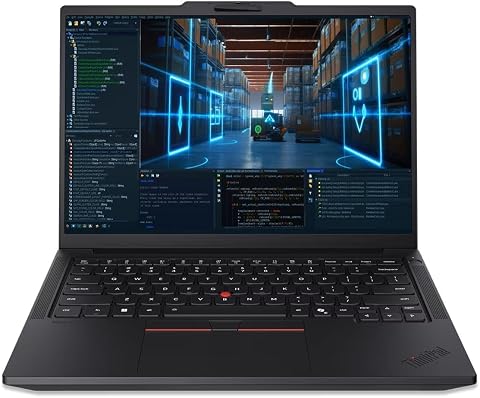 Lenovo ThinkPad P14s Gen 7 Mobile Workstation (2026) – 14" Touch, AMD Ryzen A…View on Amazon →
Choosing Hardware for AI Work
The list addresses a practical choice for people building AI workflows on the move: whether to prioritize a lighter laptop, longer battery life, a professional GPU, or cooling that can handle sustained computation. AI development varies widely. Coding, data preparation and smaller experiments may not need the same hardware as local model training or large-scale rendering, which can be constrained by memory, GPU capacity and heat.
For buyers, the key takeaway is to match the machine to the actual workload rather than rely on the “AI” label or a peak performance figure. A thin workstation may be easier to carry, while a thicker chassis can have more room to cool components during long runs. The guide’s suggestions can help frame that decision, but readers should verify configurations, software certification and measured performance before purchase.
Popular right now

LG 77-Inch OLED evo C6 4K Smart TV

De'Longhi Magnifica Start Fully Automatic Espresso Machine with Milk Frother, Silver

Samsung 48 4K OLED Smart TV (2026) with WireLogic 8ft Ultra High Speed HDMI Cable
As an affiliate, we earn on qualifying purchases.
The Tradeoffs Behind the List
The source says it evaluated workstations by sustained performance, thermal behavior, build quality, serviceability and professional software compatibility. It advises checking performance after extended workloads rather than relying only on short benchmark bursts. That approach is relevant to AI tasks, where a laptop may run at high load for much longer than a brief benchmark.
Other factors it flags include display accuracy, battery life and ports. OLED can suit creative work but may consume more power; thin models may omit ports such as HDMI or Ethernet, requiring a dock. The guide also recommends checking whether a particular professional graphics configuration is certified for the buyer’s software. It does not provide links to certification records or explain a scoring method that would allow readers to reproduce its ranking.
“A laptop that slows down after ten minutes is less useful than one that maintains consistent speed.”
— ThorstenMeyerAI.com buyer’s guide
What 2027 Buyers Must Verify
The source does not establish that all 10 products will remain on sale, retain the same names or ship with the same components in 2027. It gives no publication date, prices, complete configurations, independent benchmark methodology or results for the listed systems. The models therefore cannot be treated as a confirmed ranking of the best laptops available in 2027.
It is also unclear which AI workloads the recommendations assume. The guide does not specify model sizes, training duration, memory requirements or whether testing involved local inference, model training or cloud-based development. Claims about thermal performance, battery efficiency and professional drivers should be checked against current reviews and manufacturer documentation for the exact configuration.
Check Configurations Before Buying
Readers considering one of these machines should first confirm current availability and the exact CPU, GPU, memory, storage, display and port options. They should then compare independent sustained-load tests and battery measurements for the specific configuration, and check software vendors’ certification lists where CAD, simulation or other specialist applications are involved.
As 2027 approaches, updated product announcements and reviews will be needed to determine whether these model names still represent current choices. Until then, the source’s 10 picks are best read as a set of purchase considerations and model suggestions, not a verified forecast of the workstation market.
Key Questions
Does the source confirm these are the best workstation laptops of 2027?
No. It presents 10 recommendations, but supplies no dated comparative testing that establishes a verified 2027 ranking.
Which models does the guide favor for portability and heavy engineering?
It highlights the ThinkPad P14s Gen 7 for a compact 14-inch form and the Dell Precision 7680 for demanding engineering work. The source does not provide independent benchmark results to verify those distinctions.
Are these laptops suitable for training AI models locally?
The answer depends on the exact configuration and the size of the workload. The source does not specify model sizes or provide local training tests, so buyers should check GPU memory, system memory, cooling and workload-specific reviews.
Why does sustained performance matter?
Long-running workloads can heat a laptop and cause its processor or graphics hardware to reduce speed. A short burst benchmark may not show how a system performs during extended AI computation, rendering or engineering tasks.
Source: ThorstenMeyerAI.com