Recent tests on the Shroud of Turin have sparked fresh debates, raising more questions than providing clear answers about its authenticity. Scientific studies have examined its age, chemical makeup, and images, but results remain inconclusive. Some findings support the idea it’s a medieval forgery, while others leave room for an older origin. If you want to explore why this relic continues to inspire controversy, discover what science and faith reveal about its true story.
Key Takeaways
- Recent scientific tests on the shroud have produced conflicting results, reigniting debates over its age and authenticity.
- Some analyses support a medieval origin, while others leave open the possibility of an earlier, authentic date.
- Concerns about contamination and testing methods have prevented definitive conclusions.
- The new findings deepen the mystery, highlighting limits in scientific ability to resolve religious relic questions.
- The ongoing controversy emphasizes the enduring tension between scientific skepticism and spiritual significance.
Have you ever wondered whether the Shroud of Turin is the authentic burial cloth of Jesus Christ? That question has captivated many for centuries, sparking debates fueled by both faith and science. Recently, new tests have reignited these discussions, but instead of providing clear answers, they’ve raised more questions than they’ve answered. The shroud remains an enigma, partly because of the miraculous phenomena some believe it exhibits and partly because of scientific skepticism about its origins. For decades, believers see the shroud as a miraculous relic that bears the faint image of a crucified man, with some claiming it’s a divine sign. Others argue that the image’s strange qualities—its detailed depiction, the bloodstains, and the faint 3D features—point to supernatural intervention. These miraculous phenomena, if genuine, could suggest a connection to events described in religious texts, making the shroud more than just a piece of cloth. However, the scientific community remains cautious and skeptical. Critics question whether the image could have been artificially created or whether natural processes could produce such detailed impressions. Recent tests, including radiocarbon dating, have placed the shroud’s origin somewhere between the 13th and 14th centuries, suggesting it’s a medieval creation. But some researchers challenge these results, arguing that contamination or repair might have skewed the dating. This ongoing debate demonstrates the tension between faith-based interpretations and scientific skepticism. The new tests have also examined the chemical composition of the fibers, the nature of the bloodstains, and the image’s unique properties. While some findings seem to support the idea that the shroud is a medieval forgery, others leave open the possibility of an older origin. The controversy deepens because no test has definitively proved or disproved its authenticity. For many, the shroud’s mystery isn’t just about scientific proof, but about what it represents spiritually. Still, as modern science advances, the hope to uncover its true history persists. Yet, with each new test, skeptics remind us to question the miraculous phenomena attributed to the relic, emphasizing the importance of rigorous scientific scrutiny. This ongoing investigation underscores the significance of scientific methods in understanding historical artifacts. Ultimately, the Shroud of Turin continues to challenge both the faithful and skeptics alike, serving as a powerful symbol of faith, mystery, and the limits of scientific understanding. Whether it’s a divine relic or a medieval forgery, the debate keeps the conversation alive, inviting everyone to explore the boundaries between faith and science.
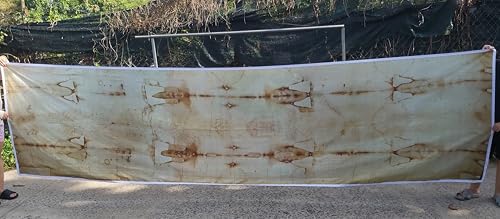
Replica Shroud of Turin, Full Size Religious Art Print on Fabric, Ancient Burial Cloth Reproduction
As an affiliate, we earn on qualifying purchases.
As an affiliate, we earn on qualifying purchases.
Frequently Asked Questions
Has the Shroud Ever Been Conclusively Proven Authentic?
You can’t say the Shroud of Turin has been conclusively proven authentic. The historical controversy surrounding its origins persists, and while some scientific tests suggest it could be ancient, others point to possible modern techniques. Artistic analysis shows inconsistencies with genuine relics from that era, fueling ongoing debates. Until definitive, undisputed evidence emerges, the shroud remains a fascinating mystery that continues to challenge experts and enthusiasts alike.
What Are the Main Scientific Theories About Its Origin?
Think of the Shroud of Turin as a puzzle missing some pieces; its origin sparks debate. Scientific theories suggest it’s either a medieval forgery or an artifact from ancient times. Forensic analysis examines the fabric’s age and pollen traces, while historical context looks at the timeline and craftsmanship. Both perspectives shape the mystery, leaving us to wonder whether it’s a relic of faith or a clever hoax, forever woven into history’s fabric.
Could Modern Technology Definitively Date the Shroud?
Modern technology, like radiocarbon dating and textile analysis, can help you better understand the Shroud of Turin’s origins. While radiocarbon dating can provide an approximate age, it’s not always definitive due to potential contamination. Textile analysis helps you examine the fibers and weaving techniques. Together, these methods can narrow down its age, but they might not provide absolute certainty, leaving some questions still open for investigation.
Why Do Some Scientists Doubt Its Authenticity?
You might be surprised to learn why some scientists doubt its authenticity. Forensic analysis reveals inconsistencies, like unusual image patterns that defy simple explanations. When you consider the historical context, doubts deepen—there’s little evidence linking the shroud to its supposed origins. These mysteries keep experts questioning, fueling debates that challenge what you think you know about this enigmatic relic.
How Does the Shroud Impact Religious Beliefs?
The shroud impacts your religious beliefs by fueling miraculous implications that strengthen faith for many. It becomes a symbol of divine presence, sparking faith debates among believers and skeptics alike. While some see it as proof of the resurrection, others question its authenticity, which can challenge or reinforce your spiritual perspective. Ultimately, the shroud’s mystery keeps the conversation alive, inspiring both faith and doubt in your spiritual journey.
Skelang 3 Pcs 3D Floating Display Case, Black Display Stand Holder 9"×3.54"×0.75"(L×W×H Suspension Frame for AA Medallion, Antique Challenge Coins, Chip, Jewelry, Pin
3 PIECE SET: Each 3D floating plastic frame display stand with rectangle shape transparent presentation window is supported…
As an affiliate, we earn on qualifying purchases.
As an affiliate, we earn on qualifying purchases.
Conclusion
So, as new tests raise more questions than answers, it’s clear the Shroud of Turin continues to keep us guessing. You’re left wondering if science will ever truly unseal its secrets or if some mysteries are better left as they are. The truth might be just out of reach, but that’s what keeps the story alive. Sometimes, you have to accept that some puzzles are better left unsolved—after all, the hunt is what makes it worth it.
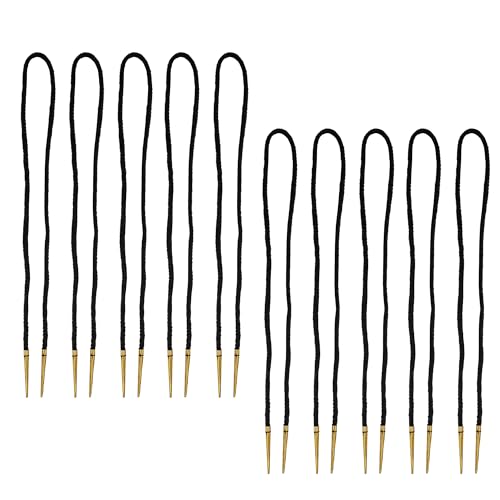
Solid Brass Aiglets with Cotton Strings, Medieval Style Aiglets for Clothing DIY Accessories, Coats, Costumes (Black – Set of 10, 45 cm)
Medieval Arming Points – Perfect closure system for medieval attire, including knight's doublets and noble gowns.
As an affiliate, we earn on qualifying purchases.
As an affiliate, we earn on qualifying purchases.
religious artifact preservation kit
As an affiliate, we earn on qualifying purchases.
As an affiliate, we earn on qualifying purchases.