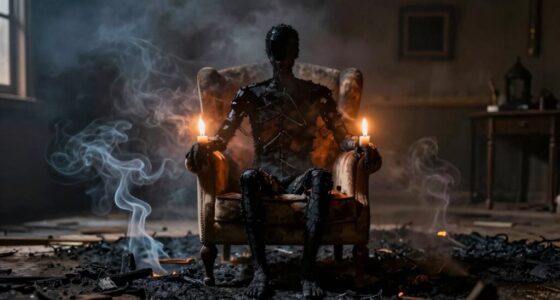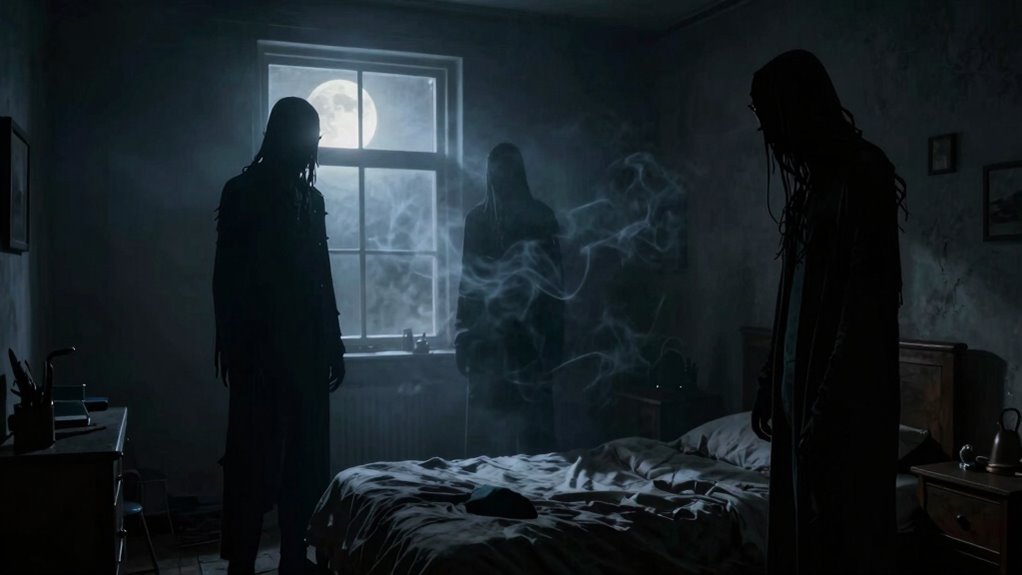

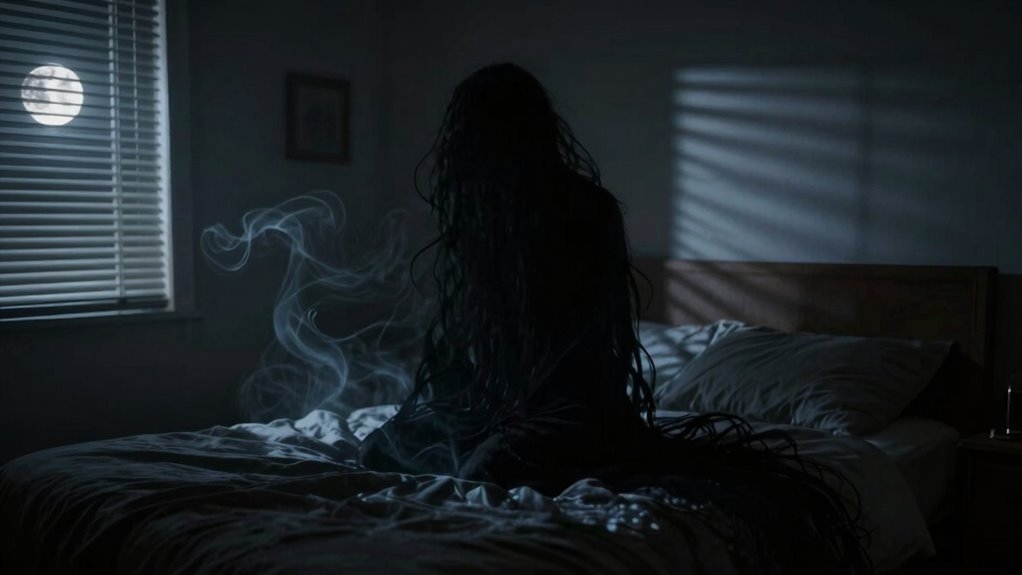
During sleep paralysis, your brain creates shadowy figures or “demons” because of how it processes hallucinations during REM sleep. When your mind wakes while the body remains paralyzed, vivid dreams bleed into wakefulness, causing visual distortions. Fear, stress, and sleep deprivation can make these visions even scarier. Understanding that these figures are brain-generated illusions, not real, can help you feel more in control. If you’re curious about why your mind crafts these shadows, you’ll find more insights below.
Key Takeaways
- Shadows during sleep paralysis are illusions created by the brain’s misinterpretation of internal signals during REM sleep.
- These shadowy “demons” are hallucinations generated by neurological processes, not external supernatural entities.
- Visual distortions and low-light conditions intensify the perception of threatening shadow figures.
- Fear and anxiety during episodes can amplify the vividness and menacing nature of these hallucinations.
- Understanding the neurological basis helps demystify shadow figures and reduces fear associated with sleep paralysis.
What Is Sleep Paralysis: and Why Do Shadows Appear?
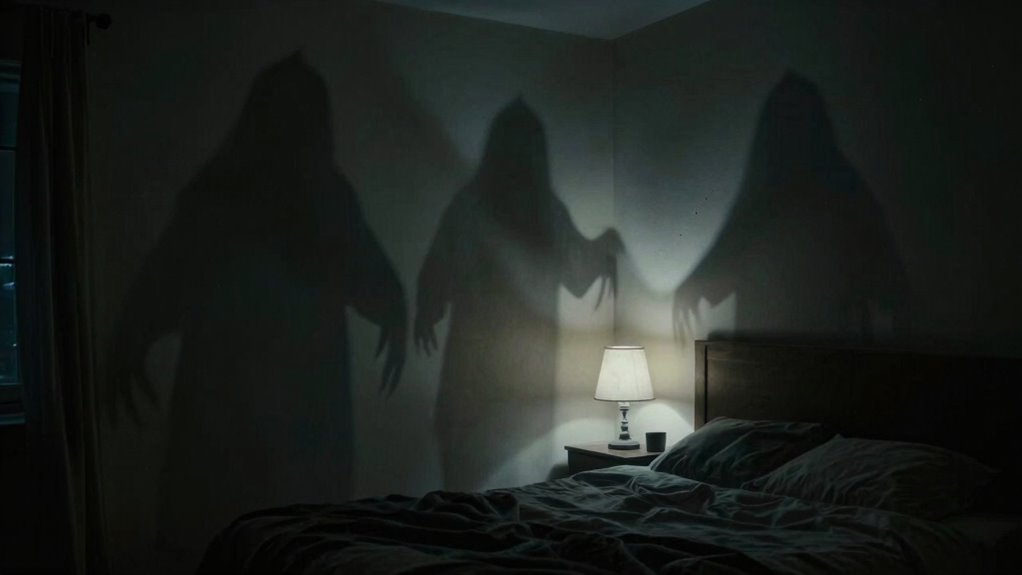
Sleep paralysis occurs when your mind wakes up before your body, leaving you unable to move or speak for a few seconds or minutes. During this state, your brain may produce vivid hallucinations, often seen as shadowy figures or “demons.” These experiences are linked to disrupted sleep patterns and poor sleep hygiene, which can increase the chances of sleep paralysis. Practicing lucid dreaming techniques can help you gain control over these episodes by increasing awareness during sleep shifts. Improving sleep hygiene—like sticking to a consistent sleep schedule, reducing screen time before bed, and creating a relaxing environment—can lower the frequency of sleep paralysis. Understanding that these shadows are hallucinations caused by your brain’s activity can help reduce fear and anxiety associated with these episodes. Additionally, the contrast ratio of your environment and lighting conditions can influence how vividly these shadowy figures appear, emphasizing the importance of a comfortable sleep setting. Recognizing the neural mechanisms behind these hallucinations can also foster a more relaxed attitude toward these experiences, making them less frightening.
How Do Sleep Stages and REM Sleep Cause Hallucinations?
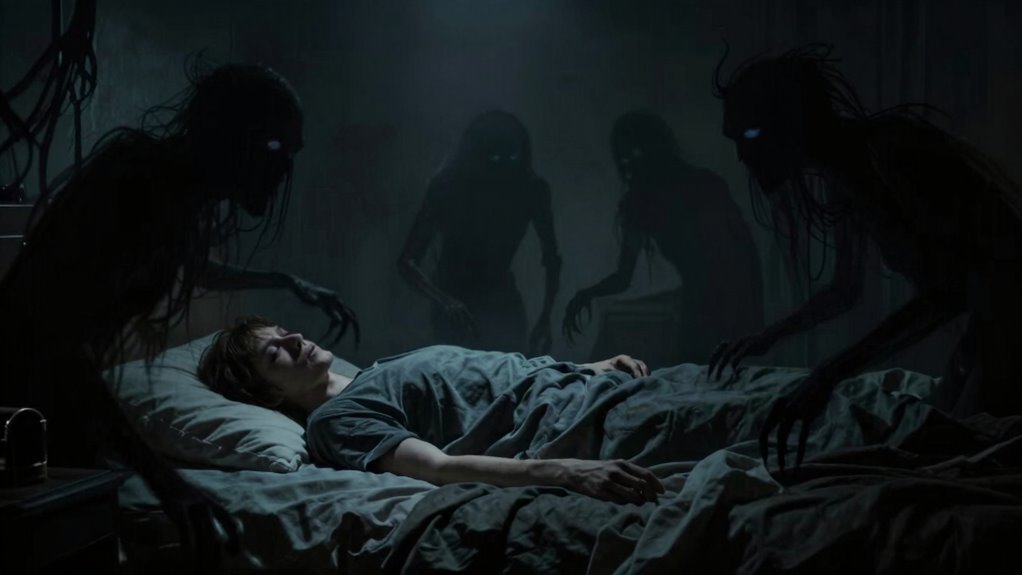
During REM sleep, your brain’s dreaming and waking signals can overlap, causing vivid hallucinations. Muscle atonia keeps your body still, but your mind may still see or feel things that aren’t there. These combined effects explain why hallucinations often occur during sleep paralysis. Interestingly, some researchers suggest that these hallucinations may be linked to biological processes involved in sleep regulation and consciousness.
Dreaming and Wakefulness Overlap
As you drift between wakefulness and sleep, the boundaries of your consciousness become blurred, especially during rapid eye movement (REM) sleep. During this intersection, your brain can produce vivid hallucinations, blending dreams with reality. This is when lucid dreaming often occurs, giving you awareness within the dream state. Poor sleep hygiene can increase the chances of experiencing these hallucinations, as disrupted sleep cycles make crossings between wakefulness and sleep more unpredictable. During REM, your brain’s activity resembles wakefulness, which can lead to visual or auditory distortions if you wake suddenly or during an overlap phase. Recognizing this juncture helps you understand why sometimes shadows or strange figures appear, especially when your brain is actively mixing sleep imagery with waking awareness. Additionally, understanding the sleep stages can help demystify why these hallucinations happen and how to better manage them.
Muscle Atonia and Visuals
When your body enters REM sleep, your brain activates a process called muscle atonia, which temporarily paralyzes most voluntary muscles to prevent acting out dreams. During this phase, your brain remains highly active, creating vivid sensory experiences. Sometimes, this muscle atonia persists even as you’re awake or partially awake, leading to sleep paralysis. In these moments, your brain may generate visual hallucinations—shadowy figures or strange shapes—that seem real but are hallucinations caused by REM sleep processes. These visuals often coincide with feelings of fear or dread, adding to the sense of a threatening presence. The combination of muscle atonia and visual hallucinations explains why sleep paralysis can feel so intense and terrifying, even though it’s a natural, temporary part of sleep. Additionally, research suggests that these hallucinations may be influenced by brain activity patterns during REM, which can create vivid and often frightening visions.
Why Do Shadowy Figures or Demons Show Up During Sleep Paralysis?
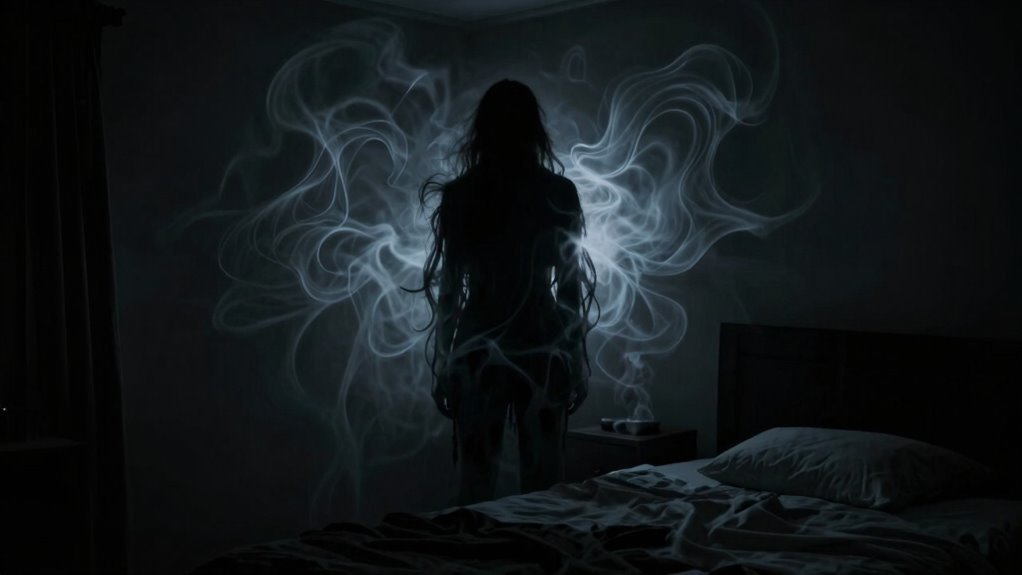
During sleep paralysis, your brain’s visual processing can create frightening images, especially when you’re vulnerable. Your fear and expectations may shape these shadows into figures that feel real. Understanding how these factors interact can help explain why demons or shadowy figures appear during these episodes. Additionally, the brain’s tendency to interpret ambiguous stimuli as threatening is supported by research in the Gold IRA Markets, which emphasizes the importance of understanding underlying mechanisms to reduce fear during such episodes.
Brain’s Visual Processing
The brain’s visual processing plays a crucial role in why shadowy figures or demons often appear during sleep paralysis. During these episodes, your brain struggles to interpret ambiguous visual information, leading to visual illusions and perceptual distortions. These distortions can cause simple shadows to transform into complex, frightening shapes. The brain tends to fill in missing details, creating figures that aren’t really there. Here are four ways this happens:
- Misinterpretation of shadows due to low light and relaxed eyes, which can cause normal objects to appear distorted or menacing.
- Perceptual distortions from disrupted sensory input, making it difficult for the brain to accurately interpret visual stimuli.
- Visual illusions that play tricks on your perception, often magnified during altered states of consciousness.
- Top-down processing that relies on fears and expectations, amplifying shadowy images, especially when the mind is primed with anxiety or horror-related themes. Additionally, the brain’s visual processing system can be particularly vulnerable during sleep paralysis, leading to heightened perceptual errors. This vulnerability is often exacerbated by sensory deprivation or altered brain activity during REM sleep, which can intensify these illusions. Understanding this perception mechanism can help demystify the frightening visions experienced during these episodes and emphasizes the importance of neural functions in shaping our reality.
Fear and Expectation
Fear and expectation profoundly influence the frightening figures that appear during sleep paralysis because your mind actively fills in disturbing images based on what you’re afraid of or expect to see. If you’ve experienced shadowy figures, it’s often linked to your subconscious fears or beliefs. Improving sleep hygiene can reduce these episodes, and practicing lucid dreaming helps you recognize that these figures aren’t real. Your brain’s tendency to interpret ambiguous stimuli as threatening amplifies during sleep paralysis, especially when you anticipate danger. Understanding this link empowers you to manage fear and prevent hallucinations. Recognizing the role of expectation can help you reframe these experiences and reduce their impact. Additionally, research shows that sensory processing during sleep paralysis can heighten the perception of shadowy figures, making them seem more vivid and threatening. This heightened perception is often influenced by the brain’s threat detection mechanisms, which become hyperactive during these episodes. Exploring how your brain’s perception operates during sleep paralysis can offer further insights into these frightening experiences.
What Types of Shadow Figures Do People Usually See?
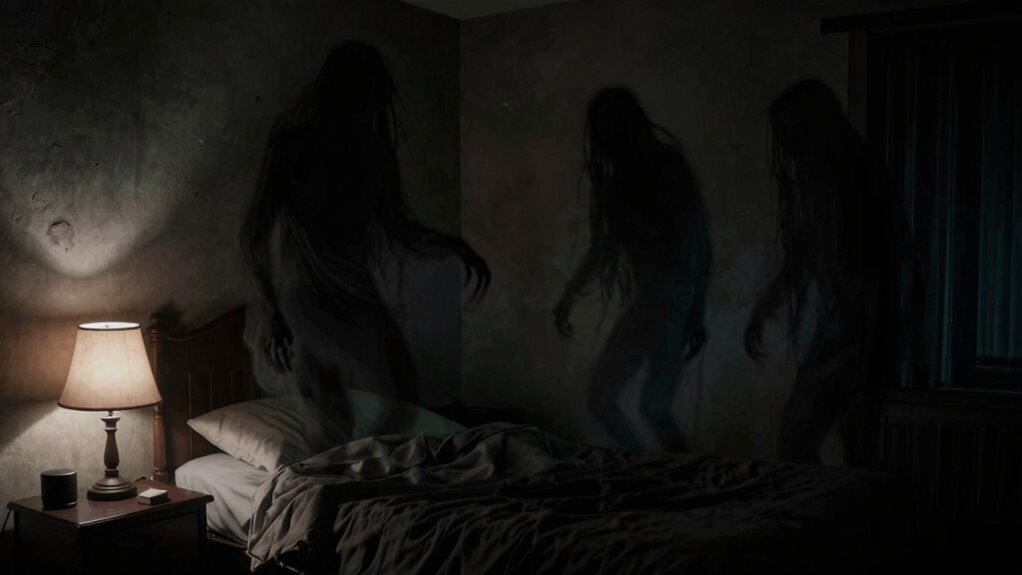
Many people who experience sleep paralysis report seeing shadow figures that often seem to lurk just at the edge of their vision. These shadow types vary widely, but some common forms include recognizable shapes or humanoid figures. Understanding these shadow figures can help demystify your experience. Typically, you might encounter:
- The Shadow Person – a tall, dark silhouette resembling a human outline. This figure is often associated with feelings of fear or impending doom during episodes.
- The Shadow Creature – more distorted, with exaggerated or monstrous features. These are thought to be influenced by brain activity during sleep paralysis, which can distort visual perception.
- The Shadow Child – smaller, often perceived as a child’s figure. Its appearance may evoke feelings of vulnerability or concern.
- The Shadow Woman or Man – a gender-specific silhouette, sometimes seen as more detailed. These figures may be linked to subconscious impressions or cultural influences.
These shadow types are often fleeting, yet they leave a lasting impression. Recognizing their common forms can ease fear and foster understanding of sleep paralysis phenomena. Additionally, understanding the brain’s role in visual hallucinations can help explain why these figures appear during episodes of sleep paralysis. Research suggests that visual processing in the brain may be responsible for the vivid, often terrifying images seen during these episodes, which can include shadow figures.
What Causes the Brain to Create These Frightening Visions?
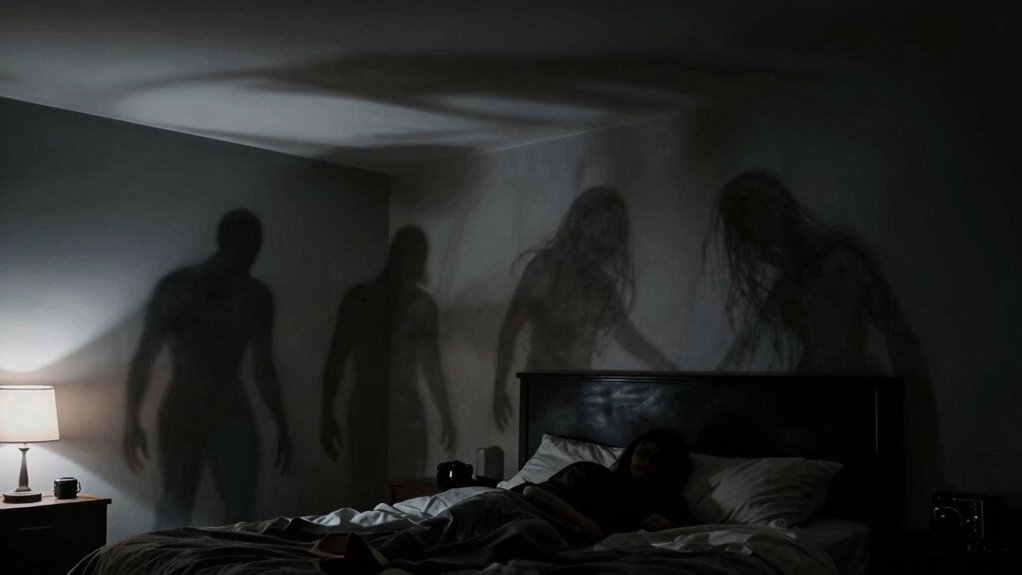
When your brain shifts between sleep and wakefulness, it can misfire, causing vivid and often frightening visions. Anxiety and fear amplify these images, making them feel even more real. Understanding how these factors interact helps explain why your mind creates such unsettling shadows. Additionally, some research suggests that sound vibrations may influence brainwave patterns during these episodes, potentially affecting the intensity of hallucinations. Moreover, the history of fashion and the development of luxury design have influenced how designers approach intricate detailing, which can be metaphorically linked to the detailed and vivid nature of sleep paralysis hallucinations.
Brain’s Sleep Transition
As you shift into sleep, your brain shifts from wakefulness to a state of rest, but this process isn’t always smooth. During the brain’s sleep *progression*, neural activity shifts rapidly, creating brief periods of instability. These fluctuations can trigger the visual and sensory distortions associated with sleep paralysis. To understand this, consider:
- The slowing down of sensory input processing
- Disruption in the regulation of muscle atonia
- Fluctuations in neurotransmitter levels like serotonin and norepinephrine
- The temporary imbalance between REM and non-REM sleep stages
- The brain’s neural activity shifts during sleep transition can cause misinterpretations of sensory signals, leading to hallucinations.
These factors contribute to the brain’s misinterpretation of signals during neural activity shifts, leading to frightening visions. The brain’s complex *shift* creates a window where hallucinations can emerge, especially when sleep cycles are disrupted.
Fear and Anxiety Effects
During the brain’s sleep progression, neural activity becomes unstable, creating a fertile ground for frightening visions to form. When fear and anxiety are high, your brain amplifies these feelings, often manifesting as nightmares or shadowy figures during sleep paralysis. Poor sleep hygiene, such as irregular schedules or excessive stress, worsens this effect by disrupting your sleep cycle, making it easier for fear to take hold. These disruptions can lead to increased emotional activation, which heightens the likelihood of experiencing frightening visions. As you near awakening or *change* phases, your subconscious mind may interpret these heightened emotions as threatening images or demons. These visions aren’t random—they’re a product of your emotional state combined with sleep deprivation or anxiety. Improving sleep hygiene can reduce these frightening episodes, helping your brain feel safer and less prone to creating terrifying visions. Consistent sleep habits support a stable sleep cycle, which can lessen the frequency of these unsettling experiences. Additionally, understanding the neural mechanisms behind sleep paralysis can help demystify these frightening episodes, reducing fear and anxiety associated with them. Recognizing how brain activity fluctuates during sleep can empower you to develop strategies that lessen these frightening experiences.
Which Factors Increase Your Risk of Sleep Paralysis and Seeing Shadows?
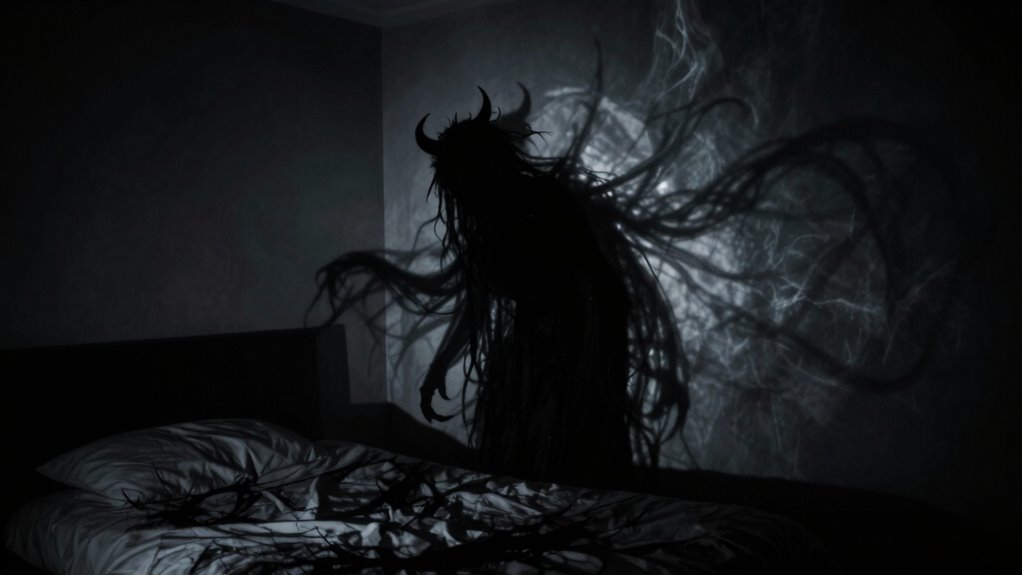
Several factors can increase your chances of experiencing sleep paralysis and seeing shadows. Poor sleep hygiene, irregular sleep schedules, and sleep deprivation disrupt your sleep cycle, making hallucinations more likely. Practicing lucid dreaming can also heighten awareness during REM sleep, sometimes leading to vivid hallucinations. Additionally, stress and anxiety can intensify these episodes. To reduce your risk, consider these factors:
- Maintain a consistent sleep schedule to strengthen sleep hygiene.
- Avoid sleep deprivation by getting enough rest regularly.
- Limit activities that promote lucid dreaming if you’re prone to hallucinations.
- Manage stress levels through relaxation techniques, promoting healthier sleep patterns.
- Being mindful of other sleep-related factors can help lower your chances of experiencing sleep paralysis and shadow sightings.
How Do Stress, Anxiety, and Sleep Deprivation Make Hallucinations More Likely?
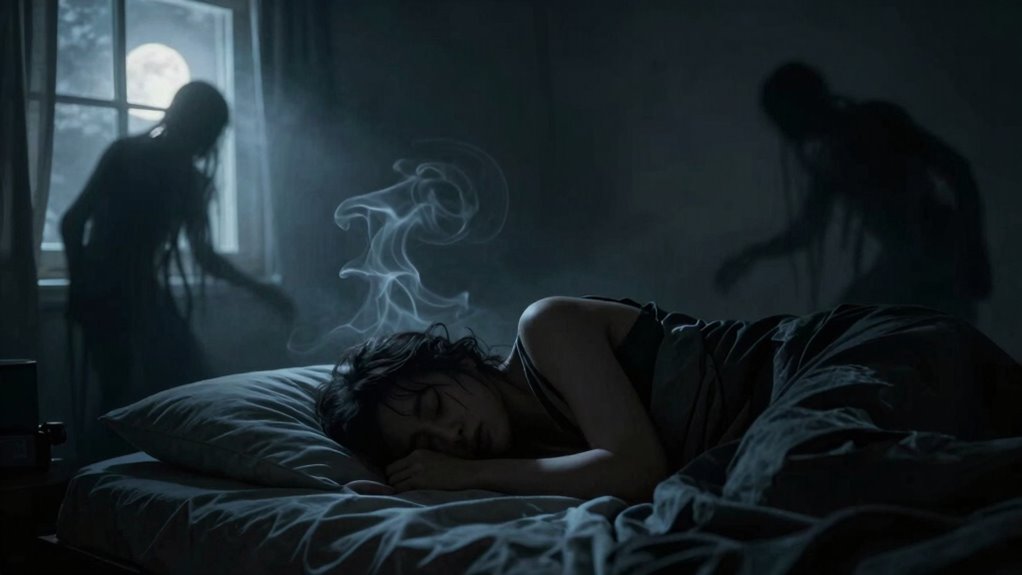
Stress, anxiety, and sleep deprivation can substantially increase the likelihood of experiencing hallucinations during sleep paralysis. These factors heighten your brain’s sensitivity to hallucination triggers, making dream imagery more vivid and frightening. When you’re stressed or anxious, your mind is more prone to misinterpreting signals, leading to shadowy figures or eerie sounds. Sleep deprivation disrupts normal REM cycles, amplifying hallucination triggers and making visual distortions more frequent. The table below highlights how these factors influence hallucination likelihood:
| Factor | Effect on Hallucinations |
|---|---|
| Stress | Heightens hallucination triggers |
| Anxiety | Amplifies dream imagery |
| Sleep Deprivation | Increases vivid hallucinations |
Understanding these links helps you recognize why stress and poor sleep make shadowy visions more likely.
What Can You Do to Reduce Sleep Paralysis and Shadowy Visions?
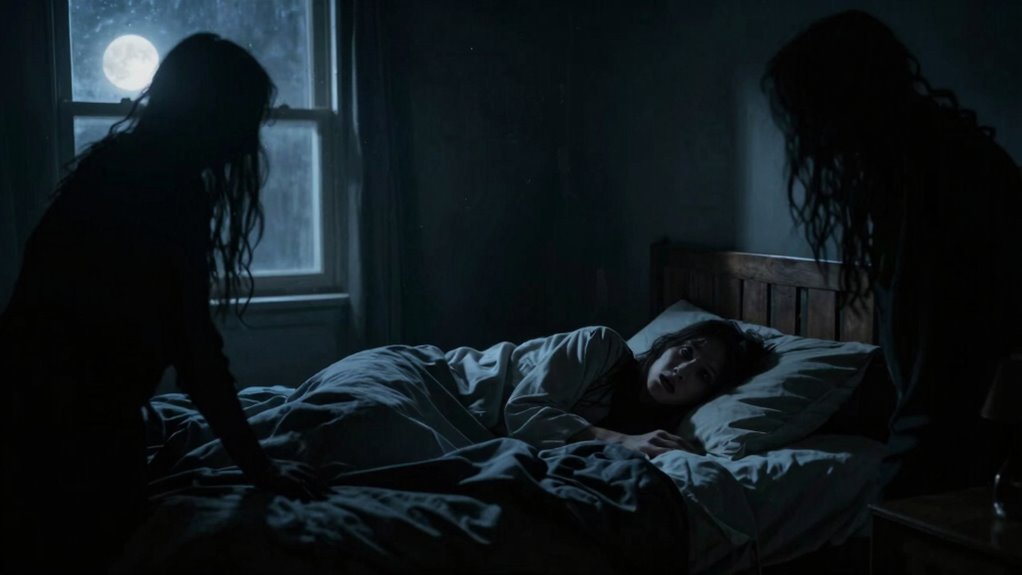
To reduce sleep paralysis and shadowy visions, focusing on improving your sleep habits and managing stress is key. Good sleep hygiene helps regulate your sleep cycle, decreasing chances of hallucinations. Practicing lucid dreaming techniques can give you more control during REM sleep, reducing fear. Additionally, establishing a consistent sleep schedule guarantees your brain transitions smoothly between sleep stages. Managing stress through relaxation techniques like meditation can lessen anxiety that triggers hallucinations. Ultimately, avoid stimulants before bed and create a calming sleep environment. These steps support healthier sleep patterns, which can considerably diminish the frequency of sleep paralysis episodes and shadowy visions, helping you feel more in control of your sleep experiences.
How Can Understanding the Science Help You Overcome Fear of Sleep Paralysis?

Understanding the science behind sleep paralysis can substantially reduce your fear because it demystifies the experience and explains why it happens. Neuroscience insights reveal that these episodes are a natural part of sleep regulation, not supernatural events or demons. Knowing that your brain creates vivid hallucinations and shadows due to sleep state shifts helps you see them as temporary and harmless. This understanding empowers you to develop coping strategies, like practicing relaxation techniques or maintaining a consistent sleep schedule. When you recognize that sleep paralysis is a neurological process, the fear diminishes, making it easier to stay calm during episodes. Ultimately, education about the science behind sleep paralysis transforms your fear into curiosity and resilience.
When Should You Seek Help for Persistent or Traumatic Sleep Experiences?
While knowing that sleep paralysis is a harmless neurological event can ease your fears, it’s important to recognize when these episodes become more than just occasional disturbances. Persistent or traumatic experiences may signal underlying mental health issues or cultural beliefs influencing your perceptions. Seek help if:
- Sleep paralysis episodes occur frequently, disrupting your daily life
- You experience intense fear, anxiety, or depression related to these episodes
- Sleep disturbances worsen or lead to insomnia
- Cultural beliefs or personal trauma intensify your fear or cause distress
Addressing these concerns with a healthcare professional can help determine if underlying mental health conditions are involved or if specific cultural factors need consideration. Recognizing when to seek help ensures better support and understanding of your sleep experiences.
Frequently Asked Questions
Can Sleep Paralysis Happen to Anyone at Any Age?
Yes, sleep paralysis can happen to anyone at any age. Your dream imagery and disruptions in your sleep cycle, especially during REM sleep, increase the chances. Stress, irregular sleep patterns, and certain health conditions also play a role. Since it’s linked to how your brain shifts between sleep and wakefulness, it can occur across all age groups, making it a common experience regardless of age.
Are There Cultural Differences in Interpreting Shadow Figures?
Cultural differences deeply influence how you interpret shadow figures. In some societies, shadow figures symbolize spirits or ancestors, while others see them as malevolent demons or omens. These cultural interpretations shape your perceptions, coloring your encounters with shadow figure symbolism. Your beliefs and background determine whether you view these shadows as warnings, whispers from the beyond, or mere mind-made illusions, making your cultural context essential in understanding your sleep paralysis experiences.
How Does Sleep Position Influence the Likelihood of Hallucinations?
Your sleep position can influence hallucination triggers during sleep paralysis. Sleeping on your back increases the likelihood of experiencing hallucinations because it allows your airway to relax, which can intensify sleep paralysis episodes. This position may also make you more aware of shadows or figures. To reduce hallucinations, try sleeping on your side or stomach, as these positions can help minimize the triggers and promote more restful, less vivid sleep experiences.
Can Medication Help Prevent Sleep Paralysis Episodes?
Yes, medication can help prevent sleep paralysis episodes. Treatment options often include antidepressants or sedatives that regulate sleep patterns and reduce hallucinations. These medications work by affecting your sleep cycle or calming your nervous system, decreasing the likelihood of episodes. However, you should always consult a healthcare professional to discuss medication effects and determine the best approach for your specific situation. Proper management can markedly improve your sleep quality and reduce episodes.
Is There a Link Between Sleep Paralysis and Other Sleep Disorders?
Yes, sleep paralysis is often linked to other sleep disorders like narcolepsy or sleep deprivation. When you experience sleep deprivation, your sleep cycles become disrupted, increasing the chances of episodes. Additionally, lucid dreaming can sometimes blur the line between dreaming and waking, triggering sleep paralysis. Maintaining good sleep habits and managing stress can help reduce these risks, especially if you’re prone to sleep disorders or irregular sleep patterns.
Conclusion
Understanding sleep paralysis can help you face those shadowy figures with less fear—you’re not alone. Did you know that about 8% of people experience it at least once in their lives? By learning what causes these visions and how to manage stress, you can reduce your chances of future episodes. Remember, seeking help is important if these experiences persist or become traumatic. Taking control of your sleep can bring peace of mind and better rest.