
Your mind interprets environmental cues like flickering lights, creaky floors, and unsettling sounds as signs of paranormal activity because of innate fear responses, cultural stories, and psychological tendencies to find patterns. Subconscious processes and prior beliefs shape how you perceive strange stimuli, often filling gaps with ghostly images or noises. These perceptions are reinforced by media and societal narratives, making haunted locations feel more convincing. Keep exploring to uncover how all these factors come together to enhance your sense of the supernatural.

Get school and study supplies delivered free — and shop member deals
- Fast, free delivery on millions of items
- Access to Prime Big Deal Days deals on October 6–7
- Prime Video, Amazon Music and more included
Key Takeaways
- Environmental cues like dim lighting and sounds trigger innate fear responses, making places feel unsettling.
- Cultural stories and media influence shape expectations, reinforcing beliefs in paranormal activity.
- The brain’s pattern recognition fills in ambiguous stimuli with ghostly images or sounds based on existing beliefs.
- Personal experiences and subconscious processes heighten sensitivity to environmental anomalies.
- Societal narratives create feedback loops, amplifying perceptions of haunted environments despite lack of evidence.
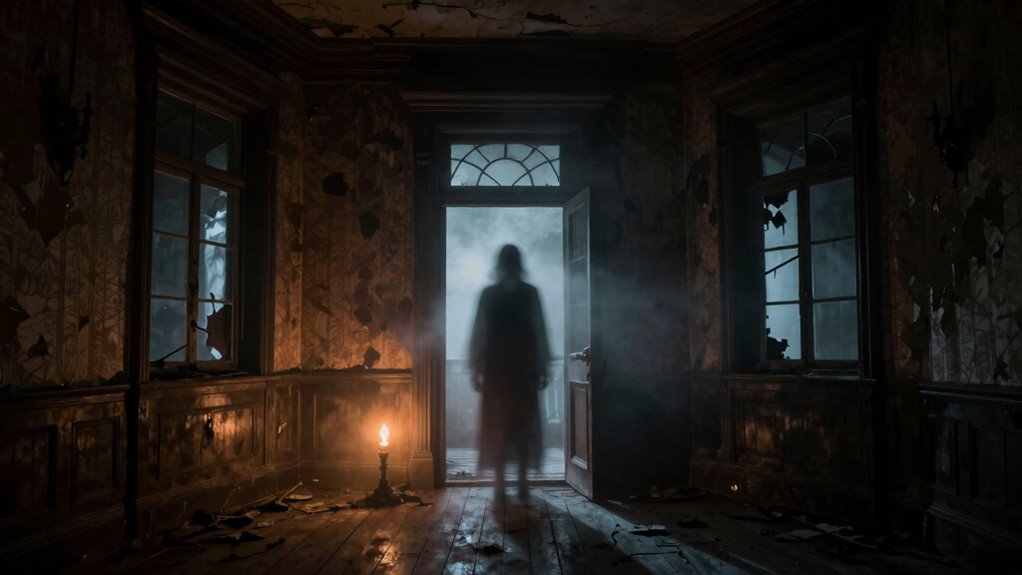
Have you ever wondered why certain places are believed to be haunted? It’s a fascinating question that explores into the psychology behind these beliefs. When you step into an old, abandoned house or a historic site, your brain is quick to pick up on environmental cues—cracked walls, flickering lights, eerie sounds—that seem to suggest something unsettling. These cues trigger your fear response, a natural mechanism designed to keep you alert and safe. Your mind interprets these subtle signals as signs of danger, even if there’s no real threat present. This reaction isn’t just about the environment; it’s deeply rooted in your subconscious, shaped by cultural stories and personal experiences that reinforce the idea that certain places are haunted.
Your fear response amplifies when you’re in a dimly lit space or when you hear a faint noise that you can’t immediately explain. These environmental cues heighten your senses and make you more aware of your surroundings, encouraging a state of heightened alertness. Your brain, wired for survival, tends to fill in gaps with familiar patterns—like imagining a ghostly figure or hearing whispers—especially in places associated with tragedy or mystery. It’s an instinctive attempt to make sense of ambiguous stimuli. When these cues align with stories or beliefs about hauntings, your mind is more likely to interpret the environment as supernatural. Additionally, environmental cues are often subtle and ambiguous, making it easier for your mind to interpret them as paranormal phenomena. The cultural influences, such as media and folklore, also play a significant role in shaping these perceptions.
Dim lighting and unexplained noises heighten awareness, triggering ghostly imaginings and supernatural interpretations.
This process is further reinforced by societal influences. Movies, stories, and local legends shape your expectations, making you more prone to experience or interpret ordinary phenomena as paranormal. If you’ve heard that a particular building is haunted, your mind may be predisposed to notice and interpret odd sounds or shadows as evidence of spirits. This creates a feedback loop where your fear response is continually triggered by environmental cues, making the haunting seem more real than it actually is.
In essence, haunted places tap into your natural fear response, using environmental cues to create a sense of the supernatural. Your brain, always seeking patterns and meaning, responds instinctively, often filling in the gaps with ghostly imagery or eerie sounds. This psychological mechanism—combining environmental cues, personal beliefs, and cultural stories—explains why haunted places feel so convincing, even when there’s no concrete evidence of spirits. It’s your mind’s way of turning the ordinary into the extraordinary, playing on your innate fears and the cues your environment provides.
As an affiliate, we earn on qualifying purchases.
Frequently Asked Questions
Can Genetics Influence Belief in Hauntings?
Genetics can influence your belief in hauntings through genetic predisposition and innate perceptions. If you have a family history of believing in supernatural phenomena, you might be more likely to accept haunted stories. Your innate perceptions also shape how you interpret ambiguous stimuli, making you more prone to perceive paranormal activity. These genetic factors subtly guide your mind, influencing how you experience and interpret potential hauntings, even before you consciously realize it.
Do Cultural Backgrounds Affect Perceptions of Haunted Locations?
Yes, your cultural background markedly shapes how you perceive haunted locations. Cultural narratives and traditions influence your beliefs about spirits and the supernatural, making some places seem more haunted based on stories you’ve heard growing up. These influences can affect your expectations and interpretations of eerie experiences, often leading you to see haunted places through the lens of your cultural context. Your traditions and stories create a framework for understanding and reacting to these spooky environments.
How Does Sleep Paralysis Relate to Ghost Sightings?
Imagine your mind as a theater stage where sleep paralysis acts as the unexpected spotlight, revealing ghostly figures. During these episodes, hallucination triggers like vivid imagery and sensory distortions make you see apparitions, much like lucid dreaming blurs reality and fantasy. This connection explains why many perceive sleep paralysis as ghost sightings—your brain, caught between sleep and wakefulness, conjures these eerie visions from subconscious fears.
Are There Neurological Reasons for Experiencing Paranormal Phenomena?
Yes, there are neurological reasons for experiencing paranormal phenomena. You might experience these sensations due to neurotransmitter fluctuations that alter your perception and brainwave patterns, creating vivid hallucinations or feelings of a presence. These changes can be triggered by stress, sleep deprivation, or neurological conditions. Your brain’s electrical activity may produce experiences that seem supernatural, but they’re rooted in your brain’s complex processes.
Can Environmental Factors Create Illusions of Hauntings?
Absolutely, environmental cues and sensory manipulation can turn any ordinary setting into a spooky spectacle. When you’re in a dimly lit room with strange sounds or shifting shadows, your mind overreacts to these cues, creating illusions of hauntings. Noise, temperature changes, or even eerie smells manipulate your senses, making you believe you’re experiencing supernatural phenomena. So, yes, your environment can craft haunted illusions more convincingly than you might think.
As an affiliate, we earn on qualifying purchases.
Conclusion
So, as you step into spooky spots, remember that your mind masterfully manipulates memories, moods, and myths. Haunted places aren’t just about paranormal phenomena—they’re playgrounds for psychological puzzles. By understanding your own perceptions and predispositions, you can decipher the mysterious and demystify the darkness. Embrace the eerie essence, explore with enthusiasm, and empower your perception. After all, the power to perceive is the power to believe—making haunted places a hauntingly human phenomenon.
As an affiliate, we earn on qualifying purchases.
As an affiliate, we earn on qualifying purchases.
Halloween Picks
halloween
As an affiliate, we earn on qualifying purchases.