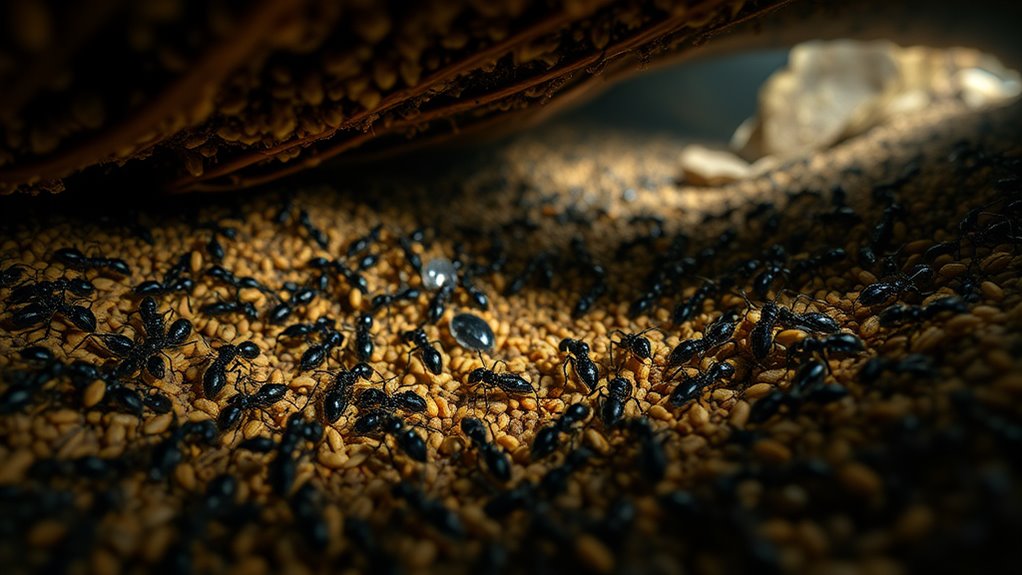

Ant supercolonies are the planet’s largest cooperative societies, made up of millions of ants working seamlessly across vast areas. They function as a single, highly organized network, with no territorial boundaries, promoting cooperation and resource sharing. These supercolonies often form when invasive ants take over new environments, outcompeting native species. Their intricate social structure, based on chemical signals, makes them incredibly resilient and difficult to control—keep exploring to learn more about their astonishing organization.

Prime made for students and young adults
- Fast, free delivery for dorm and study essentials
- Prime Video and Amazon Music included
- Member-only deals
Key Takeaways
- Ant supercolonies are vast networks of millions of ants functioning as a single, highly organized social entity across large areas.
- They lack territorial boundaries, allowing free movement and seamless cooperation among nests within the supercolony.
- Chemical signals (pheromones) enable recognition and cooperation, preventing conflicts between different nests.
- Supercolonies often become invasive, outcompeting native species and dramatically transforming ecosystems.
- Due to their interconnectedness and size, controlling or eradicating supercolonies requires targeted, comprehensive strategies.
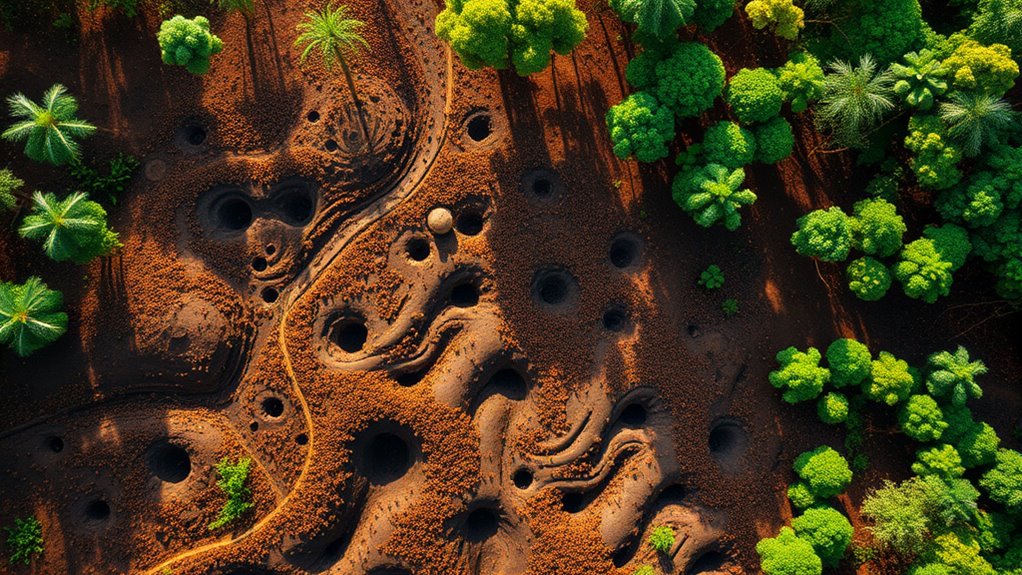
Ant supercolonies are astonishing social structures where thousands or even millions of ants from the same species form a vast, interconnected network that spans large geographic areas. These supercolonies challenge what you might think about insect societies, because they function as unified entities despite their enormous size. When you observe an ant supercolony, you’re witnessing a highly organized colony structure that allows these insects to operate seamlessly across vast distances. Instead of individual colonies acting independently, they cooperate as parts of a larger, cohesive system. This colony structure enables the supercolony to efficiently forage, defend, and expand, making it one of the most impressive examples of social insect organization. Their ability to maintain cohesion over such extensive ranges relies heavily on chemical signals, which facilitate recognition and cooperation among ants from different nests. What makes these supercolonies particularly fascinating is their ability to thrive and dominate new environments, especially when they are invasive species. When an ant species becomes invasive, it often forms a supercolony to outcompete native ants and other local species. The supercolony’s expansive network allows it to monopolize resources, establish dominance quickly, and prevent rival colonies from gaining a foothold. Because these ants work together on such a massive scale, they effectively suppress local biodiversity, which can lead to ecological imbalance. The invasive nature of some supercolonies explains how they can spread across continents, transforming local ecosystems and causing significant environmental changes. You might wonder how such extensive colony structures stay cohesive. The secret lies in their ability to recognize each other as part of the same supercolony. Unlike typical ant colonies, where territoriality keeps colonies isolated, supercolonies lack aggressive boundaries between different nests within the network. This absence of conflict allows for free movement and resource sharing across the entire supercolony, reinforcing their unity. The chemical signals, or pheromones, used by ants help maintain this recognition, ensuring that ants from different nests cooperate rather than fight. This interconnected colony structure is what makes supercolonies so resilient and capable of massive expansion. However, their size and cooperation pose challenges for control and management, especially when they are invasive species. Efforts to eliminate supercolonies are complicated because removing a single nest isn’t enough; the entire network must be disrupted. Understanding their colony structure is vital for developing effective strategies to manage or contain their spread. The scale and organization of these supercolonies show how evolution can produce highly efficient social systems that adapt to and dominate their environments, making them some of the planet’s most remarkable and impactful social phenomena.
ant supercolony control products
As an affiliate, we earn on qualifying purchases.
As an affiliate, we earn on qualifying purchases.
Frequently Asked Questions
How Do Ant Supercolonies Communicate Across Vast Distances?
You might wonder how ant supercolonies communicate over long distances. They rely on chemical signaling, mainly through trail pheromones, to do this. When a foraging ant finds food, it leaves a chemical trail that others follow, reinforcing the pathway. This constant updating and following of trail pheromones allow the colony to coordinate activities efficiently, even across vast areas, ensuring everyone stays connected and informed.
What Environmental Factors Contribute to Supercolony Formation?
Imagine a world where tiny creatures unite into massive societies—what triggers this? You’d find that habitat preferences play a pivotal role, as ants seek environments rich in resources. When resource availability is abundant and stable, ants are more likely to form supercolonies. These environmental factors create the perfect conditions, fostering cooperation and expansion. The environment’s subtle cues can set the stage for the rise of these astonishing, sprawling colonies.
Are Supercolonies Ever Threatened by Invasive Species?
You might wonder if supercolonies face threats from invasive species. While their massive size and interconnectedness give them resilience, invasive species can disrupt ant genetic diversity and weaken their territoriality. These invaders might outcompete native ants, break down colony defenses, or introduce diseases. So, even supercolonies aren’t invulnerable; invasive species pose a real threat by challenging their stability and survival.
How Do Ants Prevent Conflicts Between Neighboring Colonies?
You might think ants constantly fight, but they actually prevent conflicts through chemical signaling and high genetic relatedness. These signals communicate colony boundaries and help neighbors recognize each other, reducing misunderstandings. When colonies share genetic ties or similar chemical cues, they’re more likely to cooperate instead of conflict. This sophisticated communication system maintains peace, even among large, cooperative supercolonies, ensuring their survival and efficient resource sharing.
Can Supercolonies Survive Climate Change Impacts?
You might wonder if supercolonies can withstand climate change impacts. While their large size offers resilience, it also makes them vulnerable to environmental shifts. Genetic diversity within supercolonies is often limited, which could hinder adaptation. However, their colony longevity and ability to quickly expand help buffer against some climate stressors. Ultimately, their survival depends on environmental changes and their capacity to adapt genetically over time.
invasive ant colony eradication kit
As an affiliate, we earn on qualifying purchases.
As an affiliate, we earn on qualifying purchases.
Conclusion
As you marvel at these colossal ant supercolonies, remember they’re more than just insects—they’re nature’s grand orchestras of cooperation. Their unity, like a well-tuned symphony, shows what can be achieved when individuals work together toward a common goal. These tiny architects of the earth remind you that strength lies in unity, that even the smallest beings can build something extraordinary. In their collective rhythm, find a lesson for your own life’s harmony and collaboration.
ant bait stations for large colonies
As an affiliate, we earn on qualifying purchases.
As an affiliate, we earn on qualifying purchases.
As an affiliate, we earn on qualifying purchases.
Halloween Picks
halloween
As an affiliate, we earn on qualifying purchases.