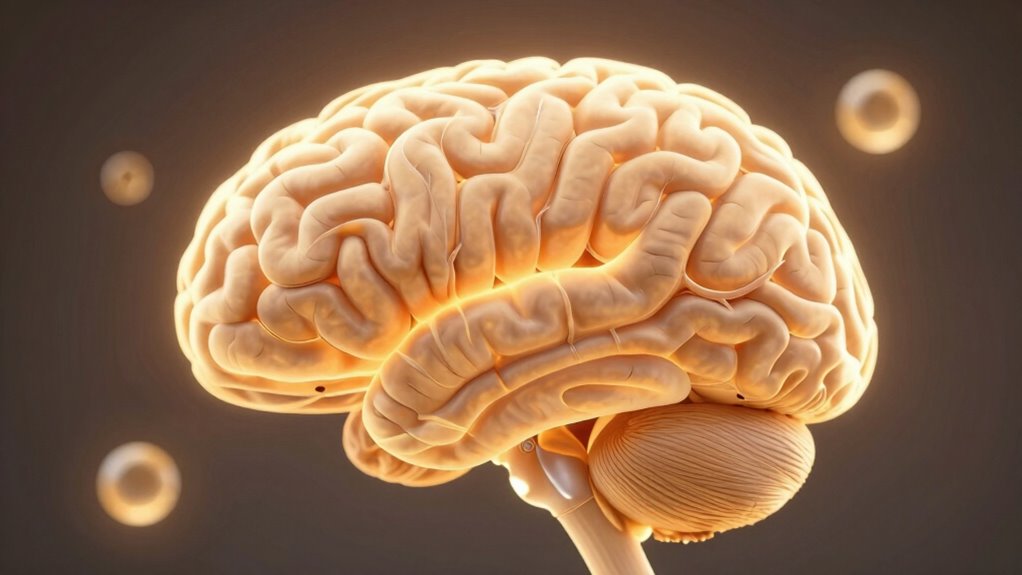

Your brain loves certainty because it seeks predictability to make decision-making easier and reduce mental effort. It’s wired to prefer stability, with areas like the prefrontal cortex evaluating risks and benefits, while the amygdala reacts strongly to uncertainty, triggering fear. This neural setup helps you feel safe and in control but can also make you wary of change. If you want to understand how this wiring affects your choices and how to navigate uncertainty better, keep exploring.

Prime made for students and young adults
- Fast, free delivery for dorm and study essentials
- Prime Video and Amazon Music included
- Member-only deals
Key Takeaways
- The brain seeks predictability to reduce cognitive load and simplify decision-making processes.
- Neural circuits, including the prefrontal cortex and amygdala, favor stability and react strongly to uncertainty.
- Evolution favored responses to predictable threats and opportunities, reinforcing a preference for certainty.
- Certainty biases promote confirmation and limit exploration, helping the brain avoid ambiguity.
- Seeking reassurance and routines during change reduces stress and conserves mental resources.
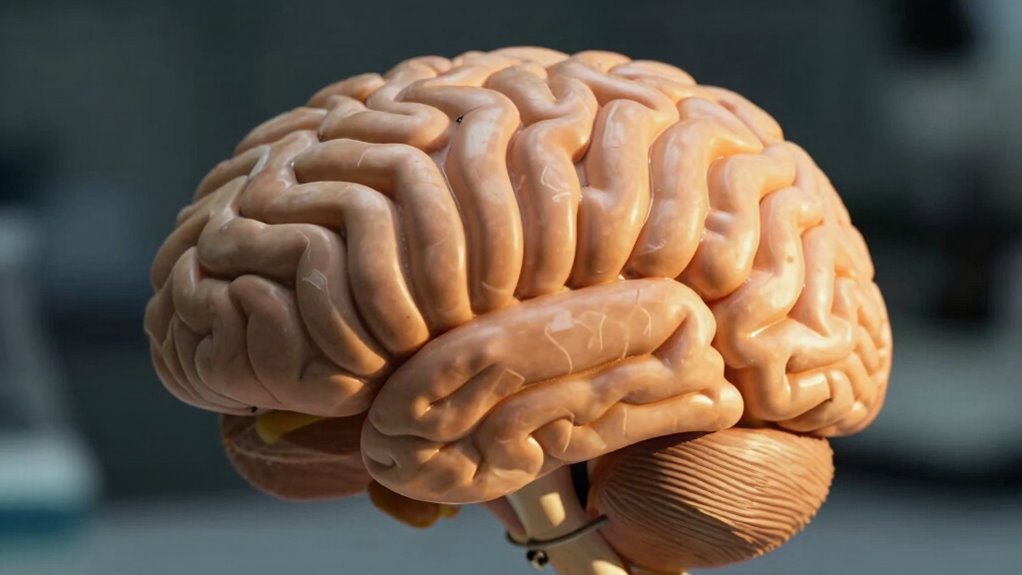
Have you ever wondered why uncertainty makes you uneasy? It’s a feeling many of us experience, and understanding it involves exploring the neuroscience implications behind our brain’s preference for certainty. Your brain is wired to seek predictability because it simplifies decision making processes, reducing mental effort and potential risks. When outcomes are clear, your brain can quickly evaluate options, weigh consequences, and act with confidence. Conversely, ambiguity triggers discomfort because it signals a lack of control, which can activate stress responses and heighten anxiety. This biological response is rooted in evolution; recognizing predictable threats and opportunities helped our ancestors survive. Today, that same wiring influences how you respond to uncertainty in everyday life. Recognizing that neural circuitry favors stability can help you better understand your own reactions to unfamiliar situations. This understanding highlights how deeply embedded our preference for certainty is, influencing not only individual choices but also societal behaviors. Moreover, this neural wiring can sometimes lead to confirmation bias, where you favor information that supports your existing beliefs, making it harder to accept uncertainty. In decision making processes, the brain’s craving for certainty manifests as a strong bias toward information that confirms what you already believe and a tendency to avoid ambiguous situations. Neuroscience implications reveal that areas like the prefrontal cortex and amygdala play critical roles in processing uncertainty. The prefrontal cortex helps you evaluate risks and benefits, *endeavor*ing to establish a sense of control and predictability. Meanwhile, the amygdala, responsible for fear responses, reacts strongly to uncertainty, heightening your sense of unease. This interplay creates a natural pull toward certainty, keeping your decision making streamlined but sometimes limiting your openness to new or complex options. Recognizing the neurobiological basis of this bias can inspire strategies to expand your comfort zone. Your brain’s attachment to certainty also impacts how you handle change and unfamiliar situations. When faced with the unknown, you might instinctively seek reassurance or cling to familiar routines. This preference isn’t just about comfort; it’s embedded in your neural circuitry that favors stability and reduces cognitive load. The neuroscience implications suggest that constantly seeking certainty can sometimes hinder growth, innovation, or adaptability. Understanding this neurobiological wiring can help you consciously challenge your aversion to uncertainty, fostering resilience and a more flexible approach to decision making. Recognizing the brain’s wiring can help you develop strategies to navigate uncertainty more effectively, improving both personal growth and adaptability.
As an affiliate, we earn on qualifying purchases.
Frequently Asked Questions
How Does Uncertainty Affect Brain Health Long-Term?
Uncertainty can challenge your brain’s emotional resilience and reduce cognitive flexibility over time. When faced with ongoing unpredictability, you might experience increased stress, which weakens neural connections and hampers your ability to adapt. Long-term, this can lead to mental fatigue, anxiety, and difficulty managing change. To protect your brain health, developing coping strategies and embracing uncertainty can strengthen resilience and enhance your cognitive flexibility, helping you adapt more effectively.
Can Seeking Certainty Lead to Better Decision-Making?
Seeking certainty can profoundly improve your decision-making, making you feel like you’re wielding a superpower. When you chase clarity, your brain perceives less risk, boosting your confidence and reducing anxiety. This risk perception sharpens your focus, allowing you to weigh options more effectively. By building confidence through seeking certainty, you create a mental foundation that guides smarter choices, ultimately empowering you to navigate life’s challenges with unwavering resolve.
What Neurological Factors Drive the Need for Certainty?
Your brain’s need for certainty is driven by neurotransmitter influence and neural circuitry. Neurotransmitters like dopamine reinforce feelings of reward when outcomes are predictable, encouraging you to seek stability. Neural circuits in the prefrontal cortex and amygdala process risk and reward, making certainty feel safe and satisfying. This neurological wiring guarantees your brain favors predictable situations, reducing anxiety and maximizing feelings of control, which ultimately drives your desire for certainty.
Are Some People More Tolerant of Uncertainty Than Others?
You might notice that some people handle uncertainty better, like a trader who adapts quickly to market shifts. This difference stems from risk tolerance and cognitive flexibility. Those with higher risk tolerance and flexible thinking accept ambiguity more comfortably, while others prefer clear answers. Your brain’s wiring influences this, making some more tolerant of uncertainty, allowing them to navigate unpredictable situations with greater ease.
How Can We Train Our Brain to Handle Uncertainty Better?
To better handle uncertainty, you can train your brain through risk management strategies that break down big worries into manageable steps, reducing overwhelm. Practice mindfulness to build emotional resilience, helping you stay calm amid ambiguity. Embrace small risks regularly to boost your comfort with uncertainty. Over time, these habits strengthen your ability to adapt, making uncertainty feel less threatening and more like an opportunity for growth.
As an affiliate, we earn on qualifying purchases.
Conclusion
Understanding why your brain craves certainty helps you recognize its influence on your choices. When you seek clear answers, you’re often trying to reduce anxiety and boost confidence. Remarkably, studies show that uncertainty activates the same brain regions as physical pain, highlighting how uncomfortable ambiguity can be. By embracing some level of uncertainty and practicing patience, you can train your mind to handle ambiguity better, leading to improved decision-making and overall well-being.
As an affiliate, we earn on qualifying purchases.
neuroscience books on brain and behavior
As an affiliate, we earn on qualifying purchases.
As an affiliate, we earn on qualifying purchases.
Halloween Picks
halloween
As an affiliate, we earn on qualifying purchases.