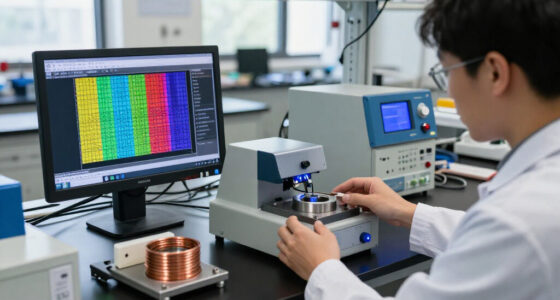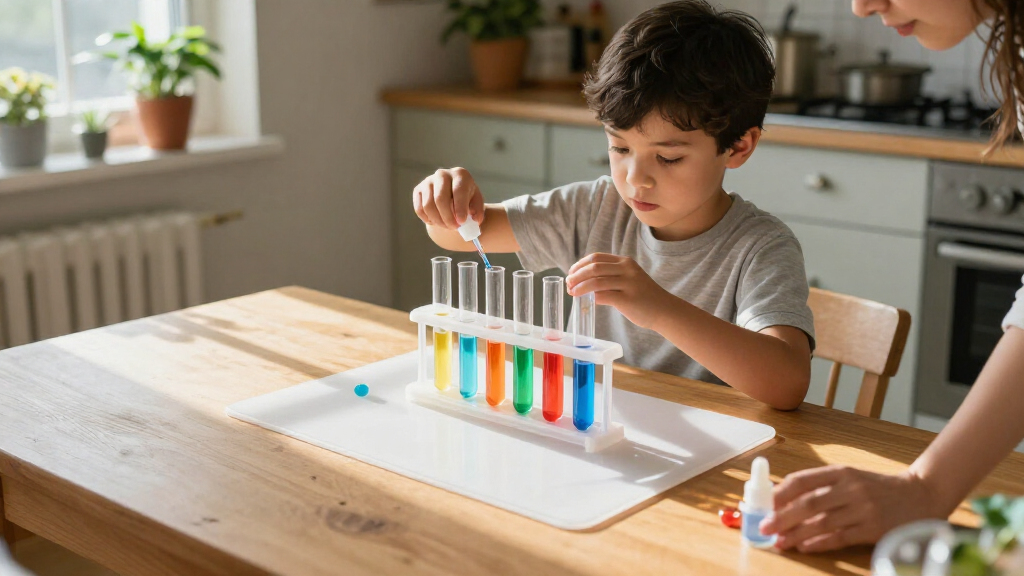

Parents comparing science experiment kits for kids are often choosing between two different kinds of hands-on learning: a chemistry kit that turns ingredients into visible reactions, or a STEM build kit that has children assemble structures, circuits, or simple machines. Both can make science more engaging than a page of facts, but they reward different kinds of curiosity. Chemistry kits tend to deliver quick, dramatic results and a direct link to topics such as reactions and solutions; build kits tend to offer more repeatable tinkering, troubleshooting, and redesign.

Prime made for students and young adults
- Fast, free delivery for dorm and study essentials
- Prime Video and Amazon Music included
- Member-only deals
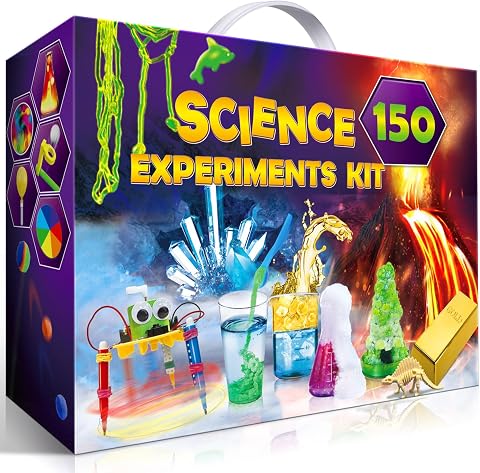
UNGLINGA 150-Experiment Science Kit for Kids
- ✔ Brand: UNGLINGA
- ✔ Experiments: 150
- ✔ Recommended age: 8 years and up
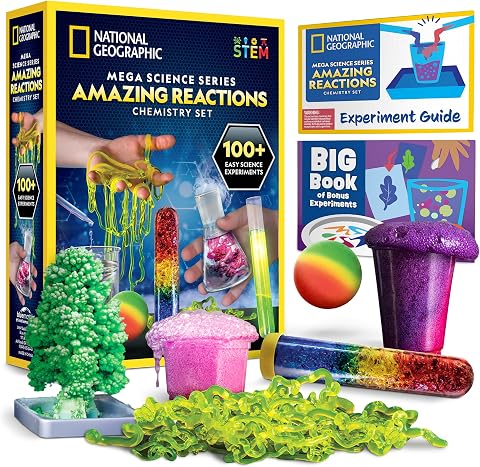
National Geographic Amazing Chemistry Set with 100+ Experiments for Ages 8–12
- ✔ Brand: Blue Marble
- ✔ Set name: Amazing Chemistry Set
- ✔ Age range: 8 years and up

National Geographic Science Magic Kit for Kids Ages 8+
- ✔ Brand: Blue Marble
- ✔ Age range: 8 years and up
- ✔ Included experiments: 20 magic-themed science experiments
The practical choice is less about which kit is “more scientific” and more about what the child will want to do after the first activity. Choose chemistry if your child enjoys mixing, observing, and asking what changed. Choose a build kit if they like constructing things, testing whether they work, and changing a design. The age range, adult help required, supplies included, and likelihood of repeating activities can matter as much as the subject on the box.
At a Glance
| Criteria | Chemistry Experiment Kits | STEM Build and Engineering Kits | Winner |
|---|---|---|---|
| Core activity | Mixing materials and observing visible reactions | Building, testing, and modifying models or mechanisms | Depends |
| Learning focus | Reactions, solutions, observation, and recording results | Design, structure, motion, circuits, and problem-solving | Depends |
| Repeat play | Often limited by consumable ingredients and one-time procedures | Often higher because components can be rebuilt in new configurations | B |
| Adult supervision | Usually needed for measuring, handling materials, and safe cleanup | Varies; younger children may need help with small pieces or instructions | Depends |
| Setup and cleanup | Can involve measuring, spills, and clearing away used materials | Usually organized around parts, though sorting and resetting take time | B |
| Best age fit | Best when the child can follow steps and handle age-appropriate materials with guidance | Depends on the kit’s parts and instructions; simpler sets suit younger builders | Depends |
| Value over time | Strong for a child who is excited by experiments; ongoing cost may include replacement supplies | Often stronger for repeated use if the pieces are sturdy and the projects allow redesign | B |
UNGLINGA 150-Experiment Science Kit for Kids
UNGLINGA takes the top spot because it gives curious children the broadest route through science in this lineup. Its 150 hands-on experiments cover chemistry, physics, Earth science, and surface tension, so a child who tires of one subject can move to another without switching kits. That breadth makes it a more flexible starting point than the Amazing Chemistry Set, which concentrates on chemistry, or the Science Magic Kit, which organizes experiments around performance.The illustrated, step-by-step manual is another practical strength: it gives children a visual guide to follow and can make it easier for an adult to help without directing every move. The kit includes tools and materials, although some activities require common household items. That means the activity count should not be read as 150 fully supplied experiments. Compared with the National Geographic options, UNGLINGA offers a wider subject mix; the Chemistry Set, by contrast, names lab tools such as test tubes, beakers, and pipettes, while the Magic Kit supplies a more theatrical format.We would choose UNGLINGA for a child whose interests are still developing and who likes variety. Its plastic components and age recommendation of 8 and up are worth considering, and the need to gather extra household supplies can interrupt spontaneous experimenting. Children specifically eager to do chemistry demonstrations or perform science tricks may get a clearer experience from one of the more focused alternatives.
Pros:
- 150 hands-on experiments provide the widest activity range in this comparison.
- Covers chemistry, physics, Earth science, and surface tension.
- Illustrated, step-by-step instructions support independent participation.
- Includes tools and materials, with some experiments using household items.
Cons:
- Some experiments require supplies from home.
- Its broad topic mix may be less appealing to a child who wants a focused chemistry or performance kit.
- Recommended for ages 8 and up.
Best for: Children ages 8 and up who want to explore several branches of science and enjoy moving between different kinds of activities.
Not ideal for: Families seeking a chemistry-only kit with explicitly listed lab tools, or a fully self-contained box that avoids household supply gathering.
Bottom line: For children who want variety across science topics, UNGLINGA offers the most versatile starting point, provided adults are comfortable sourcing some household items.
“For children who want variety across science topics, UNGLINGA offers the most versatile starting point, provided adults are comfortable sourcing some household items.”
National Geographic Amazing Chemistry Set with 100+ Experiments for Ages 8–12
For a child drawn to reactions, crystals, and colorful changes, this kit makes a more focused case than UNGLINGA’s broad science survey. The box supplies materials for 15 chemistry experiments, including growing a crystal tree and making color-changing solutions, and includes test tubes, beakers, and pipettes. Those recognizable tools can help make an experiment feel like a chemistry activity rather than a general craft project.The title’s 100-plus activity count needs context: the set pairs those 15 material-supported experiments with a guide to 85 additional activities that use common household items. This is similar to the Science Magic Kit’s structure, which also combines a smaller supplied set with a large household-item booklet. The difference is the central experience: this kit stays with chemistry, while the Magic Kit builds experiments into tricks and demonstrations.Its narrower scope is a benefit for children already interested in chemistry, but a limitation for those who want to sample physics or Earth science. UNGLINGA offers more topic variety and more listed experiments overall; the Amazing Chemistry Set counters with named lab tools and a clearer subject focus. We would pick it when chemistry is the reason for buying a kit, while keeping in mind that most of its additional activities are not supplied as complete materials.
Pros:
- Includes materials for 15 chemistry experiments.
- Features activities such as crystal growing and color-changing solutions.
- Supplies test tubes, beakers, and pipettes.
- Adds a guide to 85 more activities using household items.
Cons:
- The 85 additional experiments rely on household items that are not included.
- Its chemistry focus offers less subject variety than UNGLINGA.
- Only 15 experiments are described as having kit materials supplied.
Best for: Children ages 8 and up who are especially interested in chemistry demonstrations and using familiar lab-style tools.
Not ideal for: Children who want activities across multiple science fields or families expecting all 100-plus activities to come with their materials.
Bottom line: Choose this set when chemistry tools and demonstrations matter more than a broad mix of science subjects.
“Choose this set when chemistry tools and demonstrations matter more than a broad mix of science subjects.”
National Geographic Science Magic Kit for Kids Ages 8+
This kit makes the most sense for children who enjoy showing what they have learned. Its 20 included science experiments are designed as magic tricks, with examples such as a floating coin and a vanishing test tube. A wand and white gloves support the performance angle, while illustrated instructions explain the science behind each trick. That combination gives a child a simple way to present an experiment to family or friends, a motivation the more conventional UNGLINGA and Chemistry Set do not emphasize.The tradeoff is focus and supplied materials. Only 20 activities come with kit materials; the bonus booklet adds more than 85 experiments that use household items. This resembles the Amazing Chemistry Set’s split between supplied experiments and bonus activities, but here the organizing idea is spectacle rather than chemistry. UNGLINGA is the stronger choice for topic breadth, and the Chemistry Set is more direct for a child who wants lab-style chemistry tools.We would put this kit in front of a child who likes tricks, demonstrations, and explaining how something works. The format may help science feel social and memorable, but a child who prefers quiet exploration or a larger set of supplied activities may find its 20 included experiments limiting. Its 8-and-up age guidance also means it is not aimed at the youngest science-curious children.
Pros:
- Frames 20 supplied experiments as magic tricks, including a floating coin and vanishing test tube.
- Illustrated instructions explain the science behind the activities.
- Includes a magic wand and white gloves for performances.
- Bonus booklet offers more than 85 household-item experiments.
Cons:
- Only 20 experiments include kit materials.
- The additional experiments rely on common household items.
- Its performance theme is more specialized than UNGLINGA’s broader subject coverage.
Best for: Children ages 8 and up who enjoy performing demonstrations and explaining the science behind surprising effects.
Not ideal for: Children who want a large, varied set of supplied activities or who are not interested in presenting tricks to an audience.
Bottom line: This is the most engaging fit for a budding science performer, as long as the child is happy with a smaller supplied activity set.
“This is the most engaging fit for a budding science performer, as long as the child is happy with a smaller supplied activity set.”
As an Amazon Associate we earn from qualifying purchases.
Key Differences
The clearest difference is what the child does to make progress. In a chemistry kit, the experiment is usually a sequence: prepare materials, combine or observe them, then notice a change. That can make an abstract idea visible and satisfying, especially for children who enjoy careful observation. In a build kit, progress comes from assembling a model and seeing whether it behaves as expected. A failed test can be part of the activity: the child can adjust a support, connection, or arrangement and try again.
That difference shapes repeat use and adult involvement. Chemistry activities may consume materials or be designed around a particular set of procedures, so the box can provide less open-ended play after its experiments are complete. They may also call for closer adult guidance around measuring, handling, and cleanup. Build kits commonly reuse their pieces, giving children more chances to invent or revise, though small parts and more involved instructions can still call for help. Neither format guarantees independent play or strong learning; the age guidance, clarity of instructions, and match with the child’s interests make a real difference.
For value, compare more than the price on the shelf. A chemistry set can be worth paying for if its experiments are appealing, its materials are supplied, and an adult is available to take part. A build kit is often the better long-term buy when it has durable parts and enough flexibility to support repeated projects. If a child is unlikely to want either kind of activity, a larger or more expensive box will not solve that mismatch.
Detailed Comparison
Core activity and engagement (major difference)
Chemistry kits center on mixing or observing materials and seeing what happens. STEM build kits center on putting parts together, testing a model, and making changes. Neither approach is the universal winner: reactions can hold the attention of a child who loves immediate visual results, while building can keep a young tinkerer engaged through trial and error. The gap is major because it determines whether the child is eager to start the next activity.
Learning focus (moderate difference)
Chemistry kits have the clearer fit for learning about reactions, solutions, and careful observation. Build kits more directly connect science and engineering to structures, motion, circuits, or mechanisms, depending on their contents. The difference is moderate: both can teach children to predict, observe, and explain, but their subject matter and the questions they prompt are distinct. Pick the kit that connects to the child’s current interests or school topics.
Repeat play (STEM Build and Engineering Kits wins — moderate)
Build kits usually have the advantage because parts can often be taken apart and used again, sometimes in designs beyond the printed projects. Chemistry sets may offer several experiments, but those that use up ingredients or rely on fixed procedures can be harder to repeat or extend. This is a moderate-to-major practical difference for families hoping a gift will last beyond one afternoon. Check both the project count and whether the activity depends on supplies that need replenishing.
Adult supervision (moderate difference)
Chemistry kits often call for an adult to help measure, guide material handling, and manage cleanup; the amount depends on the child and kit. Build kits can support more independent exploration for a child who can follow the instructions, but small parts, tools, or complex assembly may also need help. No category wins in every case. Check the age label and specific directions instead of assuming “STEM” means self-directed or “chemistry” always means a major safety burden. The supervision gap is moderate and should shape when the kit can realistically be used.
Setup and cleanup (STEM Build and Engineering Kits wins — minor)
Build kits generally avoid the measuring and used-material cleanup common to experiments, though loose parts need sorting and storage. Chemistry activities may require space, preparation, and wiping down after use. The gap is minor to moderate for a family with a dedicated activity area and larger for a parent hoping to set something up quickly at the kitchen table. Look at what each experiment or project requires, not just the box contents.
Age and confidence fit (major difference)
There is no dependable category-wide winner: both types range from simple activities to projects demanding patience and close adult help. Chemistry depends on being able to follow a sequence and handle the materials appropriately; building depends on comfort with instructions, assembly, and sometimes small components. This is a major fit question because a kit that frustrates or overwhelms a child is unlikely to get used. Match the stated age range to the child’s actual experience and interest.
Value over time (STEM Build and Engineering Kits wins — moderate)
Build kits often provide better value across repeated sessions when their pieces are durable and versatile. Chemistry kits may still be the better purchase for a child who particularly wants to run the experiments, especially when the kit includes the materials needed to do so. The gap is moderate, not automatic: a reusable box that stays on the shelf has little practical value, while a well-loved experiment set can justify replacement supplies. Compare likely use and refill costs before paying a premium.
Chemistry Experiment Kits: Pros and Cons
Pros:
- Makes chemical changes and observations tangible
- Often offers satisfying, visible results
- Good fit for children curious about reactions and materials
- Can connect neatly to chemistry topics learned at school
Cons:
- Some activities use up ingredients or cannot be repeated as supplied
- Measuring and cleanup may need an adult
- Can be a poor fit for children who prefer building or open-ended play
STEM Build and Engineering Kits: Pros and Cons
Pros:
- Reusable components can support repeated projects
- Encourages testing, troubleshooting, and redesign
- Often suits children who like making things with their hands
- Can offer strong value when parts allow more than one build
Cons:
- A rigid kit may offer fewer ways to experiment than its theme suggests
- Small parts or intricate instructions may frustrate younger builders
- Some projects need tools, extra materials, or more adult help than expected
Who Should Choose What
Choose Chemistry Experiment Kits if:
- Your child is most excited by mixing materials and watching a visible change.
- You want a guided introduction to reactions, solutions, or scientific observation.
- An adult can join the activity and manage measuring and cleanup.
- The specific experiments in the kit match your child’s interests enough to justify the supplies.
Choose STEM Build and Engineering Kits if:
- Your child prefers constructing models, mechanisms, or circuits to following a recipe-like procedure.
- You want components that can be reused and rearranged across multiple sessions.
- You value trial and error and want the child to test and revise ideas.
- You want to pay more for a kit only when its parts support meaningful replay.
Skip both if: Skip both if your child has little interest in hands-on projects, or if the available kits do not match their age, abilities, and the amount of adult help you can provide.
Value for Money
Paying more makes sense when the kit’s contents solve a real fit problem: it offers experiments the child wants to do, reusable parts that invite new designs, or instructions suited to their ability. A higher-priced chemistry set is worth it for a child who is excited to run its experiments and a household with time for guided activities. A higher-priced build kit can be a better buy when durable components work across many projects rather than a single model.
When the options are close in price, favor the one the child is likely to use again. When a build kit costs more, check whether it really permits different builds or just repackages one project. When a chemistry set costs more, check which materials are included, how many activities use them, and whether replacements are readily available. A modest kit that suits the child often offers more value than a larger set purchased for its box count alone.
Final Verdict
For most families looking for a kit that can support repeated play, a well-designed STEM build kit is the safer default: reusable pieces and opportunities to test new arrangements often extend its use. Choose chemistry instead when visible reactions are the main attraction and an adult can help with the activities. The biggest deciding factor is what your child wants to do: observe changes by following an experiment or make changes by building and testing. Pay extra for either type only when the contents fit that preference and provide activities the child can realistically complete.
Frequently Asked Questions
Which type is better for a child who has never tried a science kit?
Neither type is automatically easier. Look for clear, age-appropriate directions and a first activity that suits the child’s interests. A guided experiment may appeal to a child who likes observing, while a simple build may suit one who prefers hands-on assembly. Check the adult guidance listed for the specific kit.
Are chemistry experiment kits safe for kids?
Safety depends on the actual materials, procedures, age guidance, and adult supervision in the kit. Read its directions and warnings before purchase, and follow them during use. Do not assume every set has the same supervision needs.
Which kind of kit gets used more than once?
Build kits often have an advantage because their pieces can be reused, but that depends on whether the child enjoys the projects and can make new configurations. Chemistry kits may also include multiple activities, though some materials are consumed. Compare the planned activities and replacement supplies.
Is a more expensive science kit worth buying?
It can be, if the higher price buys experiments or parts the child will actually use, useful instructions, and enough variety for repeat sessions. Check what is included and what must be supplied separately. A larger box is not better value if its activities do not fit the child.