
Magnification alone doesn’t make a better microscope because qualities like optical clarity and mechanical stability are essential for clear, detailed images. Increasing magnification can enlarge flaws and imperfections, making images blurry or distorted if the lenses aren’t top-quality. Stable focus and sturdy construction prevent jitters and image shifts, ensuring accuracy. When these factors work together, you get sharp, reliable results. Keep exploring to understand how these elements truly enhance microscopic observations.

Prime made for students and young adults
- Fast, free delivery for dorm and study essentials
- Prime Video and Amazon Music included
- Member-only deals
Key Takeaways
- Higher magnification enlarges details but does not improve image clarity or resolve optical imperfections.
- Optical quality and lens coatings are crucial for sharp, accurate images, regardless of magnification level.
- Mechanical stability prevents vibrations and keeps the sample in focus, essential for high-quality imaging.
- Depth of field decreases at higher magnifications, making focus and stability vital for clear observation.
- Overall microscope performance depends on optical and mechanical factors, not just increased magnification.
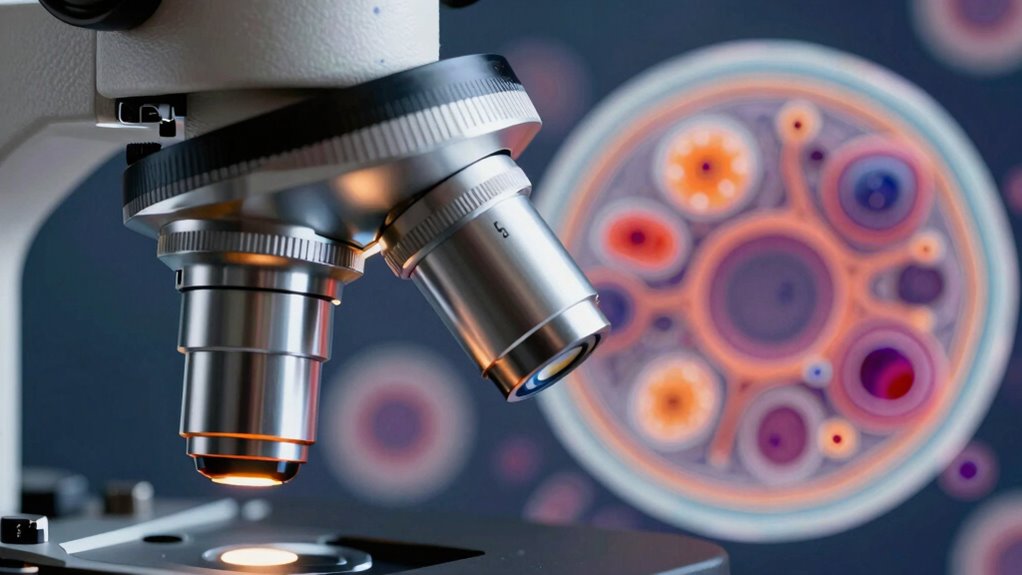
Many people assume that higher magnification automatically makes a microscope better, but that’s a misconception. While magnification can make tiny details appear larger, it doesn’t guarantee you’ll see them clearly. The real quality of a microscope depends on several factors, especially optical clarity and mechanical stability. Without these, increasing magnification only amplifies imperfections, making your observations less reliable and more frustrating.
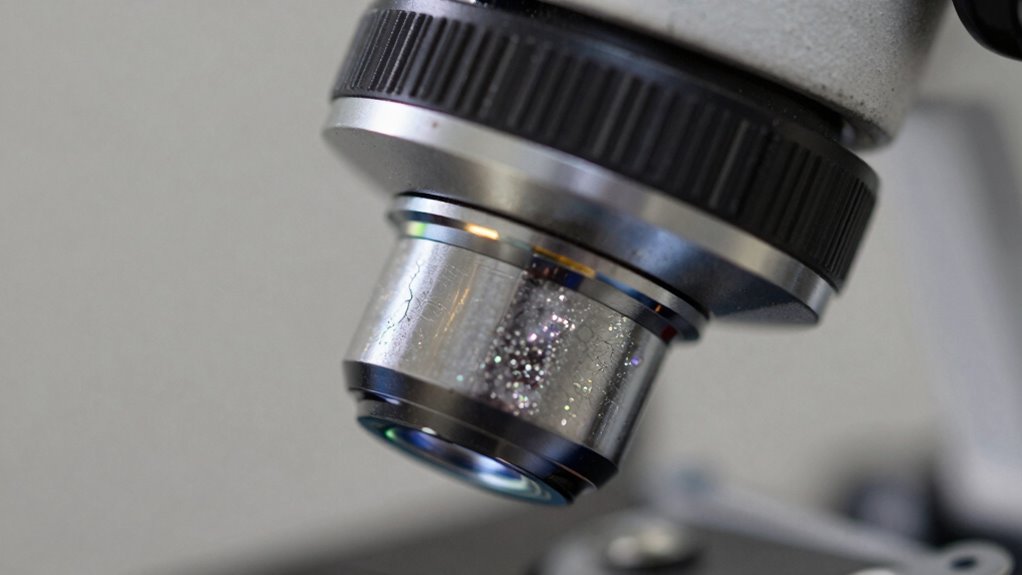
Optical clarity is critical because it determines how well you can distinguish fine details in your sample. Even at high magnifications, if the lenses are of poor quality or dirty, your view becomes blurry or distorted. A good microscope uses high-quality glass and precise lens coatings to minimize aberrations, ensuring that light passes through sharply and accurately. This optical precision is essential for revealing the true structure of what you’re observing, rather than just a magnified blur. When optical clarity is compromised, no amount of magnification will help, because you’ll be enlarging flawed images rather than revealing clarity.
Mechanical stability is equally important. If the microscope’s components aren’t steady, your image shifts or jitters, especially at high magnifications. Small vibrations or loose parts can ruin an otherwise excellent image. A stable base and well-designed focusing mechanisms are essential to keep the sample in a fixed position. When you’re trying to observe minute details, even the slightest movement causes blurring, forcing you to constantly refocus or accept a shaky view. Without mechanical stability, your ability to analyze samples accurately diminishes, regardless of how powerful the magnification is. Ensuring mechanical stability involves not only a sturdy frame but also precise adjustment controls that prevent unwanted shifts.
Furthermore, as you increase magnification, the depth of field decreases, meaning only a thin layer of your sample is in focus at any one time. Optical clarity helps you maximize this limited focus, but mechanical stability ensures that your focus remains steady. Together, they work to produce crisp, reliable images. If either is lacking, the image quality suffers—magnification becomes almost meaningless. High magnification without proper optical and mechanical support can even lead to eye strain or misinterpretations of what you’re seeing. Additionally, investing in optical components can significantly improve your viewing experience and accuracy.
In essence, a great microscope isn’t just about cranking up the magnification. It’s about the quality of the lenses and the stability of the entire structure. When these elements are in sync, you get sharp, clear, and stable images that truly reveal the details you’re after. Without them, higher magnification becomes a futile pursuit, providing no real advantage and possibly leading you astray in your observations.
high quality optical microscope lenses
As an affiliate, we earn on qualifying purchases.
As an affiliate, we earn on qualifying purchases.
Frequently Asked Questions
How Does Resolution Differ From Magnification?
Resolution differs from magnification because it’s about optical clarity and your ability to see fine image detail, not just making the image appear larger. When a microscope has high resolution, you can distinguish tiny structures clearly. Magnification enlarges the image but doesn’t improve clarity. If resolution is low, increasing magnification makes the image blurry, so you won’t see more detail, just a bigger, less sharp picture.
What Role Does Lighting Play in Microscopy?
Imagine trying to see through a foggy window—lighting is your best friend here. In microscopy, illumination techniques and light source quality are essential; they highlight details and contrast that magnification alone can’t reveal. Good lighting ensures your specimen is clear and vibrant, not a blurry ghost. Without proper illumination, even the most powerful lens becomes useless, like a flashlight in a blackout. So, light really makes or breaks your microscopic adventure.
Can a High Magnification Compensate for Poor Image Quality?
High magnification can’t compensate for poor image quality because optical clarity is essential for detailed observation. When image distortion occurs, enlarging the image only makes flaws more noticeable, reducing accuracy. You need a balance of appropriate magnification and high optical clarity to see fine details clearly. Without it, increasing magnification may give a bigger image but won’t improve the quality, leading to a less effective and misleading view of your specimen.
How Important Is the Quality of Lenses in Microscopy?
The quality of lenses is vital in microscopy because it directly impacts image clarity and detail. Good lenses have advanced lens coatings that reduce glare and enhance light transmission, providing sharper images. They also minimize optical aberrations like chromatic and spherical distortions, which can blur or distort the view. High-quality lenses guarantee you see fine details accurately, making your observations much more reliable and precise.
What Are Common Misconceptions About Microscope Capabilities?
Many people believe higher magnification always means better images, but that’s a misconception. User misconceptions often lead to expecting perfect clarity or revealing details that optical illusions can create, which isn’t true. You might think a microscope’s power alone guarantees better results, but without quality lenses and proper lighting, images can be blurry or misleading. Remember, effective microscopy depends on multiple factors, not just magnification.
mechanically stable microscope stand
As an affiliate, we earn on qualifying purchases.
As an affiliate, we earn on qualifying purchases.
Conclusion
Remember, bigger isn’t always better. Just like the saying goes, “It’s not the size of the dog in the fight, but the size of the fight in the dog.” When choosing a microscope, focus on quality, clarity, and proper illumination, not just high magnification. A good microscope reveals the details that matter, making your observations more meaningful. So, don’t chase numbers—aim for precision and a clear view. That’s what truly makes a better microscope.
professional microscope with high optical clarity
As an affiliate, we earn on qualifying purchases.
As an affiliate, we earn on qualifying purchases.
sturdy microscope with vibration reduction
As an affiliate, we earn on qualifying purchases.
As an affiliate, we earn on qualifying purchases.
Halloween Picks
halloween
As an affiliate, we earn on qualifying purchases.