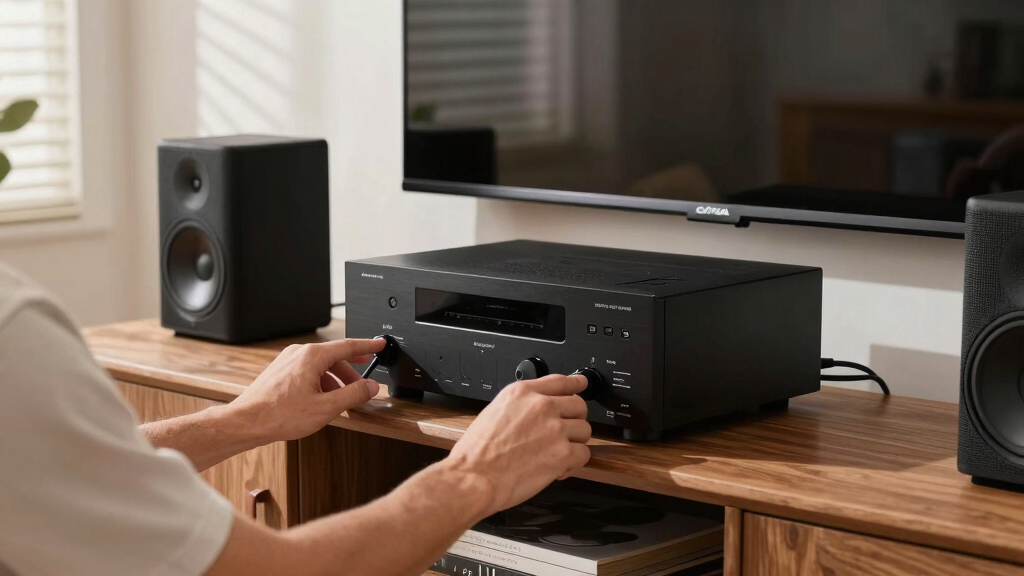

Choosing the best AV receiver for your home theater can be challenging with so many options offering different features and price points. The Denon AVR-X3800H stands out as the overall best due to its powerful processing and immersive audio support. For those on a budget, the Yamaha RX-V385 delivers solid performance at a lower price, while the Onkyo TX-RZ50 offers advanced features like Dirac Live calibration. The main tradeoffs involve balancing audio/video quality, ease of setup, and future-proofing with newer HDMI standards. Continue reading for a detailed breakdown of each model and help deciding what suits your home theater needs best.
Key Takeaways
- Top-tier models like the Denon AVR-X3800H excel in processing power and immersive sound formats, justifying higher prices.
- Budget options such as Yamaha RX-V385 provide reliable performance but may lack the latest HDMI features or multi-room capabilities.
- Future-proofing is key—look for HDMI 2.1 support and 8K compatibility if planning to upgrade screens soon.
- Ease of setup and user interface vary significantly; models with integrated calibration tend to be more beginner-friendly.
- Brands differ in their ecosystem features—Yamaha’s MusicCast and HEOS from Denon offer seamless multi-room audio, but compatibility with other systems varies.
| Yamaha RX-V385 5.1-Channel 4K Ultra HD AV Receiver with Bluetooth (Renewed) |  | Best for Budget-Conscious Home Theater Beginners | Channels: 5.1 | Video Support: 4K Ultra HD, HDR10, Dolby Vision, Hybrid Log-Gamma, BT.2020 | HDMI Inputs/Outputs: 4-in/1-out | VIEW LATEST PRICE | See Our Full Breakdown |
| Denon AVR-S570BT AV Receiver 5.2 Channel 8K Ultra HD Audio & Video | 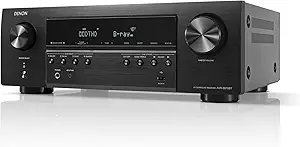 | Best Value for 8K Support and Future-Ready Features | Power: 70W x 5 | HDMI Inputs: 4 (8K HDMI 2.1) | HDMI Output: 1 | VIEW LATEST PRICE | See Our Full Breakdown |
| Denon AVR-X3800H 9.4-Ch 8K UHD Home Theater Receiver with Dolby Atmos, DTS:X, IMAX Enhanced & HEOS Multi-Room Streaming |  | Best for High-End, Immersive Home Theaters | Channels: 9.4 | Power per channel: 105W | HDMI ports: 9 (6 In/3 Out) | VIEW LATEST PRICE | See Our Full Breakdown |
| Sony STRDH590 5.2 Channel Surround Sound Home Theater Receiver |  | Best for Budget Virtual Surround Sound | Channel Count: 5.2 | Power Output: 725W | HDMI Inputs/Outputs: 4 in / 1 out | VIEW LATEST PRICE | See Our Full Breakdown |
| Onkyo TX-NR6100 7.2 Channel 8K Smart AV Receiver with THX Certification |  | Best for Gaming and High-Performance Home Theater | Channels: 7.2 | Resolution Support: 8K | HDMI Zones: 2 | VIEW LATEST PRICE | See Our Full Breakdown |
| Yamaha RX-V4A 5.2-Channel AV Receiver with MusicCast |  | Best Overall for Versatile Home Theater and Multi-Room Audio | Connectivity Technology: Wi-Fi, Bluetooth, AirPlay 2 | Controller Type: Amazon Alexa | Number of HDMI Ports: 5 | VIEW LATEST PRICE | See Our Full Breakdown |
| Sony STRDH190 2-Ch Home Stereo Receiver with Bluetooth and Phono Inputs (Black) |  | Best for Simple, High-Resolution Stereo Listening | Power Output: 100 watts x 2 (8 ohms, 1 kHz) | Inputs: Phono, 4 stereo RCA, 3.5mm | Connectivity: Bluetooth | VIEW LATEST PRICE | See Our Full Breakdown |
| Yamaha RX-V385 5.1-Channel 4K Ultra HD AV Receiver with Bluetooth |  | Best for Entry-Level Home Theater with 4K Support | Product Type: AV Receiver | Channels: 5.1 | Output Power: 100 Watts | VIEW LATEST PRICE | See Our Full Breakdown |
| Sony STR-AN1000 7.2 Channel Surround Sound Home Theater A/V Receiver with 8K HDMI, Dolby Atmos, DTS:X, Bluetooth, WiFi, Chromecast, AirPlay, and Google Assistant |  | Best for Future-Proof, Premium Surround Sound and Advanced Features | Channel Configuration: 7.2 | Power Output: 165 Watts | HDMI Ports: 6-in/2-out | VIEW LATEST PRICE | See Our Full Breakdown |
| Onkyo TX-RZ50 9.2-Channel AV Receiver with Dirac Live, THX Certification, and HDMI 2.1 |  | Best for High-End, Precise Room Calibration and Gaming | Channels: 9.2 | Power per Channel: 120 Watts | HDMI: HDMI 2.1 with 8K support | VIEW LATEST PRICE | See Our Full Breakdown |
| TX-NR7100 9.2-Channel THX Certified AV Receiver |  | Best Overall for Advanced Home Theater Enthusiasts | Channels: 9.2 | THX Certified: Yes | HDMI Out Options: 3 | VIEW LATEST PRICE | See Our Full Breakdown |
| Yamaha RX-V6A 7.2-Channel AV Receiver with MusicCast | 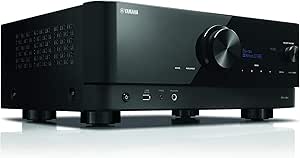 | Best for Versatile, Modern Home Theaters | Channels: 7.2 | HDMI Ports: 8 | Supported Resolutions: 4K60, 4K120, 8K60 | VIEW LATEST PRICE | See Our Full Breakdown |
| Denon AVR-X1700H 7.2 Channel AV Receiver – 80W/Channel, 8K HDMI, Dolby Atmos, DTS:X, Built-in HEOS, Alexa Voice Control |  | Best for Value-Conscious Users Needing Modern Features | Channels: 7.2 | Power per channel: 80W | HDMI Inputs: 3 | VIEW LATEST PRICE | See Our Full Breakdown |
More Details on Our Top Picks
Yamaha RX-V385 5.1-Channel 4K Ultra HD AV Receiver with Bluetooth (Renewed)
The Yamaha RX-V385 earns its spot as the best budget-friendly option for those new to home theater setups, especially because it supports the latest 4K Ultra HD and HDR formats, ensuring vibrant video quality. Its inclusion of Bluetooth allows for easy wireless audio streaming, which is a plus for casual users. The YPAO sound calibration simplifies setup by automatically optimizing audio for your room, making it accessible even for less tech-savvy buyers. Compared to the Denon AVR-S570BT, which offers 8K support and more HDMI inputs, the RX-V385 is less future-proof and has limited connections, but it excels at providing essential features at a lower cost. The main tradeoff is its refurbished condition and limited HDMI ports, which may hinder scalability in more complex systems. This pick makes the most sense for newcomers or those with modest home theater needs.
Pros:- Supports the latest 4K Ultra HD and HDR formats for high-quality video
- Includes Bluetooth for wireless audio streaming
- YPAO automatically optimizes sound for your room acoustics
Cons:- No detailed power output specifications provided
- Refurbished condition may affect long-term reliability
- Limited number of HDMI inputs may restrict device connections
Best for: Beginners or budget-conscious buyers setting up a basic 5.1 system in smaller rooms
Not ideal for: Enthusiasts wanting future-proofing with 8K support or extensive connectivity options
- Channels:5.1
- Video Support:4K Ultra HD, HDR10, Dolby Vision, Hybrid Log-Gamma, BT.2020
- HDMI Inputs/Outputs:4-in/1-out
- Connectivity:Bluetooth, HDMI
- Technology:CINEMA DSP, YPAO
- Power:Not specified
Bottom line: This is best suited for entry-level users seeking reliable basic home theater performance at an affordable price.
Denon AVR-S570BT AV Receiver 5.2 Channel 8K Ultra HD Audio & Video
The Denon AVR-S570BT stands out for offering 8K HDMI inputs at a very competitive price, making it an attractive choice for those wanting to future-proof their system without a hefty investment. Its 70W per channel may fall short for larger rooms or users seeking high-volume sound, but it compensates with ease of use, thanks to on-screen setup and a straightforward remote. Unlike the Yamaha RX-V385, which is more basic and limited in connectivity, the S570BT provides support for the latest HDR formats and gaming-friendly features like 4K/120Hz pass-through. However, its power output may not satisfy audiophiles or large spaces, and it lacks multi-zone audio capabilities. This receiver makes the most sense for users who want solid 4K/8K video support and wireless streaming without overspending.
Pros:- Supports 8K HDMI inputs for high-quality, future-proof video
- Built-in Bluetooth for wireless music streaming
- Easy on-screen setup and remote control for quick installation
Cons:- Limited to 70W per channel, possibly insufficient for large spaces
- No multi-zone audio support
- Requires compatible speakers for full surround sound
Best for: Home theater enthusiasts looking for a budget-friendly 8K-capable receiver with simple setup
Not ideal for: Large rooms or users needing multi-zone audio and higher power outputs
- Power:70W x 5
- HDMI Inputs:4 (8K HDMI 2.1)
- HDMI Output:1
- eARC:Yes
- Supported Video Formats:HDR, HLG, Dolby Vision, HDR10+
- Supported Audio Formats:DTS HD Master, Dolby TrueHD
Bottom line: Ideal for budget-conscious buyers wanting 8K support and simple operation in smaller to medium rooms.
Denon AVR-X3800H 9.4-Ch 8K UHD Home Theater Receiver with Dolby Atmos, DTS:X, IMAX Enhanced & HEOS Multi-Room Streaming
The Denon AVR-X3800H is a powerhouse tailored for serious home theater fans who demand immersive sound and cutting-edge video support. Its 9.4 channels and 105W per channel deliver robust audio capable of filling large rooms, and support for Dolby Atmos, DTS:X, and IMAX Enhanced ensures a cinematic experience. Its 8K/60Hz pass-through and multiple HDMI 2.1 ports position it ahead of the Yamaha RX-V385 and Denon AVR-S570BT, offering more bandwidth and future-proofing. The built-in HEOS multi-room streaming and Wi-Fi expand its versatility, but the complex setup could challenge beginners, and its high price reflects its premium feature set. This receiver is perfect for those with dedicated home theaters seeking top-tier sound and video quality with room for expansion.
Pros:- Supports advanced surround sound formats like Dolby Atmos and DTS:X
- 8K/60Hz pass-through for future video standards
- Multiple HDMI 2.1 ports supporting 4K/120Hz and 8K video
Cons:- Complex setup may be intimidating for less experienced users
- High price point limits accessibility
- Large size requires ample space
Best for: Aficionados creating a dedicated, high-end home theater with immersive audio and future-proof video needs
Not ideal for: Casual users or those with smaller systems who don’t need such advanced features
- Channels:9.4
- Power per channel:105W
- HDMI ports:9 (6 In/3 Out)
- HDMI support:8K & 4K/120Hz
- Supported formats:Dolby Atmos, DTS:X, IMAX Enhanced
- Connectivity:Bluetooth, Wi-Fi, HEOS
Bottom line: Best suited for serious home theater enthusiasts seeking top-tier sound and future-proof video support.
Sony STRDH590 5.2 Channel Surround Sound Home Theater Receiver
The Sony STRDH590 is a solid choice for those seeking virtual surround sound with minimal complexity, thanks to its S Force PRO technology that simulates immersive audio without additional speakers. It supports 4K HDR pass-through and multiple inputs, making it suitable for basic home theaters, especially in smaller rooms. Compared to the Yamaha RX-V385, which also offers 4K support, the Sony provides a higher power output at 725W total, though it’s spread across 5.2 channels, not 7.1 or above. The lack of built-in Wi-Fi and limited to a 5.2 configuration might restrict some setup options, but its simplicity makes it appealing for newcomers. It’s a good fit for those who prioritize virtual surround and basic 4K compatibility over advanced features.
Pros:- Delivers immersive virtual surround with S Force PRO technology
- Supports 4K HDR pass-through for high-quality video
- Bluetooth connectivity for wireless music
Cons:- Limited to 5.2 channels, not 7.1 or higher
- No built-in Wi-Fi or streaming services
- Complex setup for some users
Best for: Budget buyers wanting virtual surround sound in smaller rooms with straightforward setup
Not ideal for: Homeowners seeking 7.1 surround sound or integrated streaming services
- Channel Count:5.2
- Power Output:725W
- HDMI Inputs/Outputs:4 in / 1 out
- Supported Video:4K HDR, HDCP 2.2
- Connectivity:Bluetooth, Optical, Coaxial
- Frequency:1KHz
Bottom line: Perfect for budget-conscious users wanting virtual surround sound and simple 4K support in smaller spaces.
Onkyo TX-NR6100 7.2 Channel 8K Smart AV Receiver with THX Certification
The Onkyo TX-NR6100 caters to users looking for a premium gaming and home theater experience, with support for 8K resolution, Dolby Atmos, DTS:X, and THX certification ensuring high audio fidelity. Its 7.2 channels and 8K/60Hz pass-through make it a versatile choice for large rooms, outperforming the Sony STRDH190 in terms of power and features. Gamers benefit from 4K/120Hz, VRR, and ALLM support, while the Zone 2 HDMI extends multi-room capabilities. Although setup can be complex for beginners, the advanced features justify the higher price point. It’s an ideal pick for dedicated home theaters and gamers who require top-tier audio, video, and multi-room options in one device.
Pros:- Supports 8K resolution and 4K/120Hz gaming features
- THX certification guarantees high-quality sound
- Multi-room HDMI zones and seamless multi-room audio integration
Cons:- Setup complexity may be daunting for beginners
- Higher price reflects its premium feature set
- Requires compatible speakers for full surround sound
Best for: High-end home theater setups and gamers seeking premium audio and video with THX certification
Not ideal for: Casual users or those with smaller spaces who don’t need high-end gaming features
- Channels:7.2
- Resolution Support:8K
- HDMI Zones:2
- Gaming Features:4K/120Hz, VRR, ALLM
- Certification:THX
- Surround Sound:Dolby Atmos, DTS:X
Bottom line: Designed for serious enthusiasts seeking a combination of gaming-ready features and immersive home theater audio.
Yamaha RX-V4A 5.2-Channel AV Receiver with MusicCast
The Yamaha RX-V4A stands out as the most balanced option in this lineup, combining solid 5.2-channel surround sound with plenty of streaming options thanks to Wi-Fi, Bluetooth, and AirPlay 2. Its support for 4K and 8K HDMI pass-through makes it future-proof for high-quality video, while MusicCast enables multi-room audio, a feature that sets it apart from simpler receivers like the Sony STRDH190. However, its rich feature set can feel overwhelming for beginners, and with only 80 Watts per channel, it may not deliver enough power for large, demanding rooms. Compared to more advanced models like the Onkyo TX-RZ50, it offers fewer calibration options and less power, but it compensates with ease of use and affordability. This pick makes the most sense for users seeking a flexible, feature-rich receiver that supports both home theater and multi-room audio without a hefty price tag.
Pros:- Supports 4K and 8K HDMI pass-through for high-quality video
- Includes Wi-Fi, Bluetooth, and AirPlay 2 for flexible streaming
- Compatible with voice assistants like Alexa, Google, and Siri
- Features MusicCast for multi-room audio
Cons:- Complex setup with many features may be overwhelming for beginners
- Limited to 80 Watts output power per channel
- No built-in tuner for traditional radio
Best for: Homeowners who want a versatile receiver with streaming, multi-room support, and straightforward setup.
Not ideal for: Audiophiles seeking maximum power and detailed calibration, or those with very demanding large rooms.
- Connectivity Technology:Wi-Fi, Bluetooth, AirPlay 2
- Controller Type:Amazon Alexa
- Number of HDMI Ports:5
- Audio Encoding:DTS
- Surround Sound Channel Configuration:5.2
- Output Power:80 Watts
Bottom line: Ideal for users who want a well-rounded, future-ready home theater receiver with multi-room capabilities.
Sony STRDH190 2-Ch Home Stereo Receiver with Bluetooth and Phono Inputs (Black)
The Sony STRDH190 is tailored for those who prioritize straightforward stereo sound with modern convenience. Its 2-channel design emphasizes quality audio for music lovers, especially with Bluetooth streaming and dedicated phono input for turntables—features that make it a favorite among vinyl enthusiasts. Unlike multi-channel receivers like the Yamaha RX-V385, it lacks surround sound support, but this makes it much easier to set up and operate. Its compact size fits easily into tight spaces, and A/B speaker switching offers flexible speaker placement options. The key tradeoff is its limited functionality; it cannot handle home theater configurations or multi-room streaming. This makes it perfect for a dedicated stereo setup in a small room, but unsuitable for those wanting immersive surround sound or complex audio setups.
Pros:- Wireless Bluetooth streaming for convenience
- Multiple inputs including phono for turntables
- Compact, low-profile design fits into standard AV cabinets
- A/B speaker switching allows flexible setup
Cons:- Limited to 2-channel stereo sound
- No built-in Wi-Fi or multi-room support
- Basic display and interface may lack advanced features
Best for: Music enthusiasts or vinyl collectors seeking high-quality stereo sound in a compact form.
Not ideal for: Home theater fans wanting multi-channel surround sound or integrated multi-room streaming.
- Power Output:100 watts x 2 (8 ohms, 1 kHz)
- Inputs:Phono, 4 stereo RCA, 3.5mm
- Connectivity:Bluetooth
- Dimensions:5 ¼ inches tall
- Speaker Impedance:6–16 ohms
- Power Requirement:AC 120 V 60 Hz
Bottom line: Best suited for users who want high-resolution stereo sound with minimal fuss and a vintage touch.
Yamaha RX-V385 5.1-Channel 4K Ultra HD AV Receiver with Bluetooth
The Yamaha RX-V385 offers a reliable entry point into home theater with a solid 5.1 surround sound setup. Its support for 4K Ultra HD, HDR10, and Dolby Vision ensures crisp, vibrant video quality, while auto-calibration simplifies setup—an advantage over less advanced models like the Sony STRDH590. With 100 Watts per channel, it provides enough power for most medium-sized rooms. The built-in Bluetooth adds wireless streaming, but it lacks Wi-Fi or multi-room functions, which limits its flexibility compared to more sophisticated models like the Onkyo TX-RZ50. The remote and interface are basic, making it less appealing for tech-savvy users seeking advanced calibration or streaming options. This model makes a strong case for newcomers or those on a budget who want decent performance without bells and whistles.
Pros:- Supports 4K Ultra HD with HDR and Dolby Vision
- Built-in Bluetooth for wireless audio
- Auto-calibration technology for easy setup
Cons:- Limited to 5.1 channels, not suitable for larger setups
- No Wi-Fi connectivity
- Basic remote control and interface
Best for: First-time home theater buyers or budget-conscious users seeking quality 4K support and simple operation.
Not ideal for: Users wanting multi-room audio, Wi-Fi streaming, or high-end calibration features.
- Product Type:AV Receiver
- Channels:5.1
- Output Power:100 Watts
- HDMI Ports:4
- Supported Video:4K Ultra HD, HDR10, Dolby Vision
- Connectivity:Bluetooth
Bottom line: Great for beginners needing reliable 4K support in a straightforward, affordable package.
Sony STR-AN1000 7.2 Channel Surround Sound Home Theater A/V Receiver with 8K HDMI, Dolby Atmos, DTS:X, Bluetooth, WiFi, Chromecast, AirPlay, and Google Assistant
The Sony STR-AN1000 is designed to meet the needs of serious home theater enthusiasts seeking immersive audio and cutting-edge video support. Its 7.2 channels, Dolby Atmos, and DTS:X deliver a compelling surround experience, especially compared with 5.1 models like the Yamaha RX-V385. The inclusion of 8K HDMI support future-proofs the setup, while Chromecast, AirPlay, and voice control options expand streaming flexibility. Its high power output of 165 Watts per channel ensures ample volume and dynamic sound. However, its complex feature set can be daunting for less experienced users, and the high price reflects its premium nature. For those looking for a comprehensive, high-performance receiver capable of handling large rooms and advanced audio formats, this model is an excellent choice.
Pros:- Supports Dolby Atmos and DTS:X for immersive sound
- 8K HDMI support for future-proofing
- Multiple streaming options including Chromecast, AirPlay, and Spotify Connect
- Graphical setup interface and multi-zone capability
Cons:- High power consumption at 240W
- Complex features may require technical knowledge
- Premium price point
Best for: Home theater aficionados wanting immersive sound with the latest video standards and multi-zone streaming.
Not ideal for: Casual users or those who prefer simple, plug-and-play solutions without extensive configuration.
- Channel Configuration:7.2
- Power Output:165 Watts
- HDMI Ports:6-in/2-out
- Supported Formats:Dolby Atmos, DTS:X
- Connectivity:Bluetooth, Wi-Fi, Chromecast, AirPlay
- Power Consumption:240W
Bottom line: Ideal for advanced users demanding high surround sound, future-proof video, and extensive streaming options.
Onkyo TX-RZ50 9.2-Channel AV Receiver with Dirac Live, THX Certification, and HDMI 2.1
The Onkyo TX-RZ50 is a powerhouse tailored for demanding home theater setups, combining 9.2 channels with Dirac Live calibration for precise sound tuning, a feature missing in many competitors like the Yamaha RX-V4A. Its HDMI 2.1 support with 8K and 4K/120Hz makes it future-ready for high-end gaming and ultra-high-definition content. The inclusion of THX certification underscores its quality standards, and its multi-zone support offers expanded flexibility. The main tradeoff is its complexity—setting up Dirac calibration and managing so many channels can be overwhelming for less experienced users. Additionally, its higher price point makes it less appealing for casual users. This receiver is best suited for audiophiles and cinephiles who want top-tier sound, advanced calibration, and a full suite of modern video features.
Pros:- Advanced Dirac Live room calibration for precise sound
- Supports HDMI 2.1 with 8K and 4K/120Hz
- Compatible with Sonos for multi-room audio
- High channel count (9.2) for immersive surround
Cons:- Complex setup requiring technical knowledge
- Higher price for advanced features
- Additional microphones needed for calibration (not included)
Best for: Home theater enthusiasts seeking premium sound calibration, high channel count, and gaming support.
Not ideal for: Users wanting a straightforward plug-and-play experience or with limited technical knowledge.
- Channels:9.2
- Power per Channel:120 Watts
- HDMI:HDMI 2.1 with 8K support
- Processing Channels:11.2
- Supports:Dolby Atmos, DTS:X
- Calibration:Dirac Live
Bottom line: Best suited for advanced users prioritizing precise sound calibration, high channel count, and future-proof video features.
TX-NR7100 9.2-Channel THX Certified AV Receiver
The Onkyo TX-NR7100 stands out for its robust 9.2-channel configuration and built-in Dirac Live room calibration, delivering precise sound that surpasses many 7.2 models like the Yamaha RX-V6A. Its support for 8K HDMI with 40 Gbps transfer rate future-proofs your setup for high-resolution content, making it ideal for those who want the latest in video tech. Compared to the Denon AVR-X1700H, it offers more HDMI outputs and zone capabilities, but comes with a steeper learning curve and higher price. This model is best suited for power users who crave immersive, customizable sound and are comfortable with complex setups, or who plan to integrate multi-room audio with Sonos systems. However, its sophisticated features and price may overwhelm entry-level users or those with simpler needs.
Pros:- Advanced Dirac Live room correction for precise sound calibration
- Supports 8K HDMI with high bandwidth for future content
- Multiple HDMI outputs and zone controls for flexible installation
- Compatibility with Sonos for integrated multi-room audio
Cons:- Complex setup requiring technical knowledge
- Higher price point may be prohibitive for some
- Some features need extra peripherals or app configuration
Best for: Home theater enthusiasts seeking a premium, future-proof, multi-room capable receiver with advanced calibration.
Not ideal for: Casual viewers or budget-conscious buyers who prefer straightforward, plug-and-play options without extensive setup.
- Channels:9.2
- THX Certified:Yes
- HDMI Out Options:3
- HDMI Transfer Rate:40 Gbps
- 8K Support:Yes
- Room Correction:Dirac Live
Bottom line: This receiver is best for dedicated home theater fans who want top-tier audio calibration and future-ready video support.
Yamaha RX-V6A 7.2-Channel AV Receiver with MusicCast
The Yamaha RX-V6A makes a compelling case for those wanting a balance of high performance and ease of use, especially with its support for 8K and 4K120 video. Its versatile connectivity—including Wi-Fi, Bluetooth, AirPlay 2, and voice control—sets it apart from more basic models like the Sony STRDH590, providing seamless integration with smart home systems. While it offers Dolby Atmos and DTS:X for immersive sound, its 7.2 channels may fall short for those wanting the extra overhead speakers that a 9.2 setup provides. Compared with the Denon AVR-X1700H, it offers more HDMI ports and better integration with voice assistants, but its larger size means it needs significant space. It’s perfect for users who want a sophisticated, connected experience with flexible audio options and are comfortable with a somewhat complex setup.
Pros:- Supports Dolby Atmos and DTS:X for immersive sound
- Multiple HDMI ports with 8K and 4K120 support
- Built-in Wi-Fi, Bluetooth, and AirPlay 2 for seamless streaming
- Voice control compatibility with Alexa, Google, and Siri
Cons:- Setup can be complex for less experienced users
- Larger footprint requires ample space
- Price may be high for casual users
Best for: Tech-savvy home theater lovers who want versatile connectivity and smart integration in a stylish package.
Not ideal for: Beginners or those with limited space, as its size and setup complexity may be challenging.
- Channels:7.2
- HDMI Ports:8
- Supported Resolutions:4K60, 4K120, 8K60
- Audio Formats:Dolby Atmos, DTS:X
- Connectivity:Wi-Fi, Bluetooth, AirPlay 2
- Voice Control:Yes
Bottom line: Ideal for users wanting a feature-rich, stylish receiver that supports the latest in video and audio formats with smart home integration.
Denon AVR-X1700H 7.2 Channel AV Receiver – 80W/Channel, 8K HDMI, Dolby Atmos, DTS:X, Built-in HEOS, Alexa Voice Control
The Denon AVR-X1700H balances performance and affordability, offering 8K HDMI support and Dolby Atmos for an immersive experience, unlike the more premium Onkyo TX-NR7100, which includes additional zones and more channels. Its seamless voice control and built-in HEOS multi-room streaming make it easier for casual users to enjoy multi-room audio without extra purchases. While it supports multiple 8K inputs, its three HDMI ports might limit extensive device connections compared to larger models like the Yamaha RX-V6A. The setup is straightforward with clear on-screen guidance, but the limited number of HDMI inputs could be restrictive for users with many devices. This receiver suits those seeking modern features at a more accessible price point, with enough power for most home theaters.
Pros:- Supports 8K HDMI with pass-through and upscaling
- Dolby Atmos and DTS:X for immersive audio
- Built-in HEOS for multi-room streaming
- Easy setup with visual on-screen guide
Cons:- Limited to 3 HDMI inputs, restricting device connections
- Lower power output per channel compared to higher-end models
- No advanced room calibration features like Dirac Live
Best for: Budget-conscious home theater owners who want reliable 8K support and multi-room streaming without unnecessary complexity.
Not ideal for: Power users or large setups requiring numerous HDMI inputs or extensive channel configurations.
- Channels:7.2
- Power per channel:80W
- HDMI Inputs:3
- Supports:8K HDMI, Dolby Atmos, DTS:X
- Streaming Services:Spotify, Pandora, Amazon Music HD
- Voice Control:Yes
Bottom line: This receiver is best suited for those seeking modern 8K video support and multi-room streaming on a budget with straightforward setup.
How We Picked
These AV receivers were selected based on a combination of performance, build quality, feature set, and value for money. Priority was given to models supporting the latest HDMI standards like 8K and HDMI 2.1, ensuring future compatibility. Ease of setup and user interface were also critical, as a complicated setup can deter less experienced users. We balanced high-end features such as Dolby Atmos, DTS:X, and multi-room streaming against affordability, making sure there are options for different budgets. The ranking reflects a mix of overall performance, versatility, and buyer appeal for home theater enthusiasts and casual users alike.Factors to Consider When Choosing Best Av Receivers For Home Theater
When selecting the best AV receiver for your home theater, it’s essential to consider several key factors that affect your overall experience and future-proofing. Understanding these considerations can help you avoid common pitfalls, such as buying a model with insufficient power or outdated HDMI ports, which can limit your setup’s capabilities.Power and Channels
Matching the receiver’s power output and channel count to your speaker setup is fundamental. A 5.1 setup needs at least 50W per channel, while larger configurations with Atmos or multiple zones demand more power and channels. Underpowered units can struggle to drive speakers effectively, leading to weak or distorted sound, especially at higher volumes. Conversely, over-specifying can be unnecessary and inflate costs. Consider your room size, speaker wattage ratings, and whether multi-zone audio is a priority to choose the right balance.
HDMI and Video Features
Support for HDMI 2.1 and 8K passthrough is increasingly important as displays and content evolve. These features ensure compatibility with the latest gaming consoles, streaming devices, and future display upgrades. A receiver lacking HDMI 2.1 may become obsolete quickly, limiting your ability to enjoy high-resolution content. It’s also wise to check for HDCP 2.3 support for copy protection. Investing in a model with robust video features can save money on future upgrades and enhance your overall viewing experience.
Audio Formats and Processing
For immersive sound, look for support of Dolby Atmos, DTS:X, and IMAX Enhanced. These formats add height and surround effects that elevate your home theater experience. Not all receivers handle these formats equally; some may only process basic surround sound. If you want the most realistic audio, prioritize models with dedicated processing for Atmos and DTS:X, and consider whether they support latest codecs for streaming or gaming. This choice influences how well your setup can deliver cinematic audio quality.
Usability and Setup
An intuitive interface and calibration system simplify the setup process. Many models now include automatic room calibration, which adjusts sound based on room acoustics—an invaluable feature for beginners. However, some units require more manual configuration, which can be frustrating if you’re unfamiliar with AV gear. Also consider the remote control quality and app support, as these can significantly impact everyday usability. Prioritize models with clear menus and reliable calibration tools for a smoother experience.
Budget and Future-Proofing
Balancing your current needs with future upgrades is key. While budget models can suffice for basic setups, investing a bit more often grants access to newer HDMI standards, higher power, and better processing. Consider how long you plan to keep the receiver and whether features like 8K support or multi-room audio are worth the extra cost. Remember, a more capable receiver can extend the lifespan of your home theater system, saving money in the long run.
Frequently Asked Questions
Will my existing speakers work with a new AV receiver?
Most speakers are compatible with modern AV receivers, provided the impedance and power ratings match. Check the speaker impedance (usually 8 ohms) and ensure the receiver supports that load. Also, verify that the receiver has enough channels for your speaker setup. Upgrading to a more powerful receiver can improve sound quality, but mismatched impedance or insufficient power can cause distortion or damage. If in doubt, consult your speaker specifications and the receiver’s manual before purchasing.
Is HDMI 2.1 really necessary for home theater use?
HDMI 2.1 offers several benefits, including support for 8K content, higher frame rates, and variable refresh rates, which are especially relevant for gaming and future media. If you plan to upgrade your display or stream high-resolution content, choosing a receiver with HDMI 2.1 ensures compatibility and better performance. However, for standard HD or 4K streaming, HDMI 2.0 models still work fine. Prioritize HDMI 2.1 if you want a more future-proof setup and plan to upgrade your equipment soon.
How important is multi-room audio support in an AV receiver?
Multi-room audio allows you to stream music to different zones in your house, adding flexibility and convenience. If you value playing different content in separate rooms or want synchronized multi-room sound, choosing a receiver with built-in multi-room support like HEOS or MusicCast is beneficial. However, this feature often adds to the cost and complexity. For simple setups focused solely on your home theater room, multi-room support may be less critical, and you can consider streaming devices instead.
Can I upgrade my AV receiver later if I want more features?
Yes, upgrading your AV receiver later is possible, but it’s best to plan for compatibility with your current setup. Look for receivers with features you might want in the future, such as HDMI 2.1, 8K support, and more channels. Consider the size and connections of your existing speakers and displays to ensure the new receiver will fit seamlessly. Upgrading later can be straightforward, but compatibility and matching features will influence your overall satisfaction with the transition.
What’s the difference between a stereo and a home theater receiver?
A stereo receiver is designed primarily for two-channel music listening and often offers simpler controls. In contrast, a home theater receiver supports multiple surround sound channels like Dolby Atmos and DTS:X, along with more advanced video switching and network features. For a dedicated home theater experience, a multi-channel AV receiver provides immersive sound and better integration with modern media. If your focus is mostly music or basic TV audio, a stereo receiver might suffice, but for cinematic sound, an AV receiver is the better choice.
Conclusion
For those seeking the best overall performance, the Denon AVR-X3800H stands out as a versatile and future-proof choice. Budget-conscious buyers will appreciate the reliability of the Yamaha RX-V385, offering solid features at a lower price. If premium features and top-tier processing are your priorities, the Onkyo TX-RZ50 delivers advanced calibration and HDMI 2.1 support. Beginners or casual viewers should lean toward models with automatic calibration and user-friendly interfaces, like the Sony STRDH590. Ultimately, your choice depends on your budget, desired features, and how much you value future compatibility or ease of use—consider these factors carefully to find your perfect home theater centerpiece.