
TL;DR

Prime made for students and young adults
- Fast, free delivery for dorm and study essentials
- Prime Video and Amazon Music included
- Member-only deals
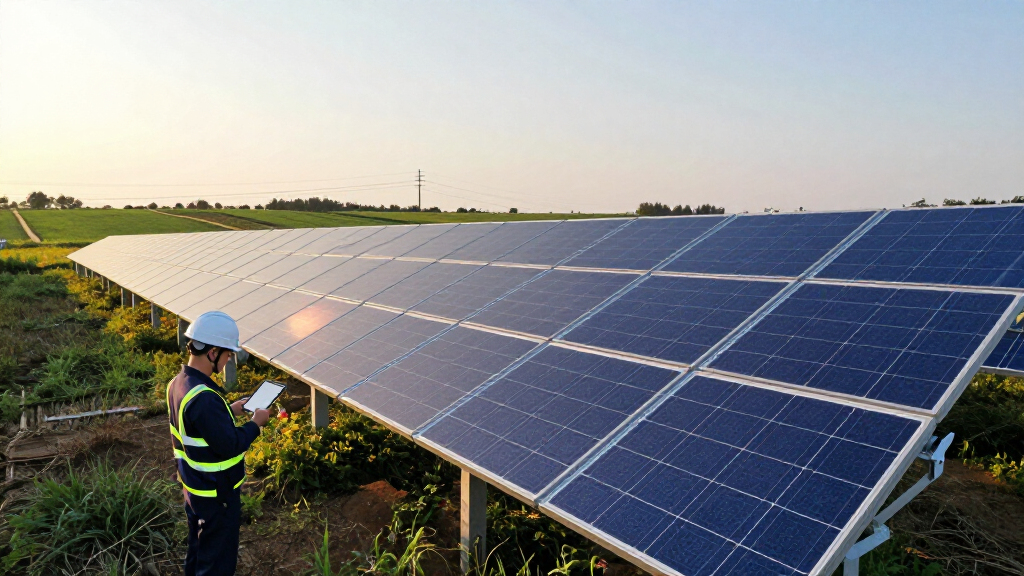
Global solar electricity generation exceeded nuclear generation in 2025 for the first time, according to the World Nuclear Industry Status Report 2026. The report says solar and wind each generated more electricity than nuclear in every month from March 2025 through June 2026, while nuclear output grew modestly and its share of global electricity fell.
Solar generated more electricity than nuclear power globally in 2025 for the first time, according to the World Nuclear Industry Status Report (WNISR) 2026. The report links the shift to rapid growth in solar generation, which rose 30% during the year, compared with a 1.1% increase in nuclear output.
The report says the monthly crossover came before the annual one: wind generation exceeded nuclear in March 2025, followed by solar in April. From March 2025 through June 2026, either solar or wind individually generated more electricity than nuclear each month. In March, April and May 2026, both sources separately outgenerated nuclear.
Capacity figures also show different growth rates. WNISR estimates global solar capacity added 510 gigawatts in 2025, reaching 2,383 GW, while wind added a record 159 GW to reach 1,291 GW. Installed nuclear capacity rose by 1.5 GW to 399.5 GW, although operating nuclear capacity declined by 0.5 GW to 368.6 GW, according to the report.
The report’s solar additions estimate is conservative compared with another source cited by pv magazine: IEA PVPS data put 2025 global photovoltaic additions at about 690 GW, roughly 180 GW above WNISR’s figure. The two estimates use different data sources; the article says the higher figure would imply a wider solar capacity gap, but it does not change the report’s central generation finding.
Renewables Pull Further Ahead
The crossover marks a change in the balance of global electricity generation, but it does not mean nuclear output fell worldwide in 2025. According to WNISR, nuclear generation rose 1.1%, while solar grew far more quickly. Solar’s annual output passed nuclear because the two sources expanded at substantially different rates.
The shift also matters for power systems. Solar and wind production varies with weather and time of day, and the report points to grid-scale batteries as one way to help manage that variability. It records 104 GW, or 257 gigawatt-hours, of battery storage connected in 2025, with more than 78% of cumulative battery energy storage capacity installed between 2023 and 2025. The figures show rapid deployment; they do not establish how much storage is needed in each grid or how reliably it will meet local demand.
For nuclear, the report’s figures point to a sector growing slowly in most regions. Nuclear’s share of global electricity fell to 8.8% in 2025, its lowest level in four and a half decades, while generation outside China edged down 0.2%. These comparisons describe recent output and capacity, not the future performance of either technology.
As an affiliate, we earn on qualifying purchases.
How the Generation Gap Emerged
WNISR 2026, overseen by French nuclear energy consultant Mycle Schneider, assesses nuclear power’s status alongside developments in other energy sources. It reports that solar and wind capacity grew rapidly in 2025, while global nuclear capacity has remained broadly flat for more than 25 years. Its figures distinguish installed nuclear capacity from operating capacity, which are not interchangeable measures.
The report counted 411 operating reactors in 31 countries as of July 1, 2026, excluding 30 units in long-term outage. Nuclear plants generated 2,703 terawatt-hours in 2025. China’s nuclear generation rose 7.6%; outside China, it declined 0.2% and remained below its 2006 level. Four reactors began supplying electricity in 2025 and seven closed, producing a negative annual reactor balance.
There is also a substantial construction pipeline: 73 reactors were under construction as of July 1, 2026, the highest number since 1987, with China accounting for 37. However, the report says none of the 16 reactors connected to the grid during 2023–25 finished on schedule; their average construction period was 10.9 years. Those figures help explain the report’s contrast between quickly expanding renewable capacity and slower nuclear project delivery.
“The reality of the nuclear industry on the ground is quite sobering for those who expected to find a booming sector.”
— Mycle Schneider, WNISR overseer, speaking to pv magazine
solar panel battery storage system
As an affiliate, we earn on qualifying purchases.
As an affiliate, we earn on qualifying purchases.
Limits of the Reported Figures
The figures are estimates compiled from separate data sources, and WNISR’s solar capacity addition estimate is lower than the IEA PVPS figure cited by pv magazine. The source material does not provide a full reconciliation of the methodologies behind those estimates. The reported annual generation crossover is attributed to WNISR; readers should not treat capacity additions and electricity generation as the same measure.
The report documents the generation comparison through June 2026, but the supplied material does not give monthly generation totals or explain how the figures may be revised. It also cannot establish from these data alone whether recent growth rates will continue. Nuclear construction plans, project completion dates and future renewable output remain subject to change.
As an affiliate, we earn on qualifying purchases.
Tracking Output and New Projects
The next useful benchmarks will be updated global generation figures and later annual reports showing whether solar continues to outproduce nuclear, and how the monthly comparison develops. Further reporting will also be needed to compare the underlying generation datasets and clarify differences in capacity estimates.
For nuclear, attention will remain on whether reactors listed as under construction enter service on schedule and whether planned projects translate into operating capacity. For renewables, battery deployment and grid integration will be relevant to how much variable solar and wind generation power systems can accommodate. The report provides current figures, but does not settle those future outcomes.
As an affiliate, we earn on qualifying purchases.
Key Questions
When did solar power surpass nuclear generation?
According to WNISR 2026, solar first generated more electricity than nuclear in a monthly comparison in April 2025. It then exceeded nuclear for the full year of 2025.
Did nuclear electricity generation decline in 2025?
No. The report says global nuclear generation increased 1.1% in 2025 to 2,703 terawatt-hours. Output outside China declined 0.2%, while China’s rose 7.6%.
How much solar capacity was added in 2025?
WNISR estimates that solar capacity increased by 510 GW to 2,383 GW. IEA PVPS data cited by pv magazine put global photovoltaic additions at about 690 GW, illustrating a difference between the estimates.
Does the crossover mean solar has replaced nuclear?
No. The report compares electricity generation and shows that solar exceeded nuclear in 2025; it does not say nuclear power has been replaced. Nuclear generated 2,703 TWh that year and supplied 8.8% of global electricity, according to WNISR.
Source: hn
Halloween Picks
halloween
As an affiliate, we earn on qualifying purchases.