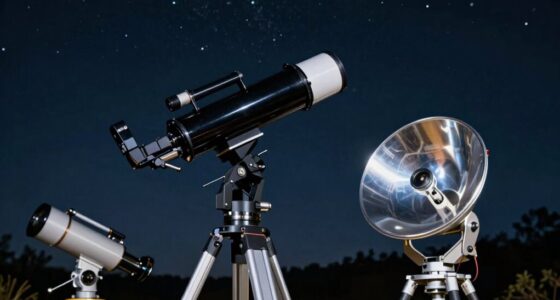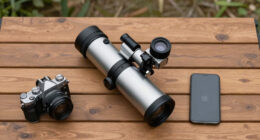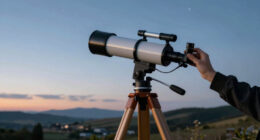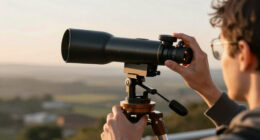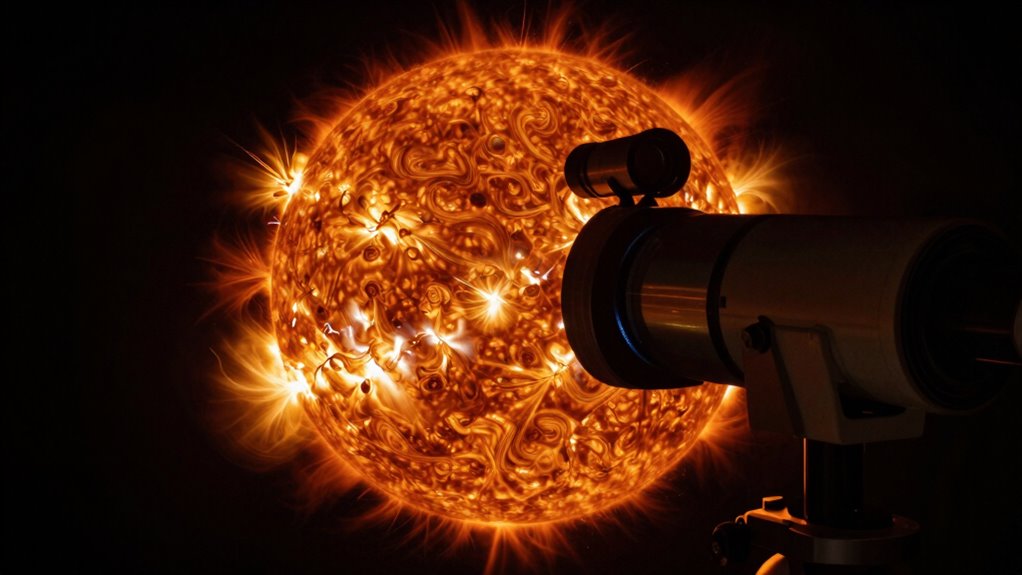
To safely observe the Sun with a solar telescope, you’ll rely on specialized filters, advanced optics, and real-time image correction. These filters block harmful rays and reduce glare, protecting your eyes and equipment from damage. The telescopes also use high-resolution detectors to capture detailed solar features like sunspots and flares without risking harm. If you want to discover more about the innovative techniques behind safe solar observation, keep exploring this fascinating subject.
Key Takeaways
- Use specialized filters, such as solar filters, to block harmful sunlight and reduce glare during observation.
- Incorporate advanced optics and adaptive technology to protect instruments and enhance image safety.
- Employ real-time image correction methods to ensure clear and safe viewing of solar features.
- Utilize ultraviolet imaging and high-energy sensors to observe the Sun without direct, unsafe exposure.
- Follow strict safety protocols and equipment standards to prevent eye and instrument damage during solar observation.
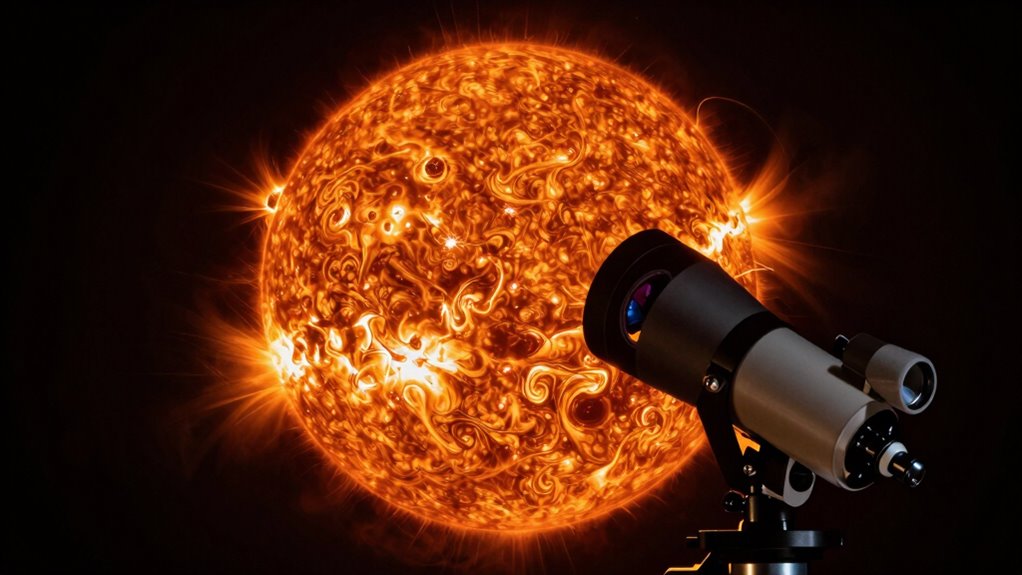
Solar telescopes allow us to observe the Sun in incredible detail, but doing so safely requires specialized equipment and techniques. Unlike regular telescopes, which simply gather visible light, solar telescopes are designed to handle the intense brightness and energy emitted by the Sun. They use advanced filters and optics to protect your eyes and instruments from damage. These filters reduce the Sun’s glare to safe levels while allowing detailed observation of solar features, such as sunspots, prominences, and solar flares. When it comes to solar flare monitoring, these specialized telescopes are indispensable. Solar flares are sudden, intense bursts of radiation caused by magnetic activity, and tracking them is crucial for understanding space weather that can impact satellites, communication systems, and power grids on Earth. By using dedicated solar telescopes equipped with high-resolution detectors, you can observe the development and progression of flares in real time, helping scientists better predict their effects.
Ultraviolet imaging plays a vital role in solar observations, especially because much of the Sun’s activity occurs outside the visible spectrum. Ultraviolet light reveals the Sun’s outer atmosphere, or corona, which is far hotter than the surface below. Solar telescopes fitted with ultraviolet filters and sensors capture this high-energy radiation, providing insights into phenomena that are invisible to the naked eye. When you use ultraviolet imaging, you can see the intricate structures of solar prominences and coronal loops, giving you a deeper understanding of the Sun’s magnetic field interactions. These observations are essential for monitoring solar activity that could lead to geomagnetic storms affecting Earth. Understanding the solar magnetic field is crucial for predicting space weather and protecting our technological infrastructure. Advances in adaptive optics also help counteract atmospheric distortion, ensuring clearer images of the Sun’s dynamic features. Additionally, innovative filtering techniques are continually developed to improve safety and image quality during solar observations, including real-time image correction methods that enhance clarity during live feeds. Incorporating spectroscopic analysis further enhances our ability to analyze solar phenomena with greater precision and detail.

Celestron 94243 EclipSmart Solar Eclipse Telescope Filter – ISO 12312-2 Compliant, Secure Fit with Solar Safe Film, Works with 6” Schmidt-Cassegrain Telescopes, Black
SOLAR SAFE TELESCOPE FILTER: Filter conforms to the ISO 12312-2:2015(E) international safety standard for filters directly viewing the…
As an affiliate, we earn on qualifying purchases.
As an affiliate, we earn on qualifying purchases.
Frequently Asked Questions
Can I Use Regular Telescopes to Observe the Sun Safely?
You shouldn’t use regular telescopes to observe the sun safely. Without proper eye protection, you risk severe eye damage or blindness. Always add a certified solar filter designed for solar viewing to your telescope, and never look through it without protection. Solar filters reduce the sun’s intensity and block harmful rays, ensuring safe observation. Never use makeshift filters like sunglasses, as they don’t provide adequate eye protection.
How Do Solar Telescopes Prevent Eye Damage During Observations?
Solar telescopes prevent eye damage through spectral filtering and safety precautions. They use special filters to block harmful wavelengths, especially intense visible and infrared light, ensuring only safe light reaches your eyes. Safety precautions include built-in filters, secure mounting, and proper use guidelines. These measures protect you from solar radiation, allowing you to observe the sun’s surface details safely without risking eye injury or damage.
Are Solar Filters Necessary for Viewing All Types of Solar Phenomena?
Honestly, solar filters are essential for viewing most solar phenomena, and yes, they’re necessary. Without proper solar filter requirements, your view might be as blurry as a Renaissance painter’s first sketches. These filters guarantee safe observation, revealing detailed solar features like sunspots and prominences. For different phenomena, the right solar filter enhances visibility, preventing eye damage while providing a clear and detailed view of the Sun’s dynamic surface.
What Is the Maximum Duration for Safe Solar Observation?
You should limit your safe solar observation to around 5 minutes at a time, especially when viewing solar flares or sunspots. Prolonged exposure, even through solar filters, can risk damaging your eyes. Take breaks, and always use approved solar viewing equipment. Remember, solar flares and sunspots indicate active solar phenomena; observing them safely helps you enjoy these dynamic features without risking your eyesight.
Can Solar Telescopes Be Used for Daytime Astronomy Beyond the Sun?
Solar telescopes are primarily designed for solar observation, but you can use them for daytime astronomy beyond the Sun with caution. They can reveal details about solar flares and sunspot activity, acting like a window into the Sun’s dynamic surface. However, their filters prevent viewing other celestial objects safely. For broader daytime astronomy, specialized telescopes are better suited, ensuring safety while exploring the sky’s daytime secrets.

Generic FAB Astra Solar Finder Scope – Precision Sun Locator Tool for Telescopes – Astrophotography Accessory
Effortlessly locate the sun with precision using the FAB Astra Solar Finder.
As an affiliate, we earn on qualifying purchases.
As an affiliate, we earn on qualifying purchases.
Conclusion
Now that you know the safety secrets behind solar telescopes, imagine what incredible images you could witness—if you dare to look directly at the sun. But beware: one wrong move could mean missing out or worse. Are you ready to explore the sun’s mysteries safely? The universe is waiting, and with the right precautions, you’ll be amazed at what you might see—just don’t forget, safety comes first. The sun’s secrets are yours to uncover… but only if you’re prepared.
Generic FAB Astra Solar Finder Scope – Precision Sun Locator Tool for Telescopes – Astrophotography Accessory
Effortlessly locate the sun with precision using the FAB Astra Solar Finder.
As an affiliate, we earn on qualifying purchases.
As an affiliate, we earn on qualifying purchases.

May's Great North American Solar Eclipse / How Many Stars Can You See? / Exploring Virgo's Galaxies / Solar Eclipses That Changed the World / Adaptive Optics: Straightening Starlight (Sky & Telescope, Volume 87, Number 5, May 1994)
As an affiliate, we earn on qualifying purchases.
As an affiliate, we earn on qualifying purchases.