
TL;DR

Prime made for students and young adults
- Fast, free delivery for dorm and study essentials
- Prime Video and Amazon Music included
- Member-only deals
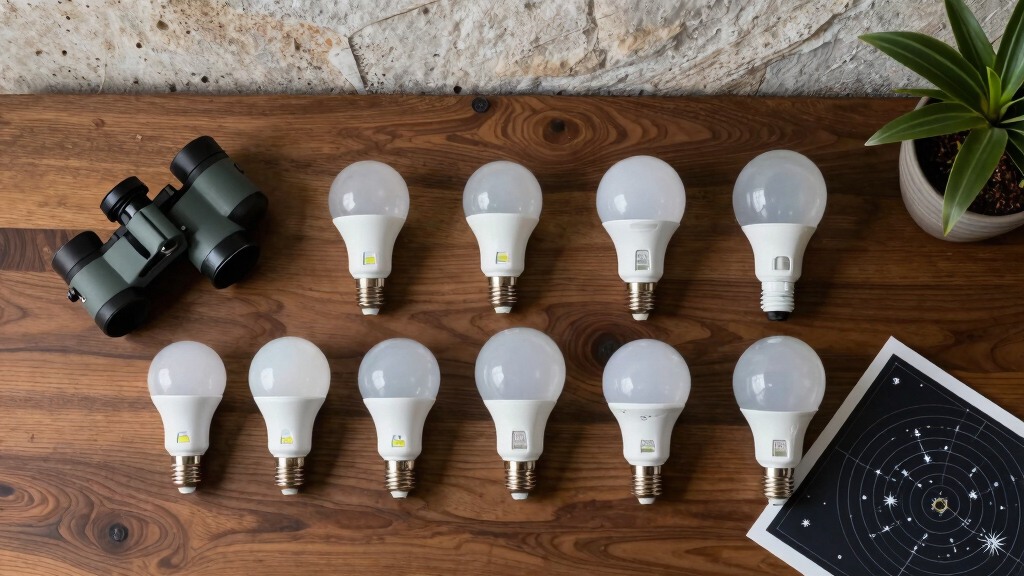
Recent studies indicate that LED lighting, if properly implemented, can significantly reduce light pollution. This development offers a promising way to protect night skies while maintaining urban illumination.
Recent research indicates that **LED lighting**, when properly designed and implemented, has the potential to significantly **reduce light pollution** and help preserve **night skies**. This development is being discussed by scientists, environmentalists, and urban planners as a possible solution to the increasing problem of artificial light encroaching on natural darkness.
Multiple studies, including recent experiments led by environmental researchers, have demonstrated that **LEDs can be engineered** to emit less upward light and minimize skyglow, a major contributor to light pollution. Experts emphasize that **not all LEDs are equal**; the key lies in **spectral composition, directionality, and brightness control**. Some municipalities and organizations are already testing **LED fixtures with reduced blue light emissions** to mitigate adverse effects on ecosystems and astronomy.
While the potential is promising, **challenges remain**. Proper implementation requires **regulation, public awareness, and technological advancements** to ensure LEDs are used in a way that benefits both urban lighting needs and environmental preservation. Experts caution that **poorly designed LED systems** could worsen light pollution if they emit excessive or poorly directed light.
How LED Lighting Could Transform Night Sky Preservation
This development matters because **light pollution** is a growing environmental concern, impacting **astronomy, ecosystems, and human health**. If LEDs are used correctly, they could **significantly reduce skyglow**, enabling better astronomical observations and protecting nocturnal wildlife. This approach offers a **cost-effective and energy-efficient** alternative to traditional street lighting, aligning urban development with environmental conservation goals.
dark sky friendly LED outdoor lighting
As an affiliate, we earn on qualifying purchases.
As an affiliate, we earn on qualifying purchases.
Recent Efforts to Address Light Pollution and LED Advancements
Light pollution has increased globally due to the widespread adoption of **high-intensity, poorly directed outdoor lighting**. Traditional lighting methods often emit excessive light upward, contributing to skyglow that obscures stars and disrupts ecosystems. Recently, **LED technology** has been promoted for its energy efficiency and versatility, but concerns about its potential to worsen light pollution have persisted. Recent research highlights that **LEDs can be designed** to emit **less blue light** and be directed downward, reducing their environmental impact. Some cities and organizations have begun adopting **dark-sky-friendly LED fixtures**, marking a shift toward more sustainable lighting practices.
“Properly designed LED lighting can dramatically decrease skyglow without compromising urban safety or visibility.”
— Dr. Emily Carter, Environmental Lighting Researcher
blue light reducing LED street lights
As an affiliate, we earn on qualifying purchases.
As an affiliate, we earn on qualifying purchases.
Remaining Challenges in Implementing LED Solutions for Light Pollution
While research is promising, it is still unclear how widespread adoption of **dark-sky-friendly LED lighting** will impact overall light pollution levels. Questions remain about **cost, regulation, and public acceptance**. Additionally, the long-term ecological effects of new LED spectral compositions are still being studied, and **standardization efforts are ongoing** to ensure consistent implementation across regions.
directional LED floodlights for outdoor use
As an affiliate, we earn on qualifying purchases.
As an affiliate, we earn on qualifying purchases.
Next Steps for Policy, Technology, and Public Awareness
Researchers plan to conduct **larger-scale field trials** to assess the real-world impact of optimized LED lighting. Policymakers are considering **regulations and standards** to promote environmentally friendly lighting practices. Public awareness campaigns are also underway to inform communities about **the benefits of dark-sky-friendly LEDs** and encourage adoption. Continued collaboration between scientists, urban planners, and industry will be crucial to realizing the potential of LEDs to protect night skies.
energy-efficient LED fixtures for dark sky preservation
As an affiliate, we earn on qualifying purchases.
As an affiliate, we earn on qualifying purchases.
Key Questions
Can LED lighting completely eliminate light pollution?
While LED technology can significantly reduce skyglow if properly designed, it is unlikely to completely eliminate light pollution without comprehensive urban planning and regulations.
Are all LEDs suitable for reducing light pollution?
No, only LEDs that emit less blue light, are properly directed downward, and are dimmable are considered suitable for minimizing light pollution.
What are the main barriers to adopting dark-sky-friendly LEDs?
The main barriers include higher initial costs, lack of regulatory standards, and public or industry resistance to changing existing lighting infrastructure.
How does blue light affect the environment?
Blue light contributes significantly to skyglow and can disrupt wildlife, especially nocturnal animals, and impact human circadian rhythms.
Source: hn
Fall Picks
fall essentials
As an affiliate, we earn on qualifying purchases.