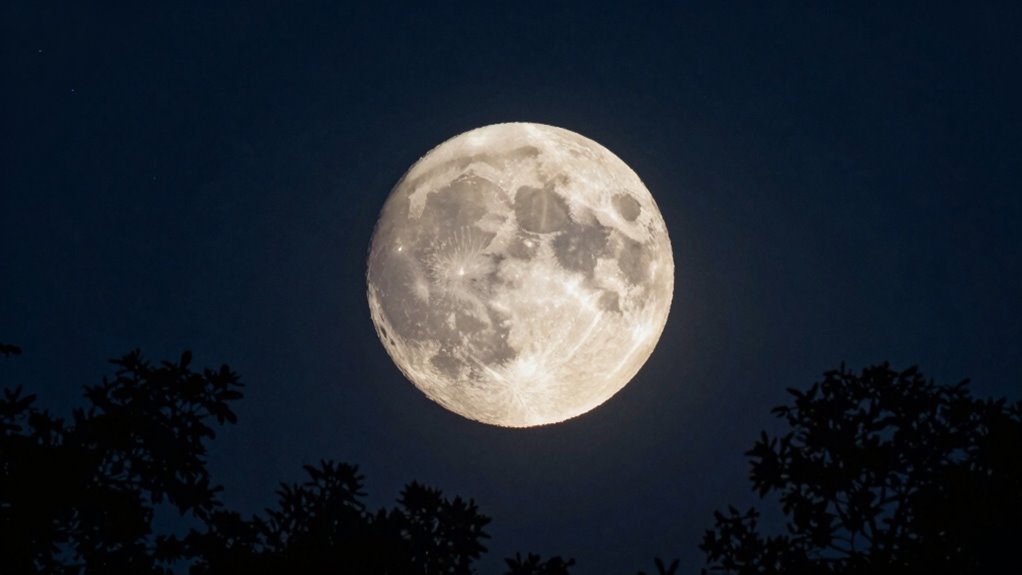

When the Moon is near the horizon, it appears larger due to atmospheric distortion and a psychological trick called the Moon illusion. The atmosphere bends and scatters the Moon’s light, making it seem bigger and distorted. Meanwhile, your brain perceives the Moon as larger when it’s close to landscape features like trees and buildings. These combined effects make the Moon look huge on some nights. Keep exploring to discover what truly influences this fascinating sky phenomenon.

Prime made for students and young adults
- Fast, free delivery for dorm and study essentials
- Prime Video and Amazon Music included
- Member-only deals
Key Takeaways
- Atmospheric refraction near the horizon bends and enlarges the Moon’s appearance, making it seem bigger during moonrise and moonset.
- The Moon Illusion causes the Moon to appear larger when close to landscape features like trees or buildings.
- Visual perception and contextual cues influence the perceived size, making the Moon seem larger near the horizon.
- The Moon appears larger on the horizon due to a combination of atmospheric distortion and psychological effects.
- When higher in the sky, the absence of reference objects and atmospheric effects make the Moon look smaller.
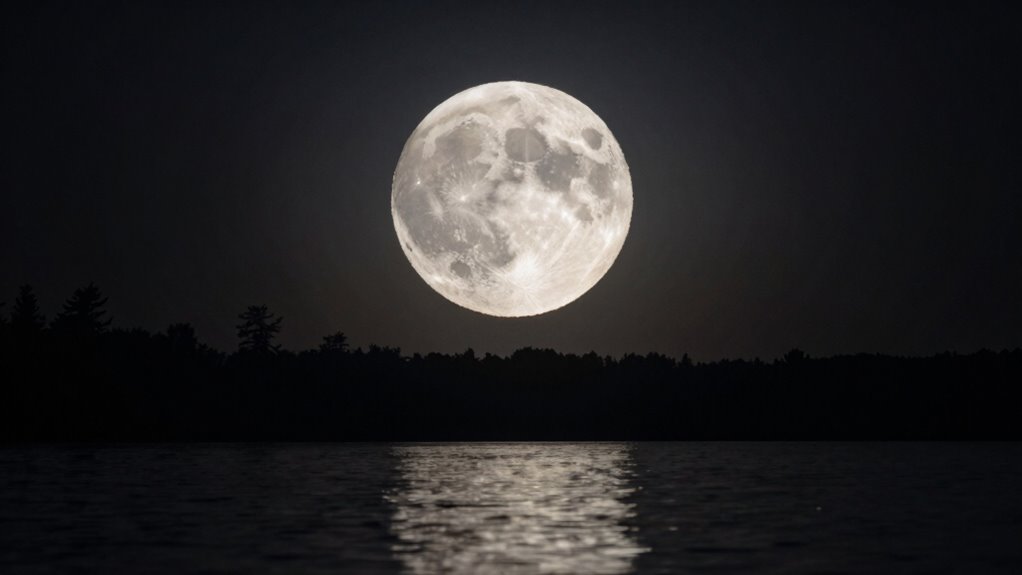
Have you ever noticed how the Moon can appear enormous on some nights, almost like you could reach out and touch it? That’s because the moon’s apparent size isn’t constant; it shifts based on a mix of factors that play tricks on your eyes. One of the main reasons it looks so big is related to atmospheric distortion. When the Moon is near the horizon, its light passes through a thicker layer of Earth’s atmosphere, which bends and scatters the light. This effect, called atmospheric refraction, makes the Moon seem larger and distorted compared to when it’s higher up in the sky. Your brain interprets this as an actual increase in size, even though the Moon’s physical dimensions stay the same.
Another key factor is what’s known as the “moon illusion,” a psychological phenomenon. When the Moon is close to the horizon, your brain perceives it as being much larger than when it’s high overhead, even though it’s the same size in the sky. This illusion tricks your mind into overestimating its size because of the way you interpret the surrounding landscape and the sky. Your brain compares the Moon to objects on the horizon—trees, buildings, mountains—and perceives it as larger because of this contextual relationship. When the Moon is high in the sky, there’s nothing to compare it to, so it appears much smaller, even though its angular size remains unchanged. Additionally, the distance from the observer to the horizon can influence the perceived size due to the visual perception of depth and space. This phenomenon is also affected by atmospheric conditions, which can enhance or diminish the perceived size of the Moon. Interestingly, these effects are compounded by human visual perception, making it a fascinating example of how our senses interpret the natural world. Furthermore, cultural influences can also shape how we experience and interpret the Moon’s size in different societies and contexts.
The angle at which you view the Moon also influences its apparent size. When the Moon is low on the horizon, it appears larger due to the combined effects of atmospheric distortion and the moon illusion. As it rises higher, these effects diminish, and the Moon appears smaller, even though it’s the same distance away from you. This fluctuation can lead to the curious experience of feeling like the Moon is enormous on some nights, especially when it’s near the horizon during moonrise or moonset.
In essence, the moon’s apparent size on different nights is a mix of physical and perceptual factors. Atmospheric distortion alters how we see it when it’s near the horizon, and the moon illusion tricks our minds into perceiving a larger size. Both combine to create those awe-inspiring nights when the Moon looks huge, making us marvel at how our eyes and brains work together to shape our perception of the night sky.
As an affiliate, we earn on qualifying purchases.
Frequently Asked Questions
Does the Moon’s Size Change During Its Orbit?
Yes, the moon’s size appears to change during its orbit due to its elliptical shape. When it’s closer to Earth, during certain lunar phases like the full moon or new moon, it looks larger and brighter. This size change also influences tidal effects, as the moon’s gravitational pull varies with its distance. These factors combine to make the moon seem bigger on some nights and smaller on others.
Can Atmospheric Conditions Affect How Big the Moon Appears?
Atmospheric conditions can indeed make the moon seem larger, like a glowing jewel on the horizon. These lunar illusions are optical illusions caused by Earth’s atmosphere bending light, amplifying the moon’s size. When the moon is near the horizon, atmospheric particles can distort its appearance, creating a mesmerizing illusion. So, your view of a giant moon isn’t just in your mind—it’s a beautiful trick played by nature’s own optical illusions.
Why Does the Moon Sometimes Look Red or Orange?
The Moon appears red or orange during lunar eclipses or when it’s near the horizon. During these times, atmospheric conditions scatter shorter blue wavelengths, allowing red and orange hues to dominate. Lunar phases influence this color change, especially during a lunar eclipse when Earth’s shadow covers the Moon. Tidal effects also relate, as the Moon’s position during these phases can intensify the visual impact, making the colors more vivid.
Is the Moon’s Distance From Earth Constant?
You might wonder if the Moon’s distance from Earth stays fixed. It doesn’t—Moon phases and lunar eclipses reveal its changing proximity. During its orbit, the Moon moves closer or farther, creating a sense of wonder and mystery. This shifting distance influences how big the Moon appears and how it interacts with Earth’s shadows. Embrace the journey of the Moon, always in motion, always enchanting your curiosity.
How Does the Earth’s Atmosphere Influence Lunar Perception?
The Earth’s atmosphere influences how you perceive the Moon through phenomena like lunar illusions and atmospheric refraction. These effects can make the Moon appear larger or distorted when it’s near the horizon. Atmospheric refraction bends light as it passes through layers of air, magnifying or altering the Moon’s appearance. This creates the illusion of a huge Moon, especially during moonrise or moonset, highlighting the atmosphere’s role in lunar perception.
As an affiliate, we earn on qualifying purchases.
Conclusion
Think of the night sky as a grand theater, and the Moon as the star performer. When it appears huge, it’s like the spotlight is shining just on it, making it seem closer and larger. But remember, this isn’t magic—it’s the theater of your mind, playing tricks with perspective and distance. Next time the Moon steals the show, you’ll see it not just as a distant orb, but as a mesmerizing star of the cosmic stage.
As an affiliate, we earn on qualifying purchases.
moon and star constellation guidebook
As an affiliate, we earn on qualifying purchases.
As an affiliate, we earn on qualifying purchases.
Halloween Picks
halloween
As an affiliate, we earn on qualifying purchases.