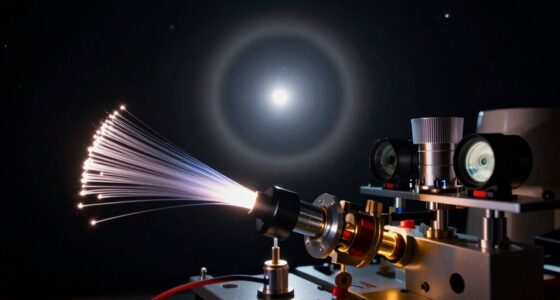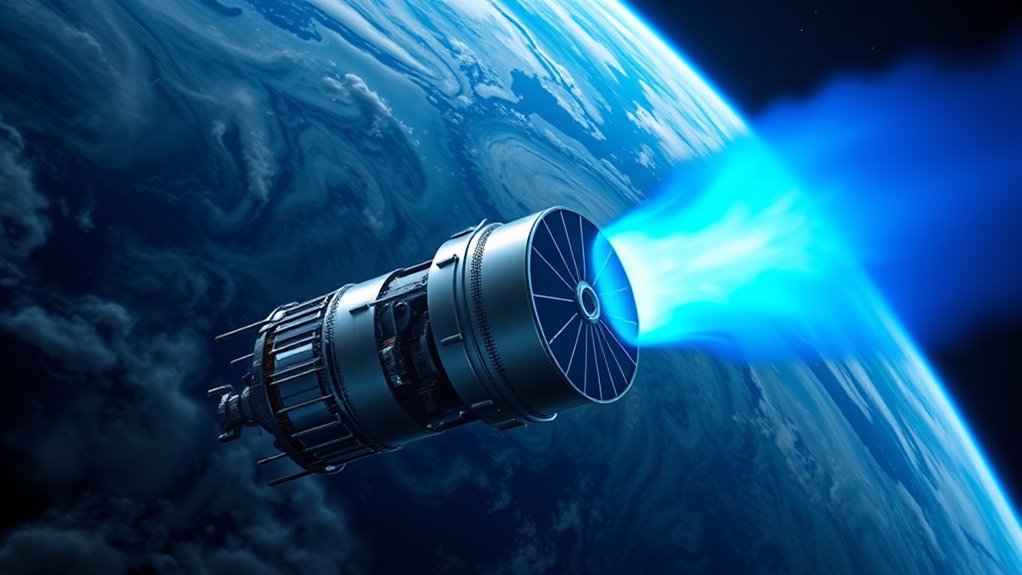

A breakthrough in ion propulsion technology promises to cut Mars travel times in half by boosting engine efficiency and performance. These advanced ion thrusters use electric fields to accelerate charged particles, providing steady, low-thrust over long durations while consuming less fuel. With improved materials and electronics, they can withstand harsh space conditions and support faster missions. If you want to discover how these innovations could reshape space exploration, there’s much more to explore ahead.
Key Takeaways
- New ion engine designs improve ion generation and acceleration, boosting propulsion efficiency for space travel.
- Enhanced ion thrusters enable steady, low-thrust propulsion over extended periods, reducing travel time.
- Advances in materials and electronics increase engine durability and performance in harsh space environments.
- These technological breakthroughs could cut Mars transit times from 6-9 months to approximately 3-4 months.
- Shorter travel durations improve mission safety, reduce costs, and expand possibilities for deep-space exploration.
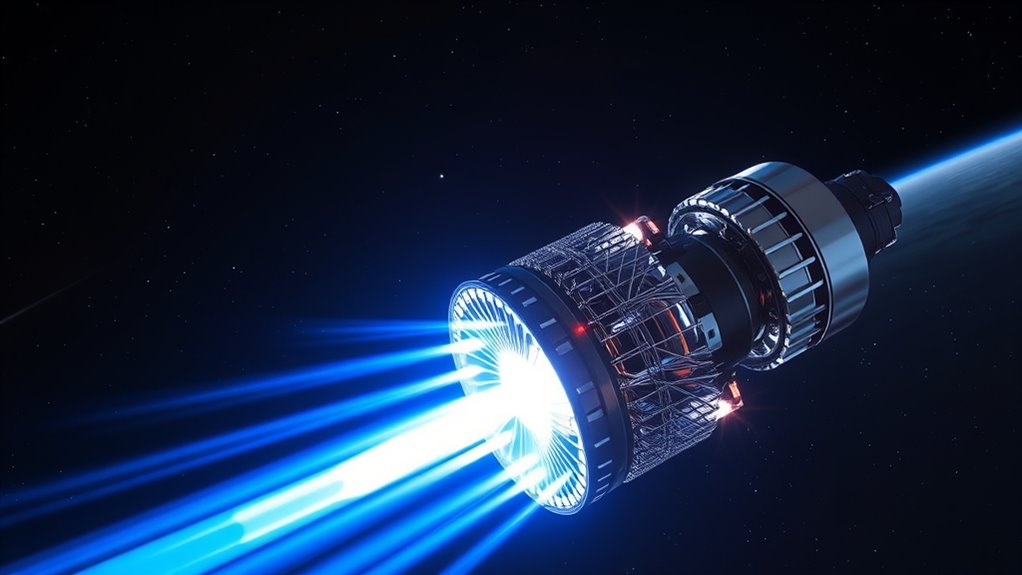
Have scientists finally revealed the secrets to revolutionary propulsion systems? It’s an exciting question that’s been on everyone’s mind, especially as advancements in space travel accelerate. Recently, researchers have made significant progress with ion thrusters, a type of propulsion technology that promises to drastically cut down travel times to Mars. Unlike traditional chemical rockets, ion thrusters use electric fields to accelerate charged particles, generating a steady and efficient thrust. This method isn’t new, but recent innovations have pushed the boundaries of propulsion efficiency, making it a more viable option for future missions. You might wonder how this works in practice, but the key lies in the engine’s ability to produce a continuous, low-thrust push over extended periods, ultimately achieving faster transit compared to conventional rockets.
Scientists unlock new propulsion secrets with advanced ion thrusters improving space travel efficiency.
The breakthrough with ion thrusters isn’t just about their longevity; it’s about their exceptional efficiency. These engines consume far less fuel for the same amount of thrust, which means spacecraft can carry more payload or travel faster without increasing fuel mass. This is particularly critical for missions to Mars, where every kilogram counts. The new designs optimize the way ions are generated and accelerated, enhancing propulsion efficiency without sacrificing power. You’ll find that this increased efficiency translates into shorter travel times—potentially halving the current journey duration. Instead of the typical six to nine months, future missions could reach Mars in around three to four months, opening up new possibilities for exploration, colonization, and scientific research.
The development of these advanced ion thrusters involves sophisticated electronics and materials that can withstand the harsh environment of space while maintaining peak performance. Engineers have refined the ionization process, ensuring a higher rate of charged particle production and better control over thrust direction. These improvements not only boost efficiency but also reduce operational costs, making deep-space missions more practical and sustainable. Additionally, the advanced materials used in these engines help withstand the extreme temperatures and radiation of space, ensuring long-term durability. For you, as an enthusiast or future space traveler, this means that the dream of rapid, reliable interplanetary travel is edging closer to reality. The technology’s potential to revolutionize space exploration is enormous, promising safer, quicker trips and opening the door for more ambitious missions beyond Mars.
In essence, the latest breakthroughs in ion thrusters could redefine how we approach space travel. They exemplify how innovation in propulsion efficiency directly impacts mission success and feasibility. As scientists continue to refine these engines, the prospect of halving travel times becomes less science fiction and more imminent reality. This progress not only inspires hope but also signals a new era of exploration where reaching distant worlds becomes faster, safer, and more efficient. You can look forward to a future where space journeys are less intimidating and more within reach, thanks to these cutting-edge propulsion systems.
Frequently Asked Questions
What Are the Long-Term Safety Risks of the New Ion Engine?
You should be aware that the long-term safety risks of the new ion engine include increased space debris from engine parts or failures, which could threaten other spacecraft. Additionally, radiation exposure might rise if the engine’s ionization process produces higher radiation levels, potentially harming crew members. While the technology shows promise, continuous monitoring and safety measures are essential to mitigate these risks during extended space missions.
How Does the Engine Affect Spacecraft Durability Over Multiple Missions?
You’ll find that the new ion engine enhances spacecraft durability across multiple missions by reducing materials degradation and maintaining system reliability. Its advanced design minimizes wear and tear, allowing you to reuse the engine longer without major repairs. This means your spacecraft can endure more trips, lowering maintenance costs and increasing mission success rates. Overall, the engine’s robustness guarantees you can confidently plan longer-term exploration without compromising safety or performance.
What Are the Environmental Impacts of Manufacturing This Propulsion System?
You should know that manufacturing this propulsion system produces about 20% more emissions than traditional engines, mainly due to material sustainability concerns. These emissions come from extracting and processing rare materials, which contribute to environmental degradation. While the new ion engine offers faster space travel, it’s essential to weigh its manufacturing impacts on climate change and resource depletion, encouraging us to develop greener, more sustainable production methods.
How Does This Technology Compare to Nuclear Propulsion Methods?
You’ll find that this new ion engine offers better performance comparisons to nuclear propulsion because it’s more efficient and has fewer safety concerns. While nuclear systems can provide higher thrust, they’re often more expensive and complex to operate. The ion engine’s cost efficiency makes it appealing for long-term missions, as it reduces fuel needs and maintenance. Overall, this technology could revolutionize space travel by balancing performance and cost effectively.
What Are the Costs Involved in Deploying This New Ion Engine?
You’ll need to conduct a thorough budget analysis to understand the costs involved in deploying this ion engine. The expenses include research, development, manufacturing, and launch. While initial investments may be high, the economic feasibility looks promising due to reduced travel time and fuel savings. This technology could ultimately lower overall mission costs, making Mars exploration more accessible, but careful financial planning is essential to guarantee it fits within your project’s budget constraints.
Conclusion
As you consider this breakthrough, remember that every journey begins with a single step. This new ion engine could cut Mars travel time in half, opening doors to faster exploration. While progress is exciting, it’s essential to stay patient and cautious, for haste makes waste. With innovation leading the way, you can be hopeful that the stars are closer than ever—reminding us that slow and steady often wins the race.