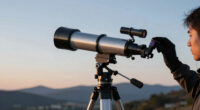
Dew can ruin your astronomy session because it quickly condenses on your telescope lenses and mirrors as temperatures drop, blurring or obscuring your view of celestial objects. This moisture creates a water film that reduces clarity and can damage your equipment over time. If you don’t take steps to prevent it, dew can spoil your night of stargazing faster than you expect. Keep going to discover simple ways to protect your gear and enjoy clearer skies.
Key Takeaways
- Dew condenses on telescope lenses and mirrors, blurring celestial images and obstructing clear observation.
- Moisture accumulation can cause permanent damage like water spots, mold, or rust on equipment.
- Dew formation often occurs suddenly, disrupting carefully planned stargazing sessions.
- Persistent moisture promotes mold growth and corrosion, reducing equipment lifespan and optical quality.
- Dew-related issues can necessitate additional maintenance, preventing optimal viewing conditions.
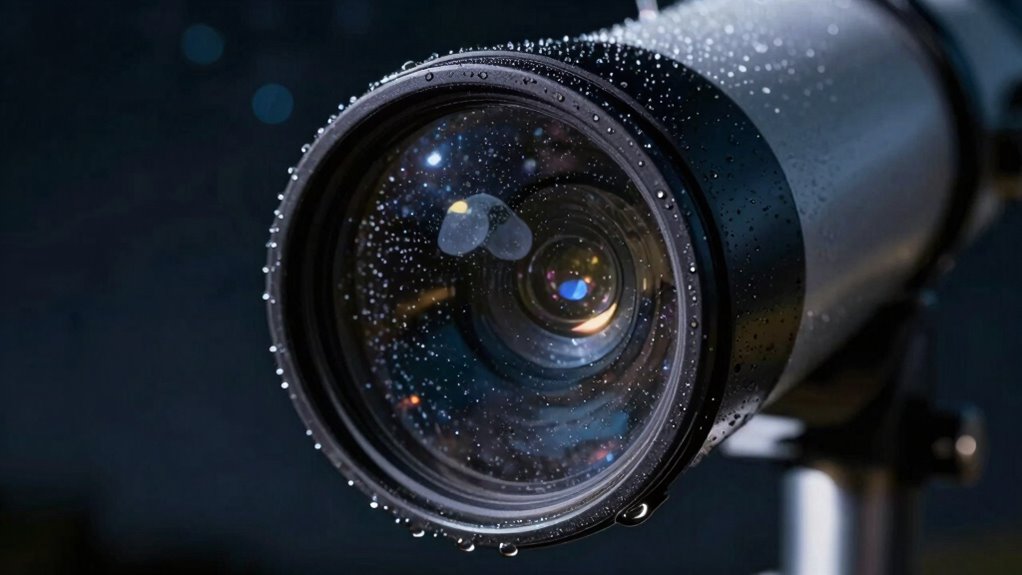
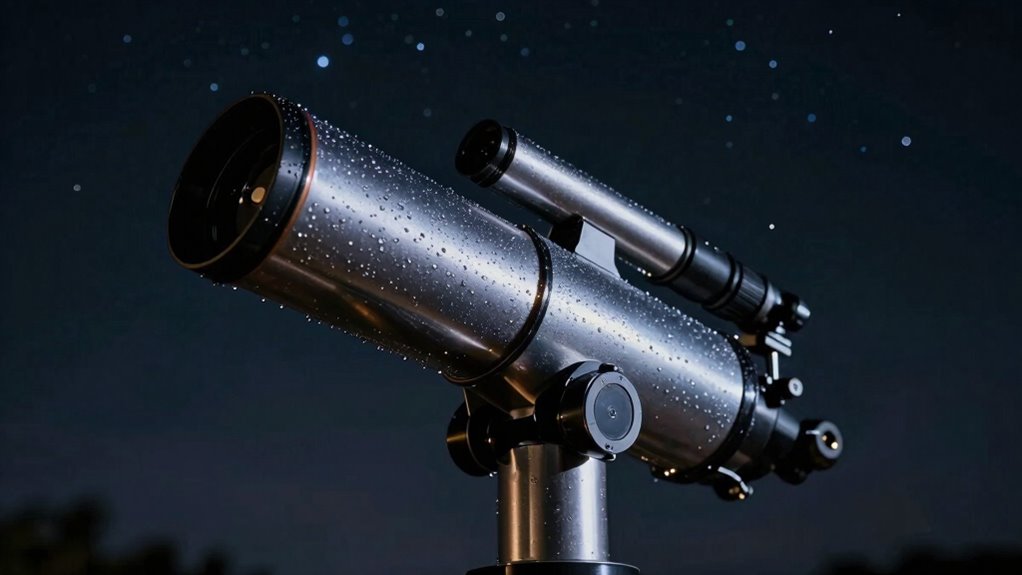
When you’re all set up for a perfect night of stargazing, dew can suddenly turn your experience into a frustrating ordeal. It might seem like a minor nuisance at first, but dew formation can quickly obscure your view and make even the most carefully planned session disappointing. As the night progresses, moisture from the air condenses on your telescope’s lenses and mirrors, creating a thin film of water that blurs or completely obscures celestial objects. This condensation not only diminishes visibility but also risks damaging your equipment if you don’t take proper precautions.
Dew formation happens when the temperature drops to the dew point, causing water vapor in the air to condense onto cooler surfaces. Your telescope, especially metal parts and glass lenses, acts as an ideal surface for this moisture to settle. If you’re not prepared, the dew can settle so quickly that you find yourself scrambling to wipe off optics with cloths or, worse, inadvertently scratching delicate surfaces. The more your telescope’s optics are exposed to moisture, the higher the chance of residual dew lingering or water spots forming, which can permanently impair your viewing quality.
To keep dew from ruining your night, regular telescope maintenance becomes essential. You need to keep your equipment clean and dry after each session, ensuring no residual moisture remains that could attract dew during your next outing. Using dew shields or dew heaters can help prevent dew formation altogether. Dew shields act as barriers, reducing the temperature differential between the telescope and the surrounding air, while dew heaters actively warm the optics just enough to keep moisture at bay. Investing in these accessories not only preserves your telescope’s optical clarity but also extends its lifespan by preventing corrosion or mold caused by persistent moisture.
While it might be tempting to ignore dew prevention, neglecting proper telescope maintenance can lead to long-term damage. Moisture promotes rust on metal parts and can lead to the growth of mold or mildew, which is difficult to remove and can compromise the integrity of your equipment. Regularly wiping down your telescope with appropriate cleaning supplies, storing it in a dry place, and applying protective covers when not in use work together to keep your gear in top condition. Additionally, implementing indoor air quality solutions like dehumidifiers can help regulate moisture levels in your storage area, preventing dew-related issues before they even occur. Understanding climate conditions and how they influence dew formation can also help you plan your observing sessions more effectively. Using dew prevention tools such as silica gel packs or anti-condensation coatings can further reduce the risk of moisture buildup on your equipment. Moreover, being aware of humidity levels can help you choose the best nights for observing and avoid nights with high moisture content.
In the end, understanding dew formation and prioritizing telescope maintenance isn’t just about avoiding a frustrating night—it’s about ensuring every stargazing session remains clear, enjoyable, and safe for your equipment.

Celestron 94018 Deluxe Telescope Dew Shield with Velcro Attachment Points – Prevents Dew Formation on 6" and 8” Schmidt Cassegrain or EdgeHD Telescope Lenses, Black
Prevents dew from forming on your Schmidt-Cassegrain or EdgeHD corrector lens
As an affiliate, we earn on qualifying purchases.
As an affiliate, we earn on qualifying purchases.
Frequently Asked Questions
Can Dew Damage My Telescope’s Optics Permanently?
Dew damage can lead to optical degradation if it’s left on your telescope’s lenses or mirrors for too long. Moisture can cause corrosion or mold, which may permanently harm your optics. To prevent this, always cover your telescope or use a dew shield. If you notice dew, dry it off promptly with a soft cloth. Proper maintenance keeps your optics clear and prevents long-term damage.
How Quickly Does Dew Form During Clear Nights?
On clear nights, dew formation can start within 30 minutes to an hour as night temperature drops. Think of it like a sponge soaking up moisture—the cooler the air, the faster dew forms. If the temperature drops rapidly, dew can settle onto your telescope quickly, often before you even start observing. To prevent this, keep your gear insulated or use dew shields early in the night.
Are There Specific Weather Conditions That Increase Dew Formation?
Yes, certain weather conditions boost dew formation. When humidity fluctuations increase, moisture in the air rises, making dew more likely. Additionally, temperature drops during clear nights cause surfaces to cool quickly, reaching the dew point. These factors combined create the ideal environment for dew to form, which can settle on your telescope and hinder your stargazing experience. Keep an eye on weather forecasts to anticipate these conditions.
What Are the Best Ways to Prevent Dew on Telescopes?
To prevent dew on telescopes, you should use dew prevention methods like dew shields, dew heaters, or anti-dew coatings. Keep your telescope well-maintained by regularly cleaning optics and ensuring proper storage. During observations, activate dew heaters or use moisture-absorbing desiccants to minimize dew formation. Proper telescope maintenance and proactive dew prevention techniques help keep your equipment clear, ensuring a successful and uninterrupted astronomy session.
Does Dew Affect All Types of Telescopes Equally?
No, dew affects all types of telescopes differently. Dew formation and optical condensation happen when moisture in the air cools and condenses on surfaces. Refractors with their glass lenses are more prone to dew, while reflectors with open tubes might experience less. However, regardless of type, you should take precautions like using dew shields or heaters, because optical condensation can quickly impair your view, ruining your session.

SVBONY SV172 Dew Heater Strip 320 mm Lens Heater Warmer for Telescopes and Camera Lens Temperature Regulator Strip
Keep your devices from Fog Dew Freezing; when the dew was a big issue and it can keep…
As an affiliate, we earn on qualifying purchases.
As an affiliate, we earn on qualifying purchases.
Conclusion
Just like Icarus soaring too close to the sun, if you ignore dew’s quiet threat, your perfect night can quickly turn to disappointment. Stay vigilant, keep your gear dry, and don’t let dew’s gentle touch turn your celestial dreams to dust. Remember, even the brightest stars need a little caution to shine at their best. Guard against dew, and you’ll guarantee your stargazing adventures remain legendary, not lost to the silent, creeping fog of moisture.
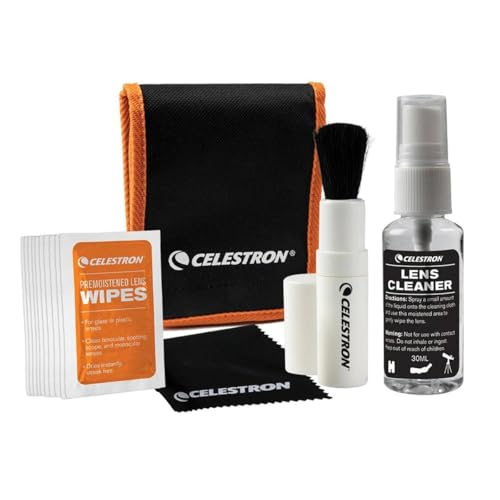
Celestron Lens Cleaning Kit
Lens cleaning kit for all your optics
As an affiliate, we earn on qualifying purchases.
As an affiliate, we earn on qualifying purchases.

Astromania Protective Telescope Cover with Fixing Strap, Diameter 37.6" – Protect Your Telescope Against dust, Moisture and More
High-quality Protective Cover for telescopes: It offers perfect protection for your telescope against dust and moisture. It is…
As an affiliate, we earn on qualifying purchases.
As an affiliate, we earn on qualifying purchases.