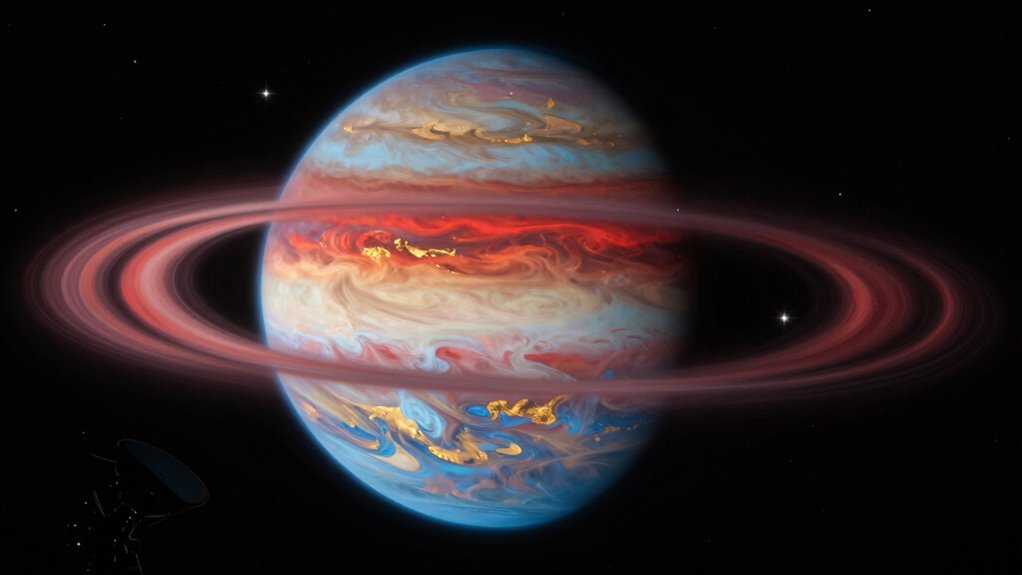

Studying exoplanets helps you understand Earth’s environment, climate, and what keeps life possible. By observing their atmospheres, you see how factors like gases, temperature, and radiation impact habitability. These planets reveal how planetary processes, such as volcanic activity or atmospheric loss, shape surface conditions—highlighting Earth’s fragility. Recognizing these connections shows how small changes can threaten life-supporting conditions. If you explore further, you’ll discover even more about how other worlds mirror our own and why protecting Earth matters.

Prime made for students and young adults
- Fast, free delivery for dorm and study essentials
- Prime Video and Amazon Music included
- Member-only deals
Key Takeaways
- Studying exoplanet atmospheres reveals how atmospheric composition influences habitability and planetary resilience, offering insights into Earth’s environmental stability.
- Exoplanet research highlights the importance of factors like magnetic fields and orbital stability in sustaining life-supporting conditions.
- Analyzing planetary processes such as volcanic activity and chemical interactions on exoplanets informs our understanding of Earth’s climate and surface conditions.
- Examining exoplanet atmospheric loss and extreme temperatures underscores Earth’s vulnerability and resilience amid environmental challenges.
- Investigating diverse planetary environments deepens awareness of Earth’s fragility and the delicate balance needed for sustaining life.
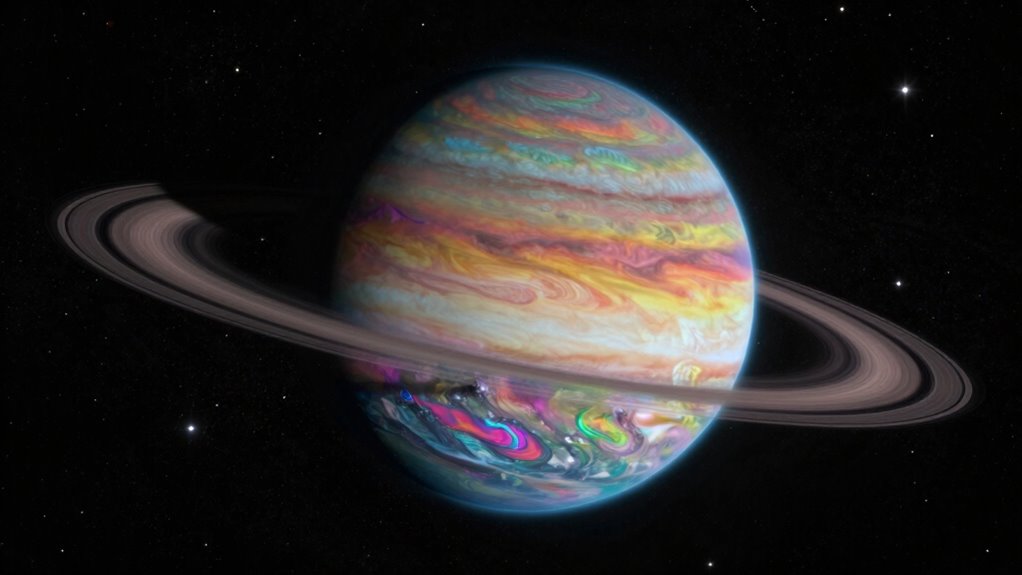
While exoplanets are worlds far beyond our solar system, studying them helps us better understand our own planet. These distant worlds serve as natural laboratories, revealing how planetary environments form, evolve, and sustain life—or struggle to do so. By analyzing their habitability challenges, you gain insights into the delicate balance required for life to exist. Many exoplanets orbit within their stars’ habitable zones, yet this alone doesn’t guarantee they’re truly hospitable. Factors like atmospheric composition play a vital role in determining whether these planets can support life as we know it. When scientists investigate the atmospheres of exoplanets, they look for gases such as oxygen, methane, and water vapor, which are indicators of potential habitability. Understanding the atmospheric makeup of these worlds helps you grasp the complex interactions that influence surface conditions, climate stability, and the potential for life.
Studying exoplanet atmospheres also highlights the habitability challenges faced by planets, including atmospheric loss, extreme temperatures, and radiation exposure. For instance, a planet might be in the right location but suffer from a thin or toxic atmosphere that prevents water retention or blocks sunlight essential for photosynthesis. These challenges mirror issues on Earth, where climate change and pollution threaten life’s sustainability. By observing how exoplanets deal with such hurdles, you can appreciate the resilience required for a planet to remain habitable over geological timescales. Additionally, variations in atmospheric composition point to different planetary processes, such as volcanic activity or chemical interactions, that impact surface conditions. These insights help you understand the dynamic nature of planetary environments and the fine line between habitability and inhospitable conditions. Recognizing how these processes operate elsewhere can also inform planetary protection strategies for Earth.
Furthermore, examining exoplanets broadens your perspective on Earth’s uniqueness and fragility. It underscores how specific factors—like atmosphere, magnetic fields, and orbital stability—are essential for maintaining life-supporting environments. When you compare these worlds, you see that even small differences in atmospheric composition or habitability challenges can make the difference between a thriving planet and a barren one. This understanding highlights the importance of atmospheric health in safeguarding life on Earth. This knowledge emphasizes the importance of protecting Earth’s environment, as small changes can have profound impacts on habitability. Essentially, studying exoplanets allows you to recognize the interconnectedness of planetary systems and the delicate conditions necessary for life to flourish, deepening your appreciation for the fragile balance that sustains our own world.
A deeper understanding of planetary atmospheres can also inform efforts to address environmental challenges here on Earth, highlighting the importance of atmospheric health.
As an affiliate, we earn on qualifying purchases.
Frequently Asked Questions
How Do Exoplanets Form in Different Stellar Environments?
You learn that exoplanets form differently depending on stellar formation environments. In dense regions, planets often form quickly through core accretion, while in sparse areas, formation may take longer. Stellar radiation influences planetary migration, causing planets to shift position over time. These variations reveal how diverse stellar environments shape planetary systems, helping us understand our own planet’s history and the processes that lead to planet formation across the universe.
Can Exoplanet Atmospheres Reveal Signs of Past or Present Life?
Yes, exoplanet atmospheres can reveal signs of life through biosignature detection. By analyzing atmospheric composition, you can spot gases like oxygen, methane, or ozone that may indicate biological activity. When you study these atmospheres, you’re looking for chemical imbalances or specific combinations of gases that don’t easily form through abiotic processes, offering clues about potential life or past habitability on these distant worlds.
What Technological Advancements Are Needed to Study Exoplanets More Effectively?
You need advanced spectroscopic techniques and powerful space telescopes to study exoplanets more effectively. These tools will improve your ability to analyze atmospheres, detect chemical signatures, and observe surface conditions. Upgrading spectroscopic technology enhances your precision, while larger, more sensitive space telescopes expand your observational reach. Together, these advancements allow you to uncover details about exoplanet environments, bringing you closer to understanding distant worlds and their potential for life.
How Do Exoplanet Discoveries Influence Our Understanding of Earth’s Uniqueness?
Exoplanet discoveries influence your understanding of Earth’s uniqueness by highlighting planetary diversity and challenging habitability criteria. You see that many planets differ vastly in size, atmosphere, and surface conditions, prompting you to reassess what makes Earth special. These findings suggest that habitable worlds might be rarer or common than previously thought, inspiring you to refine search criteria and better appreciate the delicate balance that supports life on your own planet.
Are There Any Known Exoplanets With Conditions Similar to Earth?
Yes, some exoplanets have conditions similar to Earth. You can explore their planetary geology, which reveals surface features and composition, and orbital dynamics, showing how they orbit their stars. These factors help determine if a planet might support life. Scientists focus on these aspects to identify potentially habitable worlds, giving you insights into what makes Earth unique and how other planets might mirror its environment.
As an affiliate, we earn on qualifying purchases.
Conclusion
Just like a mirror held up to the universe, exoplanets reflect the possibilities and fragility of your own world. They remind you that our planet isn’t alone in the vast cosmic dance, and understanding them helps you see Earth’s beauty and vulnerability more clearly. Keep exploring these distant worlds, for in their mysteries lies the key to safeguarding your home. They’re not just distant planets—they’re lessons waiting to be learned, shining like stars guiding your way.
As an affiliate, we earn on qualifying purchases.
As an affiliate, we earn on qualifying purchases.
Fall Picks
fall essentials
As an affiliate, we earn on qualifying purchases.
![SpaceX Starship Flight 13 Livestream [Video]](https://curiousminds.info/wp-content/uploads/2026/07/spacex-starship-flight-13-livestream-video-featured-560x300.jpg)