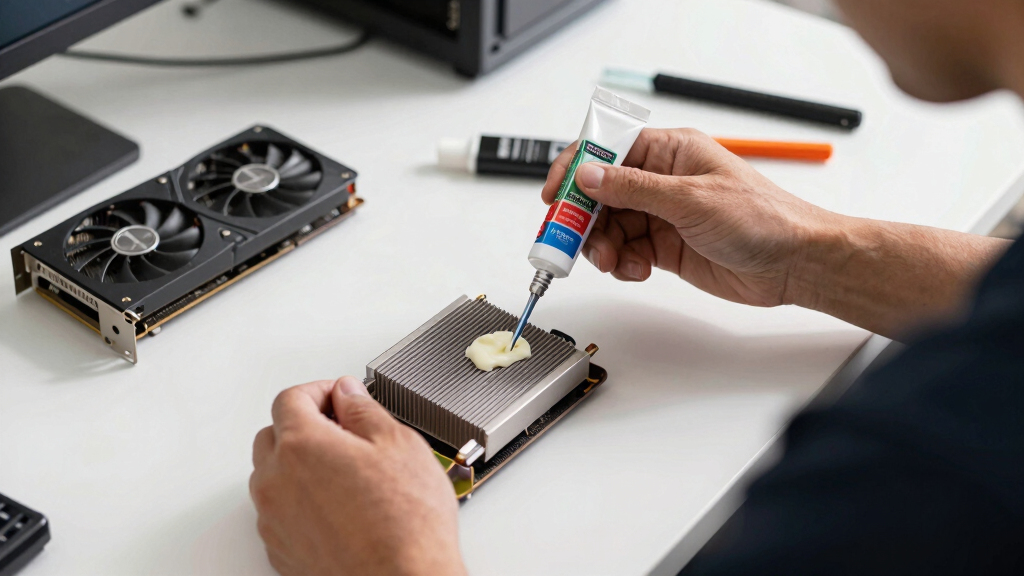

📊 Full opportunity report: Best Thermal Paste and Pads for High-TDP GPUs on ThorstenMeyerAI.com — validation score, market gap, and execution plan.

Prime made for students and young adults
- Fast, free delivery for dorm and study essentials
- Prime Video and Amazon Music included
- Member-only deals
TL;DR
This article identifies the best thermal paste and pads for high-TDP GPUs used in sustained workloads. Honeywell PTM7950 excels long-term, while Arctic MX-6 and Noctua NT-H2 offer reliable traditional options. Reusable Kryosheet provides a durable alternative.
Honeywell PTM7950 phase-change material is now recognized as the top thermal interface solution for high-TDP GPUs operating continuously, due to its resistance to pump-out and long-term stability, according to recent testing and user reports.
Traditional thermal pastes like Kryonaut and MX-6 perform well initially but tend to degrade over time under sustained high temperatures, leading to increased GPU temperatures and potential throttling. Honeywell PTM7950, a phase-change material, resists pump-out and maintains low thermal resistance over years of continuous operation, making it ideal for 24/7 GPU workloads such as AI inference or server tasks. Arctic MX-6 offers a simple, reliable traditional paste alternative with an 8–10 year lifespan and easy application. Noctua NT-H2 provides a premium traditional paste with consistent performance and durability, favored by enthusiasts. Additionally, Thermal Grizzly Kryosheet, a graphene reusable pad, offers a long-lasting, non-drying alternative but requires careful handling due to its electrical conductivity. These options reflect a shift from day-one temperature rankings toward long-term stability for high-power GPU applications, where pump-out significantly impacts thermal performance over time.Best thermal paste
for a high-TDP GPU.
The standard “coldest on day one” advice is wrong for a 24/7 rig. Continuous heat slowly squeezes traditional paste out — a failure called pump-out — so the real question is what stays cold for years.
Impact of Long-Term Thermal Interface Choices on GPU Stability
Choosing the right thermal interface material is critical for maintaining optimal GPU performance during prolonged high-load operation. Using materials like PTM7950 can prevent thermal degradation, reduce maintenance, and improve system reliability, especially in AI, data center, or continuous mining environments. This shift in guidance influences how enthusiasts and professionals select components for demanding workloads, emphasizing longevity over initial low temperatures.
Popular right now

Breville Bambino Espresso Machine, Brushed Stainless Steel

De'Longhi Dinamica Plus Fully Automatic Espresso Machine

Dyson Big Ball Multi Floor Canister Vacuum, Yellow
As an affiliate, we earn on qualifying purchases.
Evolution of Thermal Interface Material Recommendations
Most guides have historically prioritized low initial temperatures, favoring pastes like Thermal Grizzly Kryonaut. However, recent user feedback and testing indicate that under continuous high temperatures, traditional pastes tend to dry out or pump out, leading to increased thermal resistance over time. The development of phase-change materials like Honeywell PTM7950 addresses this issue by maintaining effective contact during sustained operation, marking a significant shift in best practices for high-TDP GPU cooling.
"For high-TDP, 24/7 GPU workloads, long-term stability of the thermal interface matters more than initial low temperatures. PTM7950 is the best choice for durability."
— Thorsten Meyer, cooling expert
Remaining Questions on Long-Term Performance
While PTM7950 is highly recommended for long-term stability, detailed long-term testing data under varied conditions are still limited. The performance of other traditional pastes over multiple years in continuous high-temperature environments remains less well-documented. Additionally, the handling and application complexity of phase-change sheets may deter some users, and the electrical conductivity of pads like Kryosheet poses risks if not applied carefully.
Future Testing and Industry Adoption of Long-Term Solutions
Further long-term, real-world testing of phase-change materials and advanced pads is expected to solidify their roles in high-power GPU applications. Manufacturers may develop more user-friendly, durable interface materials tailored for continuous workloads, and community feedback will continue to shape best practices. Monitoring these developments will be key for users aiming to optimize GPU longevity and performance.
Key Questions
Is Honeywell PTM7950 suitable for all high-TDP GPUs?
PTM7950 is highly effective for sustained workloads but requires careful application as a sheet. Compatibility depends on your specific GPU and cooling setup, so review your hardware specifications before use.
Can traditional pastes like Arctic MX-6 last for years under continuous load?
Yes, Arctic MX-6 is rated to last 8–10 years, but its performance may degrade over time in high-temperature, continuous operation, leading to increased GPU temperatures.
What are the risks of using the Thermal Grizzly Kryosheet?
The Kryosheet is electrically conductive, so improper placement or contact with circuitry can cause shorts. Precise cutting and careful handling are essential.
Does applying phase-change material void my GPU warranty?
Applying any thermal interface material can void warranty if it involves disassembly or damage, so proceed with caution and consult your manufacturer’s policies.
Will I need to reapply thermal interface materials frequently?
Traditional pastes may require reapplication every few years, especially under continuous high load. Phase-change sheets like PTM7950 are designed for long-term stability and may not need reapplication for years.
Source: ThorstenMeyerAI.com