
Edge AI allows your devices to process data locally, making them faster, smarter, and more private without relying on the cloud. Instead of sending information to servers, devices handle tasks right on the spot, reducing delays and boosting security. This means quicker responses, better privacy, and less dependence on internet connectivity. To understand how this technology is transforming your gadgets, explore further—there’s more to discover about the future of smarter devices.
Key Takeaways
- Edge AI processes data locally on devices, enabling smarter functions without relying on cloud servers.
- It enhances privacy by keeping personal data on the device, reducing risks of data breaches.
- Devices with Edge AI respond faster, providing real-time insights and actions without internet delays.
- Edge AI reduces data transmission, conserving energy and extending device lifespan.
- Future smart devices will be more autonomous, secure, and privacy-focused by leveraging Edge AI technology.
What Is Edge AI and How Does It Differ From Cloud AI?
Edge AI refers to artificial intelligence that processes data locally on devices rather than relying on centralized cloud servers. This setup helps address privacy concerns because your data stays on the device, reducing the risk of exposure during transmission. With edge AI, data management becomes more efficient, as you don’t need to send large amounts of information to the cloud for analysis. Instead, the device handles tasks in real-time, making responses faster and more secure. This localized processing minimizes latency and enhances privacy, giving you more control over your information. Unlike cloud AI, which depends on constant internet connections, edge AI operates independently, offering a more private and streamlined way to manage data while keeping your personal information safer. Additionally, edge AI supports energy-efficient cloud solutions, aligning with sustainable technology goals.
Which Devices Use Edge AI Today?

Today, many devices you use daily rely on Edge AI to function smarter and faster. Smart home gadgets, wearable health trackers, and autonomous vehicles all leverage local processing to make real-time decisions. These devices demonstrate how Edge AI is transforming convenience, safety, and independence in your life. Responsible use and privacy are also critical considerations as more devices operate locally to protect user data. Additionally, advancements in local processing power continue to expand the capabilities and applications of Edge AI technology. As these devices become more sophisticated, understanding hardware capabilities helps in appreciating how they efficiently process data at the source. The ongoing improvements in edge hardware enable more complex tasks to be handled directly on the device rather than relying on cloud connections, fostering a more secure environment for user information.
Smart Home Devices
Many smart home devices now incorporate Edge AI to process data locally, reducing reliance on cloud services and improving responsiveness. This means your devices can respond faster and maintain privacy. For example, smart speakers use voice recognition directly on the device, so you don’t need to wait for cloud processing. Thermostats analyze your habits locally, optimizing energy efficiency without external servers. Security cameras detect movement and identify faces in real-time, alerting you instantly. Additionally, smart lighting adjusts based on occupancy patterns without cloud input. These devices handle tasks like voice commands and energy management on-device, making your smart home more private, efficient, and responsive. Edge AI ensures your devices work smarter, faster, and more securely right at home. A local data processing approach minimizes latency and enhances your privacy. Moreover, the reduction of cloud dependency enhances security by limiting potential points of vulnerability. Incorporating edge computing also allows for easier integration of new features without requiring constant internet connectivity.
Wearable Health Trackers
Wearable health trackers leverage Edge AI to analyze your data directly on the device, eliminating the need for constant cloud connectivity. This allows for real-time insights, faster responses, and improved sensor accuracy, as processing happens locally. Because of this, these trackers can deliver more precise health metrics, like heart rate, activity levels, and sleep quality, without delay. Plus, Edge AI helps extend battery life by reducing data transmission to the cloud, conserving power during extended use. Devices like Fitbit, Apple Watch, and Garmin now incorporate Edge AI features to optimize performance and provide instant feedback. As a result, you get more reliable, timely health information with less concern about data privacy, all while maintaining a sleek, long-lasting device. Free Floating technology further enhances these capabilities by enabling smarter data processing directly on the device without relying on external sources. Additionally, ongoing advances in edge computing continue to expand the potential of wearable devices to function independently and more efficiently. Increasingly, these devices are integrating real-time processing to improve responsiveness and accuracy even further.
Autonomous Vehicles
Autonomous vehicles rely heavily on Edge AI to process data directly on the vehicle, enabling real-time decision-making without constant cloud connection. This use of edge AI applications allows for faster responses, critical for safety and navigation. Thanks to AI hardware advancements, sensors and processors are now powerful enough to handle complex tasks onboard. You’ll find that:
- High-resolution cameras feed data directly into onboard AI systems
- LIDAR sensors create real-time 3D maps for obstacle detection
- Edge AI chips analyze data instantly, reducing latency
- Autonomous systems adapt quickly to changing environments
- Edge AI hardware improvements have made onboard processing more efficient and reliable.
These innovations ensure your vehicle can make split-second decisions, improving safety and efficiency. As AI hardware continues to evolve, autonomous vehicles become smarter and more reliable, all without relying heavily on cloud connectivity. Edge AI enables these devices to operate independently, ensuring continuous performance even in areas with poor or no network coverage.
How Does Edge AI Make Devices Faster and Smarter?
Ever wondered how Edge AI makes devices smarter and faster? It processes data locally, reducing reliance on cloud servers. This improves device integration, allowing gadgets to communicate seamlessly and react instantly. Edge AI also enhances energy efficiency by limiting data transmission and conserving power. Faster decision-making is achieved because data doesn’t need to travel far, cutting delays. Here’s a quick look at how it works:
| Feature | Benefit | Impact |
|---|---|---|
| Local Data Processing | Faster responses | Reduced latency |
| Device Integration | Smooth interaction | Better user experience |
| Energy Efficiency | Less power consumption | Longer device lifespan |
| Real-time Analysis | Instant insights | Smarter device actions |
| Privacy Preservation | Keeps data local | Enhanced security |
Edge AI makes your devices smarter and more responsive through smarter data handling and efficient device integration.
Why Is Local Data Processing Better for Privacy?
Because data is processed locally on your device, it never needs to leave your control, which substantially reduces the risk of sensitive information being intercepted or misused. This approach enhances your data sovereignty, guaranteeing you maintain full authority over your personal information. Local data processing also bolsters localized security, minimizing exposure to external threats. Additionally, it helps prevent infection risks associated with data transmission or external storage, further safeguarding your privacy. Moreover, local processing can improve device performance by reducing latency and dependency on network connectivity. The use of Edge AI enables smarter, faster responses without relying on cloud-based computations. Implementing local AI systems can also help ensure compliance with strict data privacy regulations, giving you greater confidence in your digital security. This method aligns with privacy-focused practices that prioritize user control over data.
What Are the Main Benefits of Edge AI for Users and Businesses?

With Edge AI, you get faster processing speeds that keep your devices responsive and efficient. It also boosts data privacy by processing information locally, so sensitive data stays secure. These benefits help both users and businesses operate smarter and more confidently. Additionally, local data processing reduces reliance on constant internet connectivity, further enhancing device reliability. Moreover, the ability to operate independent of cloud connections allows for seamless performance even in areas with limited internet access, making devices more self-sufficient and adaptable to various environments. This shift towards decentralized computing promotes more resilient and adaptable technology solutions.
Faster Processing Speeds
Edge AI delivers faster processing speeds by analyzing data locally on devices rather than relying on distant cloud servers. This reduces device latency and allows for real-time responses. With processing optimization, your devices can handle complex tasks instantly, improving efficiency. Benefits include:
- Rapid decision-making without delays
- Improved responsiveness for critical applications
- Reduced reliance on internet connectivity
- Streamlined workflows with immediate data insights
Enhanced Data Privacy
By processing data locally on your devices, Edge AI markedly enhances data privacy for users and businesses alike. Since data stays on the device, there’s less risk of interception or breaches. You gain greater control over your information, deciding what to share and when. Data encryption adds an extra layer of security, safeguarding sensitive data from unauthorized access. This reduces dependency on cloud servers, lowering vulnerability to cyberattacks. Here’s how Edge AI improves privacy:
| Benefit | Description | Impact |
|---|---|---|
| User Control | You decide what data to process or share | Increased privacy |
| Local Processing | Data remains on device, not cloud | Reduced breach risk |
| Data Encryption | Secures data through encryption | Enhanced security |
| Minimized Data Transfer | Less data transmitted over networks | Less exposure to threats |
| Faster Response | Immediate processing without cloud delay | Better user experience |
What Challenges Come With Deploying Edge AI?

Deploying Edge AI presents several significant challenges that can complicate implementation. One major concern is ensuring data security, since sensitive info processed locally needs robust protection against breaches. Technical complexity also poses hurdles, as developing and maintaining edge devices requires specialized skills and resources. You may face difficulties in managing limited hardware capabilities, which impacts AI model performance. Additionally, updating and maintaining models across numerous devices can become a logistical nightmare. Here are some key challenges to consider:
- Ensuring data security on distributed devices
- Overcoming technical complexity in deployment
- Managing hardware limitations and power constraints
- Coordinating updates and maintenance across devices
Addressing these challenges is vital to successfully harness the benefits of Edge AI without compromising security or performance.
How Can You Recognize Devices That Use Edge AI?
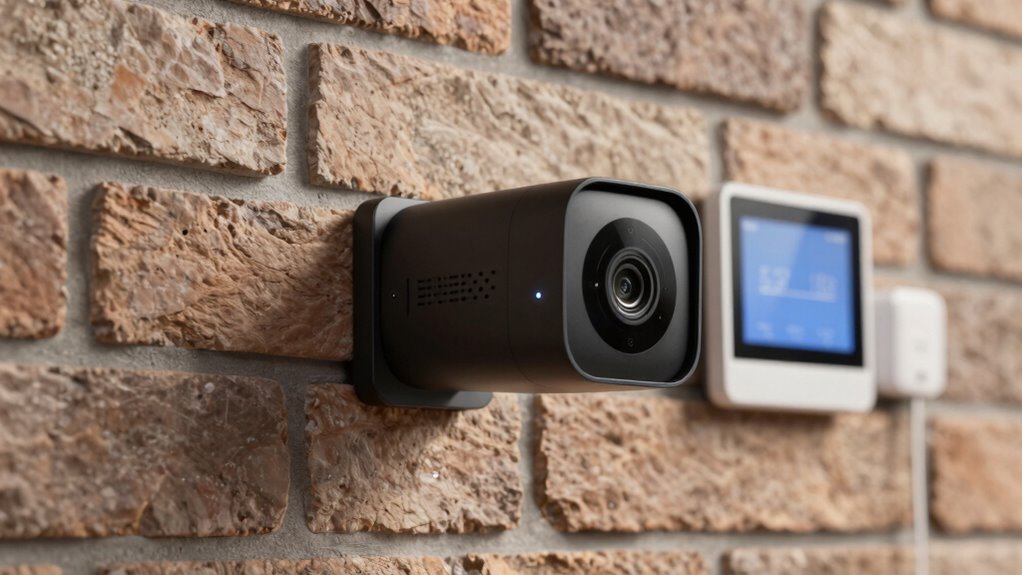
Have you ever wondered how to tell if a device is powered by Edge AI? One key indicator is sensor detection capabilities. Devices using Edge AI often include sensors that analyze data locally, allowing for real-time responses without relying on the cloud. Look for features like advanced motion sensors, facial recognition, or environmental sensors—these are signs of intelligent processing happening nearby. Device identification also helps; many smart devices advertise their Edge AI functions, highlighting local processing power. Check product specs or marketing materials for mentions of on-device AI, local data processing, or edge computing. Recognizing these features makes it easier to distinguish devices that operate with Edge AI from traditional, cloud-dependent gadgets.
What’s Next for Edge AI and Smart Devices?
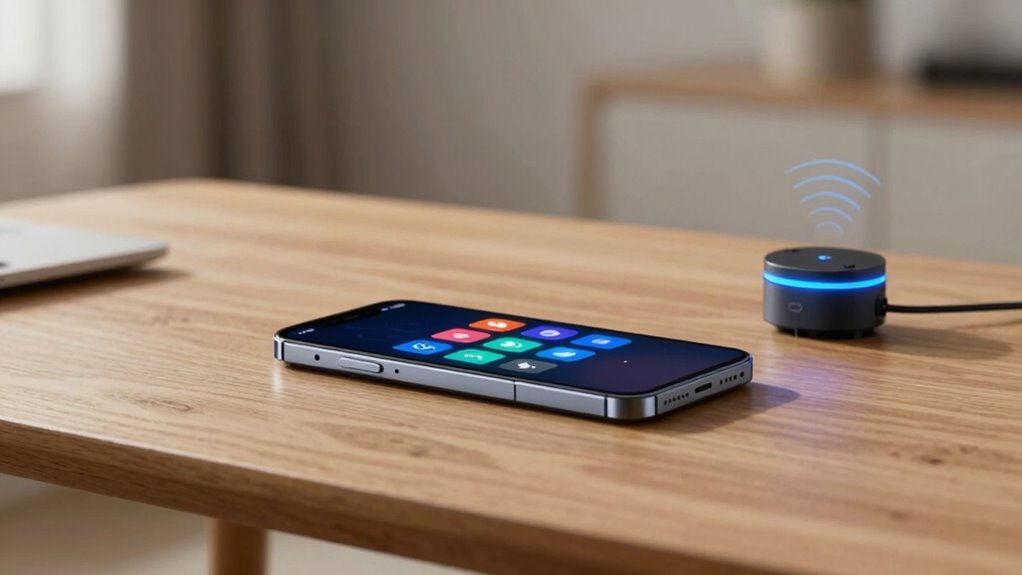
As Edge AI devices become more prevalent, innovations are shaping their future capabilities and applications. Expect smarter, more autonomous devices that adapt in real-time, reducing latency and reliance on cloud connectivity. However, privacy concerns and data security will stay at the forefront. Developers are working on advanced encryption methods and decentralized data processing to protect user information. You might see:
Edge AI devices will become smarter and more private with real-time adaptation and enhanced security measures.
- Enhanced privacy features that keep your data local
- Improved security protocols for edge devices
- Greater integration of AI with IoT for seamless automation
- More customizable and adaptive smart devices
These advancements aim to balance innovation with privacy, ensuring your devices remain secure while becoming more intuitive and responsive. The future of Edge AI promises smarter devices that respect your privacy without sacrificing performance.
Frequently Asked Questions
Can Edge AI Operate Without Internet Connectivity?
Yes, edge AI can operate without internet connectivity because it relies on local processing. This means your device can perform tasks independently of the cloud, ensuring internet independence. When you use edge AI, data is processed directly on the device, which enhances privacy, reduces latency, and keeps everything running smoothly even if the internet goes out. So, your device stays smart and functional, no matter the network status.
How Secure Is Data Processed Locally on Devices?
Processing data locally on your device enhances local data privacy because sensitive information stays on the device, reducing risks of interception. Device security measures like encryption, secure boot, and regular updates further protect your data from unauthorized access. While no system is entirely foolproof, local processing minimizes vulnerabilities tied to cloud breaches, giving you better control and peace of mind over your data privacy and overall device security.
What Industries Are Most Adopting Edge AI Solutions?
You’ll find that manufacturing, healthcare, and retail industries are leading adopters of edge AI solutions, with over 60% integrating it into their operations. These industries benefit from real-time data processing, improved security, and reduced latency. However, adoption challenges like cost, integration complexity, and ensuring data privacy still exist. Despite these hurdles, edge AI’s industry applications are transforming operations, making processes faster, smarter, and more secure.
How Does Edge AI Impact Device Battery Life?
Edge AI can improve your device’s battery efficiency by processing data locally, which reduces overall power consumption. Since it doesn’t rely on constant cloud communication, your device uses less energy, extending battery life. You’ll notice your devices last longer between charges because edge AI minimizes the need for energy-intensive data transfers. This makes your devices more efficient and reliable, especially in situations where conserving battery power is vital.
Are There Standards or Certifications for Edge AI Devices?
Surprisingly, there aren’t many universal standards or certifications specifically for edge AI devices. You’d think safety standards and device certification would be straightforward, but the rapidly evolving tech landscape means manufacturers often set their own benchmarks. While some industry groups promote safety standards, it’s up to you to verify if your device meets essential certifications, ensuring both performance and safety. Don’t assume all edge AI devices are created equal.
Conclusion
As you see, Edge AI is transforming your devices into smarter, faster, and more private companions—almost like giving them a brain of their own. With this technology, your gadgets can think on their own without relying on the cloud, making everything smoother and more secure. As Edge AI continues to grow, your devices will become even more incredible, turning your everyday tech into unstoppable, genius machines that keep up with your busy life effortlessly.