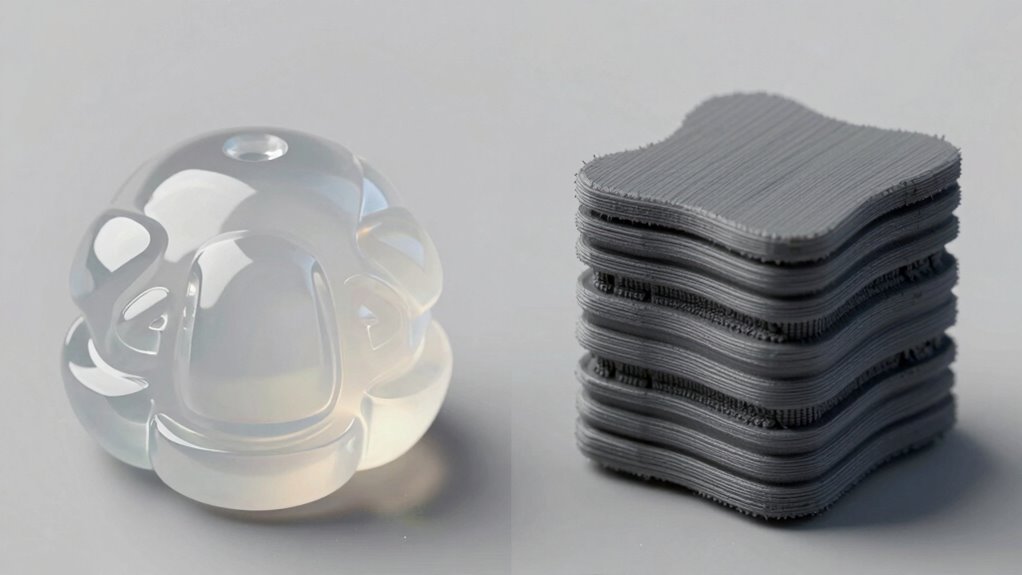

When choosing between resin and filament 3D printing, consider your needs for detail, speed, and durability. Resin offers high resolution and smooth finishes, ideal for miniatures or jewelry, but it’s brittle and slower due to curing time. Filament printing is faster, more impact-resistant, and easier to post-process, making it suitable for functional parts. To discover which method best fits your projects and the tradeoffs involved, explore the full details below.

Prime made for students and young adults
- Fast, free delivery for dorm and study essentials
- Prime Video and Amazon Music included
- Member-only deals
Key Takeaways
- Resin offers higher resolution and smoother finishes, ideal for detailed miniatures, but is more fragile and less durable over time.
- Filament printing is faster and better suited for larger, functional parts with tougher, impact-resistant materials like ABS and PETG.
- Resin printing involves longer post-processing steps, including cleaning and curing, whereas filament prints require minimal finishing.
- Filament materials are generally more cost-effective and available in a wider range of mechanical properties for practical uses.
- Resin’s high detail comes at the expense of longer print times and increased handling complexity, while filament offers quicker, more straightforward workflows.
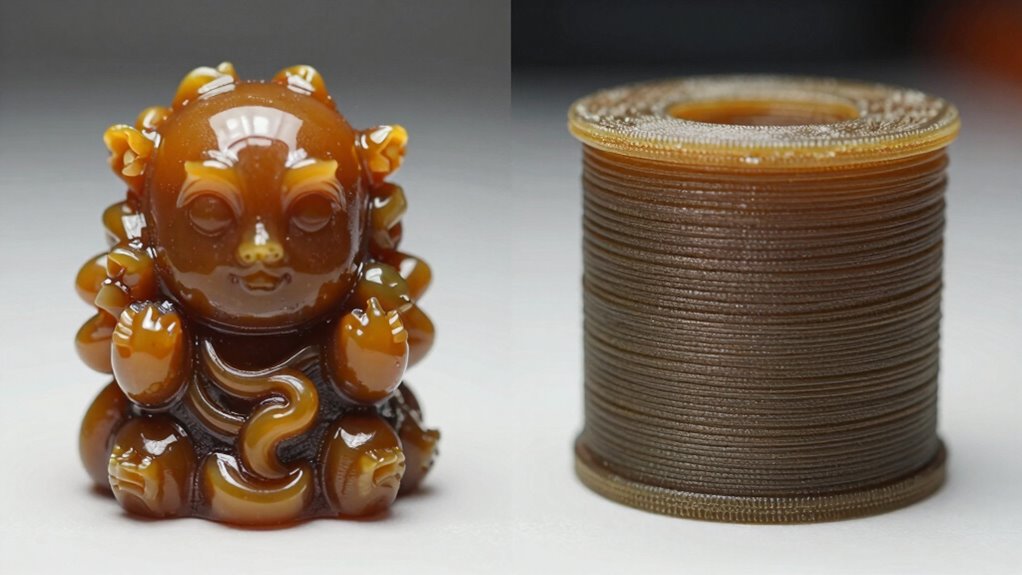
When choosing between resin and filament 3D printing, understanding their key differences can help you make the right decision for your project. Both methods have unique strengths and limitations, especially when it comes to material durability and printing speed. Resin printing typically offers higher resolution and smoother finishes, making it ideal for detailed prototypes, jewelry, or miniatures. However, the material used in resin printing tends to be more brittle and less durable over time, especially when exposed to UV light or harsh conditions. If you need parts that can withstand mechanical stress or outdoor environments, filament printing might be more suitable, as its materials—like ABS or PETG—are generally tougher and more resistant to impact and temperature fluctuations.
In terms of printing speed, filament 3D printers usually have an edge. They can produce larger objects more quickly because the process involves extruding heated filament through a nozzle, which allows for faster layer deposition. Resin printers, on the other hand, cure liquid resin layer by layer with UV light, which can be a slower process, especially for larger or more complex models. The tradeoff here is that resin printing often delivers finer detail and smoother surface finishes, but at the expense of longer print times. If speed is a priority for your project, especially for larger or multiple parts, filament printing might help you meet deadlines more efficiently. Additionally, material properties such as impact resistance and temperature tolerance are crucial factors to consider when selecting the right printing method. It’s also important to consider the cost of materials, which can vary significantly between resin and filament options, affecting your overall project budget. Furthermore, understanding print resolution is essential to match your project’s needs, as resin printing generally provides higher accuracy.
Another consideration is the post-processing involved. Resin prints require careful cleaning with alcohol and additional curing under UV light, which adds time and effort to the workflow. Filament prints usually need minimal finishing—just some sanding or support removal—making them more straightforward for quick iterations. When considering post-processing steps, it’s clear that resin printing demands more meticulous handling and added time compared to filament methods. Additionally, the availability of different material options can influence your choice, as filament supplies a wider range of mechanically suitable options. When it comes to material durability, filament options tend to be more versatile. For example, ABS and PETG are well-known for their toughness and resistance to heat and chemicals, making them suitable for functional parts or end-use applications. Resin parts, while highly detailed, can be more fragile and prone to cracking or breaking under stress.
Ultimately, your choice depends on what matters most for your project. If you prioritize high detail, smooth surfaces, and rapid prototyping of small parts, resin printing is a compelling option. But if you need durable, impact-resistant parts and faster production times, filament printing provides a practical and robust solution. Recognizing these tradeoffs helps you select the right technology to meet your specific needs efficiently.
resin 3D printer for detailed miniatures
As an affiliate, we earn on qualifying purchases.
As an affiliate, we earn on qualifying purchases.
Frequently Asked Questions
Which 3D Printing Method Is More Environmentally Friendly?
You’ll find filament 3D printing generally more eco-friendly because it uses plastic filaments like PLA, which are often made from biodegradable and eco-friendly materials. Resin printing involves chemicals that can be hazardous and harder to recycle, making it less sustainable. However, with recycling options for filaments and eco-conscious materials, filament 3D printing helps reduce your environmental impact more effectively. Always consider recycling and sustainable material choices to enhance eco-friendliness.
How Do Post-Processing Requirements Compare Between Resin and Filament Prints?
Like a sculptor refining their masterpiece, you’ll find resin prints require more post-processing. You’ll need to carefully remove supports and UV cure the model to achieve smooth, fully hardened surfaces. Filament prints, on the other hand, often need minimal cleanup—just some sanding and possibly paint. Resin’s detailed finish demands patience, but it rewards you with high precision. Filament’s easier cleanup makes it more straightforward, but with less fine detail.
Can Resin or Filament Printers Print Flexible or Rubber-Like Materials?
You can print flexible or rubber-like materials with both resin and filament printers, but filament printers excel in versatility for flexible materials. Flexible filaments like TPU or TPE are compatible with many FDM printers, making them ideal for versatile projects. Resin printers typically struggle with flexible resins, limiting their versatility for soft, rubber-like objects. So, if flexible materials are your priority, a filament printer offers better options.
What Are the Long-Term Durability Differences of Resin Versus Filament Prints?
Like a fortress built to last, your filament prints generally offer greater long-term durability than resin ones. They boast superior material strength, resisting cracks and wear over time. Resin prints, while boasting a smoother surface finish, tend to be more brittle and prone to surface degradation with prolonged use. So, if longevity matters, filament is your sturdy companion, enduring the test of time better than the delicate, glass-like resin creations.
How Do Operating Costs Differ Over the Lifespan of Each Printer Type?
Over the lifespan, filament printers tend to be more cost-efficient due to lower material costs and simpler maintenance, reducing ongoing expenses. Resin printers, however, often have higher operating costs because of expensive resin supplies and more frequent maintenance challenges like cleaning and replacing parts. You’ll find that filament printers generally require less upkeep and are cheaper to run long-term, making them a better choice for cost-conscious users.
filament 3D printer for functional parts
As an affiliate, we earn on qualifying purchases.
As an affiliate, we earn on qualifying purchases.
Conclusion
Ultimately, choosing between resin and filament 3D printing depends on your specific needs. Resin offers incredible detail but requires more cleanup, while filament is more straightforward but less precise. Remember, “The grass is always greener,” but understanding the strengths and limitations of each can help you make the best choice. By weighing your project demands and resources, you’ll find the right fit and avoid regrets, turning your ideas into reality with confidence.
As an affiliate, we earn on qualifying purchases.
As an affiliate, we earn on qualifying purchases.
Fall Picks
fall essentials
As an affiliate, we earn on qualifying purchases.