
TL;DR

Prime made for students and young adults
- Fast, free delivery for dorm and study essentials
- Prime Video and Amazon Music included
- Member-only deals
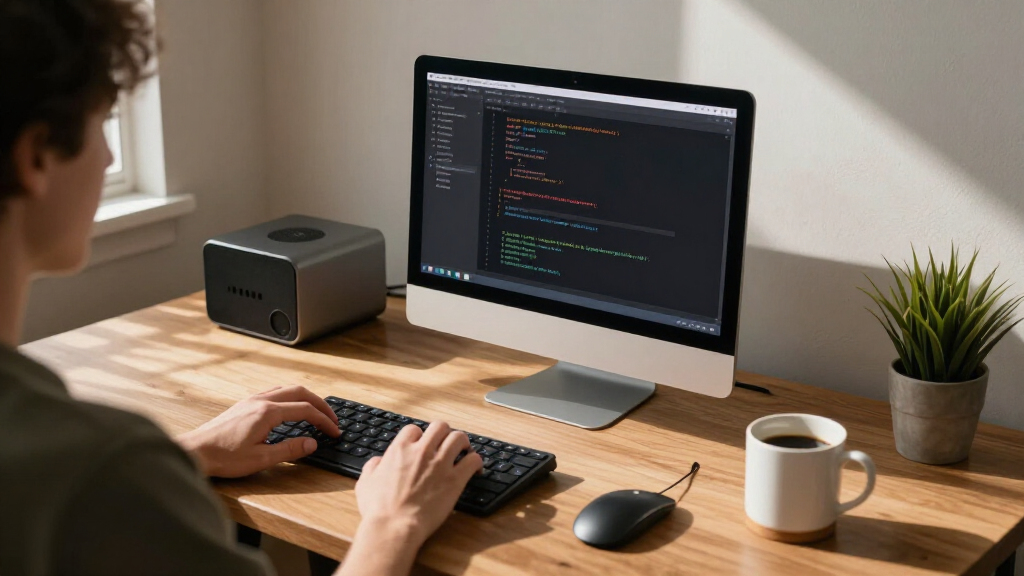
Apple’s new Mac Studio, announced in August 2026, features up to 512GB of unified memory, enabling it to load frontier-scale AI models locally. While capable of running large models, its speed and throughput are limited compared to data center GPUs, making it ideal for experimentation rather than production-scale deployment.
Apple has introduced a new Mac Studio model with up to 512GB of unified memory, designed to run frontier-scale AI models locally without relying on cloud services. This marks a significant step toward bringing large AI model inference to desktop hardware, making it accessible to individual researchers and small teams. While the claim that it can run these models is confirmed, the actual performance and limitations are nuanced and depend on specific workloads.
The new Mac Studio, announced on August 25, 2026, in two configurations, includes the M5 Ultra model, which features a 36-core CPU and an 80-core GPU, with a maximum of 512GB of unified memory. This memory capacity allows the entire model to be loaded directly into the GPU’s address space, a feat previously reserved for data center GPUs. The machine’s memory bandwidth reaches 1.2 terabytes per second, facilitating the loading of large models. Apple claims the M5 Ultra offers up to 4.3x faster AI performance than the previous M3 Ultra, based on benchmarks conducted internally in July, though independent testing is pending.
However, experts emphasize that capacity does not equate to speed. While the machine can load and hold large models, the actual inference speed—tokens processed per second—is governed by bandwidth and compute power, which are still limited compared to specialized data center hardware. The machine is suitable for experimentation, development, and privacy-sensitive inference tasks but is not designed to handle high-throughput, multi-user serving at scale.
Impact of Large Memory on Local AI Capabilities
The introduction of 512GB of unified memory in a desktop device signifies a major shift in local AI development. It enables individual users and small teams to load and experiment with frontier-scale models—those with hundreds of billions of parameters—without cloud reliance. This advances the sovereignty of data and models by reducing dependence on third-party cloud providers and opens new possibilities for privacy-sensitive AI work. Nonetheless, the hardware’s throughput limitations mean it remains a tool for research and experimentation rather than large-scale deployment or production use.
As an affiliate, we earn on qualifying purchases.
Background on AI Hardware and Apple’s Innovation
Prior to this release, running large AI models locally was limited to specialized, expensive data center hardware, often inaccessible to individual researchers. Apple’s shift to unify memory and integrate neural accelerators directly into the GPU marks a departure from traditional GPU architectures, aiming to democratize access to large models. The new Mac Studio builds on Apple’s recent hardware innovations, including the multi-chip M5 Ultra, which connects two M5 Max chips through UltraFusion technology, creating a powerful, integrated processor suitable for AI workloads.
Historically, most desktop computers have lacked the memory bandwidth and capacity to load frontier-scale models. This new hardware aims to bridge that gap, offering a desktop solution capable of holding large models in memory, although at a cost—both financial and in terms of raw throughput—compared to dedicated AI servers.
“Apple’s new Mac Studio with 512GB of unified memory can load large AI models locally, but speed and throughput are still limited compared to data center GPUs. It’s a significant step for experimentation, not production.”
— Thorsten Meyer, AI researcher and writer
large AI model development hardware
As an affiliate, we earn on qualifying purchases.
As an affiliate, we earn on qualifying purchases.
Performance and Practical Use of Large Models on Mac Studio
While the hardware can load large models, independent benchmarks measuring real-world inference speed and throughput are still pending. It remains unclear how well the Mac Studio performs under sustained workloads or multi-user scenarios, and whether software tooling will fully support all types of AI workflows. Additionally, the actual speed for running models—tokens per second—may fall short of expectations set by marketing claims, especially outside controlled benchmark environments.
As an affiliate, we earn on qualifying purchases.
Next Steps for Users and Developers
Independent testing and real-world benchmarking will clarify the true capabilities of the new Mac Studio for AI workloads. Software ecosystem improvements, including better support for AI frameworks and tools, are expected to follow, enhancing usability. Buyers should evaluate whether their specific AI tasks—such as experimentation, privacy-sensitive inference, or small-scale deployment—align with the hardware’s strengths. The high-memory model will likely be available in late October, with pricing above $10,000, emphasizing its premium position.
As an affiliate, we earn on qualifying purchases.
Key Questions
Can the Mac Studio run large AI models at production scale?
No. While it can load and run large models for experimentation and small-scale inference, its throughput and multi-user capacity are limited compared to data center GPUs designed for production deployment.
What does 512GB of memory mean for AI development?
It allows loading and working with frontier-scale models directly on a desktop, enabling research, experimentation, and privacy-focused inference without cloud dependence.
How does the Mac Studio’s inference speed compare to data center hardware?
It is significantly slower in terms of tokens per second and throughput, as the bandwidth and compute power are limited compared to specialized AI servers, but it offers a usable environment for development and testing.
When will the high-memory version be available?
The 512GB configuration is expected to ship in late October 2026, with pricing around $10,800 before storage upgrades.
Is this hardware suitable for deploying AI models for multiple users?
Generally not. Its throughput limitations make it more appropriate for individual or small-team use rather than serving multiple users at scale.
Source: ThorstenMeyerAI.com
Halloween Picks
halloween
As an affiliate, we earn on qualifying purchases.