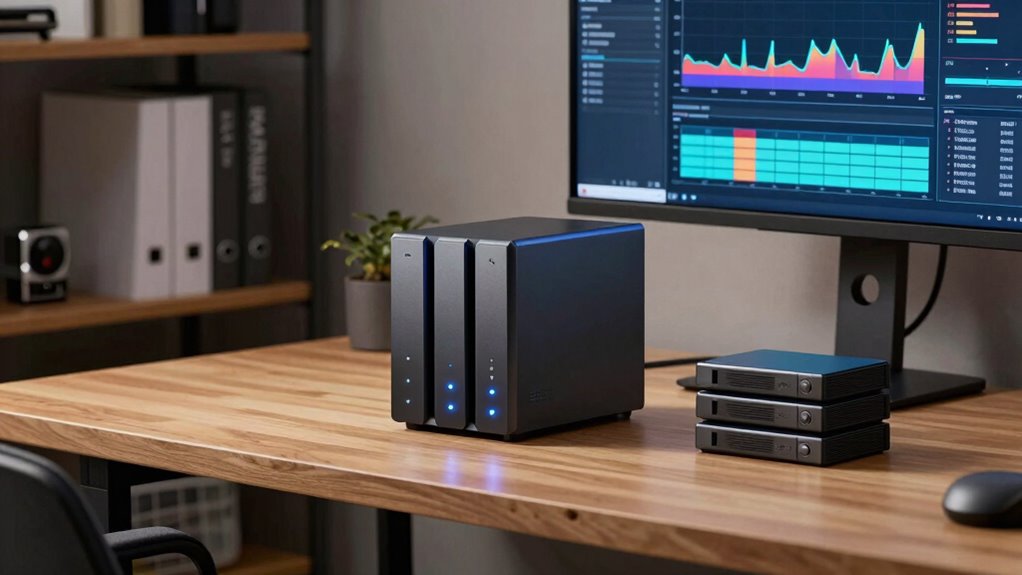

NAS systems change how you store your research data by providing a centralized, secure, and scalable solution you can access from anywhere. With features like cloud integration, you can easily sync and share files while safeguarding sensitive information through encryption and permissions. As your data grows, NAS allows you to expand storage without disrupting your workflow. Plus, tools like automated backups and monitoring keep your research safe and organized. To discover more about how NAS can optimize your data management, keep exploring.

Prime made for students and young adults
- Fast, free delivery for dorm and study essentials
- Prime Video and Amazon Music included
- Member-only deals
Key Takeaways
- NAS systems enable secure, centralized storage accessible from anywhere, enhancing remote research collaboration.
- They support seamless cloud integration for easy data backup, sharing, and synchronization.
- Scalability allows researchers to expand storage as research data grows, without workflow disruption.
- Advanced security features protect sensitive data through encryption and access controls.
- User-friendly management dashboards simplify data organization, monitoring, and backup processes.
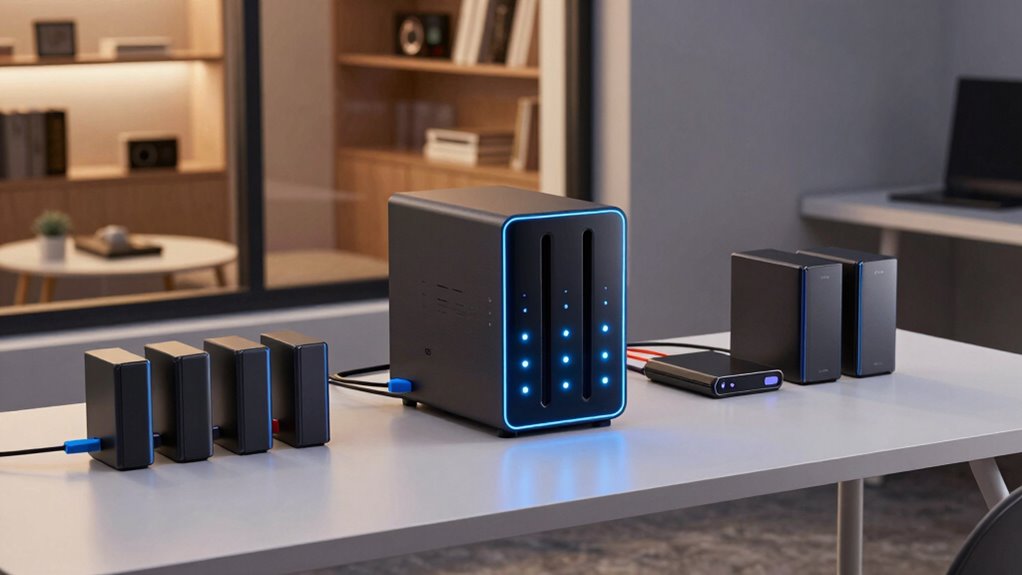
In today’s digital age, managing your personal data efficiently is more important than ever, and NAS (Network-Attached Storage) systems offer a practical solution. As a home researcher, you often deal with large files, multiple devices, and the need for secure, easy access to your data. NAS systems simplify this process by providing centralized storage you can access from anywhere. With features like cloud integration, you no longer need to worry about transferring files manually or carrying external drives. Instead, your NAS can sync with popular cloud services, allowing you to store, back up, and access your research data seamlessly across devices and locations. This integration makes it easier to collaborate with others or retrieve important files on the go.
Security is a top concern when managing sensitive research data, and modern NAS systems prioritize protecting your information through robust security protocols. These protocols include encryption, user authentication, and access controls, ensuring only authorized users can view or modify your files. You can set permissions for different users, which is particularly beneficial if you work with a team or share data with collaborators. Additionally, many NAS devices support VPN (Virtual Private Network) connections, adding another layer of security when accessing your data remotely. These security features help prevent unauthorized access and safeguard your research from cyber threats or accidental data loss. Regular firmware updates also help address potential vulnerabilities, contributing to a comprehensive security setup. Incorporating advanced security features can further enhance your data protection, providing peace of mind.
The flexibility of NAS systems allows you to scale your storage as your research grows, avoiding the limitations of traditional external drives or cloud-only solutions. You can add drives or upgrade hardware without disrupting your workflow. This adaptability is especially advantageous for home researchers who need reliable, expandable storage options. Additionally, the ability to utilize scalable storage solutions means you can grow your system in tandem with your research needs. Moreover, implementing automated backup strategies can minimize the risk of data loss and ensure your work is continuously protected, even during hardware failures or accidental deletions. Plus, with scheduled backups and snapshot features, you can protect your work from accidental deletion or hardware failure, ensuring your research remains safe and accessible at all times. Incorporating security protocols into your setup further enhances your data protection, giving you peace of mind. Moreover, many NAS systems provide detailed logs and monitoring tools, which help you track access and activity, adding another layer of accountability and security.
Another benefit of NAS systems is their user-friendly interface, which makes managing your data straightforward, even if you’re not tech-savvy. You can organize your files with ease, set up automated backups, and monitor system health—all through intuitive dashboards. This ease of use lets you focus more on your research and less on technical troubleshooting. Overall, NAS systems revolutionize how home researchers store and protect their data by combining cloud integration, robust security protocols, scalability, and user-friendly management, giving you a dependable and efficient way to handle your valuable research data.
As an affiliate, we earn on qualifying purchases.
Frequently Asked Questions
How Secure Are NAS Systems Against Cyber Threats?
You might wonder how secure NAS systems are against cyber threats. They generally provide strong security through encryption protocols and access control features. By encrypting your data and setting strict permissions, you reduce the risk of unauthorized access. However, it is crucial to keep the system updated and use strong passwords. While NAS devices are quite secure when properly managed, no system is entirely invulnerable, so staying vigilant is key.
Can NAS Systems Automatically Back up Cloud Data?
Yes, NAS systems can automatically back up cloud data through cloud synchronization features. You set up your NAS to regularly sync with your cloud services, ensuring your data is continuously backed up. This process enhances data redundancy, protecting your important files from loss. By automating cloud backups, you save time and reduce the risk of manual errors, making your data management more efficient and secure.
What Is the Typical Lifespan of a NAS Device?
A NAS device typically lasts between 3 to 5 years, though durability depends on usage and environment. You can extend its lifespan by ensuring good device resilience, like proper ventilation and handling. Regular software updates are essential, as they fix security issues and improve performance. Proper maintenance and timely updates help your NAS stay reliable, ensuring your data remains safe and accessible over its lifespan.
Are NAS Systems Suitable for Large Multimedia Libraries?
Yes, NAS systems are suitable for large multimedia libraries. They excel in multimedia management by offering centralized access and easy sharing of files. With features like storage optimization, you can efficiently expand storage capacity as your collection grows. Plus, NAS devices often support multiple users simultaneously, making them ideal for managing large multimedia libraries at home, ensuring smooth playback and quick access to your favorite videos, music, and images.
How Easy Is It to Upgrade NAS Storage Capacity?
Upgrading your NAS storage capacity is surprisingly straightforward, but it hinges on storage expansion options and hardware compatibility. You might worry about complexity, yet many systems support hot-swappable drives or modular expansion units, making the process seamless. Still, make sure your NAS model can accommodate larger drives or additional bays, as hardware compatibility is essential. With the right setup, expanding your storage becomes an effortless step toward future-proofing your data needs.
secure network-attached storage device
As an affiliate, we earn on qualifying purchases.
As an affiliate, we earn on qualifying purchases.
Conclusion
With NAS systems, you’re empowered to store and access your home data effortlessly, even if you’re worried about complexity. Think of it as having your own personal cloud — simple, secure, and always available. You might assume it’s complicated to set up, but modern NAS devices are user-friendly and designed for ease. So, don’t let tech fears hold you back; embrace this smart solution and keep all your memories and files within reach, anytime.
expandable NAS for research data
As an affiliate, we earn on qualifying purchases.
As an affiliate, we earn on qualifying purchases.
As an affiliate, we earn on qualifying purchases.
Fall Picks
fall essentials
As an affiliate, we earn on qualifying purchases.